 Skip to content

Sticking to a healthy diet consistently is one of the most common struggles for people committed to wellness. Life gets busy, cravings strike, and old habits pull you back. This article equips you with science-backed strategies to build a sustainable eating pattern that works for your lifestyle, health goals, and long-term success without relying on willpower alone.
Table of Contents
- Understand The Foundations: What A Consistent, Healthy Diet Looks Like
- Prepare Your Environment And Mindset For Success
- Execute Your Dietary Plan With Evidence-Backed Strategies
- Verify Progress And Troubleshoot Common Challenges
- How Dietium Can Support Your Consistent Eating Habits
Key takeaways
| Point | Details |
|---|---|
| Balanced nutrition foundation | A healthy diet includes cereals, legumes, fruits, vegetables, and quality protein sources per WHO guidelines. |
| Structured maintenance plans | Combining high-protein meals, physical activity, and intermittent low-energy diets prevents weight regain. |
| Environmental preparation | Meal planning, grocery strategies, and supportive routines reduce decision fatigue and impulsive choices. |
| Progress verification | Track energy, mood, and satiety cues while troubleshooting metabolic and behavioral challenges. |
Understand the foundations: what a consistent, healthy diet looks like
Before you can execute any dietary strategy, you need clarity on what constitutes a balanced, nutrient-rich eating pattern. Understanding these fundamentals gives you a framework to make informed food choices every day.
A substantial diet includes cereals, legumes, fruits, vegetables, and animal or alternative proteins according to the World Health Organization. This variety ensures you get essential vitamins, minerals, fiber, and macronutrients your body needs to function optimally. Without this foundation, even the most motivated person will struggle with consistency because their body will signal deficiencies through cravings and low energy.
Variety is not just about nutrition. It also keeps your meals interesting and satisfying, which directly affects how long you can stick with your eating plan. When you rotate different whole foods, you prevent diet boredom and give yourself better chances at long-term adherence.
Key components of a nutritionally complete diet include:
- Whole grains like brown rice, quinoa, oats, and whole wheat products for sustained energy
- Legumes such as lentils, chickpeas, and beans for plant-based protein and fiber
- Colorful fruits and vegetables providing antioxidants, vitamins, and phytonutrients
- Lean proteins from fish, poultry, eggs, tofu, or dairy to support muscle and satiety
- Healthy fats from nuts, seeds, avocados, and olive oil for hormone production and absorption of fat-soluble vitamins
Building sustainable eating habits starts with prioritizing these whole food groups in your daily meals. When you eat this way consistently, your body receives stable blood sugar, adequate nutrients, and signals of fullness that make it easier to avoid impulsive eating and stick to your plan.
Pro Tip: Write down three meals you genuinely enjoy that include all five food groups listed above. Rotate these as your go-to options when decision fatigue hits, so you always have a satisfying, balanced backup plan.
Prepare your environment and mindset for success
Consistency does not happen by accident. It requires intentional preparation of both your physical environment and mental approach to food. When your surroundings support healthy choices and your mindset is aligned with realistic goals, staying on track becomes significantly easier.
Start by establishing routines around meals and snacks. Eating at similar times each day stabilizes hunger hormones and reduces the likelihood of impulsive snacking. Your body learns when to expect fuel, which helps regulate appetite and energy throughout the day.
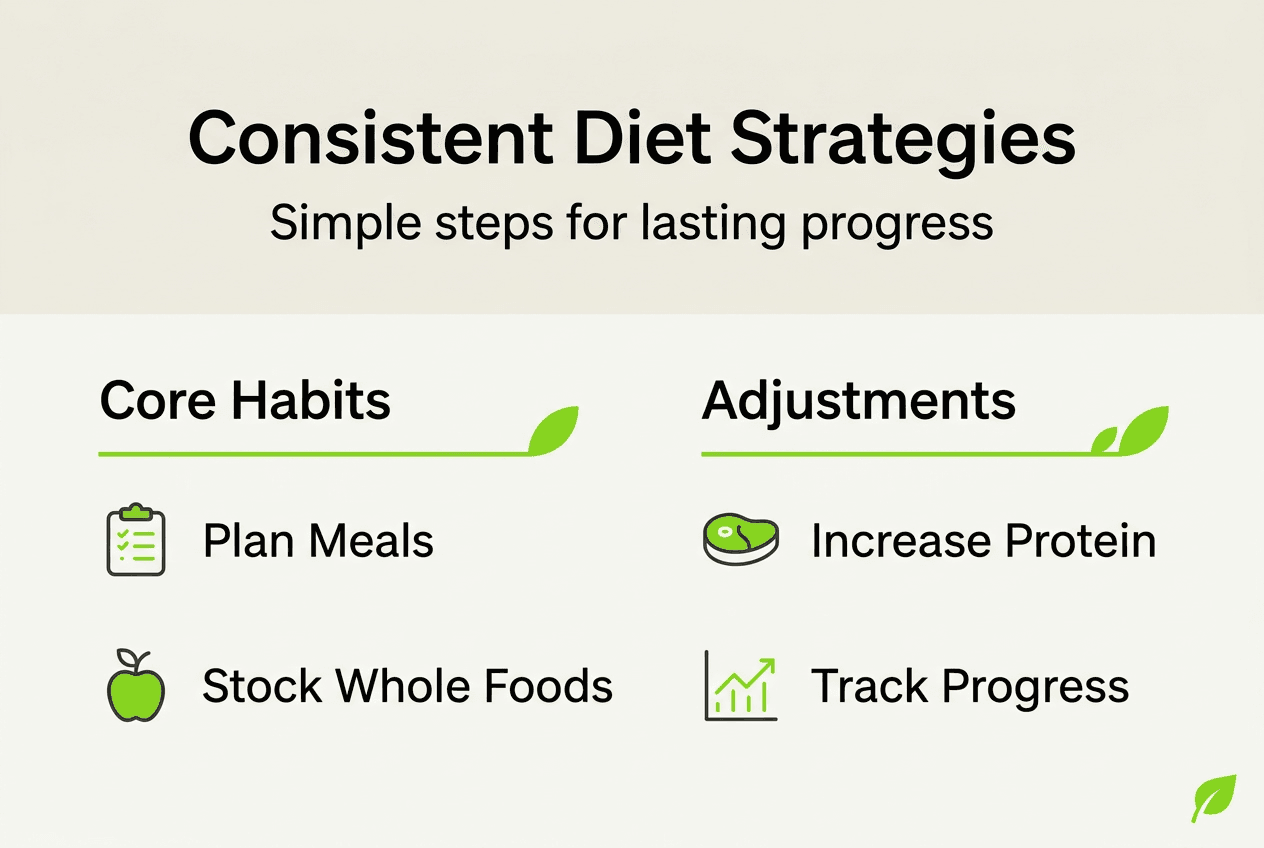
Meal planning and grocery shopping are foundational habits for building healthy habits naturally. When you plan your weekly meals and shop with a list, you eliminate the mental load of deciding what to eat every single day. You also avoid the trap of grabbing whatever is convenient when you are hungry and unprepared.
Create a supportive physical environment by stocking your kitchen with whole foods and minimizing ultra-processed snacks that trigger overeating. Keep cut vegetables, washed fruits, and portioned proteins visible and accessible. When healthy options require less effort than unhealthy ones, you naturally default to better choices.

Your social environment matters too. Communicate your goals with family or roommates so they understand your priorities. Join a community or find an accountability partner who shares similar health values. Social support significantly increases adherence to dietary changes over time.
Mindset preparation involves setting realistic expectations and defining your personal why. Understand that consistency is not perfection. You will have days when you eat off plan, and that is normal. What matters is your ability to return to your habits without guilt or derailment.
Practical steps to prepare your environment:
- Schedule meals and snacks at consistent times to regulate hunger signals
- Batch cook proteins and grains on weekends to simplify weekday meals
- Keep a running grocery list organized by food group to streamline shopping
- Remove or relocate tempting foods that do not align with your goals
- Set up meal prep containers and utensils for easy portion control
Explore meal planning tips to develop a system that fits your schedule and preferences. The less you rely on willpower and the more you rely on systems, the easier dietary consistency becomes.
Pro Tip: Schedule your meal prep session like any other important appointment. Treat it as non-negotiable time invested in your health, not an optional task you will do if you have time.
Execute your dietary plan with evidence-backed strategies
Once you have the knowledge and environment in place, execution is about implementing specific dietary strategies proven to enhance consistency and long-term success. The right combination of macronutrient choices, eating patterns, and physical activity creates a powerful foundation for sustained results.
High-protein, high-fiber diets promote satiety and long-term weight control by keeping you fuller longer and stabilizing blood sugar. Protein requires more energy to digest and preserves lean muscle mass during weight management. Fiber slows digestion, improves gut health, and reduces overall calorie intake without leaving you hungry.
Physical activity is not optional if you want dietary consistency. Physical activity of 200-300 minutes per week supports weight maintenance and improves insulin sensitivity, which helps your body use nutrients more efficiently. Exercise also regulates appetite hormones and reduces stress, both of which directly impact your food choices.
Intermittent use of structured approaches can help you maintain progress. Formula low-energy diets used intermittently assist long-term weight maintenance when combined with regular eating patterns. This does not mean constant restriction, but rather strategic short periods of lower calorie intake followed by balanced maintenance eating.
Step-by-step implementation of dietary consistency:
- Start each day with a high-protein breakfast to reduce cravings and stabilize energy.
- Include a source of fiber at every meal through vegetables, fruits, whole grains, or legumes.
- Schedule 30-45 minute sessions of moderate physical activity most days of the week.
- Track your meals for the first few weeks to identify patterns and adjust portions.
- Use intermittent structured eating periods if you notice gradual weight regain or loss of control.
| Strategy | Primary Benefit | Implementation Frequency |
|---|---|---|
| High-protein meals | Increased satiety and muscle preservation | Daily, at each main meal |
| High-fiber foods | Improved digestion and appetite control | Daily, minimum 25-30g total |
| Physical activity | Metabolic health and weight maintenance | 200-300 min/week moderate intensity |
| Intermittent LED | Reset after weight regain or plateaus | Periodically, 2-4 week cycles |
Check out a meal plan for weight maintenance to see how these principles translate into real meals. Understanding the physical activity role in health helps you prioritize movement as part of your overall dietary consistency strategy.
Pro Tip: Pair your meal timing with your workout schedule. Eat your highest-protein meal within two hours after exercise to maximize muscle recovery and metabolic benefits, making both your diet and fitness routine more effective.
Verify progress and troubleshoot common challenges
Measuring success goes beyond the number on the scale. True dietary consistency shows up in how you feel, your energy levels throughout the day, and your ability to maintain healthy habits without constant mental effort. Learning to recognize these signals helps you verify progress and adjust your approach when needed.
Monitor success through multiple indicators. Notice improvements in stable energy without afternoon crashes, better sleep quality, improved mood, and reduced cravings. These are signs your body is getting adequate nutrition and your eating pattern is sustainable. Physical changes like clothing fit, strength gains, and body composition shifts are also valuable metrics.
Understand that long-term weight maintenance is challenged by metabolic, hormonal, and behavioral adaptations after weight loss. Your metabolism slows slightly, hunger hormones increase, and your body becomes more efficient at storing energy. This is normal physiology, not personal failure.
Long-term dietary consistency requires understanding and working with your body’s biological adaptations, not fighting against them through unsustainable restriction.
Behavioral obstacles often derail consistency more than physiological ones. Irregular eating schedules, poor sleep, chronic stress, and social pressures create environments where maintaining healthy habits becomes extremely difficult. Circadian misalignment impairs glucose regulation and appetite, affecting diet consistency by disrupting the hormones that control hunger and satiety.
Common mistakes to avoid:
- Skipping meals to save calories, which triggers overeating later
- Eating the same foods daily without variety, leading to nutrient gaps and boredom
- Ignoring hunger and fullness cues in favor of rigid meal plans
- Neglecting sleep and stress management while focusing only on food choices
- Comparing your progress timeline to others instead of your own baseline
When you notice slips in consistency, identify the trigger rather than judging yourself. Was it poor planning? Emotional stress? Social pressure? Understanding the cause helps you develop specific solutions instead of relying on generic advice to try harder.
Learn about metabolic adaptation after weight loss to set realistic expectations for your body’s response to dietary changes. Use resources on tracking health and fitness progress to develop a comprehensive monitoring system beyond just weight.
Adjust your strategies based on what you observe. If you feel constantly hungry on your current plan, increase protein and fiber rather than simply eating less. If stress drives you to emotional eating, develop coping strategies that do not involve food. Successful long-term consistency comes from adapting your approach to fit your life, not forcing your life to fit a rigid diet.
How Dietium can support your consistent eating habits
Maintaining dietary consistency becomes significantly easier when you have personalized guidance and tools designed for your specific needs. Dietium offers science-based resources that take the guesswork out of nutrition planning and help you stay accountable to your health goals.
Our nutritional assessment methods provide detailed insights into your current eating patterns, nutrient intake, and areas for improvement. Understanding your baseline helps you create realistic goals and track meaningful progress over time.
Personalized meal plans designed for your preferences, schedule, and health objectives eliminate the daily stress of deciding what to eat. Each plan incorporates the evidence-based strategies discussed in this article, including adequate protein, fiber, and variety to support long-term consistency.
Progress tracking tools help you monitor not just weight, but energy, mood, satiety, and adherence patterns. This comprehensive approach to tracking progress for health goals ensures you recognize improvements beyond the scale and adjust your plan when needed.
FAQ
What are some effective ways to avoid diet boredom and stay motivated?
Rotate healthy recipes and try new foods frequently to keep meals interesting. Set small, achievable goals and reward yourself for progress to maintain motivation. Use meal planning to systematically introduce variety while maintaining nutritional balance, as outlined in meal planning tips to avoid boredom.
How important is physical activity in maintaining dietary consistency?
Physical activity is one of the strongest predictors of successful weight maintenance and directly supports dietary consistency. Regular moderate exercise improves insulin sensitivity, regulates hunger hormones, and reduces stress-driven eating. Aim for 200-300 minutes per week of moderate-intensity aerobic activity, and learn more about the role of physical activity in overall health.
What strategies can help manage cravings and emotional eating?
Identify emotional triggers and develop alternative coping skills like walking, journaling, or calling a friend. Incorporate high-protein, high-fiber foods to reduce physical hunger that often intensifies cravings. Use mindfulness and structured meal timing to curb impulsive eating, and explore building healthy habits for long-term behavior change.
How do I get back on track after breaking my diet consistency?
Return to your regular eating pattern at your next meal without restricting to compensate. Analyze what triggered the deviation to develop specific strategies for similar situations in the future. Remember that occasional off-plan eating is normal and does not negate your overall progress if you resume your habits promptly.
Can intermittent fasting help with diet consistency?
Intermittent fasting can support consistency for some people by simplifying meal timing and reducing decision fatigue. However, it works best when combined with balanced nutrition during eating windows and may not suit everyone’s lifestyle or metabolic needs. Focus first on what you eat, then experiment with when you eat to find your optimal pattern.
Recommended
- How to Stay Consistent with Diet: Proven Tips 2 Lose Weight
- How to Prevent Weight Regain Naturally: Lasting Results Guide – Dietium
- Diet vs Lifestyle Change – Impact on Lasting Health – Dietium
- How to Build Healthy Habits Naturally for Lasting Results – Dietium
- How To Make Healthier Food Choices – Veridata Insights


