 Skip to content

Keeping weight off after reaching your goal often feels tougher than losing it in the first place. Many health-conscious individuals discover that familiar habits and subtle lifestyle choices can quietly undo their hard work. Tracking nutritional intake and physical activity is a proven way to spot patterns that threaten your success, while technology and personalized nutrition solutions can offer practical support. You will find modern, data-driven steps to make your weight maintenance journey sustainable and empowered.
Table of Contents
- Step 1: Assess Recent Diet And Activity Patterns
- Step 2: Set Achievable, Data-Driven Maintenance Goals
- Step 3: Create Personalized Meal And Fitness Routines
- Step 4: Leverage Technology For Daily Tracking And Reminders
- Step 5: Monitor Long-Term Progress And Adjust Strategies
Quick Summary
| Essential Insight | Clarification |
|---|---|
| 1. Document dietary habits | Keep a detailed food and activity log for at least two weeks to identify patterns affecting weight. |
| 2. Set SMART goals | Establish specific, measurable, achievable, relevant, and time-bound goals based on your tracking data. |
| 3. Personalize meal plans | Create a nutrition and exercise routine tailored to your body’s needs and preferences for sustainability. |
| 4. Use technology effectively | Leverage apps for tracking meals, workouts, and progress to enhance motivation and engagement. |
| 5. Monitor progress regularly | Conduct monthly assessments of multiple health metrics to adapt strategies and ensure continuous improvement. |
Step 1: Assess recent diet and activity patterns
To prevent long-term weight regain, understanding your current dietary and activity patterns is crucial. Tracking nutritional intake and physical activity provides valuable insights into potential behaviors contributing to weight fluctuations.
Start by documenting your typical eating and exercise routines with precision. This assessment helps identify key areas for improvement:
- Record daily food intake using a digital journal or smartphone app
- Note portion sizes and meal timing
- Track types of foods consumed (processed vs whole foods)
- Monitor weekly physical activity duration and intensity
- Log exercise types and frequency
Consider creating a detailed log spanning at least two weeks to capture comprehensive data about your lifestyle patterns. Analyzing this information will reveal subtle trends that might otherwise go unnoticed.
Consistent tracking provides the foundation for sustainable weight management strategies.
Look for patterns such as stress-induced eating, inconsistent meal times, or sedentary periods that could undermine your weight maintenance goals. Understanding these nuances allows you to develop targeted interventions.

Pro tip: Use a digital tracking tool with automatic nutritional analysis to simplify your monitoring process and provide objective insights into your dietary habits.
Step 2: Set achievable, data-driven maintenance goals
Successful weight maintenance requires strategic goal setting that transforms your tracking data into actionable targets. Creating personalized weight management goals helps maintain motivation and provides clear direction for your health journey.
Apply the SMART framework to develop meaningful objectives that align with your unique metabolic profile and lifestyle:
- Specific: Define precise weight maintenance targets
- Measurable: Establish quantifiable metrics like weekly weight range
- Achievable: Set realistic goals based on your tracking data
- Relevant: Align goals with your overall health and wellness objectives
- Time-bound: Create short-term and long-term milestones
Focus on creating goals that go beyond just weight numbers. Consider developing objectives around:
- Consistent exercise frequency
- Balanced nutritional intake
- Body composition improvements
- Energy level maintenance
- Metabolic health indicators
Effective goal setting transforms data into a roadmap for sustained health success.
Regularly review and adjust your goals as your body adapts and your fitness level changes. Flexibility ensures continued progress and prevents plateaus in your weight maintenance journey.
Pro tip: Utilize digital tracking tools that automatically generate insights and recommend goal adjustments based on your performance data.
Step 3: Create personalized meal and fitness routines
Developing a customized approach to nutrition and exercise is critical for sustainable weight maintenance. Personalized nutrition and activity planning enables you to design a strategy that matches your unique metabolic needs and lifestyle preferences.
Craft your personalized routine by considering these key elements:
- Nutritional Balance: Develop meals with appropriate macronutrient ratios
- Calorie Alignment: Match intake to your metabolic requirements
- Workout Diversity: Incorporate different exercise types
- Schedule Compatibility: Design routines that fit your daily life
- Progressive Adaptation: Allow flexibility for ongoing adjustments
Focus on creating a holistic plan that integrates both nutrition and fitness:
- Calculate your precise daily calorie needs
- Design meal plans with balanced nutrients
- Select exercise routines matching your fitness level
- Schedule workouts that complement your meal plan
- Track progress and modify as needed
Successful weight maintenance requires a dynamic, personalized approach that evolves with your body.
Remember that your routine should be sustainable and enjoyable. Rigid plans often fail, so build in flexibility and choose activities and meals you genuinely like.
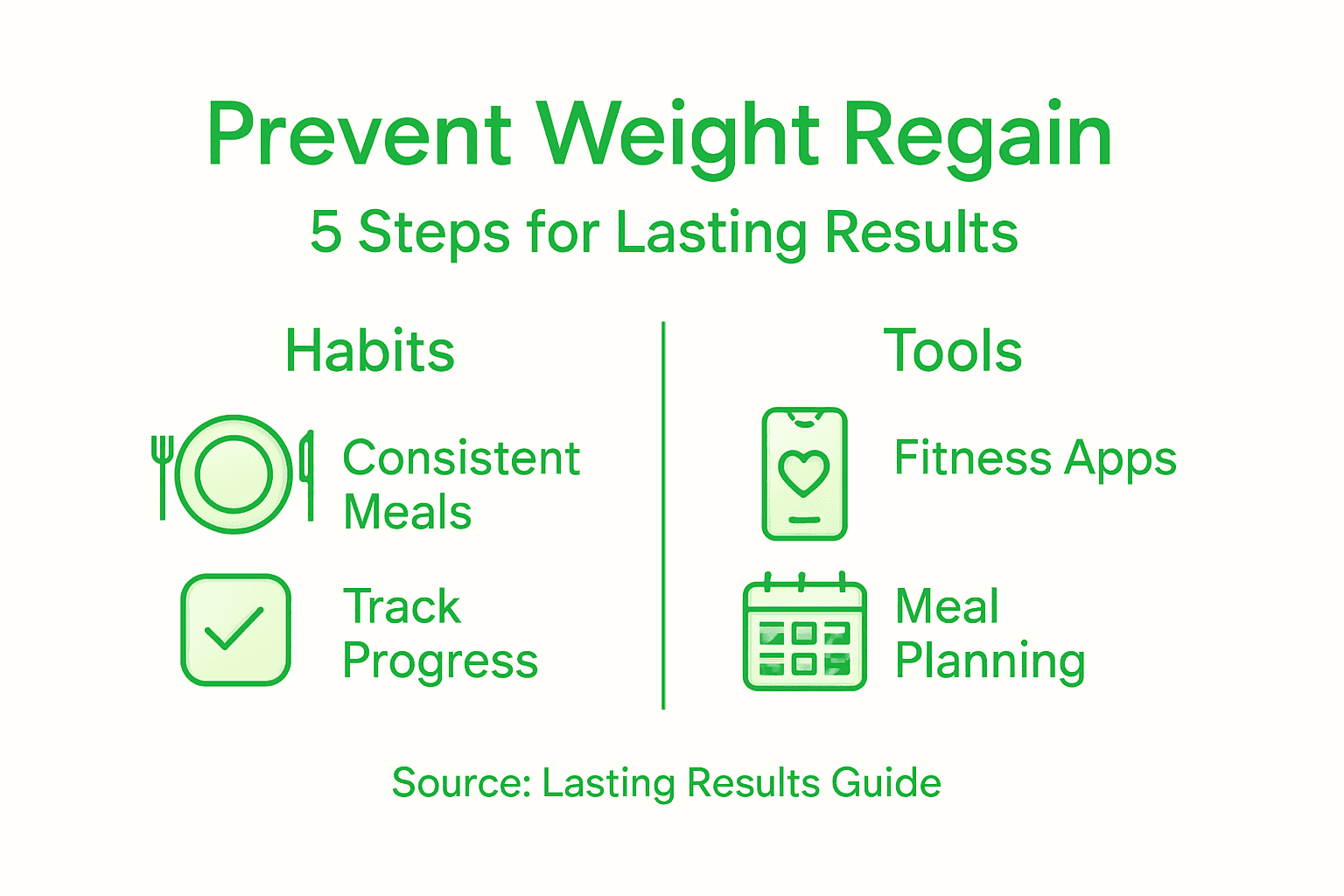
Pro tip: Experiment with different meal and workout combinations during the first month to discover what feels most natural and energizing for your body.
Step 4: Leverage technology for daily tracking and reminders
Technology offers powerful tools to support your weight maintenance journey by providing consistent monitoring and motivational support. Smartphone apps for activity tracking can transform how you approach daily health management, turning habit formation into an engaging and interactive experience.
Select technological tools that align with your specific health goals and lifestyle preferences:
- Activity Trackers: Monitor daily movement and exercise
- Nutrition Apps: Log meals and track nutrient intake
- Reminder Systems: Set notifications for workouts and meal times
- Progress Visualization: Use apps that generate performance graphs
- Goal Setting Platforms: Create and track personalized health objectives
Implement a comprehensive tracking strategy using these key steps:
- Choose 2-3 complementary health tracking apps
- Set up personalized daily and weekly reminders
- Enable automatic progress syncing across platforms
- Review your data weekly to identify patterns
- Adjust your approach based on insights gained
Technology transforms health tracking from a chore into an empowering personal journey.
Remember that technology should support, not replace, your personal commitment to health. Select tools that feel motivating and intuitive, not overwhelming.
Here’s a comparison of common digital tracking tools and their unique benefits for weight maintenance:
| Tool Type | Key Benefit | Potential Drawback |
|---|---|---|
| Nutrition App | Tracks calories/nutrients | Learning curve possible |
| Activity Tracker | Monitors steps and heart | May require syncing |
| Reminder System | Prompts healthy routines | Can cause notification fatigue |
| Goal Platform | Visualizes progress | May need customization |
Pro tip: Experiment with different tracking apps during the first month to find the combination that feels most natural and keeps you consistently engaged with your health goals.
Step 5: Monitor long-term progress and adjust strategies
Successful weight maintenance requires continuous assessment and strategic adaptation of your health approach. Long-term weight management tracking enables you to stay proactive and responsive to your body’s changing needs.
Develop a comprehensive monitoring strategy that goes beyond simple weight measurements:
- Physical Metrics: Track weight, body composition, and measurements
- Performance Indicators: Monitor fitness levels and energy
- Nutritional Assessment: Evaluate dietary quality and nutrient intake
- Behavioral Patterns: Record stress levels, sleep quality, and emotional well-being
- Metabolic Health: Check key health markers like blood pressure and glucose
Implement a systematic approach to progress monitoring:
- Schedule monthly comprehensive health assessments
- Compare current metrics with baseline measurements
- Identify trends and potential areas of improvement
- Adjust diet and exercise plans based on data insights
- Consult healthcare professionals for expert guidance
Consistent monitoring transforms weight maintenance from a challenge to a manageable, data-driven journey.
Remember that progress is not linear. Minor fluctuations are normal, and your ability to adapt is more important than achieving perfect consistency.
This table summarizes progress monitoring metrics for effective long-term weight management:
| Metric Category | What to Track | Why It Matters |
|---|---|---|
| Physical Metrics | Weight, body fat, waist | Monitor changes over time |
| Performance | Exercise level, stamina | Detect fitness improvements |
| Nutritional Quality | Macros, food diversity | Ensure balanced eating |
| Lifestyle Factors | Stress, sleep, emotions | Identify behavioral trends |
| Health Indicators | Blood glucose, pressure | Monitor metabolic health |
Pro tip: Create a quarterly review ritual where you celebrate your achievements and thoughtfully recalibrate your health strategies.
Take Control of Weight Regain with Personalized Support From Dietium
Struggling to prevent weight regain naturally can feel overwhelming, especially when faced with challenges like inconsistent meal timing, fluctuating motivation, or lacking personalized guidance. This article highlights the importance of tracking diet and activity, setting data-driven goals, and adapting routines to your unique needs. If you want to turn these insights into lasting habits Dietium.com offers a comprehensive solution designed precisely for these challenges.
Discover how Dietium’s advanced AI-powered tools help you monitor your body metrics such as BMI and calorie needs while its Recipians app crafts custom meal plans and fitness routines tailored to your individual goals. By integrating technology with personal health management, you gain empowering reminders, real-time tracking, and expert guidance that make sustaining progress easier than ever. Take the next step in your wellness journey now and explore personalized nutrition and fitness strategies at Dietium.com. Unlock the power of tailored planning that fits your lifestyle and prevents unwanted weight regain.
Frequently Asked Questions
How can I assess my recent diet and activity patterns for weight maintenance?
To assess your recent diet and activity patterns, track your daily food intake and exercise routines for at least two weeks. Use a digital journal or smartphone app to log portion sizes, meal timings, and types of foods consumed.
What are SMART goals, and how can I set them for weight maintenance?
SMART goals are Specific, Measurable, Achievable, Relevant, and Time-bound objectives. To set them, define your weight maintenance targets clearly and create milestones, such as aiming to maintain your weight within a specific range over the next three months.
How do I create a personalized meal and fitness routine for sustained weight management?
To create a personalized routine, calculate your daily calorie needs and design meals with balanced macronutrient ratios. Incorporate various types of exercises that fit your schedule and preferences, and ensure to adjust your plan weekly as needed.
What technology can I use to help track my weight maintenance efforts?
You can use activity trackers to monitor daily movement and nutrition apps to log meals and nutrient intake. Set reminders for workouts and utilize goal tracking platforms to visualize your progress.
How can I effectively monitor my long-term progress and adjust my strategies?
To monitor long-term progress, track various metrics such as your weight, body composition, and energy levels on a monthly basis. Regularly evaluate this data to identify trends and adjust your diet or exercise plans based on what you observe, aiming for continuous improvement.


