 Skip to content

Most American adults who pursue weight loss find that nearly 80 percent regain the weight when focusing solely on diets. For health-conscious millennials aiming for lasting results, the real challenge lies in choosing between short-term diets and broader lifestyle changes. This article breaks down the crucial differences, showing how holistic habits and smart technology are reshaping sustainable wellness for a new generation.
Table of Contents
- Defining Diet And Lifestyle Change
- Types And Key Features Of Diets
- Essentials Of Lifestyle Transformation
- Using Technology To Support Lasting Change
- Comparing Short-Term Diets To Holistic Habits
- Common Mistakes And How To Avoid Them
Key Takeaways
| Point | Details |
|---|---|
| Understanding the Difference | A diet focuses on specific food patterns, while lifestyle change incorporates broader behavioral modifications for comprehensive wellness. |
| Sustainable Transformation | Integrated lifestyle changes yield better long-term health outcomes than temporary diet restrictions. |
| Importance of Holistic Approach | Successful lifestyle transformation requires attention to physical activity, stress management, and habitual consistency alongside dietary changes. |
| Avoid Common Pitfalls | Setting realistic goals and ensuring social support are crucial for maintaining progress and preventing burnout during health transformations. |
Defining Diet and Lifestyle Change
Diet and lifestyle change represent two interconnected yet distinctly different approaches to personal health management. Understanding their nuanced differences reveals how comprehensive wellness strategies extend beyond simple nutritional modifications.
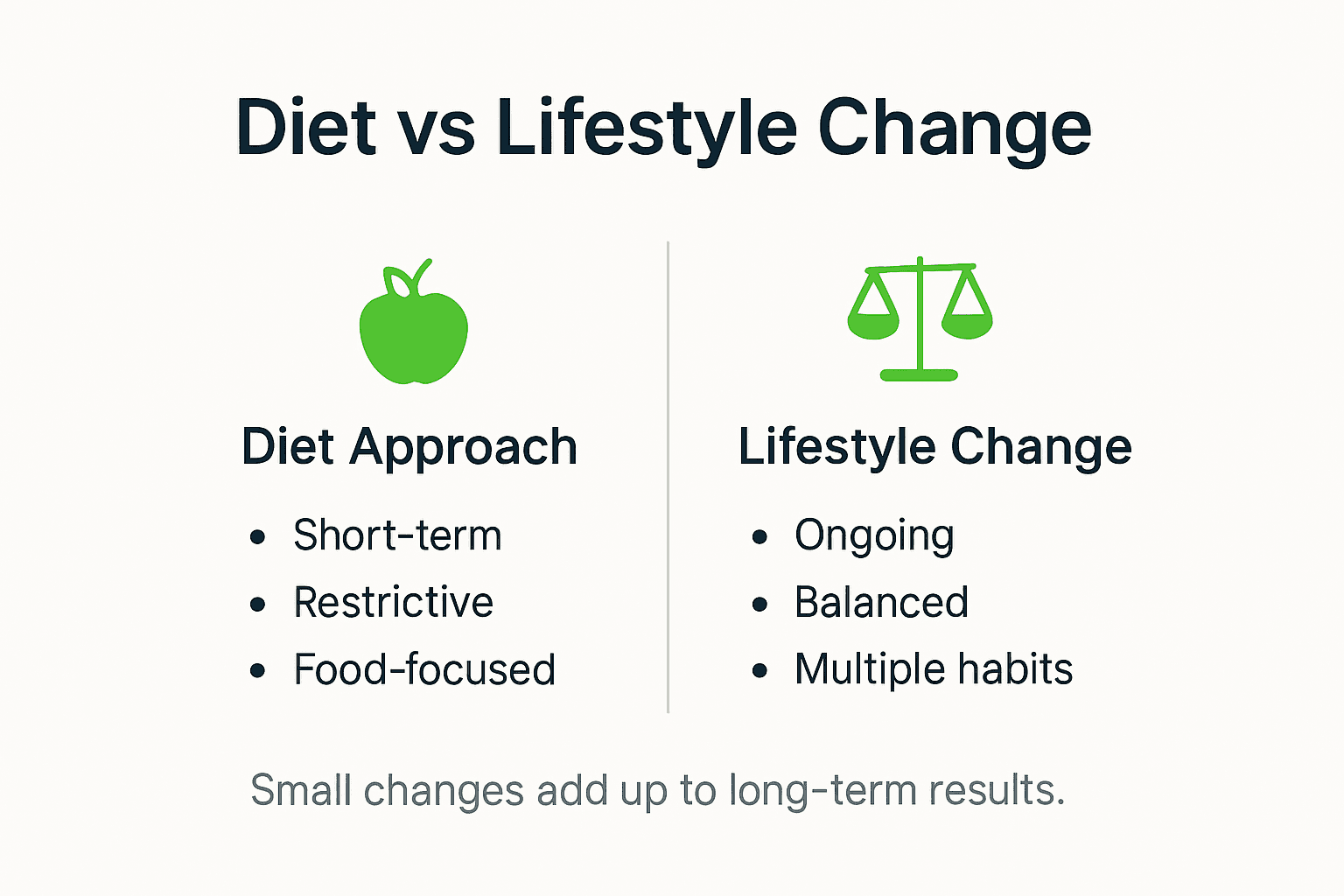
A diet traditionally refers to the specific patterns of food consumption an individual follows, focusing primarily on nutritional intake and caloric balance. This could involve specific eating protocols like low carbohydrate, Mediterranean, or plant based approaches. In contrast, a lifestyle change encompasses a much broader spectrum of behavioral modifications that integrate nutrition with other critical health dimensions such as physical activity, sleep quality, stress management, and psychological well being.
Research highlights that lifestyle interventions combining dietary adjustments and holistic behavioral strategies produce more sustainable health outcomes compared to isolated dietary restrictions. While a diet represents a targeted nutritional strategy, a lifestyle change involves systematic personal transformation across multiple domains. This comprehensive approach recognizes that lasting health improvements require integrated changes in thinking, acting, and maintaining sustainable habits.
Here’s a side-by-side comparison showing how diets differ from lifestyle changes in scope and impact:
| Aspect | Diet Approach | Lifestyle Change Approach |
|---|---|---|
| Focus | Food intake and nutrition | Holistic behavior and environment |
| Duration | Often temporary | Designed for long-term adoption |
| Key Elements | Calorie counts, food types | Exercise, sleep, stress, habits |
| Goal | Short-term health improvements | Sustainable overall wellness |
| Flexibility | Restrictive or limited | Adaptable to personal needs |
Pro tip: Track your daily habits across nutrition, movement, sleep, and stress to identify interconnected areas for meaningful lifestyle transformation.
Types and Key Features of Diets
Diet types represent diverse nutritional strategies designed to meet specific health goals and individual needs. Comprehensive research reveals multiple approaches to dietary planning, each with unique characteristics and potential health impacts. Understanding these variations helps individuals make informed choices about their nutritional intake.
Several prominent diet types have emerged, each characterized by distinct macronutrient compositions and nutritional philosophies. Mediterranean diets emphasize plant based foods, healthy fats, and lean proteins, while DASH diets focus on reducing sodium and supporting cardiovascular health. Ketogenic diets prioritize high fat consumption with minimal carbohydrates, designed to trigger metabolic changes. Population studies demonstrate how diet transitions significantly influence metabolic outcomes, underscoring the importance of understanding each diet’s fundamental features.
Beyond general classification, diets can be further differentiated by their core nutritional strategies. Some prioritize whole, unprocessed foods, while others focus on specific macronutrient ratios or caloric restrictions. The Whole30 approach eliminates potential inflammatory foods, the Paleo diet mimics ancestral eating patterns, and plant based diets center on minimizing or eliminating animal products. Each approach offers unique benefits and potential challenges, making personalized nutrition a critical consideration for individual health goals.
Pro tip: Consult a registered dietitian to develop a personalized nutrition strategy that aligns with your specific health objectives and metabolic profile.
Below is an overview of popular diet types and the primary health focus of each:
| Diet Type | Main Characteristics | Primary Health Focus |
|---|---|---|
| Mediterranean | Emphasizes plant foods, olive oil | Heart health and longevity |
| DASH | Low sodium, nutrient-rich foods | Blood pressure management |
| Ketogenic | High fat, minimal carbs | Metabolic adaptation |
| Whole30 | Eliminates inflammatory foods | Reset eating patterns |
| Paleo | Mimics ancestral diets | Gut health and inflammation |
| Plant Based | Reduces animal products, high fiber | Chronic disease prevention |
Essentials of Lifestyle Transformation
Lifestyle transformation represents a comprehensive approach to personal health that goes far beyond simple dietary modifications. Systematic research reveals critical components for sustainable behavioral change, emphasizing the need for a holistic, personalized strategy that addresses multiple dimensions of wellness.

The fundamental essentials of lifestyle transformation include several interconnected domains. Physical activity emerges as a cornerstone, complementing nutritional changes with consistent movement and exercise. Stress management plays an equally crucial role, with techniques like meditation, mindfulness, and emotional regulation directly impacting overall health outcomes. Comprehensive studies highlight how integrated lifestyle choices contribute to chronic disease prevention, demonstrating that transformation is not about isolated changes but systemic improvement.
Successful lifestyle transformation requires strategic planning and self-awareness. Key elements include setting realistic goals, creating supportive environments, developing consistent habits, and maintaining social support networks. Self-regulation becomes critical, enabling individuals to adapt strategies, track progress, and maintain motivation through challenges. Understanding personal triggers, building resilience, and developing adaptive strategies distinguish meaningful lifestyle changes from temporary interventions.
Pro tip: Create a comprehensive wellness journal to track your physical, mental, and emotional progress, helping you identify patterns and maintain accountability during your transformation journey.
Using Technology to Support Lasting Change
Digital technology has revolutionized personal health management, offering unprecedented tools for tracking, analyzing, and supporting lifestyle transformations. Innovative digital platforms now provide comprehensive interventions that extend far beyond traditional health tracking, enabling individuals to create more personalized and effective wellness strategies.
Modern technological solutions integrate multiple dimensions of health monitoring and behavior modification. Smartphone applications and wearable devices can now track physical activity, nutrition intake, sleep patterns, and stress levels with remarkable precision. These tools offer real time feedback, personalized recommendations, and data visualization that help users understand their health patterns. Advanced digital platforms support self regulatory skills by providing ongoing engagement and tailored interventions, transforming how individuals approach personal wellness.
The power of technology in lifestyle transformation lies in its ability to provide accountability, motivation, and continuous learning. Digital ecosystems now combine artificial intelligence, machine learning, and personalized coaching to create adaptive health strategies. Features like goal setting, progress tracking, social network integration, and predictive analytics enable users to develop more sustainable and informed approaches to their health journey. By breaking down complex health data into actionable insights, technology empowers individuals to make more informed decisions about their lifestyle choices.
Pro tip: Select digital health tools that offer comprehensive tracking and integrate seamlessly with your existing devices to maximize your lifestyle transformation potential.
Comparing Short-Term Diets to Holistic Habits
Short-term diets often promise rapid transformations, presenting themselves as quick solutions to complex health challenges. Research comparing diet transitions reveals significant differences between temporary interventions and comprehensive lifestyle approaches, highlighting the limitations of isolated nutritional strategies.
Traditional short-term diets typically focus on dramatic macronutrient restrictions or eliminating entire food groups, creating unsustainable weight loss patterns. In contrast, holistic habits integrate multiple wellness dimensions, including nutrition, physical activity, stress management, and behavioral strategies. Systematic reviews consistently demonstrate that comprehensive lifestyle modifications provide superior long-term health outcomes, addressing root causes rather than merely treating symptoms.
The fundamental distinction lies in approach and sustainability. Short-term diets operate on a temporary, often restrictive model that fails to address underlying behavioral patterns. Holistic habits, however, focus on gradual, integrated changes that become permanent lifestyle modifications. These approaches consider psychological factors, social support systems, and individual metabolic variations, creating a more nuanced and personalized path to wellness. By emphasizing consistent, manageable adjustments across multiple life domains, holistic strategies develop lasting behavioral change that traditional diets cannot achieve.
Pro tip: Design your wellness journey around small, consistent habits that you can sustain long-term, rather than pursuing extreme, short-lived dietary interventions.
Common Mistakes and How to Avoid Them
Personal health transformations often derail due to predictable yet avoidable pitfalls that undermine sustainable progress. Research identifies critical behavioral patterns that can compromise lifestyle change success, highlighting the importance of strategic self-awareness and intentional planning.
Unrealistic expectations represent one of the most significant barriers to lasting change. Many individuals set overly ambitious goals without considering their current lifestyle, physical capabilities, or psychological readiness. This approach frequently leads to rapid burnout and demotivation. Common mistakes include dramatic dietary restrictions, extreme exercise regimens, and wholesale lifestyle overhauls that ignore individual capacity for adaptation. Successful transformation requires incremental, personalized strategies that respect individual metabolic differences, psychological resilience, and existing life constraints.
Another critical mistake involves insufficient social support and self-regulatory mechanisms. Sustainable lifestyle changes demand more than individual willpower; they require robust accountability systems, realistic goal setting, and adaptive strategies that accommodate inevitable setbacks. Effective transformation integrates psychological support, tracks progress systematically, and develops flexible approaches that allow for gradual, meaningful behavioral modifications. By understanding personal triggers, building resilient mindsets, and creating supportive environments, individuals can navigate the complex journey of health optimization more effectively.
Pro tip: Break down your health goals into small, measurable milestones and create a supportive network that can provide consistent encouragement and accountability.
Unlock Lasting Health by Bridging Diet and Lifestyle Change
The article highlights the challenge many face when choosing between short term diets and sustainable lifestyle change. If you have struggled with restrictive diets that fail to deliver long lasting results or felt overwhelmed trying to manage nutrition, exercise, sleep, and stress all at once, you are not alone. The key is integrating personalized nutrition with holistic wellness habits for a truly transformative approach.
At Dietium, we understand the importance of combining these critical concepts. Our advanced AI powered tools help you track your body metrics like BMI and calorie needs while offering custom meal plans and fitness routines tailored to your unique metabolic profile. By focusing on gradual, consistent habits backed by data, you can avoid common pitfalls like unrealistic goals and burnout. Take control of your health journey with seamless device integration and expert guidance through video consultations.
Ready to start your transformation with evidence based strategies that merge diet and lifestyle? Discover how the Recipians app empowers your wellness goals today. Explore personalized meal planning, daily tracking, and professional support all in one place by visiting Dietium.com. Take the first step towards sustainable health now.
Frequently Asked Questions
What is the difference between a diet and a lifestyle change?
A diet focuses primarily on food intake and nutrition, often encompassing specific eating protocols, while a lifestyle change includes broader behavioral modifications, integrating nutrition with aspects like physical activity, stress management, and sleep quality.
Why are lifestyle changes considered more sustainable than short-term diets?
Lifestyle changes incorporate comprehensive strategies that address multiple dimensions of health, creating long-term habits, whereas short-term diets often involve restrictive eating patterns that are not maintainable over time.
What are some common mistakes to avoid during lifestyle transformation?
Common mistakes include setting unrealistic expectations, engaging in dramatic dietary restrictions, and lacking social support or self-regulation mechanisms, which can hinder sustainable progress.
How can technology support my lifestyle transformation journey?
Digital tools like smartphone apps and wearable devices can track activity, nutrition, and sleep, providing real-time feedback and personalized recommendations that help you understand and improve your health habits.


