 Skip to content

Many people start a new health journey but struggle to measure real progress. Goals that feel vague or out of reach quickly sap motivation, leaving you to wonder if your efforts are making an impact. By using AI tools and meal planning strategies, you can transform scattered attempts into a focused path with clear results. Discover how specific, measurable goals and advanced tracking make every step toward better wellbeing count.
Table of Contents
- Step 1: Set Clear Health and Fitness Goals
- Step 2: Choose and Connect AI Tracking Tools
- Step 3: Input Baseline Body Metrics and Dietary Data
- Step 4: Monitor Progress with Real-Time Tracking Features
- Step 5: Review Results and Adjust Plans Accordingly
Quick Summary
| Important Insight | Explanation |
|---|---|
| 1. Set Specific and Measurable Goals | Define clear fitness objectives that challenge you while being realistic, using the SMART framework for guidance. |
| 2. Choose Suitable AI Tracking Tools | Select AI tools that track essential metrics and fit seamlessly with your devices, enhancing your fitness monitoring. |
| 3. Establish Accurate Baseline Metrics | Capture precise initial measurements to create a foundation for tracking progress and tailoring your fitness plan. |
| 4. Use Real-Time Tracking Features | Engage with real-time metrics to motivate yourself and adjust your activities based on immediate insights. |
| 5. Regularly Review Progress and Adjust | Continuously assess your performance and make strategic adjustments to your fitness plan to avoid plateaus and maintain progress. |
Step 1: Set Clear Health and Fitness Goals
Setting clear health and fitness goals is the foundation of any successful wellness journey. Without a well-defined roadmap, your efforts can quickly become scattered and ineffective. Fitness goal strategies recommend creating objectives that are specific, measurable, and tailored to your individual capabilities.
To develop meaningful goals, start by conducting an honest assessment of your current fitness level. The American Heart Association suggests examining key metrics such as your walking pace, current strength levels, and body composition. This baseline evaluation helps you create realistic and achievable targets. Consider the following approach to goal setting:
- Identify your primary motivation for improving health and fitness
- Evaluate your current physical condition through simple fitness assessments
- Select specific, measurable objectives that align with your overall wellness vision
- Create a timeline for achieving each goal
The most effective fitness goals are those that challenge you without feeling overwhelming.
- Define precise goals (e.g., “I want to run a 5K in under 30 minutes”)
- Break larger goals into smaller, manageable milestones
- Track progress using quantifiable metrics
Realistic goal setting means understanding your body’s current capabilities and creating a progression plan that builds gradually. SMART goal framework recommends ensuring each objective is Specific, Measurable, Attainable, Relevant, and Time-bound.

Here’s how the SMART goal framework guides effective fitness goal setting:
| SMART Element | Description | Practical Example |
|---|---|---|
| Specific | Clearly defines the outcome | Run a 5K race |
| Measurable | Provides quantifiable progress | Track completion time |
| Attainable | Matches current abilities | Increase distance gradually |
| Relevant | Aligns with personal priorities | Supports heart health goal |
| Time-bound | Has a set deadline | Complete in 8 weeks |
Pro tip: Keep your fitness goals flexible and be prepared to adjust them as you gain more experience and understanding of your body’s capabilities.
Step 2: Choose and Connect AI Tracking Tools
Navigating the world of fitness technology requires selecting the right AI tracking tools that align with your personal health goals and provide comprehensive insights. AI fitness tracking technologies have revolutionized how we monitor and improve our wellness, offering real-time data analysis and personalized recommendations.
When choosing AI tracking tools, consider the following key factors:
- Compatibility with your existing devices and smartphones
- Range of metrics tracked (heart rate, sleep, steps, calories)
- Accuracy of data collection and analysis
- User interface and ease of navigation
- Integration capabilities with other health platforms
Advanced AI tools transform raw fitness data into actionable wellness insights.
- Research different fitness tracker options
- Read user reviews and professional recommendations
- Test compatibility with your lifestyle and fitness routine
Mobile health tracking studies demonstrate that consistent use of connected fitness tools can significantly increase physical activity levels. Look for platforms that offer dynamic workout recommendations and personalized progress tracking.
Compare common AI fitness tracking platforms using essential selection criteria:
| Platform | Key Strength | Ideal User Type |
|---|---|---|
| Fitbit | Comprehensive health metrics | Beginners and casual users |
| Apple Health | Deep integration with iOS | iPhone and Apple Watch users |
| Garmin Connect | Advanced performance analytics | Endurance and outdoor athletes |
| WHOOP | Focused recovery insights | High-performance individuals |
Pro tip: Select AI tracking tools with robust data privacy settings and choose platforms that allow you to control and understand how your personal health information is used and stored.
Step 3: Input Baseline Body Metrics and Dietary Data
Capturing accurate baseline measurements is crucial for tracking your health and fitness progress effectively. Comprehensive body metrics tracking provides the foundation for understanding your current physical condition and developing targeted improvement strategies.
To establish a comprehensive baseline, you’ll need to collect several key measurements:
- Body composition percentages
- Resting heart rate
- Muscle strength measurements
- Flexibility assessments
- Current dietary intake details
Precise initial measurements create the roadmap for your fitness transformation.
- Measure body weight and body fat percentage
- Record key body measurements (chest, waist, hips)
- Document current physical performance levels
Global diet quality assessment requires detailed nutritional tracking through food frequency questionnaires and comprehensive dietary records. Accurate data collection enables personalized nutrition and fitness planning.
Utilize digital tracking tools or work with a professional to ensure consistent and precise measurement techniques. These initial metrics will serve as your benchmark for future progress evaluation.
Pro tip: Conduct your baseline measurements at the same time of day and under consistent conditions to ensure the most accurate and comparable data points.
Step 4: Monitor Progress with Real-Time Tracking Features
Real-time fitness tracking revolutionizes how you understand and improve your health by providing immediate, actionable insights into your daily performance. These advanced monitoring tools transform raw data into motivation, helping you stay engaged and committed to your wellness journey.
Effective real-time tracking involves understanding and utilizing key performance metrics:
- Step count and daily movement
- Heart rate zones during exercise
- Calorie expenditure
- Sleep quality and duration
- Recovery and stress levels
Continuous monitoring turns fitness goals from abstract concepts into tangible achievements.
- Set daily metric targets
- Review progress in detailed dashboard
- Adjust activities based on real-time feedback
Wearable fitness technology studies demonstrate how immediate data visualization can increase physical activity by encouraging users to meet or exceed their personal benchmarks. Dynamic tracking features provide instant motivation and accountability.
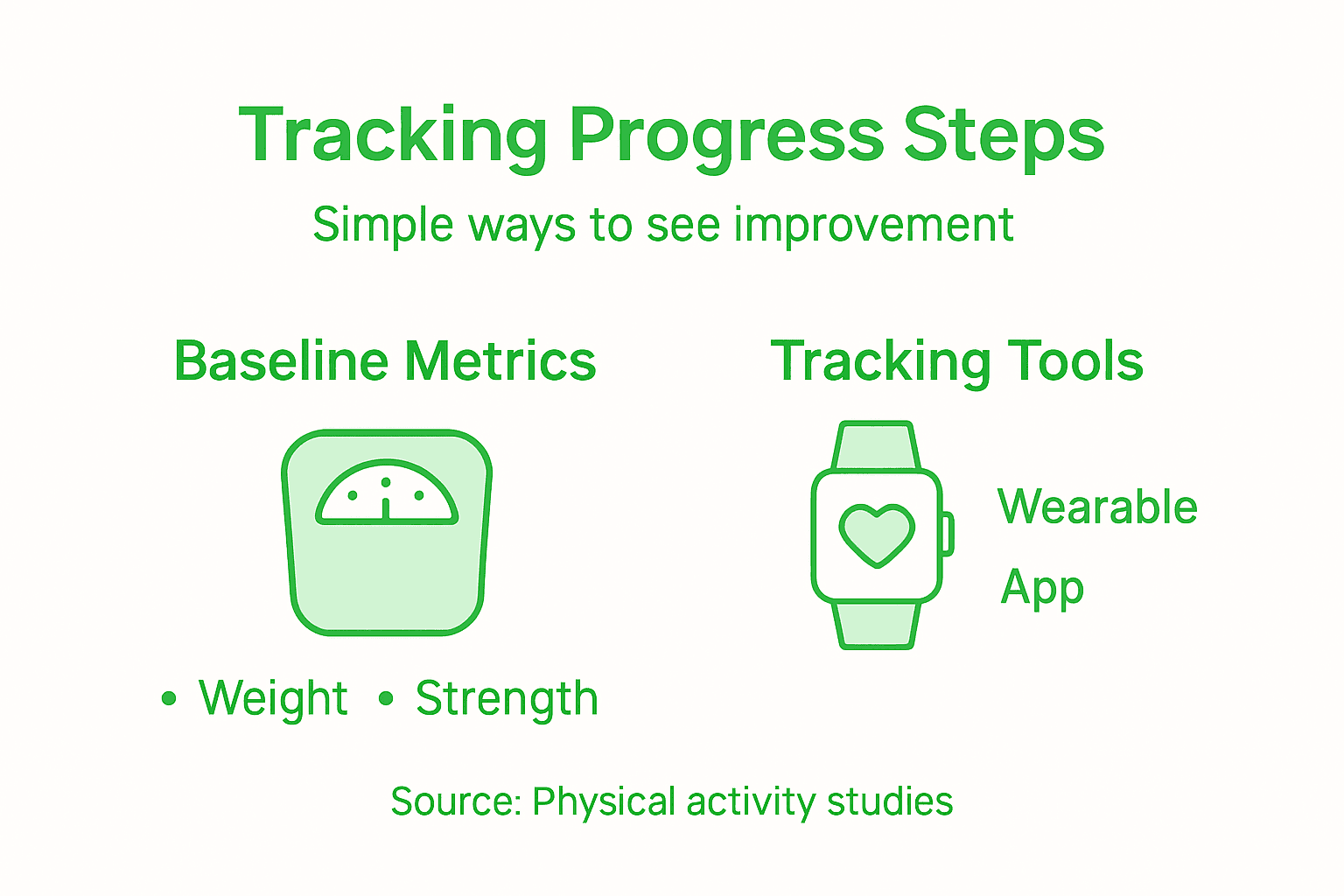
Consistent engagement with your tracking tools helps you recognize patterns, celebrate small victories, and make informed adjustments to your fitness strategy.
Pro tip: Configure personalized notifications and alerts to maintain consistent engagement and receive timely encouragement toward your health goals.
Step 5: Review Results and Adjust Plans Accordingly
Fitness progress assessment is a critical component of sustainable health improvement, allowing you to understand what strategies are working and where modifications are needed. Regularly evaluating your performance helps prevent plateaus and keeps your fitness journey dynamic and engaging.
When reviewing your progress, focus on these key evaluation areas:
- Strength training performance
- Cardiovascular endurance
- Nutrition and dietary adherence
- Recovery and rest periods
- Overall energy and motivation levels
Consistent assessment transforms fitness from a static goal into an evolving personal journey.
- Compare current metrics with initial baseline measurements
- Identify areas of significant improvement
- Recognize potential stagnation points
- Develop targeted adjustment strategies
Physical activity guidelines recommend making gradual, strategic adjustments to maintain progress and prevent burnout. Adaptive fitness planning ensures your approach remains challenging yet achievable.
Remember that progress is not linear. Some weeks you’ll see dramatic improvements, while others might feel like maintenance. The key is consistent effort and willingness to adapt.
Pro tip: Schedule a quarterly comprehensive review to conduct an in-depth analysis of your fitness progress, allowing for more substantial strategic recalibrations.
Take Control of Your Health and Fitness Journey with Dietium
Tracking your progress toward health and fitness goals can feel overwhelming without the right tools and personalized guidance. This article highlights the importance of setting clear, measurable objectives and utilizing real-time data from AI tracking technologies to stay motivated and on course. If you struggle with transforming raw data into actionable insights or finding meal plans and workouts that truly fit your unique needs Dietium is designed to bridge that exact gap.
Discover how our advanced AI-powered platform, including the Recipians app, helps you input and analyze baseline body metrics and dietary habits in a seamless way. Benefit from customized meal plans, recipe suggestions, and fitness routines that evolve with your progress. Experience the convenience of integrated health tracking tools combined with expert video consultations and evidence-based nutrition content that keeps you informed and empowered.
Ready to elevate your wellness strategy with data-driven support tailored just for you Explore everything Dietium offers by visiting our main site today and take the next step toward achieving your health and fitness goals with confidence.
Frequently Asked Questions
How can I set clear health and fitness goals?
To set clear health and fitness goals, start by identifying your primary motivation for improvement. Conduct an honest assessment of your current fitness level and create specific, measurable objectives that align with your wellness vision. Consider breaking larger goals into smaller milestones to track progress more effectively.
What baseline metrics should I track for fitness progress?
You should track key baseline metrics such as body composition percentages, resting heart rate, muscle strength measurements, and current dietary intake. Collect these data points to establish your starting point, which will guide your future progress evaluations and adjustments.
How often should I review my fitness progress?
You should review your fitness progress regularly, ideally on a weekly or monthly basis. This consistent evaluation allows you to compare your current metrics with initial baseline measurements and recognize areas of improvement or stagnation, enabling you to adjust your fitness plan as needed.
What role do AI tracking tools play in monitoring fitness progress?
AI tracking tools play a significant role in providing real-time data analysis and personalized recommendations. By using these tools, you can monitor your daily performance metrics, such as step count and heart rate, and make informed adjustments to your activities to enhance your fitness journey.
How can I adjust my fitness plans based on my progress?
You can adjust your fitness plans by comparing your current metrics with your initial benchmarks and identifying areas for improvement. Based on this analysis, develop targeted strategies, such as increasing workout intensity or adjusting your diet, to continue making progress toward your goals.
What should I do if I hit a plateau in my fitness journey?
If you hit a plateau, consider changing up your workout routine or incorporating new exercises to challenge your body differently. Additionally, reassess your nutrition and recovery strategies to ensure they align with your fitness goals and support ongoing progress.


