 Skip to content

TL;DR:
- One holiday meal does not harm long-term health; guilt can lead to unhealthy patterns.
- Self-monitoring and staying active help prevent holiday weight gain without stress.
- Strategic food swaps and mindful eating allow enjoyment while supporting overall nutrition goals.
The holidays are one of the hardest times to eat well. Between family feasts, office parties, and seasonal treats at every turn, your nutrition goals can feel like a distant memory by December. But here is the truth: enjoying holiday food does not have to mean abandoning your health. With the right habits and a realistic mindset, you can savor every bite and still feel great come January. These evidence-based strategies will help you navigate the season with confidence, without the post-meal guilt spiral that so many people know all too well.
Table of Contents
- Understand your body’s response to holiday meals
- Self-monitor without obsession: smart tracking tips
- Build a balanced holiday plate: practical food swaps
- Stay active to balance out indulgence
- Our take: why holiday eating is more about mindset than food
- Want a customized healthy holiday plan?
- Frequently asked questions
Key Takeaways
| Point | Details |
|---|---|
| One meal isn’t harmful | A single day of holiday eating does not ruin your health or cause lasting weight gain. |
| Mindful tracking works | Simple self-monitoring helps keep your goals on track with minimal stress during holidays. |
| Small swaps make a difference | Easy ingredient changes can keep your favorite holiday foods enjoyable and healthier. |
| Stay active for balance | Incorporating everyday activity helps offset indulgent meals and supports well-being. |
Understand your body’s response to holiday meals
Before you stress about that extra slice of pie, take a breath. Your body is more resilient than you think. Understanding what actually happens when you eat a big holiday meal makes it much easier to enjoy the season without anxiety.
Here is a key insight most people miss: a single day of overeating will not cause permanent harm. Your body digests the excess food efficiently and returns to its normal baseline within a day or two. The real risk is not the meal itself. It is the guilt that follows.
“What actually damages long-term health is not one indulgent meal. It is the shame spiral that follows, which can trigger restrictive eating, binge cycles, and a broken relationship with food.”
When guilt takes over, many people respond by either over-restricting in the days after or giving up entirely and continuing to overeat. Both responses are harder on your body and your mindset than the original holiday meal was. Shifting your focus from isolated meals to overall patterns is what leads to better long-term results.
Here is what your body is actually doing after a holiday feast:
- Digesting efficiently: Most excess calories from a single meal are processed and used for energy, not immediately stored as fat.
- Regulating hormones: Hunger hormones like leptin and ghrelin recalibrate within hours, helping you feel less hungry the next day.
- Restoring balance: Blood sugar and sodium levels normalize quickly in healthy individuals, usually within 24 to 48 hours.
For practical guidance on navigating this time of year, review these healthy holiday eating tips to stay grounded in evidence and feel in control all season long.
Pro Tip: Instead of judging individual meals, assess your week as a whole. One festive dinner surrounded by balanced breakfasts and lunches is a healthy week by any measure.
Self-monitor without obsession: smart tracking tips
Once you have released the guilt around occasional enjoyment, gentle self-monitoring can give you confidence and control through the season. Tracking is not about punishment. It is about staying informed so small shifts do not become large ones.
Research confirms that overweight individuals gain more during the holiday season, and that self-monitoring combined with regular activity are the two strongest predictors of avoiding that gain. The good news is that tracking does not have to be rigid or stressful to be effective.
Here is a simple system to stay aware without obsessing:
- Weigh yourself consistently. Step on the scale at the same time every morning, two to three times per week. This gives you trend data, not panic-inducing daily fluctuations.
- Use a simple food journal. You do not need to log every macro. Just note your meals at a high level to spot patterns, like late-night snacking or skipping lunch before big dinners.
- Set a realistic range, not a fixed number. Allow yourself a flexible 2 to 3 pound window during the holidays. This takes pressure off while still keeping you accountable.
- Check in with your energy and mood. How you feel is data too. Low energy or poor sleep after certain meals is worth noticing and adjusting.
- Reassess weekly. One check-in per week is enough to make small corrections before they compound.
For more practical approaches, explore these prevent weight regain tips and learn how tracking body measurements can complement what the scale tells you.
Pro Tip: Take your measurements (waist, hips) at the start of the holiday season and again in January. Body composition tells a fuller story than weight alone.
Build a balanced holiday plate: practical food swaps
Now that you are monitoring wisely, it is time to build plates that satisfy both your taste buds and your nutrition goals. You do not need to skip your favorite dishes. Small, strategic swaps can make a meaningful difference across the whole season.
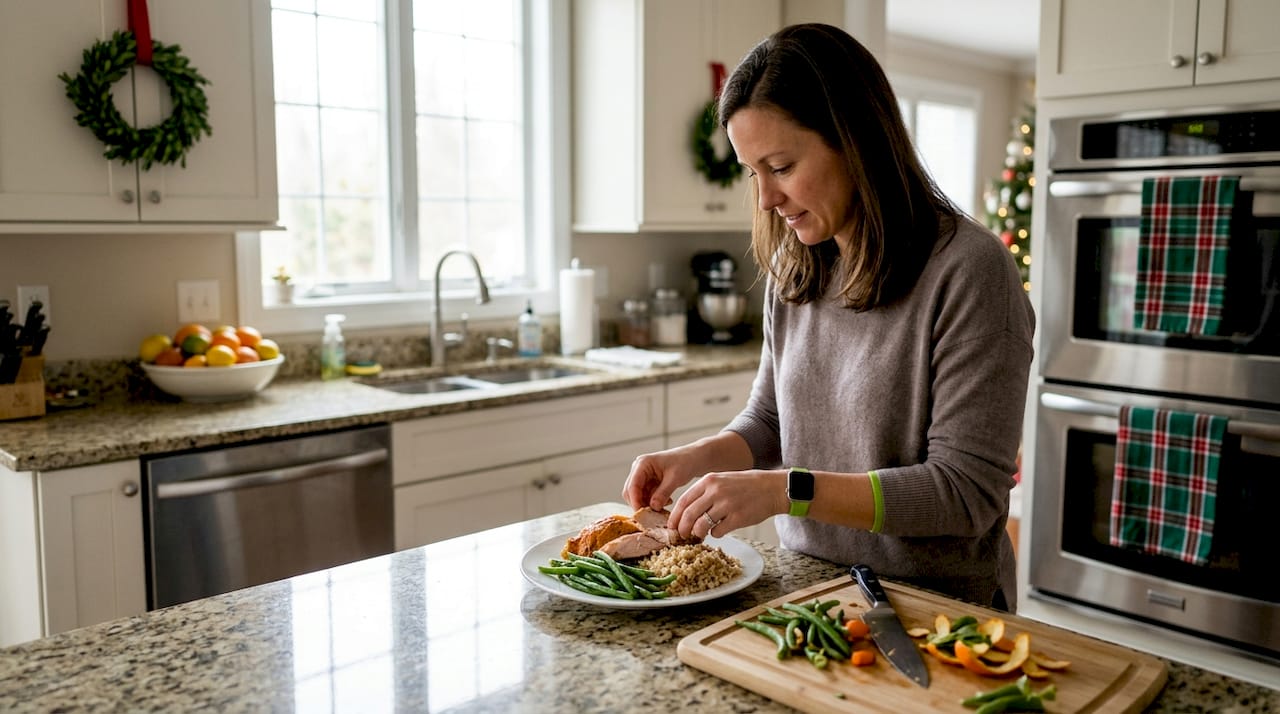
Dietitians consistently agree that evidence-based food choices allow you to enjoy holiday meals fully while supporting your health. The key is building your plate with intention, not restriction.
Simple food swaps that work:
| Traditional choice | Healthier swap | Benefit |
|---|---|---|
| Heavy cream in mashed potatoes | Greek yogurt or blended cottage cheese | More protein, fewer calories |
| Candied yams with marshmallows | Roasted sweet potatoes with cinnamon | Less sugar, more fiber |
| White dinner rolls | Whole grain rolls or sourdough | Better blood sugar response |
| Pecan pie | Pumpkin pie with reduced sugar | Lower fat, more nutrients |
| Soda or juice | Sparkling water with citrus | Zero added sugar |
Beyond swaps, the structure of your plate matters. Aim for:
- Half your plate filled with vegetables, salads, or fruit
- One quarter with lean proteins like turkey, fish, or legumes
- One quarter with grains or starches, preferably whole grain
- Dessert as a conscious choice, not a default
For a broader look at building nutritious food choices into any meal context, there are practical frameworks worth bookmarking year-round.
Pro Tip: Eat a protein-rich snack before a holiday party. Arriving hungry leads to faster eating and less satisfaction. A small snack improves your portion control without willpower alone.
Stay active to balance out indulgence
Eating well is only half the equation. Staying active makes holiday health easier and more enjoyable, and it does not require a gym membership or a rigid workout schedule.
Self-monitoring and physical activity are the two behaviors most consistently linked to avoiding holiday weight gain. Activity does not just burn calories. It regulates stress hormones, improves sleep, and boosts the mood needed to make better food decisions in the first place.
Here is a realistic picture of what movement looks like during the holidays:
| Activity | Duration | Approximate calories burned (150 lb person) |
|---|---|---|
| Brisk walk | 30 minutes | 150 to 180 kcal |
| Dancing at a party | 45 minutes | 200 to 250 kcal |
| Playing with kids or pets | 30 minutes | 120 to 150 kcal |
| Shoveling snow | 20 minutes | 170 to 200 kcal |
| Yoga or stretching | 30 minutes | 90 to 120 kcal |
You do not need to run a 5K after Thanksgiving dinner. You do need to keep moving in whatever form fits your day. A post-meal walk with family serves double duty: it supports digestion and gives you quality time without screens.
- Schedule movement as a social event, not a solo chore
- Use step goals instead of calorie-burn targets for less pressure
- Break activity into 10 to 15 minute chunks if a full session is not realistic
- Make it seasonal: ice skating, hiking, or shoveling all count
Learn more about the benefits of physical activity on your long-term health, and find specific strategies to increase daily activity throughout the holiday season.
Pro Tip: Set a step goal for holiday gathering days specifically. Aiming for 8,000 steps on Thanksgiving or Christmas Day is realistic and measurably offsets a larger meal.
Our take: why holiday eating is more about mindset than food
The nutrition science on holiday eating is clear and encouraging. One meal cannot derail a healthy lifestyle. Patterns, not moments, define your health. But the deeper issue that most advice sidesteps is this: no food swap or tracking tool works if your relationship with food is driven by fear and guilt.
The data is direct: guilt can trigger unhealthy patterns, and one day of indulgence is simply not dangerous. Yet most holiday nutrition content focuses almost entirely on what to eat and what to avoid, as if willpower alone drives health outcomes.
What actually works long-term is building habits you genuinely enjoy and can sustain. That means giving yourself full permission to eat the foods that matter to you culturally and emotionally, without treating every holiday table as a nutritional minefield. Rigid restriction during celebrations tends to backfire, creating stronger cravings and less satisfaction overall.
A more durable approach: identify the two or three holiday foods that bring you the most joy, eat them with full attention and zero guilt, and let the rest of your plate reflect your usual healthy habits. This is not compromise. It is strategy. For a broader framework on applying this approach, revisit evidence-based holiday eating to combine mindset with practical tools.
Want a customized healthy holiday plan?
Knowing the principles is a strong start, but applying them to your specific goals, dietary needs, and lifestyle is where the real change happens. Dietium offers personalized meal plans built around your calorie needs, food preferences, and health targets so you are never guessing what to eat. You can also use Dietium’s nutritional assessments to understand where your diet currently stands and what specific adjustments will have the biggest impact this season. Whether you want to maintain your weight, support your energy, or simply feel better through the holidays, Dietium gives you the data and tools to do it with confidence.
Frequently asked questions
Will I gain permanent weight from one big holiday meal?
No. A single holiday meal does not cause long-term weight gain. Your body processes the excess efficiently and returns to balance within a day or two.
How can I avoid feeling guilty after eating holiday treats?
Recognize that guilt triggers unhealthy patterns more than the food itself does. Practice self-kindness and refocus on balanced habits at your very next meal.
What is the simplest way to track healthy holiday eating?
Weighing yourself consistently two to three times per week is one of the most effective tools. Self-monitoring and activity together are the strongest predictors of avoiding holiday weight gain.
Are there any easy food swaps for healthier holiday plates?
Yes. Swap heavy cream for Greek yogurt, choose roasted vegetables over casseroles loaded with butter, and build your plate around lean proteins like turkey or fish. Small swaps across several meals add up to a meaningful nutritional difference.


