 Skip to content

TL;DR:
- Practical on-the-go eating emphasizes balanced, minimally processed foods with protein, fiber, and healthy fats.
- Preparing and packing healthy snacks in advance supports consistent, nutritious choices amid busy schedules.
- Reading labels carefully helps distinguish nutritious options from heavily processed foods and hidden sugars.
Eating well when your schedule barely leaves room to breathe is one of the most common struggles for professionals and students alike. Between back-to-back meetings, classes, and commutes, nutrition often becomes an afterthought. Yet the food choices you make during those rushed moments directly shape your energy, focus, and long-term health. This guide cuts through the noise and gives you practical, evidence-backed strategies to keep your nutrition on track, no matter how packed your day gets. You’ll find clear frameworks, real food options, and simple habits that actually stick.
Table of Contents
- Understand the basics: What makes on-the-go eating truly healthy?
- Quick-prep and portable options for busy schedules
- Reading labels and choosing the best convenience foods
- Avoiding common pitfalls and building lasting habits
- How to evaluate your on-the-go eating habits and make improvements
- Our take: What most ‘on-the-go’ eating guides miss
- Bring smart nutrition to every day with Dietium
- Frequently asked questions
Key Takeaways
| Point | Details |
|---|---|
| Prioritize balanced plates | Aim for meals and snacks with fruits or vegetables, whole grains, and lean proteins in each bite. |
| Prep portable options ahead | Preparing nutritious snacks in advance helps you avoid unhealthy impulse choices. |
| Read labels for hidden ingredients | Checking for short ingredient lists and minimal added sugars lets you spot genuinely healthy options. |
| Avoid overreliance on ultra-processed foods | Mix in whole foods and homemade snacks to support better energy and sustained health. |
| Self-check and adjust | Tracking your on-the-go food patterns helps you identify and improve your healthy eating habits. |
Understand the basics: What makes on-the-go eating truly healthy?
With the challenge set, let’s examine the building blocks of healthy on-the-go eating. Not all quick meals are created equal, and understanding what separates a genuinely nutritious choice from a convenient but empty one is the first step.
The foundation is balance. The Harvard Healthy Eating Plate recommends filling half your plate with fruits and vegetables, a quarter with whole grains, and a quarter with lean protein. This model works just as well for a packed lunch as it does for a sit-down dinner.
Three nutrients matter most for keeping you full and focused on the move:
- Protein slows digestion and stabilizes blood sugar, reducing energy crashes.
- Fiber from vegetables, legumes, and whole grains promotes satiety and gut health.
- Healthy fats (avocado, nuts, olive oil) support brain function and extend fullness.
Portion control is equally important. Hidden sugars and sodium are everywhere in convenience foods. A single flavored yogurt can contain 20+ grams of added sugar, and a packaged soup can exceed your daily sodium target in one serving. Making smart nutrition choices means reading beyond the front-of-pack claims.
| Nutrient | Why it matters | Daily target (adults) |
|---|---|---|
| Protein | Satiety, muscle repair | 0.8g per kg body weight |
| Fiber | Gut health, fullness | 25-38g |
| Added sugar | Limit for energy stability | Under 25-36g |
| Sodium | Blood pressure control | Under 2,300mg |
Research confirms that reduced high-calorie intake leads to measurable improvements in physical health markers. The data is clear: what you eat on the go matters as much as what you eat at home. For more structured guidance, EatWell tips offer a solid starting point.
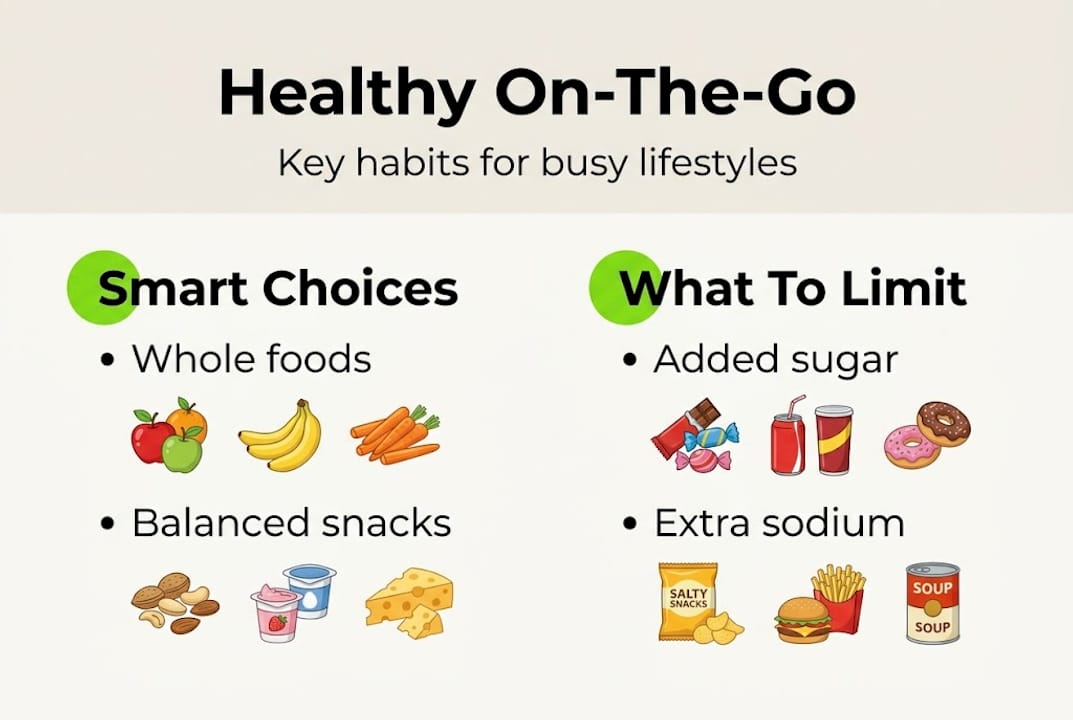
Pro Tip: When scanning packaged foods, look for fewer than five recognizable ingredients and less than 5g of added sugar per serving. Short lists usually mean less processing.
Quick-prep and portable options for busy schedules
Once you grasp the basics, it’s time to explore practical, actionable food choices for busy lifestyles. The good news: you don’t need a full kitchen or an hour of prep time to eat well.
Portable foods that combine protein and fiber are your best allies. Portable snack options like apple with peanut butter, Greek yogurt with berries, nuts and seeds, hard-boiled eggs, veggie sticks with hummus, chia pudding, plain popcorn, string cheese, low-sugar jerky, and rice cakes with nut butter are all effective for sustained energy.
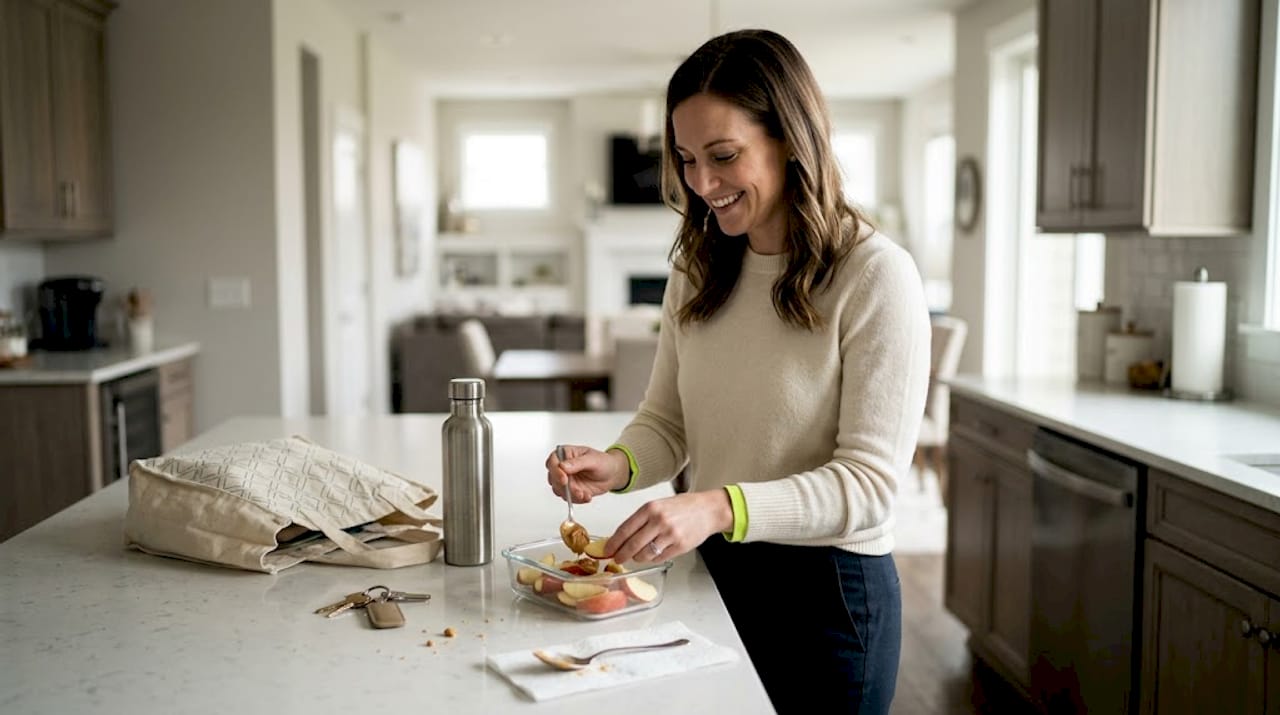
Here’s a quick comparison of top portable options:
| Food option | Prep time | Protein | Fiber | Shelf stable? |
|---|---|---|---|---|
| Greek yogurt + berries | 2 min | High | Medium | No (refrigerate) |
| Apple + peanut butter | 1 min | Medium | High | Yes (short term) |
| Hard-boiled eggs | 10 min (batch) | High | None | No (refrigerate) |
| Trail mix (homemade) | 5 min | Medium | Medium | Yes |
| Veggie sticks + hummus | 5 min | Low-medium | High | No (refrigerate) |
| Rice cakes + nut butter | 1 min | Medium | Low | Yes |
Quick-assembly pairings that work well together:
- Apple slices + almond butter (natural sugar + healthy fat)
- Greek yogurt + mixed berries + a sprinkle of flaxseed
- Rice cakes + sunflower seed butter + banana slices
- Celery sticks + hummus + a handful of walnuts
- Cottage cheese + cherry tomatoes + whole grain crackers
For more ideas to start your day strong, explore high-protein breakfast ideas and a broader range of high-protein snacks suited to every lifestyle.
Homemade trail mix is especially underrated. Combine raw nuts, seeds, a small amount of dark chocolate chips, and dried fruit with no added sugar. It’s shelf-stable, calorie-dense in a good way, and takes five minutes to batch-prep for the week.
Pro Tip: Every Sunday, portion out five to seven snack packs in small containers or zip bags. Having them ready means you’ll never default to a vending machine out of desperation.
Reading labels and choosing the best convenience foods
Even quick, convenient foods can be nutritious if you know what to look for on the label. The label is your most reliable tool, and learning to read it fast is a skill worth building.
Follow these four steps every time you pick up a packaged food:
- Check the ingredient list first. Ingredients are listed by weight. If sugar, refined oil, or an unrecognizable chemical appears in the top three, put it back.
- Review sugar and sodium content. Aim for under 5g added sugar and under 400mg sodium per serving for snacks.
- Watch for artificial additives. Artificial colors, preservatives, and sweeteners are signals of heavy processing.
- Seek whole, recognizable foods. If you can picture the ingredient growing in nature, it’s a good sign.
Ultra-processed foods (UPFs) make up a significant portion of adult diets, but not all UPFs are equally problematic. Plain popcorn and mixed nuts technically qualify as processed, yet they’re far better choices than candy bars or sugary sauces. The real issue is with heavily engineered products designed to override your satiety signals.
Protein bars are a perfect example. Many bars contain candy-level sugar and calories, with long ingredient lists full of syrups and isolates. The guidance is clear: choose bars with fewer than 10 ingredients and low added sugar and saturated fat.
“Choosing minimally processed over ultra-processed is key, but some processed options like Greek yogurt and canned beans are nutrient-rich.”
Beware of misleading labels. Words like “natural,” “clean,” or “wholesome” have no regulated definition. A product labeled “high protein” might still be loaded with sugar. Always go to the nutrition facts panel and ingredient list, not the front of the package. For breakfasts for lasting energy, the same label-reading rules apply. You can also check healthy diet tips for additional guidance on food choices that support overall wellness.
Avoiding common pitfalls and building lasting habits
While convenient options abound, it’s easy to fall into nutritional traps without a solid plan. The most common mistake is treating convenience as a strategy rather than a backup.
Common shortcuts that quietly undermine your nutrition:
- Relying on protein bars as meal replacements day after day
- Skipping meals and then overeating at the next opportunity
- Buying “healthy” packaged snacks in bulk without checking labels
- Defaulting to coffee as a substitute for actual food
- Choosing low-fat products that compensate with added sugar
Building better habits doesn’t require a complete overhaul. Small, consistent changes compound over time:
- Use a hunger scale (1 to 10) and aim to eat at a 7, not a 10
- Plan your snacks the night before, not in the moment
- Rotate three to five staple snacks weekly to prevent boredom
- Keep healthy options visible at your desk, in your bag, or in your car
- Pair a new habit with an existing one (for example, prep snacks while making coffee)
Over-reliance on packaged bars can quietly erode your nutrition quality and reinforce a pattern of reaching for processed options by default. The fix is not perfection. It’s preparation.
The data on students is striking: higher protein intake correlates with better GPA and stronger health outcomes. Nutrition isn’t just about your waistline. It directly affects how well your brain performs under pressure.
“Environmental supports like keeping healthy foods visible and accessible consistently improve dietary choices, even in the short term.”
Pro Tip: Aim to eat when your hunger is at a 7 out of 10. Waiting until you’re at a 10 almost always leads to grabbing whatever is fastest, not whatever is best. For more strategies, explore breakfasts for healthy weight management.
How to evaluate your on-the-go eating habits and make improvements
Maintaining better on-the-go nutrition means checking in on your own habits and making tweaks over time. Self-assessment is not complicated. It just requires honesty and a simple system.
Start with this quick habit check:
| Habit | Frequency (current) | Target frequency |
|---|---|---|
| Choosing whole-food snacks | 2-3x/week | 5-7x/week |
| Reading nutrition labels | Rarely | Every purchase |
| Controlling portion sizes | Sometimes | Consistently |
| Monitoring satiety levels | Never | Daily |
| Prepping snacks in advance | Occasionally | Weekly |
Then follow this simple improvement cycle:
- Set a one-week goal. Pick one specific habit to improve, such as prepping snacks every Sunday.
- Track your choices daily. Use a notes app, a food journal, or a tracking tool to log what you actually eat on the go.
- Adjust one variable at a time. Don’t overhaul everything at once. Change one snack, one meal, or one habit per week.
- Review and repeat. At the end of the week, assess what worked and what didn’t, then build on it.
Interventions that increase healthy food availability and provide clear labeling produce measurable dietary improvements, even in short-term studies. This means your environment matters as much as your willpower. Stock your workspace with nuts, fruit, or whole grain crackers, and you’ll naturally make better choices.
Food journals and tracking food intake with apps add accountability that makes the difference between a good intention and a consistent habit. Even logging three days a week builds awareness faster than going by memory alone.
Our take: What most ‘on-the-go’ eating guides miss
Most guides hand you a list of snacks and call it a day. That’s not enough. The real gap is the environment and the mindset around convenience eating.
Too many busy people treat bars and shakes as a complete nutrition strategy. They’re tools, not solutions. When every meal comes from a wrapper, you miss out on the fiber, micronutrients, and satiety signals that whole foods provide. The fix isn’t eating perfectly. It’s building a small, repeatable system around smart, sustainable nutrition that you can actually maintain.
Habit stacking, keeping healthy foods visible, and doing a weekly five-minute prep session are more powerful than any superfood. Self-monitoring, even casually, keeps you honest without adding stress.
“Convenience doesn’t equal compromise. When you plan ahead, even the busiest days can include nutritious, energy-boosting meals that actually taste good.”
The professionals and students who eat well on the go aren’t the ones with the most discipline. They’re the ones with the best systems.
Bring smart nutrition to every day with Dietium
![cta_image]
Ready to turn healthy eating into an everyday reality? Dietium makes it straightforward. The platform’s AI-powered tools help you track your calorie needs, macros, and body metrics so you always know where you stand. Whether you’re looking for meal planning on a budget or want fully personalized meal plans built around your specific goals, Dietium’s Recipians app delivers practical, ready-to-use options. Stop guessing and start planning with tools designed for real schedules. Explore Dietium today and build the nutrition routine that fits your life, not the other way around.
Frequently asked questions
What are the healthiest snacks for on-the-go?
Nutritious, portable snacks include apple with nut butter, Greek yogurt and berries, veggie sticks with hummus, and homemade trail mixes with nuts and seeds. These options deliver protein, fiber, and healthy fats for sustained satiety and steady energy.
How can I avoid unhealthy choices when I’m too busy to cook?
Prepare snacks in advance, prioritize whole-food options, and read labels to limit added sugars and sodium. Planning ahead consistently beats relying on willpower in the moment.
Are all processed foods bad for you?
No. Some processed foods like canned beans and Greek yogurt are genuinely nutritious. Choose options with simple ingredients and minimal additives rather than avoiding all packaged foods entirely.
Does healthy eating on-the-go really improve energy or performance?
Yes. Studies show that higher protein diets and fewer high-calorie processed foods are linked to better physical health and stronger academic performance in students.
Recommended
- Nutrition for Busy Professionals: Smart, Sustainable Choices – Dietium
- Top time-efficient healthy meals for busy lifestyles – Dietium
- 7 Fast Lunch Ideas for Busy Professionals Worldwide – Dietium
- Healthy travel meal ideas: convenient, nutritious eating – Dietium
- 7 Healthy Snacks for Teeth to Boost Your Smile | Paynless


