 Skip to content

Packing a school lunch sounds simple until you’re standing at the kitchen counter at 7 a.m., staring at a half-empty fridge and a child who suddenly hates everything they liked last week. Most parents know they need to include fruits, vegetables, and protein. But knowing what to pack and actually getting your child to eat it are two very different challenges. Add food safety concerns and allergy management into the mix, and lunchbox prep can feel like a daily obstacle course. This guide cuts through the noise with practical, research-backed strategies that address nutrition, safety, and picky eating all at once.
Table of Contents
- Follow the MyPlate formula for balanced lunches
- Food safety first: Keep lunches fresh and safe
- Winning over picky eaters without losing nutrition
- School lunches vs. packed lunches: What works best?
- A fresh perspective: Redefining lunchbox wins for modern families
- Take the next step: Smarter lunchbox planning and nutrition tools
- Frequently asked questions
Key Takeaways
| Point | Details |
|---|---|
| Use MyPlate for balance | Divide the lunchbox into half fruits and veggies, one-quarter grains, and one-quarter protein for proven nutrition. |
| Prioritize food safety | Always use insulated containers and two cold sources to keep foods at safe temperatures until lunchtime. |
| Engage picky eaters | Consistently offer variety and let kids help select new foods to increase acceptance and nutrition. |
| School lunches boost veggies | Research shows school meals often push vegetable and whole grain intake higher than packed lunches. |
| Personalize your approach | Flexible routines and realistic planning lead to the most consistent healthy lunch habits for families. |
Follow the MyPlate formula for balanced lunches
The simplest way to build a balanced lunchbox is to use the MyPlate model developed by the USDA. Think of the lunchbox as a divided plate: fill half with fruits and vegetables, one quarter with grains (at least half of which should be whole grains), and one quarter with protein. Add a small dairy portion, like a string cheese or low-fat yogurt, and you have a nutritionally solid meal.
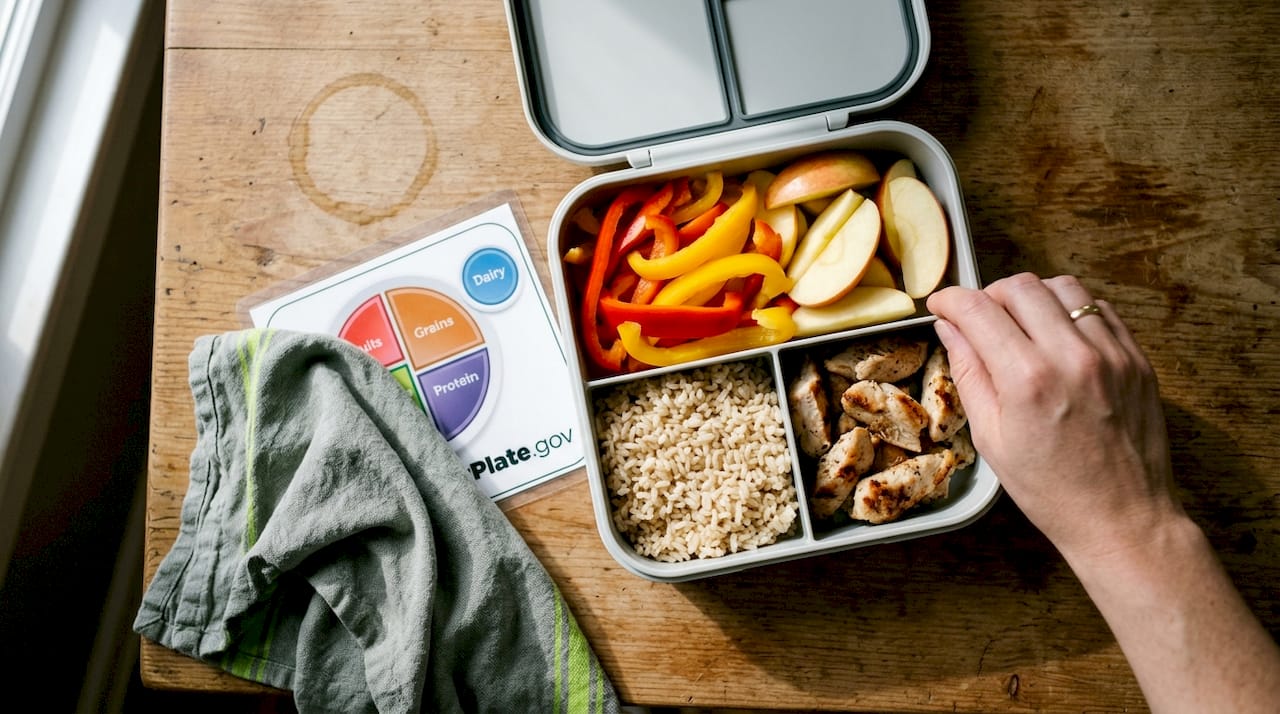
According to CDC healthy eating guidelines, kids need 1.5 to 2 cups of fruits and vegetables daily, yet most fall short of this target. Using MyPlate as your visual guide helps close that gap without complicated calorie counting.
Here are practical food swaps for each MyPlate category:
- Fruits and vegetables (half the lunchbox): Carrot sticks, apple slices, grape halves, cucumber rounds, cherry tomatoes, or snap peas
- Grains (one quarter): Whole grain tortilla wraps, whole wheat bread, brown rice cakes, or oat-based crackers
- Protein (one quarter): Turkey slices, hard-boiled eggs, hummus, black beans, edamame, or nut butter
- Dairy: Low-fat string cheese, plain yogurt with fruit, or a small milk carton
Portion size reference by age group:
| Food group | Ages 4 to 8 | Ages 9 to 13 |
|---|---|---|
| Fruits | 1 to 1.5 cups | 1.5 cups |
| Vegetables | 1.5 cups | 2 cups |
| Grains | 4 to 5 oz | 5 to 6 oz |
| Protein | 3 to 4 oz | 5 oz |
| Dairy | 2.5 cups | 3 cups |
Common pitfalls and quick fixes:
- Too many refined grains: Swap white bread for whole wheat or use a whole grain wrap instead
- Not enough vegetables: Add a small dip like hummus or ranch to encourage eating raw veggies
- Protein gaps: Beans and nut butter count as protein and work well for non-meat eaters
- Fruit overload: Balance sweet fruits with savory options to avoid sugar spikes
For more inspiration, browse quick lunchbox ideas or explore family lunch planning strategies that fit your schedule.
Pro Tip: Every Sunday, wash and portion out vegetables and fruits into small containers. This makes weekday lunch assembly take under five minutes and removes the decision fatigue that leads to less healthy choices.
Food safety first: Keep lunches fresh and safe
Once you know what to pack, keeping it fresh and safe is just as important. The “danger zone” for food temperature is between 40°F and 140°F. In this range, bacteria multiply rapidly, and perishable foods like meat, dairy, and cooked grains can become unsafe within two hours.
The USDA recommends using insulated lunchboxes with at least two cold sources to keep perishable foods below 40°F throughout the school day. A single gel pack often is not enough, especially in warm weather.
Insulated vs. non-insulated containers:
| Feature | Insulated lunchbox | Non-insulated bag |
|---|---|---|
| Temperature control | Maintains cold or hot for 4 to 6 hours | Minimal temperature control |
| Best for | Perishables, hot soups, dairy | Dry snacks, crackers, sealed shelf-stable items |
| Cold sources needed | Two gel packs or one pack plus frozen bottle | Not effective for perishables |
| Daily cleaning required | Yes | Yes |
Step-by-step guide to packing a safe lunch:
- Wash your hands and clean all surfaces before preparing food
- Refrigerate the lunchbox overnight if it contains perishable items
- Use two cold sources: one gel pack and one frozen water bottle
- Pack hot foods in a pre-warmed thermos (fill with boiling water for 5 minutes first, then drain and add food)
- Keep raw proteins separate from ready-to-eat foods using sealed containers
- Remind your child not to leave the lunchbox in a hot locker or sunny area
- Wash and sanitize the lunchbox every evening with warm soapy water
Pro Tip: Fill a thermos with boiling water and let it sit for five minutes before adding hot food like soup or pasta. This pre-warming step keeps food above 140°F for several hours, well outside the danger zone.
For time-saving strategies that also support safe food handling, check out these batch meal prep tips designed for busy parents.
Winning over picky eaters without losing nutrition
But what if you’re packing for a picky or allergy-prone child? Here’s how to keep nutrition up without mealtime battles.
Picky eating is developmentally normal. Children between the ages of 2 and 10 often go through phases of food refusal, and repeated exposure is one of the most evidence-based strategies for expanding their palates. Research consistently shows that children may need to encounter a new food 10 to 15 times before accepting it. The key is low-pressure exposure, not force.
Creative ways to add variety without battles:
- Pack a “tasting flight”: three small portions of different foods in a divided container, including one familiar favorite
- Use fun shapes: a cookie cutter turns a sandwich into a star, which genuinely increases the chance it gets eaten
- Offer dipping sauces: hummus, yogurt dip, or mild guacamole make vegetables more appealing
- Rotate one new item per week alongside two guaranteed favorites
- Use healthy lunch variety ideas to keep the rotation fresh without extra effort
For children with food allergies, the stakes are higher. HealthyChildren.org advises that families should provide a doctor’s Allergy Plan to school staff, enforce no-sharing rules, and check every label carefully, including non-food items like play dough that may contain allergens.
Key insight: Children exposed to a wider variety of foods in small, non-pressured settings show measurable improvements in dietary quality over a single school year. Consistency matters more than perfection.
Pro Tip: Take your child grocery shopping once a week and let them choose one new fruit or vegetable to try. Ownership over the choice dramatically increases the likelihood they will actually eat it.
For a structured approach to feeding selective eaters, the picky eaters lunch guide offers step-by-step meal planning frameworks. You can also find quick healthy lunches that work for even the most selective kids.
School lunches vs. packed lunches: What works best?
Finally, should you pack or rely on school lunches? Here’s how each option stacks up and what research reveals.
A Dutch intervention study published in BMC Medicine found that school-provided healthy lunches increased vegetable intake from 7% to 56% among participating students. By comparison, packed lunches showed only 6% vegetable consumption. School lunches also scored better on whole grain content and reduced sugary drink intake.
Strengths and weaknesses of each approach:
- School lunches: Higher vegetable and whole grain content, regulated nutrition standards, no prep time required, but limited flexibility for allergies or dietary preferences
- Packed lunches: Full control over ingredients, allergy-safe, customizable, but often higher in sodium and sugar and lower in vegetables when not carefully planned
Side-by-side comparison:
| Factor | School lunch | Packed lunch |
|---|---|---|
| Vegetable intake | Higher (up to 56%) | Lower (around 6%) |
| Whole grain content | Regulated by USDA standards | Depends on parent choices |
| Allergy management | Limited flexibility | Full parental control |
| Cost | Subsidized for many families | Variable, often higher |
| Prep time | None | 5 to 20 minutes daily |
| Dietary customization | Low | High |
The best approach for many families is a hybrid. Use school lunches on busy days and supplement with a healthy snack from home, like a piece of fruit or a small bag of nuts. On days when you pack, focus on the MyPlate formula to compensate for any gaps. For simple ideas that support both approaches, explore simple lunch ideas that take under ten minutes to assemble.
The most important factor is consistency. A good-enough lunch eaten every day beats a perfect lunch packed twice a week. Also worth reviewing is school lunch research from Mayo Clinic for additional guidance on making the right call for your child.
A fresh perspective: Redefining lunchbox wins for modern families
Let’s rethink what a successful lunchbox actually means.
There is real pressure on parents to pack elaborate, photogenic lunches that check every nutritional box. Social media amplifies this, making it easy to feel like a failure if your child’s lunch is a turkey wrap and an apple instead of a bento box with color-coded compartments.
But the data tells a different story. Research shows that school-provided lunches often outperform homemade ones on key metrics like vegetable intake and whole grain content. This is not a knock on home cooking. It is a reminder that the goal is consistent nutrition, not culinary performance.
Lowering your own stress around lunchbox prep actually leads to better outcomes. When parents feel less pressured, they stick to routines more reliably, and routine is what drives healthy eating habits in children over time. The family meal success strategies that work best are the ones families actually follow, not the ones that look best online.
Choose what fits your life. Adjust as your child grows. That is a lunchbox win.
Take the next step: Smarter lunchbox planning and nutrition tools
Ready to make healthy lunches easier? Dietium offers practical resources designed for busy families who want real results without the guesswork. The family meal planning tools section gives you structured guides for building balanced weekly lunch menus that your kids will actually eat. If your child has specific dietary needs, explore personalized meal plans tailored to a wide range of health goals and food preferences. You can also use Dietium’s nutritional assessment methods to evaluate whether your current lunchbox choices are meeting your child’s daily nutrient targets. Small adjustments, backed by data, add up to big improvements over a school year.
Frequently asked questions
How can I get my picky eater to try new lunchbox foods?
Offer small portions of new foods alongside favorites and invite your child to help choose new items at the store. Repeated low-pressure exposure, ideally 10 to 15 encounters, is the most effective strategy for expanding food acceptance over time.
What is the safest way to keep packed lunches cold?
Use an insulated lunchbox with two cold sources, such as a gel pack and a frozen water bottle, to keep food below 40°F throughout the school day. Refrigerate the packed lunchbox overnight whenever possible.
Are school lunches healthier than packed lunches?
Recent studies show school lunches often include more vegetables and whole grains than the average packed lunch. A BMC Medicine study found vegetable consumption jumped from 7% to 56% with school-provided meals.
How do I manage allergies in school lunches?
Check all food labels, notify the school of your child’s Allergy Plan, and teach your child not to share food. The HealthyChildren.org allergy guide recommends training school staff and reviewing ingredient lists for hidden allergens in unexpected products.


