 Skip to content

TL;DR:
- Core strength stabilizes the trunk, pelvis, and hips, vital for injury prevention and efficient movement. Consistent training for eight or more weeks significantly improves pain, stability, and athletic performance, especially with high adherence. Most exercises should focus on deep stabilizers, like planks, rather than only visible abdominal muscles, for lasting functional benefits.
Core strength is defined as the combined muscular support of the trunk, pelvis, and hips that stabilizes the body during movement and at rest. Most people associate it with visible abdominal muscles, but the clinical term “core stability” captures what actually matters: the ability to control spinal position and transfer force efficiently between your upper and lower body. Harvard Health describes the core as the central link between upper and lower body, and notes that strengthening it helps prevent falls and injuries, especially as you age. Whether you lift weights, run, sit at a desk for eight hours, or chase toddlers, your core is working. The question is whether it’s working well enough to protect you.
Why core strength matters for everyday movement
A strong core does far more than support athletic performance. It stabilizes your body during the most ordinary actions: bending to pick something up, twisting to reach a shelf, or simply standing still for an extended period. Without adequate core stability, your spine absorbs forces it was never designed to handle alone, which accelerates wear and increases injury risk.
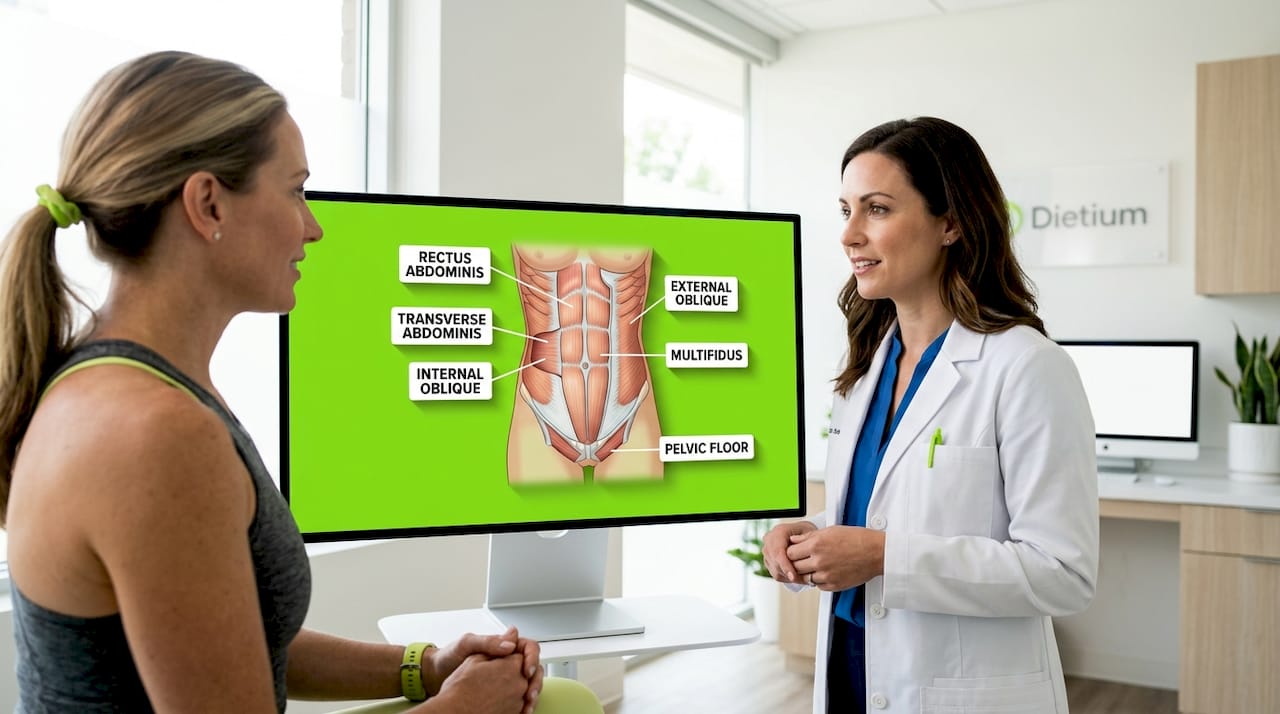
Research on core stability confirms that it directly improves dynamic balance and postural control, two factors that determine how well you move and how safely you recover when you lose your footing. For older adults, this connection is especially significant. Exercises for elderly people that target core stability have been shown to reduce fall risk and improve mobility in adults over 60, a population where a single fall can trigger a cascade of health complications.
The activities that benefit most from a well-trained core include:
- Running and cycling: Core endurance maintains upright posture and reduces energy waste from excessive trunk sway.
- Overhead lifting: A stable core transfers force from the legs through the torso to the arms without energy leakage.
- Swimming: Rotational power in freestyle and butterfly strokes originates from the trunk, not the shoulders.
- Desk work and driving: Sustained sitting loads the lumbar spine; core activation reduces that compressive stress.
- Carrying groceries or a backpack: Asymmetric loads challenge lateral stability, which a trained core manages automatically.
Pro Tip: If you find yourself leaning to one side when carrying a bag, that’s a real-time signal of lateral core weakness. Single-leg standing exercises like the suitcase carry directly address this imbalance.
What does science say about core training and back pain?
Low back pain affects a substantial portion of the global population, and core muscle training is one of the most studied interventions for managing it. A 2026 meta-analysis published in Frontiers in Medicine found significant pain reduction (SMD = −0.56) and functional improvement (SMD = −0.81) from core training in people with chronic non-specific low back pain. These are clinically meaningful effect sizes, not marginal improvements.
Duration matters more than most people realize. The same research confirmed that interventions lasting eight weeks or longer produced the most consistent results. Short-term programs of two to four weeks showed weaker and less stable outcomes. This means the popular “30-day core challenge” approach is unlikely to deliver lasting relief for anyone dealing with chronic back issues.
The table below compares outcomes based on training duration and adherence level:
| Training condition | Pain reduction (SMD) | Functional improvement |
|---|---|---|
| High adherence, 8+ weeks | Up to −1.98 | Significant and sustained |
| Moderate adherence, 8+ weeks | Moderate effect | Partial improvement |
| Short duration (under 8 weeks) | Minimal to moderate | Inconsistent |
| Low adherence, any duration | Negligible | Unreliable |
A separate 2026 systematic review in Frontiers in Physiology showed that high adherence to ACSM guidelines produced a pooled pain reduction SMD of −1.98, compared to much weaker effects when adherence was uncertain. That gap is enormous. It tells you that how consistently you train matters more than which specific exercises you choose.
The mechanism behind these results involves motor control and load distribution. A well-trained core improves the timing and coordination of muscle activation, so the spine is protected before stress arrives, not after. This is called feed-forward activation, and it’s the difference between a core that reacts to injury and one that prevents it.
Pro Tip: Combine core training with one adjunct therapy, such as manual therapy or cognitive behavioral strategies, for better outcomes. The Frontiers in Medicine meta-analysis found that multimodal approaches produced more stable functional improvements than single-modality training alone.
How core strength benefits athletes and specific populations
The benefits of core stability extend well beyond back pain management. For athletes, the core functions as the kinetic chain’s control center, linking ground reaction forces to upper-body output. A 2026 study published in Scientific Reports found that overhead athletes with scapular dyskinesis showed reduced core muscle activation during plank and push-up tasks, with effect sizes of d = 0.81 to 0.88. This is a striking finding. It means that shoulder dysfunction in athletes like baseball pitchers, volleyball players, and swimmers is often rooted in core endurance deficits, not just shoulder mechanics.
This is where the concept of neuromuscular timing becomes critical. Assessment tools like the McGill Core Endurance Test and EMG analyses reveal endurance and activation deficits that are not visible through strength measures alone. An athlete can appear strong in isolation tests yet still show poor core activation timing during dynamic tasks. That gap between visible strength and functional stability is where many sports injuries originate.
Core training also delivers measurable benefits for postpartum women dealing with lumbopelvic pain, a condition that is frequently undertreated. A 2026 meta-analysis found that core stabilization exercises produced pain reduction (SMD = −0.80), disability improvement (SMD = −0.85), and quality of life gains (SMD = 0.44) in this population. Notably, improvements in pain and disability did not always correlate with measurable changes in core muscle contractility, which reinforces the importance of tracking functional outcomes rather than relying solely on strength metrics.
Across all populations, the core stability advantages that matter most include:
- Injury prevention: Proper load distribution reduces stress on the lumbar spine, knees, and shoulders.
- Endurance: A stable trunk reduces compensatory movement patterns that drain energy during prolonged activity.
- Rehabilitation: Core training accelerates recovery from musculoskeletal injuries by restoring neuromuscular coordination. Functional fitness workouts that integrate core work are a standard component of modern rehabilitation protocols.
- Postpartum recovery: Targeted core stabilization restores pelvic floor and trunk function after childbirth.
- Aging populations: Core strength reduces fall risk and supports independent mobility well into later life.
How to build core strength that actually lasts
Effective core training is not about doing the most exercises or the hardest ones. It’s about choosing the right exercises, performing them with proper form, and sticking to a program long enough for adaptation to occur.
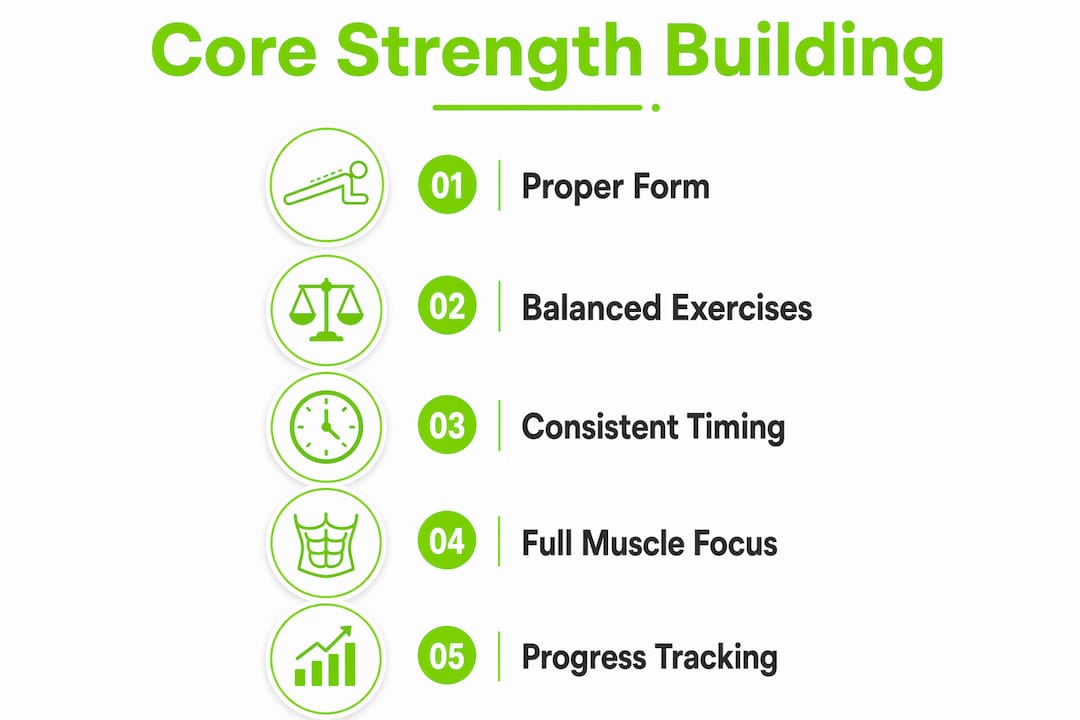
Harvard Health identifies planks over sit-ups as the preferred approach because planks engage a balanced set of core muscles without placing compressive stress on the lumbar spine. Sit-ups, by contrast, heavily recruit the hip flexors and can aggravate lower back discomfort in people who already have spinal issues. This does not mean sit-ups are universally harmful, but planks offer a better risk-to-benefit ratio for most people.
Here is a practical progression for building core strength over eight or more weeks:
- Weeks 1 to 2: Master the dead bug and forearm plank. Focus on breathing and neutral spine position. Hold planks for 20 to 30 seconds with perfect form rather than pushing duration prematurely.
- Weeks 3 to 4: Add the bird dog and side plank. These introduce anti-rotation and lateral stability demands that the basic plank does not address.
- Weeks 5 to 6: Introduce the pallof press and single-leg variations. These exercises train the core under load and in positions that mirror real-life movement patterns.
- Weeks 7 to 8 and beyond: Progress to loaded carries, cable rotations, and compound lifts with deliberate core bracing. At this stage, core training integrates with strength training basics rather than remaining a separate practice.
Avoid the common mistake of training only the visible abdominal muscles. The transverse abdominis, multifidus, and quadratus lumborum are deeper stabilizers that rarely get targeted by crunches or sit-ups, yet they are the muscles most responsible for spinal protection. Balanced engagement across all core layers is what produces functional stability.
Pro Tip: Track your plank hold time and bird dog repetitions weekly. Consistent progress in these two markers is a reliable indicator that your core endurance is improving, even before you notice changes in posture or pain levels. Dietium’s fitness tracking tools make it easy to log these metrics and spot trends over time.
Key takeaways
Core stability is the foundation of injury-free movement, and sustained training of eight or more weeks with high adherence produces the most significant and lasting improvements in pain, function, and performance.
| Point | Details |
|---|---|
| Core stability defined | Core strength stabilizes the trunk, pelvis, and hips to protect the spine during all movement. |
| Back pain relief requires time | Interventions lasting 8+ weeks with high adherence produce the largest pain and function improvements. |
| Athletes need core endurance | Overhead athletes with scapular dyskinesis show measurable core activation deficits linked to injury risk. |
| Planks beat sit-ups | Planks engage balanced core muscles without lumbar compression, making them the preferred training tool. |
| Postpartum benefits are real | Core stabilization exercises significantly reduce pain and disability in postpartum women with lumbopelvic pain. |
Why I think most people are training their core wrong
I’ve observed a consistent pattern among fitness-focused individuals: they train their core for appearance, not function. The goal becomes a flatter stomach or visible abs, so the training defaults to crunches, leg raises, and sit-ups. These exercises do produce some muscular development, but they miss the deeper stabilizers that actually protect your spine and improve your movement quality.
What I find more telling is the research on neuromuscular timing. You can have a visually strong core and still show poor activation patterns under dynamic load. That’s not a failure of effort. It’s a failure of exercise selection. The McGill Core Endurance Test reveals deficits that no mirror assessment can catch.
Early core training can produce noticeable posture improvements within as little as two weeks, which is encouraging. But the deeper functional changes, the ones that prevent injury and improve athletic output, take eight weeks or more of consistent, well-structured work. The readers who get the most out of core training are the ones who stop chasing aesthetics and start tracking functional markers: plank endurance, balance under load, and pain-free range of motion.
My advice is to treat core training as a permanent part of your fitness routine, not a phase you cycle through. Integrate it with your broader health goals, fuel it with adequate protein and recovery nutrition, and measure progress by how you move, not how you look.
— Srasti
Fuel your core training with the right nutrition and tracking
A strong core program only delivers full results when your nutrition and recovery keep pace with your training demands. Dietium’s personalized diet plans are built around your specific fitness goals, whether that’s reducing back pain, improving athletic performance, or building functional strength. The Recipians app pairs custom meal plans with fitness routines, so your macros and calorie targets align with your training load. You can also use Dietium’s fitness tracking tools to monitor your core training adherence over time, the single factor research identifies as the strongest predictor of lasting improvement.
FAQ
What muscles make up the core?
The core includes the rectus abdominis, transverse abdominis, obliques, multifidus, erector spinae, and pelvic floor muscles. The deeper stabilizers like the transverse abdominis and multifidus are the most critical for spinal protection and injury prevention.
How long does it take to see results from core training?
Postural improvements can appear within two weeks of consistent core work. Significant pain reduction and functional gains, particularly for low back pain, require at least eight weeks of high-adherence training according to 2026 meta-analysis data.
Are planks better than sit-ups for core strength?
Yes. Harvard Health identifies planks as the preferred core exercise because they engage a balanced set of core muscles without placing compressive stress on the lumbar spine, which sit-ups can aggravate.
Can core training help with back pain?
Core muscle training produces significant pain reduction (SMD = −0.56) and functional improvement (SMD = −0.81) in people with chronic non-specific low back pain, based on a 2026 Frontiers in Medicine meta-analysis.
Does core strength matter for athletes specifically?
Overhead athletes with scapular dyskinesis show measurably lower core endurance and reduced muscle activation during standard tasks, with effect sizes of d = 0.81 to 0.88. This confirms that core stability is a direct factor in athletic injury risk and performance capacity.


