 Skip to content

TL;DR:
- Intermittent fasting alternates between eating and fasting periods to support weight management and metabolic health. It primarily focuses on when you eat, with methods like 16/8 and 5:2, and offers benefits such as weight loss, improved metabolic markers, and cognitive clarity. However, it requires careful planning, medical supervision for some populations, and consistent adherence to maximize safety and results.
Intermittent fasting is an eating pattern that alternates between eating and fasting periods to support weight management and metabolic health. Unlike most diets, it focuses on when you eat, not what you eat. The two most recognized approaches are the 16/8 method (eating within an 8-hour window) and the 5:2 method (two low-calorie days per week). Johns Hopkins neuroscientist Mark Mattson identifies metabolic switching as the core mechanism: once your body depletes its glucose stores, it shifts to burning fat for fuel. This intermittent fasting guide covers every method, the science behind the benefits, who should be cautious, and exactly how to start.
What are the main intermittent fasting methods?
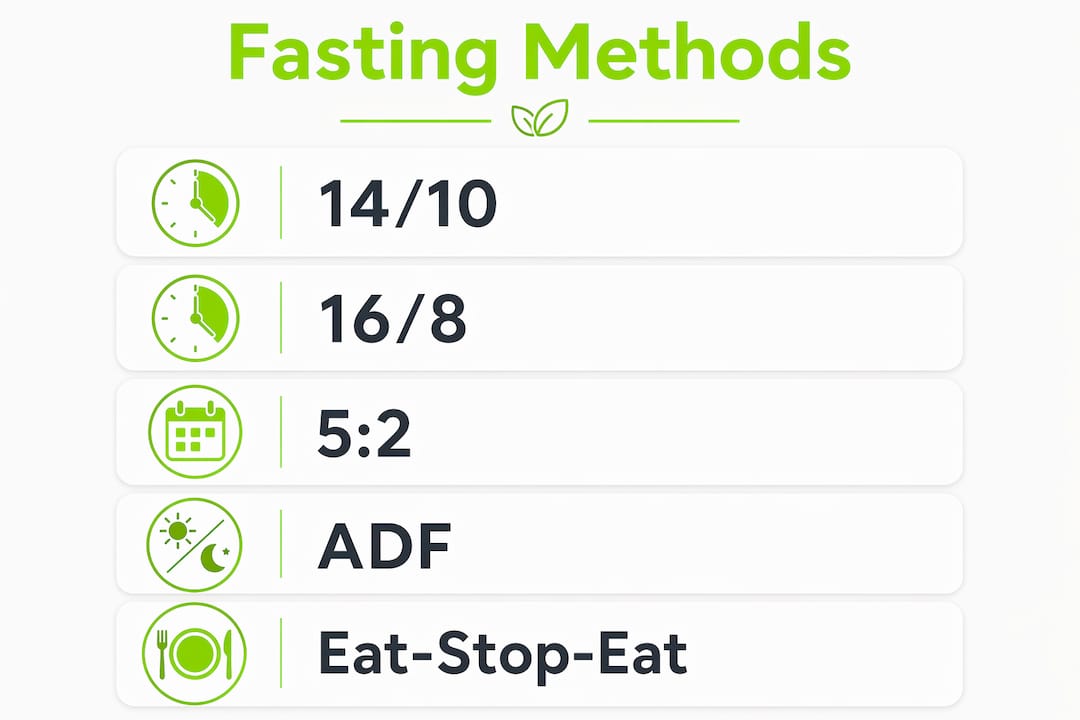
Time-restricted eating, alternate-day fasting, and 5:2 fasting are the three primary categories of intermittent fasting, each with different fasting durations and calorie rules. Choosing the right one depends on your schedule, lifestyle, and how your body responds to extended fasting periods.
Time-restricted eating (TRE) is the most popular entry point. The 16/8 method limits eating to an 8-hour window each day, while the 14/10 method offers a slightly wider 10-hour window. Most people skip breakfast and eat between noon and 8 p.m. This approach fits naturally into a standard workday routine and requires no calorie counting.
The 5:2 method involves eating normally five days per week and restricting calories to around 500 to 600 on two non-consecutive days. It does not require daily fasting, which many people find easier to sustain socially. The trade-off is that low-calorie days can feel difficult, especially for active individuals.
Alternate-day fasting (ADF) and eat-stop-eat represent more aggressive approaches. ADF alternates between regular eating days and fasting or very low-calorie days. Eat-stop-eat involves one or two complete 24-hour fasts per week. Both methods produce faster results but carry higher dropout rates due to hunger and fatigue.
| Method | Eating window | Fasting period | Calorie limit | Difficulty |
|---|---|---|---|---|
| 16/8 TRE | 8 hours daily | 16 hours | None | Low |
| 14/10 TRE | 10 hours daily | 14 hours | None | Very low |
| 5:2 | 5 normal days | 2 days/week | 500–600 kcal | Moderate |
| Alternate-day fasting | Every other day | Every other day | ~500 kcal | High |
| Eat-stop-eat | 5–6 days/week | 24 hours, 1–2x/week | None on fast days | High |
Pro Tip: Start with the 14/10 method for two weeks before moving to 16/8. The gradual shift reduces hunger-related dropout and lets your body adapt to fat metabolism without the shock of a full 16-hour fast.
What are the proven benefits of intermittent fasting?
Intermittent fasting produces measurable improvements in weight, metabolic markers, and cognitive function, though most clinical evidence comes from trials under 12 months. The benefits are real, but the degree varies by method, adherence, and individual biology.

Weight loss is the most documented outcome. Weight loss averages 0.5 to 1.0 lb per week with intermittent fasting, driven primarily by calorie restriction rather than any unique metabolic effect. A 2026 randomized trial found that time-restricted eating produces about 3.86% body weight loss and measurably alters hunger hormones, which helps explain why adherence improves over time for many participants.
Beyond weight, the metabolic benefits are significant. Intermittent fasting improves blood pressure, blood sugar, inflammation, and cognitive function, according to Cleveland Clinic research. Improved insulin sensitivity is particularly relevant for people managing prediabetes or metabolic syndrome. Lower systemic inflammation also connects to reduced risk factors for cardiovascular disease.
Cognitive benefits are less publicized but worth noting. Several studies report improvements in memory and concentration during fasting periods, likely linked to the metabolic switch from glucose to ketone-based fuel. Ketones are a more efficient energy source for the brain, which may explain the mental clarity many fasters report after the initial adaptation period.
“Most trials are under 12 months, so long-term effects remain less understood. Sustaining adherence is the single biggest predictor of success.” — Harvard Health
The honest limitation of the current research is that most trials are short-term and rely on self-reported dietary data. Results also depend heavily on what you eat during your eating window. Compressing your nutrition into fewer meals without planning leads to fatigue and rebound overeating, which erases the calorie deficit that drives results.
Who should be cautious about intermittent fasting?
Intermittent fasting is not appropriate for everyone, and certain populations face real medical risks without professional supervision. Knowing where you fall on this spectrum before you start is non-negotiable.
-
People with diabetes. Fasting can trigger hypoglycemia or dangerous blood sugar spikes in people with type 1 or type 2 diabetes, especially those on insulin or sulfonylureas. NHS diabetes specialists recommend adjusting medication timing and monitoring blood glucose closely before and during any fasting protocol. Reviewing your blood sugar management strategy with a clinician first is critical.
-
Pregnant and breastfeeding women. Calorie and nutrient demands increase significantly during pregnancy and lactation. Fasting is not recommended for pregnant or breastfeeding women, children, or teenagers without direct medical supervision.
-
People with a history of eating disorders. Structured restriction schedules can reinforce disordered thinking around food. Anyone with a history of anorexia, bulimia, or binge eating disorder should consult a registered dietitian before attempting any fasting protocol.
-
People on certain medications. Heart medications, blood pressure drugs, and some antidepressants require food for proper absorption or to prevent side effects. Fasting can alter how these drugs work in your system.
-
People with chronic fatigue or adrenal issues. Extended fasting periods can worsen cortisol dysregulation, leading to increased fatigue, dizziness, and irritability. These symptoms are common in the first week for most beginners but persistent symptoms signal a mismatch between the protocol and your physiology.
Pro Tip: Before starting any fasting protocol, bring a printed summary of your current medications to your doctor. Ask specifically whether fasting affects absorption timing or dosage requirements for each one.
How to start intermittent fasting: meal planning and hydration
Starting intermittent fasting successfully comes down to three factors: choosing the right window, planning your meals to cover your nutritional needs, and managing hydration during fasting hours.
Ease into your fasting window gradually. If you currently eat breakfast at 7 a.m. and finish dinner by 9 p.m., you are already fasting for 10 hours overnight. Shifting your first meal to 9 a.m. and finishing by 7 p.m. creates a 14-hour fast with minimal disruption. Move to 16/8 only after two to three weeks at 14/10.
Build nutrient-dense meals within your eating window. Short eating windows make it harder to consume adequate protein, fiber, and micronutrients, which causes fatigue and rebound overeating. Prioritize lean proteins (chicken, eggs, legumes), high-fiber carbohydrates (oats, sweet potatoes, vegetables), and healthy fats (avocado, olive oil, nuts) at every meal. A structured meal planning approach prevents the nutritional gaps that derail most beginners.
Hydration during fasting hours is non-negotiable. Water, black coffee, and unsweetened tea are the approved zero-calorie beverages that keep you in a fasted state. Sparkling water works too. Avoid flavored drinks, creamers, or anything with calories. Consistent hydration reduces hunger signals and prevents the headaches that many beginners mistake for fasting side effects. For a detailed breakdown of what breaks a fast, Dietium’s guide on drinking tea while fasting covers every common beverage question.
- Drink at least 2 to 3 liters of water daily, spread across both fasting and eating hours
- Black coffee before noon is effective for suppressing morning hunger during the adaptation phase
- Herbal teas (peppermint, chamomile) work well in the evening to reduce late-night cravings
- Avoid diet sodas during fasting windows; artificial sweeteners trigger insulin responses in some individuals
- Meal prep on Sundays to avoid impulsive eating when your window opens. Dietium’s meal prep tips are built specifically for this scenario
Pro Tip: Set a phone alarm for both the start and end of your eating window for the first two weeks. Consistency in timing is what triggers the metabolic adaptation that makes fasting easier over time.
Key takeaways
Intermittent fasting works best when you match the method to your lifestyle, plan your meals to cover full nutritional needs, and maintain consistent fasting windows to drive metabolic adaptation.
| Point | Details |
|---|---|
| Method selection matters | Start with 14/10 TRE before advancing to 16/8 or 5:2 for better adherence. |
| Weight loss is calorie-driven | Average loss is 0.5 to 1.0 lb per week; meal quality inside the window determines results. |
| Medical clearance is required | Diabetes, pregnancy, and eating disorder history all require professional supervision before starting. |
| Hydration supports fasting | Water, black coffee, and unsweetened tea maintain the fasted state and reduce hunger. |
| Consistency drives adaptation | Fixed eating and fasting windows are what trigger and sustain metabolic switching. |
What I’ve learned after years of tracking fasting outcomes
The most common mistake people make with intermittent fasting is treating it as a shortcut rather than a structure. They pick 16/8 on day one, eat whatever fits in the window, and wonder why results stall after three weeks. The fasting window is only half the equation. What you put in that window determines whether you are building a sustainable metabolic habit or just skipping breakfast.
What I have found consistently is that people who track more than just weight see better long-term outcomes. Blood glucose trends, energy levels at specific hours, sleep quality, and hunger patterns all tell you whether your protocol is working or needs adjustment. Dietium’s calculators and tracking tools exist precisely for this reason: to give you data beyond the scale.
The science is also still catching up. Most trials run under 12 months, and the research on long-term effects beyond weight loss is genuinely incomplete. That is not a reason to avoid fasting. It is a reason to stay curious, stay in contact with your healthcare provider, and adjust your approach as new evidence emerges. Fasting is not a fixed protocol. It is a framework you refine over time.
One more thing worth saying directly: if you have diabetes, do not start fasting based on an article alone. The carb counting and insulin management considerations for fasting with diabetes are specific enough that a clinician’s input is not optional. It is the difference between a beneficial protocol and a dangerous one.
— Srasti
How Dietium helps you build a fasting plan that actually works
Intermittent fasting produces real results when your eating window is built around your specific nutritional needs, not a generic template. Dietium’s personalized diet planning tools calculate your calorie needs, macros, and meal timing based on your body metrics and health goals. The Recipians app generates meal plans that fit your fasting window, whether you are following 16/8 or 5:2, and adjusts recipes based on your dietary preferences. For anyone managing blood sugar or working toward specific weight targets, Dietium’s personalized meal plans provide the structure that turns a fasting schedule into a sustainable nutrition strategy.
FAQ
What is intermittent fasting in simple terms?
Intermittent fasting is an eating pattern that cycles between set periods of eating and fasting. It focuses on when you eat rather than restricting specific foods.
Which intermittent fasting method is best for beginners?
The 14/10 method is the most beginner-friendly approach, requiring only a 14-hour overnight fast with a 10-hour eating window. It requires no calorie counting and fits most daily schedules without major disruption.
How much weight can you lose with intermittent fasting?
Weight loss with intermittent fasting averages 0.5 to 1.0 lb per week, with results depending on meal quality, adherence, and the specific method used.
Can you drink coffee while fasting?
Yes. Black coffee contains no calories and does not break a fast. Cleveland Clinic confirms that water, black coffee, and unsweetened tea are all safe during fasting windows.
Is intermittent fasting safe for people with diabetes?
Not without medical supervision. Fasting can cause hypoglycemia or blood sugar spikes in people with diabetes, particularly those on insulin. A clinician should review your medication schedule before you begin any fasting protocol.


