 Skip to content

TL;DR:
- A study shows that diets rich in minimally processed foods lead to greater weight loss and reduced cravings, even when calorie intake is unchanged. Eating closer to natural, unprocessed foods enhances health by improving heart markers, supporting healthy aging, and preventing chronic diseases. Success relies on gradual additions of whole foods, practical meal swaps, and flexible planning that fits real-life routines.
Two people eat the same number of calories every day for two weeks. One eats mostly whole, minimally processed foods. The other eats packaged, ultra-processed meals. The results are not even close. Recent clinical research found that participants on minimally processed food diets lost significantly more weight and improved cravings, even at the same calorie level compared to those on ultra-processed diets. That single finding changes everything you thought you knew about weight management and food quality.
Table of Contents
- What exactly is a whole food diet?
- How whole food diets impact your health
- What does a whole food meal look like?
- Common challenges and real-world solutions
- What most guides get wrong about whole food diets
- Ready to make whole food eating easier?
- Frequently asked questions
Key Takeaways
| Point | Details |
|---|---|
| Whole foods defined | A whole food diet focuses on foods close to their natural state with minimal processing. |
| Real health benefits | Increasing whole foods can boost weight loss, heart health, and support healthy aging. |
| Flexible, not rigid | You don’t need to eat perfectly; gradual, consistent changes drive long-term results. |
| Overcome obstacles | Budget, prep, and social challenges can be managed with practical planning and swaps. |
| Start small | Swapping processed snacks for whole foods and reading labels are easy first steps. |
What exactly is a whole food diet?
A whole food diet is not a trendy meal plan with strict rules and a 30-day expiration date. It is a practical, flexible approach to eating that prioritizes foods close to their natural state. Think fresh vegetables, whole grains, legumes, fruits, nuts, seeds, and unprocessed meats and fish. As Medical News Today explains, a whole food diet prioritizes minimally processed or unprocessed foods close to their natural state.
The philosophy is straightforward: the less a food is altered from its original form, the more nutritional value it retains. An apple delivers fiber, antioxidants, and natural sugars. Apple-flavored candy delivers sugar, artificial color, and almost nothing else. Both are “food,” but they could not be more different in terms of what they do to your body.
“It is not a rigid diet plan but a flexible eating pattern emphasizing nutrient-dense foods.” — Harvard Health
What’s in, what’s out
Understanding whole food diet benefits starts with knowing what actually qualifies. Here is a quick breakdown:
| Whole foods (eat freely) | Minimally processed (acceptable) | Ultra-processed (minimize) |
|---|---|---|
| Fresh fruits and vegetables | Plain yogurt | Chips and crackers |
| Whole grains (oats, brown rice) | Canned beans (no added salt) | Packaged cookies and pastries |
| Legumes (lentils, chickpeas) | Frozen vegetables (no sauce) | Sugary cereals |
| Nuts and seeds | Whole grain bread (short ingredient list) | Fast food items |
| Eggs, fish, lean meats | Olive oil, vinegar | Flavored instant noodles |
The key distinction is processing level. Frozen plain spinach is still a whole food. Spinach dip in a can with 20 added ingredients is not. Your nutrient density guide is a useful reference for understanding which foods pack the most nutritional value per calorie.
A whole food diet also supports foods for digestive health, since fiber-rich whole foods feed beneficial gut bacteria and improve digestion naturally.
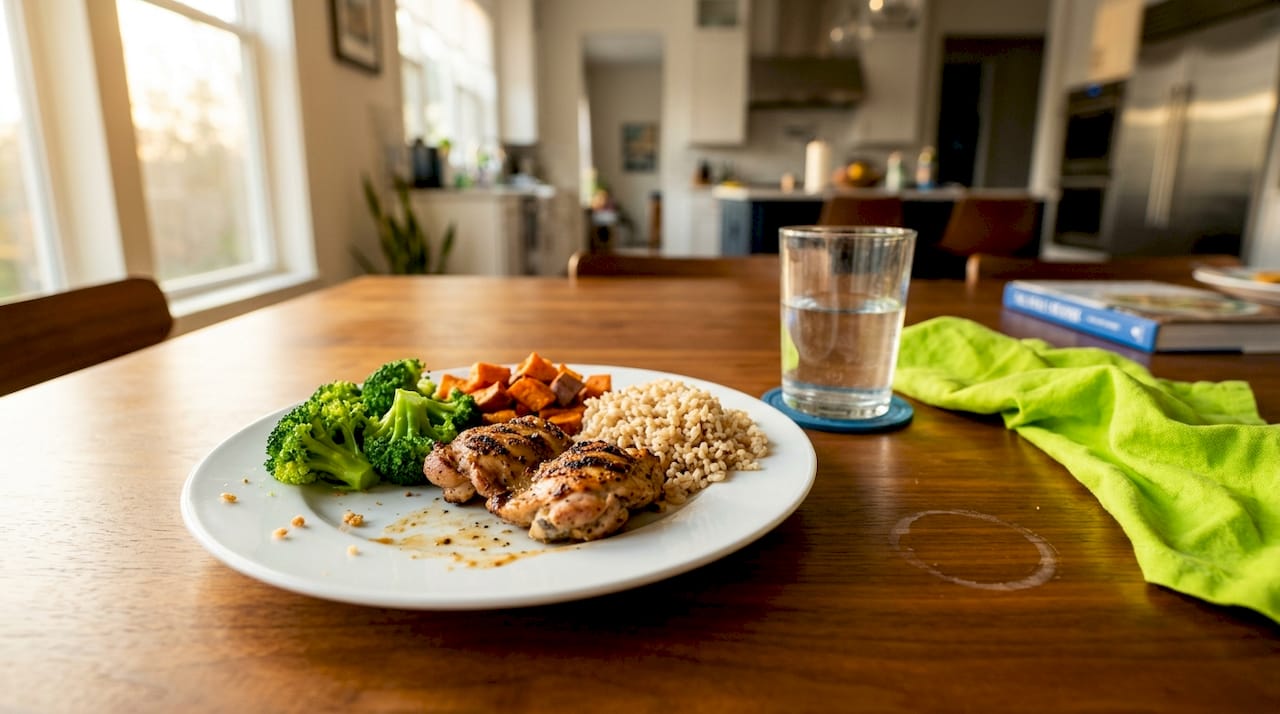
What makes this approach accessible is its flexibility. You do not have to eat 100% whole foods every single meal. The goal is to shift the majority of your diet toward higher-quality, less-processed choices over time.
How whole food diets impact your health
The evidence backing whole food diets is substantial. This is not wellness marketing. These are measurable, reproducible outcomes studied across thousands of participants. Let’s look at the specific areas where your health improves most.
Weight loss and body composition
MPF diets (minimally processed food diets) produced more weight and fat loss while reducing cravings, independent of calorie intake. That phrase “independent of calorie intake” is critical. It means that food quality, not just quantity, directly influences how your body responds to what you eat.
Why does this happen? Whole foods contain a complex structure called the food matrix, which refers to how nutrients, fiber, and compounds are organized within the food itself. This matrix slows digestion, stabilizes blood sugar, and triggers hormonal satiety signals. Ultra-processed foods, stripped of their natural structure, bypass these systems entirely and make overeating almost effortless.
Pro Tip: If you struggle with portion control, start by adding more fiber-rich whole foods to each meal before worrying about cutting anything out. Fullness comes naturally when the food matrix is intact.
Heart health and blood pressure
Whole food dietary patterns improved blood pressure, cholesterol, and indicators of vascular health. This includes lower LDL (bad cholesterol), higher HDL (good cholesterol), and reduced arterial stiffness. These are not small improvements. They are the same markers doctors track when managing cardiovascular disease risk.
Research on dietary patterns and heart health consistently shows that diets built around plants, whole grains, and lean proteins outperform low-fat or low-carb diets that still rely on processed products. The combination of fiber, antioxidants, and healthy fats found in whole foods works together to protect your cardiovascular system.
Healthy aging and chronic disease prevention
Eating more whole foods improved odds of healthy aging to 70 and beyond, free of chronic disease. This is a compelling stat. Reaching your 70s without diabetes, heart disease, or cognitive decline is not purely genetic luck. Diet plays a major role, and whole food eating is one of the most consistent dietary predictors of long-term health.
Key wellness benefits backed by research include:
- Reduced risk of type 2 diabetes through better blood sugar regulation
- Lower inflammation markers linked to arthritis, cancer, and heart disease
- Improved gut microbiome diversity from prebiotic fiber in vegetables and legumes
- Better cognitive function associated with Mediterranean and whole food dietary patterns
- Sustained energy levels without the blood sugar spikes and crashes from processed foods
Understanding nutrient density explains why these benefits occur. Foods with high nutrient density deliver vitamins, minerals, and phytonutrients that support cellular repair, immune function, and hormonal balance simultaneously.
What does a whole food meal look like?
Theory is useful. But most people need to see what this actually looks like on a plate before they can take action. Here is a practical breakdown of meals that fit a whole food approach.
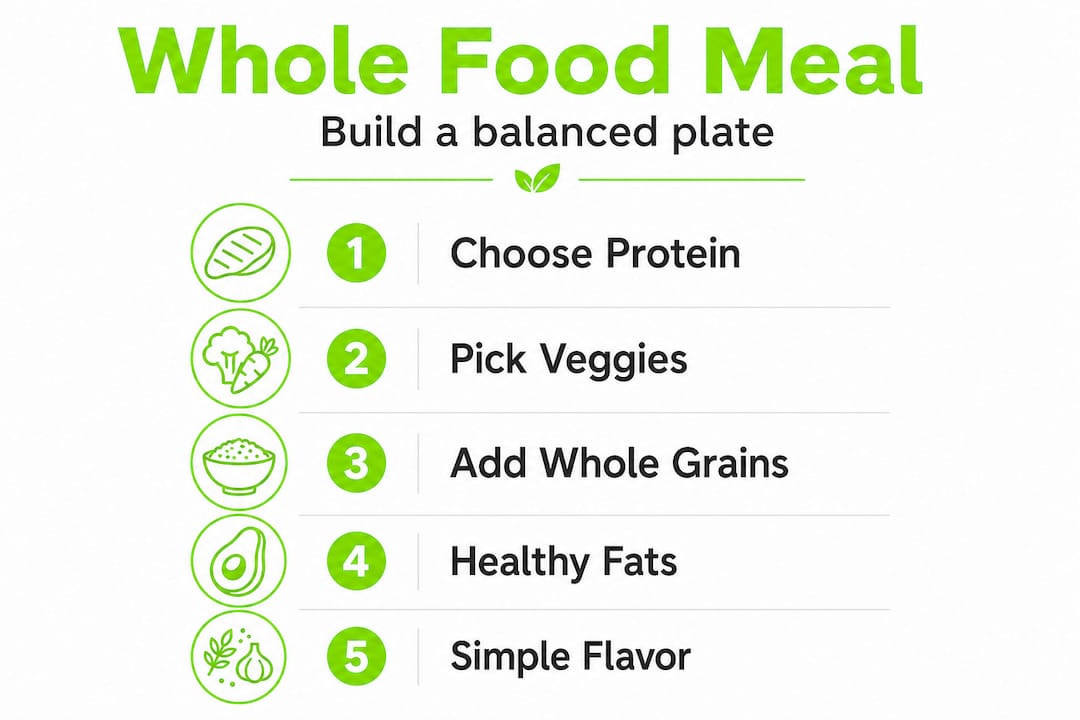
Sample day of eating
Breakfast: Rolled oats topped with fresh berries, a spoonful of almond butter, and a drizzle of honey. This delivers fiber, healthy fats, natural antioxidants, and slow-digesting carbohydrates. Skip the flavored instant oat packets with 12 grams of added sugar.
Lunch: A large salad with mixed greens, canned salmon (in water), cherry tomatoes, cucumber, avocado, and a lemon-olive oil dressing. No croutons needed. This meal hits protein, healthy fats, and multiple micronutrients in one bowl.
Dinner: Baked chicken thighs with roasted sweet potatoes and steamed broccoli. Simple, filling, and built from single-ingredient foods. Season with herbs, garlic, and olive oil for flavor without additives.
Snacks: A handful of walnuts and an apple. Plain Greek yogurt with sliced banana. Hard-boiled eggs. These require zero prep and zero ingredient labels to worry about.
Practical swaps for common processed foods
Beginners succeed by swapping processed snacks for whole fruits and nuts and reading labels to avoid additives. Small changes build real momentum. Here are direct, actionable swaps:
- Replace flavored rice cakes with a small handful of unsalted almonds and a piece of fruit.
- Swap bottled salad dressing for olive oil, lemon juice, and a pinch of salt.
- Choose plain canned tomatoes instead of pasta sauce with added sugar and preservatives.
- Use rolled oats instead of boxed breakfast cereals.
- Replace white bread with whole grain bread that lists whole wheat flour as the first ingredient.
How to read ingredient labels
This skill takes five minutes to learn and saves years of confusion. Follow these steps:
- Check the ingredient count. Fewer ingredients generally means less processing.
- Read the first three ingredients. They make up the majority of the product. If sugar, refined flour, or a chemical name appears here, put it back.
- Watch for added sugars under different names: sucrose, high-fructose corn syrup, dextrose, maltose, and agave nectar are all added sugars.
- Avoid unfamiliar chemical preservatives like BHA, BHT, and sodium benzoate without a clear nutritional reason.
- Scan sodium content. Many processed foods contain 40 to 50% of your daily sodium limit in a single serving.
Use the half-plate strategy as a simple visual guide. Fill half your plate with vegetables or fruit at every meal. This one habit automatically increases nutrient density and fiber intake without requiring strict calorie counting.
Your approach to eco-friendly meal planning can also align with whole food principles, since whole foods typically carry a lower environmental footprint than ultra-processed packaged goods. Learning how to identify healthy recipes helps you build a practical meal rotation without second-guessing every ingredient. A solid diet guide for gut health can help you further refine your food choices based on how your digestive system responds.
Common challenges and real-world solutions
Knowing what to eat is one thing. Navigating real life is another. Here is where most people hit a wall, along with practical ways through it.
Time and convenience
Batch cooking is your best tool here. Spend two hours on Sunday cooking a large pot of grains, roasting a sheet pan of vegetables, and preparing a protein source like baked chicken or hard-boiled eggs. These components combine into five or six different meals throughout the week without daily effort.
Freezer meals are another underused strategy. Soups, stews, grain bowls, and portioned smoothie ingredients all freeze well. Prepare double batches when you cook and stock your freezer for the weeks when life gets busy.
Cost concerns
Whole foods do not have to be expensive. The most affordable whole foods are also among the most nutritious. Dried lentils, canned beans, frozen vegetables, oats, eggs, and seasonal produce cost significantly less per serving than most packaged convenience foods.
Meal planning on a budget is a practical skill that reduces grocery waste and keeps costs manageable. Planning five dinners before you shop eliminates impulse purchases and ensures nothing spoils in the fridge.
Social and family eating
This is the challenge most nutrition guides overlook. You cannot always control what is served at family dinners, work lunches, or social events. And that is fine.
As Harvard Health guidelines note, experts prioritize more whole foods with healthy swaps rather than perfection, since 100% whole foods can be time-intensive and overly restrictive for real life. One meal off track does not undo consistent daily effort. The goal is patterns, not perfection.
Pro Tip: When eating out, apply the same half-plate rule. Order an extra side of vegetables or a salad. Choose grilled over fried. These small adjustments protect your overall eating pattern without requiring you to scrutinize every menu item.
Check the digestive health checklist for additional guidance on supporting your gut while navigating varied food environments. And use smart meal planning tips to build a realistic weekly routine that works for your actual schedule.
What most guides get wrong about whole food diets
Most whole food guides focus almost entirely on what to eat and what to avoid. That framework sets people up for failure. The moment you label certain foods as forbidden, you make them more psychologically appealing. Restriction triggers craving. Craving triggers guilt. Guilt triggers abandonment.
The far more effective approach is addition, not subtraction. Add a serving of vegetables to meals you already enjoy. Add fruit to your breakfast. Add a handful of nuts to your afternoon snack. Over weeks and months, these additions crowd out less nutritious choices naturally, without the mental strain of restriction.
Research consistently supports gradual, consistent changes over strict elimination for best adherence and long-term success. The people who sustain healthy eating for years are not the ones who started with an extreme 30-day cleanse. They are the ones who made a few small changes, repeated them until they became automatic, and then built from there.
There is also a cultural obsession with “clean eating” purity that can become counterproductive. Eating is social. Food is enjoyable. A good relationship with eating matters for long-term health outcomes in ways that obsessive restriction actively undermines.
Understanding why meal planning matters goes beyond logistics. It shapes your food environment, your decision-making under stress, and your ability to stay consistent when motivation dips. Structure supports flexibility, it does not contradict it.
The practical takeaway: track your progress toward adding more whole foods each week, not toward eliminating everything processed. That shift in mindset is where real, lasting change begins.
Ready to make whole food eating easier?
Knowing the principles is a great start. Applying them to your specific lifestyle, goals, and food preferences is where Dietium makes the difference. The platform offers personalized tools to help you personalize your diet based on your actual body metrics, calorie needs, and nutritional goals. Whether you are managing weight, improving energy, or building a more balanced plate, you will find step-by-step meal plans, recipe ideas, and shopping guidance built around real food. Families can also explore meal planning for families to bring whole food eating to every member at the table, without making separate meals or spending hours in the kitchen.
Frequently asked questions
Can I eat any processed foods on a whole food diet?
Some minimally processed foods like plain yogurt or whole grain pasta fit within a whole food diet, since a whole food diet prioritizes minimally processed foods but allows some lightly processed staples. Heavily processed items with long ingredient lists are minimized, not necessarily banned entirely.
Do I need to go 100% whole foods to see benefits?
No. Experts recommend prioritizing more whole foods rather than perfect elimination, and research shows that even moderate increases in whole food intake improve health and weight outcomes meaningfully.
Will a whole food diet help with weight loss?
Yes. MPF diets produced more weight and fat loss while reducing cravings, independent of calorie intake, making whole food eating one of the most effective strategies for sustainable weight management.
Can I follow a whole food diet if I’m vegetarian or vegan?
Absolutely. Plant-based diets built around whole grains, legumes, fruits, vegetables, nuts, and seeds align directly with whole food principles. In fact, an 8-week plant-based whole food program led to significant weight loss and measurable health benefits in study participants.
How quickly will I see changes on a whole food diet?
Some people notice improvements in energy, cravings, and weight within a few weeks. Participants on whole food diets lost significant weight and controlled cravings in as little as 8 weeks, though individual results vary based on starting habits and overall diet quality.


