 Skip to content

TL;DR:
- Sustainable meal planning reduces food waste, saves money, and lowers environmental impact.
- Choosing plant-based, local, and seasonal ingredients maximizes eco-friendly benefits.
- Flexibility and gradual changes are more effective than strict diets for maintaining sustainability long-term.
Sustainable eating carries a reputation for being expensive, restrictive, or time-consuming. That reputation is mostly wrong. Eco-friendly meal planning prioritizes seasonal, local, and plant-based ingredients alongside batch cooking and zero-waste techniques to reduce food waste and your carbon footprint. The good news: these habits also save money, simplify your week, and support better nutrition. This guide breaks down the evidence-based strategies you need to eat well, waste less, and make a measurable difference for the planet without overhauling your entire lifestyle.
Table of Contents
- Why meal planning matters for sustainability
- Choosing sustainable ingredients: The power of plants and local foods
- Smart planning strategies: Batch cooking, zero-waste tips, and digital tools
- Adapting to your needs: Flexibility for families, busy lives, and balanced nutrition
- The planetary health approach: Aligning diet with environmental and personal wellness
- Our take: Why practical, flexible meal planning beats perfectionism
- Explore personalized eco-friendly meal planning solutions
- Frequently asked questions
Key Takeaways
| Point | Details |
|---|---|
| Reduce food waste | Meal planning minimizes food waste and helps save money and resources. |
| Choose plant-forward | Selecting more plant-based meals significantly lowers your environmental impact. |
| Batch and batch cook | Efficient prep routines make sustainable eating easier for busy schedules. |
| Stay flexible | Adjust meal plans for your lifestyle, family, and nutrition needs for consistent success. |
| Align with health | Frameworks like the Planetary Health Diet support both personal wellness and global sustainability. |
Why meal planning matters for sustainability
Food waste is one of the most overlooked environmental problems. Globally, one-third of all food produced for human consumption is wasted every year, according to the FAO. That waste generates greenhouse gases, squanders water, and drains land resources. The problem hits close to home too.
American families lose an estimated $1,500 per year to discarded food, and targeted interventions like meal planning apps can reduce household greenhouse gas emissions by up to 33%.
Meal planning directly addresses this problem. When you map out your meals before shopping, you buy only what you need. You use ingredients across multiple meals. You avoid the impulse buys that spoil in the back of your fridge. The result is less waste, lower spending, and a smaller environmental footprint.
Here is what structured meal planning delivers for sustainability:
- Less overbuying: A clear shopping list built from a weekly plan eliminates duplicate purchases and forgotten ingredients.
- Better ingredient use: Planning meals around shared ingredients, like a batch of roasted vegetables used in grain bowls, wraps, and soups, stretches every item further.
- Reduced packaging waste: Buying in bulk and cooking from scratch cuts down on single-use packaging.
- Lower energy use: Batch cooking one or two days per week uses less energy than cooking seven separate meals daily.
- Financial savings: Fewer impulse purchases and less food thrown away adds up quickly over a month.
For practical frameworks to get started, smart meal planning tips can help you build a routine that works for your schedule. You can also reference a planetary health menu for a structured weekly template aligned with environmental benchmarks.
Now that we have set the stage for why eco-friendly meal planning matters, let’s break down which ingredients offer the most significant sustainability benefits.
Choosing sustainable ingredients: The power of plants and local foods
Not all food is equal when it comes to environmental impact. Animal products, especially red meat and dairy, require significantly more land, water, and energy to produce than plant foods. The gap is large.
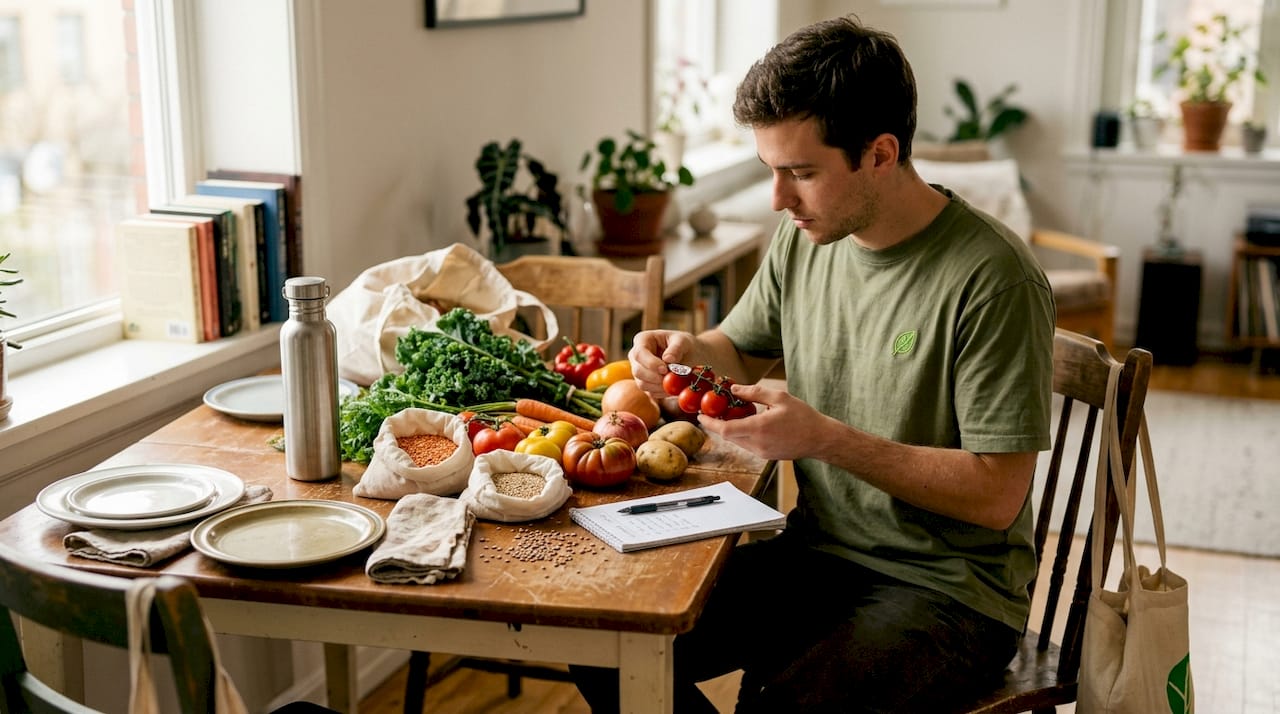
Research on plant-based diets confirms that vegan and vegetarian meals consistently show lower global warming potential, freshwater eutrophication, terrestrial acidification, and water depletion compared to meat-based equivalents. A flexitarian approach, meaning mostly plants with occasional animal products, can reduce climate impact by a factor of seven compared to a standard Western diet.
| Food type | Relative carbon footprint | Land use | Water use |
|---|---|---|---|
| Beef | Very high | Very high | High |
| Pork | High | Moderate | Moderate |
| Poultry | Moderate | Moderate | Low |
| Legumes | Very low | Low | Very low |
| Vegetables | Very low | Very low | Low |
| Whole grains | Low | Low | Low |
You do not need to go fully vegan to make a difference. Swapping two or three meat-based meals per week for legume or grain-based alternatives creates a measurable impact. A dietary impact study reinforces that even partial shifts toward plant-rich diets yield significant environmental and health benefits.
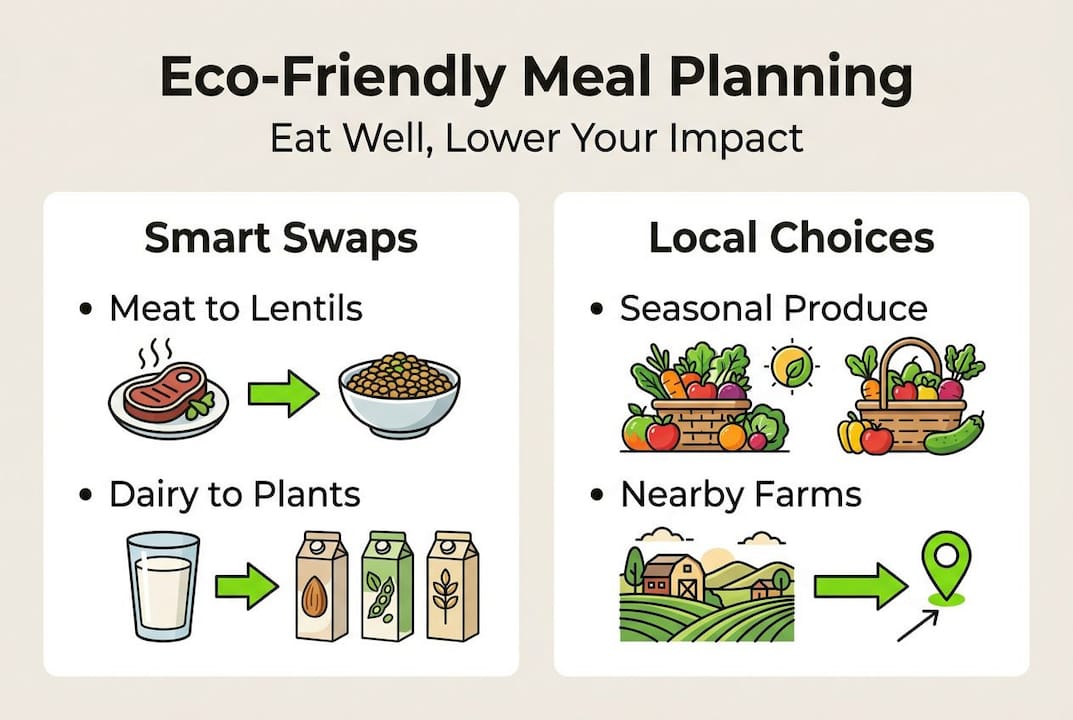
Local and seasonal produce adds another layer. Ingredients grown nearby and harvested in season require less refrigeration, less transportation, and fewer preservatives. They also tend to be fresher and more nutrient-dense.
Pro Tip: At the grocery store, check the country of origin label on produce. Items labeled with your state or a neighboring state are almost always more local than imports. Farmers markets are the most reliable source, but standard supermarkets increasingly stock regional produce, especially in spring and summer.
For structured guidance on plant-forward cooking, vegan meal prep offers practical recipes and prep strategies that make plant-based eating efficient and satisfying.
Once you have mastered ingredient selection, optimizing how you plan and prep your meals is the next crucial step.
Smart planning strategies: Batch cooking, zero-waste tips, and digital tools
Batch cooking is the single most effective habit for reducing food waste and saving time. The concept is straightforward: cook large quantities of staple ingredients once or twice a week, then assemble varied meals from those components throughout the week.
Key methodologies include planning around shared ingredients, realistic portioning, theme nights, pantry staples, and apps to reduce over-purchasing and spoilage. Combined, these habits eliminate the guesswork that leads to wasted food.
Here is a step-by-step framework for building a week of sustainable meals:
- Audit your pantry first. Check what you already have before writing a shopping list.
- Choose two to three protein bases. Lentils, chickpeas, or chicken thighs can anchor multiple meals.
- Pick three to four vegetables. Select ones that work across different preparations, roasted, raw, and cooked.
- Plan for leftovers intentionally. Cook double portions of grains and proteins on Sunday.
- Assign theme nights. Taco Tuesday or stir-fry Friday reduces decision fatigue and simplifies shopping.
- Store properly. Use airtight containers and label everything with dates to prevent forgotten food.
- Track and adjust. Note what you actually used versus what you planned to refine next week’s list.
| Strategy | Waste reduction benefit | Time saved per week |
|---|---|---|
| Batch cooking grains | High | 2 to 3 hours |
| Shared ingredients across meals | High | 1 to 2 hours |
| Meal planning app | Moderate to high | 1 hour |
| Proper food storage | Moderate | Reduces spoilage |
Digital tools make this process faster. Meal planning apps reduce GHG emissions by up to 33% by helping households track inventory, generate shopping lists, and avoid duplicate purchases. Compare top meal planning tools to find one that fits your workflow.
Pro Tip: Vegetable scraps like onion skins, carrot tops, and celery leaves can be frozen and used to make broth. This single habit eliminates one of the most common sources of kitchen waste.
For time-pressed schedules, meal prep for busy people offers condensed strategies that fit into real-world routines. You can also find detailed prep guidance at meal prep for healthy eating.
While these strategies work for many, adaptation is vital to address diverse lifestyles and nutritional needs.
Adapting to your needs: Flexibility for families, busy lives, and balanced nutrition
Eco-friendly meal planning is not one-size-fits-all. Families, solo eaters, and people with demanding schedules all face different constraints. The key is building flexibility into your system rather than following a rigid template.
For families, getting kids involved in meal selection increases the chance they will actually eat what is prepared, which directly reduces waste. Flexible portioning, cooking a base and offering toppings separately, accommodates picky eaters without cooking multiple meals.
Here are practical strategies for common situations:
- Busy weekdays: Prep proteins and grains on Sunday. Assemble meals in under 10 minutes during the week.
- Families with young children: Use build-your-own meal formats like grain bowls or tacos where each person customizes their plate.
- Budget-conscious households: Prioritize dried legumes, frozen vegetables, and whole grains, which are both affordable and low-impact.
- Varying taste preferences: Rotate cuisines weekly to keep meals interesting while using overlapping ingredients.
One important caution: low-impact diets can underperform nutritionally if they rely heavily on sweetened beverages or ultra-processed plant foods. A plant-forward plan still needs adequate protein, iron, calcium, and B vitamins. Planning intentionally, rather than just eliminating meat, is what makes the difference.
The OECD household food choices report also notes that sourcing local produce can be genuinely challenging in certain regions, so flexibility about what counts as sustainable is important.
Pro Tip: Use a nutrition tracking app to monitor your macros and micronutrients when shifting to a more plant-based plan. This catches gaps early before they become deficiencies.
For structured family routines, batch cooking for families provides targeted advice for households managing multiple schedules and preferences.
Having explored how flexibility and adaptation are key, let’s look at how the healthiest, most sustainable frameworks work in practice.
The planetary health approach: Aligning diet with environmental and personal wellness
The Planetary Health Diet (PHD), developed by the EAT-Lancet Commission, is the most evidence-based framework for aligning what you eat with both personal health and environmental sustainability. It is not a strict diet. It is a flexible benchmark.
The PHD daily targets include approximately 232g of whole grains, 300g of vegetables, 200g of fruit, up to 250g of dairy, and only around 14g of red meat. The emphasis is firmly on plants. Adopted broadly, this dietary pattern could reduce food-related greenhouse gas emissions by more than 50%.
Key features of the PHD approach:
- Whole grains as the calorie base: Brown rice, oats, quinoa, and whole wheat provide fiber, sustained energy, and a low carbon footprint.
- Legumes as the primary protein: Lentils, beans, and chickpeas deliver protein and iron with minimal environmental cost.
- Generous vegetables and fruits: Aim for variety and color to cover micronutrient needs.
- Minimal red and processed meat: Treat red meat as a condiment rather than a centerpiece.
- Moderate dairy and poultry: These are permitted but in smaller quantities than a typical Western diet.
- Cultural flexibility: The PHD is designed to be adapted across cuisines. You can meet its benchmarks with Mediterranean, Asian, Latin American, or African food traditions.
Adopting the PHD does not require perfection. Shifting your plate to be 60 to 70% plant-based already moves you significantly toward its targets. A detailed planetary health diet guide provides a practical breakdown for everyday implementation.
For a fully personalized meal plan aligned with your specific health goals and dietary preferences, data-driven tools can map PHD principles directly to your nutritional needs.
Our take: Why practical, flexible meal planning beats perfectionism
The biggest barrier to sustainable eating is not cost or access. It is the belief that you have to do it perfectly to make it count. That belief causes more people to quit than any other obstacle.
Research consistently shows that affordability, taste, and convenience outrank environmental concern in most household food decisions. That is not a failure of values. It is a realistic picture of how people actually live. The most sustainable plan is the one you maintain for years, not the one that looks perfect on paper for two weeks.
A flexitarian approach that you stick with beats a strict vegan diet you abandon after a month. Swapping beef for lentils three times a week beats an all-or-nothing mindset. Small, consistent changes compound over time into real impact.
We recommend starting with meal planning on a budget to build habits that are financially sustainable first. When the routine feels natural, layer in more ambitious sustainability goals. Progress, not perfection, is the standard that actually works.
Explore personalized eco-friendly meal planning solutions
Dietium gives you the tools to put these strategies into practice immediately. The platform’s AI-powered features help you build custom meal plan options aligned with your nutritional goals, taste preferences, and sustainability priorities. Track your macros, reduce food waste, and plan smarter with evidence-based guidance built into every recommendation.
For households managing multiple schedules and preferences, family meal planning resources provide structured, flexible templates that save time and reduce the stress of daily decisions. Start with one tool, build your routine, and scale from there.
Frequently asked questions
What are the top benefits of eco-friendly meal planning?
Eco-friendly meal planning reduces food waste, saves money, and lowers your carbon footprint while supporting healthy eating habits. It also simplifies your weekly routine by reducing last-minute decisions and impulse purchases.
How can I make my meal planning more sustainable on a budget?
Focus on plant-based, local, and seasonal ingredients, batch cook on weekends, use leftovers intentionally, and leverage meal planning apps to avoid overbuying. Planning around shared ingredients and pantry staples keeps costs low while minimizing spoilage.
Are plant-based diets always more eco-friendly than others?
Generally yes, plant-based meals show lower global warming potential, land use, and water depletion than meat-based equivalents. However, nutrition quality can suffer if the diet relies heavily on ultra-processed plant foods rather than whole ingredients.
What are some common mistakes to avoid in eco-friendly meal planning?
Relying too much on ultra-processed foods or failing to track nutritional balance can undermine both health and sustainability goals. Plant-based diets with trade-offs in diet quality highlight why intentional planning matters more than simply removing meat.


