 Skip to content

Starting a healthier diet doesn’t require perfection or drastic restrictions. Research shows that balanced patterns outperform restrictive approaches for long-term success, meaning you can achieve better health by adding nutritious foods rather than eliminating entire food groups. Many beginners feel overwhelmed by conflicting nutrition advice, but the path to better eating habits is simpler than you think. This guide breaks down practical, science-backed strategies to help you build sustainable habits that fit your lifestyle and budget, focusing on gradual improvements that deliver real results.
Table of Contents
- Key takeaways
- Understanding healthy eating basics
- Key nutrients to focus on: protein, fiber, and water
- Budget-friendly tips for beginners to start healthy eating
- Common challenges and how to personalize eating habits
- Explore personalized nutrition solutions
- FAQ
Key Takeaways
| Point | Details |
|---|---|
| Add before restricting | Start by adding healthy foods before removing anything to create a less restrictive and more sustainable path. |
| Choose whole foods | Base meals on whole and minimally processed foods such as fruits, vegetables, whole grains, lean proteins, and healthy fats while limiting added sugars and ultra processed items. |
| Protein and fiber focus | Aim for 80 to 100 grams of protein daily and 25 to 38 grams of fiber to support satiety, muscle maintenance, digestion, and blood sugar control. |
| Balanced patterns preferred | Choose balanced patterns such as Mediterranean or DASH that emphasize variety and moderation instead of cutting out entire food groups. |
Understanding healthy eating basics
Healthy eating starts with understanding food quality. Whole, minimally processed foods should form the foundation of your diet, including fresh or frozen fruits and vegetables, whole grains, lean proteins, and healthy fats. These foods provide essential nutrients your body needs while limiting added sugars, excess sodium, saturated fats, and ultra-processed items that offer little nutritional value. The difference between whole and processed foods is simple: whole foods are close to their natural state, while processed foods have been altered with additives, preservatives, or excessive refining.
Nutrient balance matters more than perfection. Your body needs adequate protein to maintain muscle and keep you feeling full, fiber to support digestion and blood sugar control, and healthy fats for hormone production and nutrient absorption. Rather than obsessing over every calorie, focus on getting these core nutrients at each meal. This balanced approach naturally crowds out less nutritious options without requiring strict rules or constant willpower.
Research consistently shows that balanced eating patterns like Mediterranean and DASH diets support healthy aging better than restrictive low-carb or keto approaches. These patterns emphasize variety and moderation rather than elimination, making them easier to maintain long-term. For beginners, this means you don’t need to cut out entire food groups or follow complicated rules. Instead, gradually add more nutritious foods to your routine.
Pro Tip: Start by adding healthy foods before removing anything from your diet. This positive approach feels less restrictive and naturally reduces cravings for less nutritious options.
Core food groups to prioritize:
- Vegetables and fruits (aim for variety in colors)
- Whole grains like oats, brown rice, quinoa, and whole wheat bread
- Lean proteins including chicken, fish, eggs, beans, and Greek yogurt
- Healthy fats from nuts, seeds, avocados, and olive oil
- Water as your primary beverage
The key to success lies in consistency, not perfection. Small, sustainable changes compound over time to create lasting results. Building healthy habits naturally requires patience and self-compassion as you learn what works for your body and lifestyle.
“The best diet is the one you can stick with. Focus on progress, not perfection, and make changes you can maintain for years, not just weeks.”
Key nutrients to focus on: protein, fiber, and water
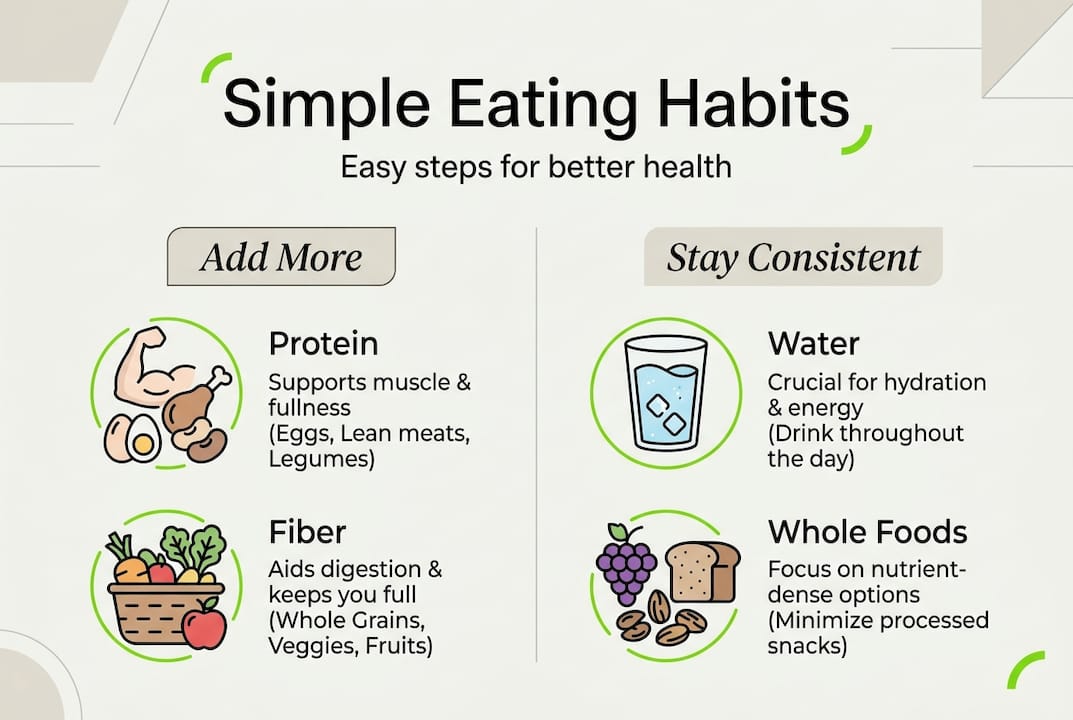
Protein serves as the foundation for satiety and muscle maintenance. Beginners should aim for 80-100 grams daily, which translates to roughly 1.2 to 1.6 grams per kilogram of body weight depending on activity level. Including protein at every meal helps stabilize blood sugar, reduces cravings, and supports your metabolism. Common lean protein sources include chicken breast, turkey, fish, eggs, Greek yogurt, cottage cheese, beans, lentils, tofu, and nuts.

Fiber often gets overlooked but plays a crucial role in digestion, blood sugar control, and keeping you full between meals. The recommended fiber intake ranges from 25-38 grams daily, yet most Americans consume less than half that amount. Fiber-rich foods include fruits with edible skins, vegetables, whole grains, legumes, nuts, and seeds. Increasing fiber gradually prevents digestive discomfort while your gut adjusts to the change.
Hydration impacts everything from energy levels to hunger signals. Many people mistake thirst for hunger, leading to unnecessary snacking. Drinking 80-100 ounces of water daily supports digestion, nutrient absorption, and overall health. Keep a water bottle nearby and sip throughout the day rather than trying to drink large amounts at once.
Pro Tip: If you’re active or trying to build muscle, aim for the higher end of protein recommendations (1.6g per kg body weight). If weight loss is your goal, prioritize both protein and fiber to stay satisfied on fewer calories.
Practical steps to meet nutrient targets:
- Add a palm-sized portion of protein to breakfast, lunch, and dinner
- Include at least one cup of vegetables with lunch and dinner
- Choose whole grain options when eating bread, pasta, or rice
- Snack on fruits, vegetables, or nuts instead of processed foods
- Start your day with a large glass of water before coffee or tea
- Keep a water bottle at your desk or in your car for easy access
These nutrients work together to support your health goals. Protein and fiber slow digestion, preventing blood sugar spikes and crashes that trigger cravings. Water helps your body process nutrients and eliminates waste efficiently. When you consistently meet these targets, you’ll notice improved energy, better focus, and reduced hunger between meals. Meal prep for beginners can help you plan protein and fiber-rich meals in advance, making it easier to hit your daily targets without last-minute decisions.
Budget-friendly tips for beginners to start healthy eating
Healthy eating doesn’t require expensive specialty foods or organic everything. Strategic meal planning and shopping help you eat well while staying within budget. Start by planning your meals for the week before shopping, which reduces impulse purchases and food waste. Create a simple menu based on what’s on sale, then make a shopping list organized by store sections to avoid wandering and temptation.
Budget-friendly shopping strategies:
- Buy frozen fruits and vegetables, which are just as nutritious as fresh and last longer
- Stock up on dried beans, lentils, and chickpeas as affordable protein sources
- Choose whole grains in bulk like oats, brown rice, and whole wheat pasta
- Compare unit prices rather than package prices to find the best value
- Shop store brands for staples like canned tomatoes, olive oil, and spices
- Avoid pre-cut, pre-washed, and individually packaged convenience foods
- Plan meals around seasonal produce when prices are lowest
| Food Category | Budget Option | Average Cost | Nutrition Benefits |
|---|---|---|---|
| Produce | Frozen vegetables | $1-2 per pound | Same vitamins and minerals as fresh; longer shelf life |
| Produce | Fresh seasonal | $0.50-3 per pound | Peak nutrition and flavor; supports local farms |
| Protein | Dried beans/lentils | $1-2 per pound | High protein and fiber; versatile for many dishes |
| Grains | Bulk oats/rice | $1-3 per pound | Complex carbs and B vitamins; filling and versatile |
| Convenience meals | Pre-made frozen | $4-8 per serving | High sodium and preservatives; minimal nutrients |
The data clearly shows that whole foods cost less and provide more nutrition than convenience options. A bag of frozen broccoli costs about $1.50 and provides four servings of vegetables, while a single serving of a frozen convenience meal costs $4 to $8 and often contains minimal vegetables along with excessive sodium.
Implement these habits gradually to avoid feeling overwhelmed. Start by planning just three dinners for the week, then expand as you get comfortable. Cook larger batches and freeze portions for quick meals later. This approach saves both time and money while ensuring you always have healthy options available. Healthy eating on a budget guide offers additional strategies for maximizing nutrition while minimizing costs.
Avoid common budget pitfalls by shopping after eating, not when hungry. Hunger leads to impulse purchases of expensive snacks and treats. Stick to your list and resist marketing tactics like end-cap displays and checkout lane candy. Compare prices across stores using apps or weekly ads, and consider shopping at discount grocers or buying generic brands for staples. Meal planning tips can help you organize your shopping and cooking routine for maximum efficiency and savings.
Common challenges and how to personalize eating habits
Beginners often face predictable challenges when improving eating habits. Feeling overwhelmed by conflicting nutrition advice tops the list, followed by digestive discomfort when increasing fiber too quickly, and confusion about whether to restrict certain foods or food groups. Understanding these challenges helps you navigate them successfully rather than giving up when difficulties arise.
Practical solutions for common obstacles:
- Start with one small change rather than overhauling your entire diet overnight
- Increase fiber gradually over several weeks to allow your digestive system to adapt
- Focus on adding nutritious foods rather than creating long lists of forbidden items
- Track your meals for a few days to identify patterns without judgment
- Prepare simple meals using basic ingredients you already know how to cook
- Give new habits at least three weeks before deciding if they work for you
| Eating Pattern | Best For | Pros | Cons for Beginners |
|---|---|---|---|
| Mediterranean | Long-term health, beginners | Flexible, sustainable, heart-healthy, well-researched | Requires cooking skills and meal planning |
| DASH | Blood pressure, heart health | Structured guidelines, proven results | Can feel restrictive with sodium limits |
| Low-carb/Keto | Quick initial weight loss | Rapid results, reduces cravings | Hard to maintain long-term, may lack fiber |
| Balanced/Flexible | Sustainable lifestyle change | Easy to personalize, no forbidden foods | Requires self-monitoring and patience |
Expert guidance emphasizes that plant-heavy diets with moderate animal protein offer optimal health outcomes. Low-carb approaches may deliver faster short-term weight loss, but balanced patterns prove easier to maintain over years and decades. The best approach depends on your personal goals, food preferences, and lifestyle constraints.
Personalization matters more than following rigid rules. Pay attention to your hunger and fullness cues rather than eating by the clock or finishing everything on your plate. Some people thrive on three meals daily, while others prefer smaller, more frequent eating occasions. Your protein needs vary based on activity level, age, and goals. Someone training for a marathon needs more protein than someone with a desk job, even at the same body weight.
Monitor sodium intake to stay below 2,300 milligrams daily, especially if you have high blood pressure or heart disease risk factors. Most excess sodium comes from processed and restaurant foods rather than the salt shaker, so cooking at home gives you better control. For weight loss, aim for 1,500 to 2,000 calories daily with high protein and fiber to stay satisfied while creating a calorie deficit.
Adjust gradually and observe how your body responds. If adding more vegetables causes bloating, slow down the increase and ensure you’re drinking enough water. If you feel tired on a lower-carb approach, add back some whole grains around your workouts. Staying consistent with diet becomes easier when you personalize your approach based on feedback from your body rather than forcing yourself to follow someone else’s perfect plan.
Explore personalized nutrition solutions
Taking the next step in your healthy eating journey becomes easier with the right tools and guidance. Dietium offers personalized meal plans tailored to your specific goals, whether you’re focused on weight loss, building muscle, managing a health condition, or simply eating better overall. These plans take the guesswork out of what to eat by providing structured guidance that fits your preferences and lifestyle.
Budget remains a top concern for many beginners, which is why meal planning on a budget strategies can transform your approach to healthy eating. Learn how to maximize nutrition while minimizing costs through smart shopping, batch cooking, and strategic meal prep. These practical skills serve you for life, making healthy eating accessible regardless of your financial situation.
For those wanting deeper insights into their nutritional status, exploring nutritional assessment methods helps identify specific areas for improvement. Understanding your unique needs allows you to make targeted changes that deliver better results than generic advice. Whether you’re just starting out or looking to refine your approach, these resources provide the support and expertise to help you succeed.
FAQ
What are some easy eating habits to start with?
Begin by adding one serving of vegetables at lunch or dinner daily, which increases fiber and nutrients without requiring major changes. Include a source of lean protein in each meal to improve satiety and stabilize blood sugar throughout the day. Drink an extra glass of water each day to support hydration and reduce mistaking thirst for hunger. Plan one meal ahead to reduce impulsive choices when you’re tired or busy.
How much protein should a beginner eat daily?
Beginners should aim for 80-100 grams of protein daily depending on body weight and activity level, which translates to roughly 1.2 to 1.6 grams per kilogram. Including protein in every meal helps with satiety and muscle maintenance while preventing energy crashes between meals. Distribute protein throughout the day rather than consuming most of it at dinner for optimal results.
What are budget-friendly healthy foods?
Budget-friendly options include frozen fruits and vegetables, dried beans, lentils, oats, brown rice, and eggs. These foods provide excellent nutrition at a fraction of the cost of convenience items or specialty health foods. Avoid processed convenience foods and shop sales to maximize your grocery budget while still eating nutritious meals.
How can I avoid feeling overwhelmed when changing eating habits?
Start with one small change and master it before adding another, which builds confidence and prevents decision fatigue. Focus on adding nutritious foods rather than creating lists of forbidden items, making the process feel positive instead of restrictive. Give new habits at least three weeks to become routine before evaluating whether they work for your lifestyle. Track your progress to see improvements over time, which provides motivation to continue.
Should I follow a specific diet plan as a beginner?
Most beginners succeed better with a flexible, balanced approach rather than strict diet rules that eliminate entire food groups. Emphasize whole foods, adequate protein and fiber, and gradual improvements that fit your lifestyle and preferences. If you have specific health concerns like high blood pressure, patterns like DASH may help, but always personalize based on what you can maintain long-term rather than short-term results.
Recommended
- Master Intuitive Eating for Beginners: A Step-by-Step Guide – Dietium
- Vegetarian Diet for Beginners: Easy Guide to Get Started – Dietium
- Meal Prep for Beginners: Simple Steps to Healthy Eating – Dietium
- Eating Out Healthy: Smart Steps for Nutritious Dining Choices – Dietium
- 7 consejos clave para comer sano en Barcelona


