 Skip to content

TL;DR:
- The most effective performance supplements backed by research are creatine, caffeine, and beta-alanine, which target specific training demands. Using evidence-based doses and timing strategies enhances their benefits while minimizing side effects, forming a minimal and effective supplement plan. Supplements serve as precise tools that complement a solid foundation of sleep, nutrition, and consistent training for optimal fitness results.
More supplements do not equal better results. That belief drives billions in annual industry sales, yet the research tells a far more focused story. Walk into any supplement store and you will see hundreds of products promising faster recovery, explosive strength, and rapid fat loss. Most of those claims rest on thin or non-existent evidence. The real science narrows the field quickly: only a small number of supplements consistently deliver measurable performance benefits across well-designed studies. This guide cuts through the noise, explaining what works, how it works, and how to build a practical, evidence-backed supplement strategy around your actual training goals.
Table of Contents
- Understanding evidence-based supplements for fitness
- How the top supplements for fitness work
- Considerations and nuances: timing, tolerance, and safety
- Multi-ingredient pre-workouts: useful or overhyped?
- Building your personalized supplement plan
- Why less is more: the overlooked reality of supplements for fitness
- Next steps: personalize your nutrition for lasting results
- Frequently asked questions
Key Takeaways
| Point | Details |
|---|---|
| Focus on proven basics | Creatine, caffeine, beta-alanine, and protein are the few supplements with strong scientific backing for fitness. |
| Match supplement to goal | Choose supplements based on your training type and adapt for personal response and tolerance. |
| Less is more | A minimal, targeted approach outperforms chasing every new supplement blend on the market. |
| Monitor timing and side effects | Dosing and when you take supplements impact benefits and side effects such as sleep or tingling. |
| Personalize and track progress | Regularly assess how your supplement and nutrition plan affects your performance and adjust as needed. |
Understanding evidence-based supplements for fitness
Not all supplements are created equal, and the gap between marketing claims and clinical reality is wide. An evidence-based supplement is one that has been tested in controlled studies, shown a consistent effect in multiple trials, and has a clear biological mechanism that explains the result. Most products on shelves do not meet that bar.
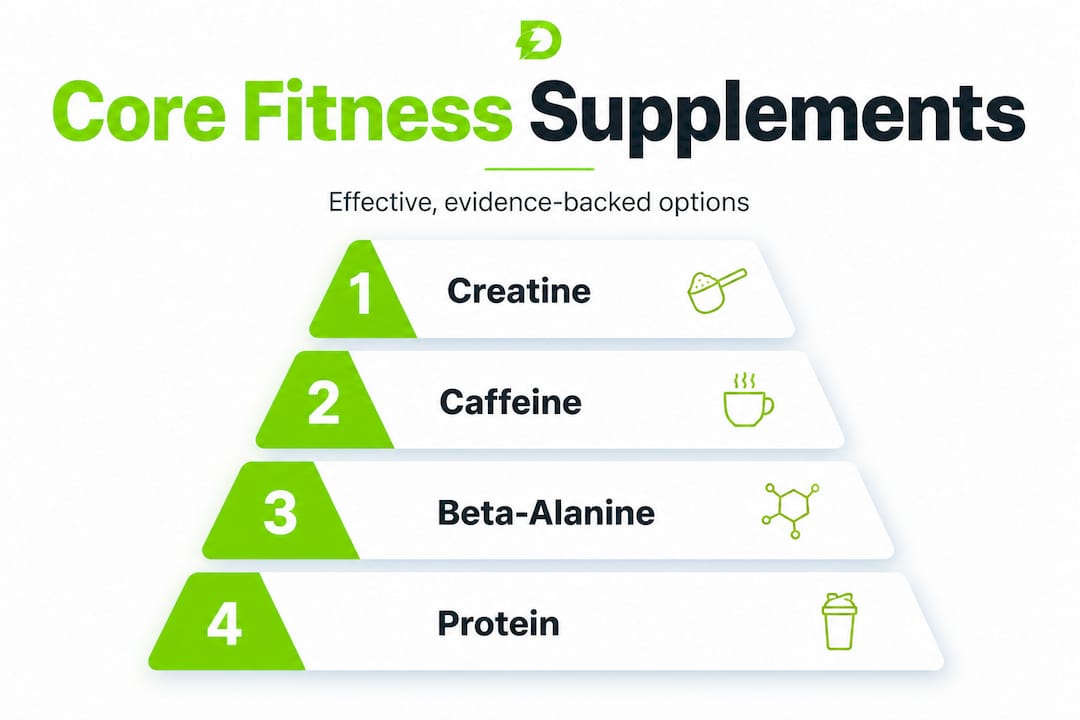
When researchers review elite and recreational athlete populations together, the list of truly effective options shrinks fast. Creatine, caffeine, and beta-alanine consistently top systematic reviews as the most research-supported performance supplements, with protein earning its place when total dietary intake falls short. That is the short list you should build from.
Understanding evidence-based nutrition as a concept matters here because the same principles that apply to food choices apply to supplements. Mechanism matters. Dose matters. Context matters. A supplement that works for elite sprinters may add nothing to a recreational gym-goer, and vice versa.
Here are the core criteria that separate evidence-based supplements from marketing-driven ones:
- Multiple randomized controlled trials showing consistent effects
- A clear biological mechanism (not just correlation data)
- Real-world performance outcomes such as strength, power, or endurance gains
- Safety data collected over meaningful timeframes and population sizes
- Dose ranges established through well-designed trials, not label suggestions
“Caffeine and creatine have the strongest evidence among performance supplements, with broad applicability across training styles and populations.” This is not a marketing claim; it is the consensus of multiple large-scale systematic reviews.
The practical takeaway is simple: start your supplement evaluation with mechanism and evidence, not with social media endorsements or gym lore.
How the top supplements for fitness work
Now that you know which supplements matter, let’s look at how they work and how to choose wisely. Each of the four top-tier options operates through a distinct mechanism, which means the right choice depends on your specific training goal.
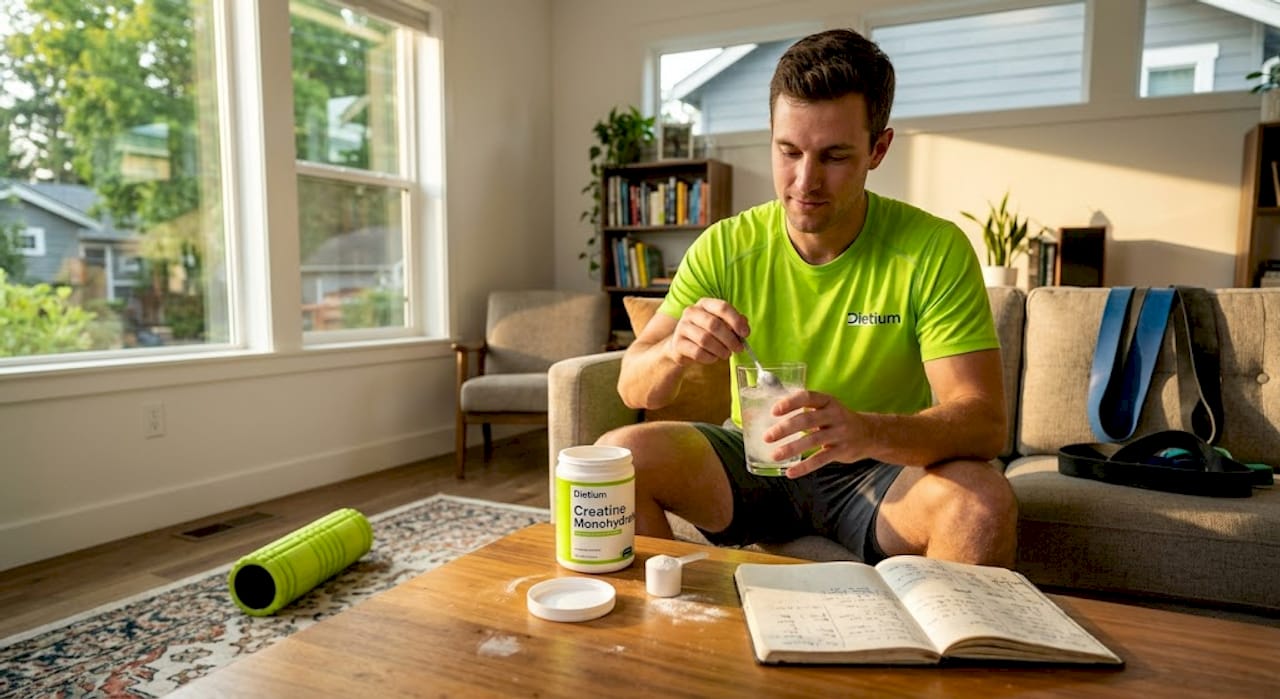
Creatine monohydrate works by increasing the availability of phosphocreatine in muscle cells, which accelerates ATP (adenosine triphosphate) regeneration during short, intense bursts of effort. Think heavy squats, sprint intervals, and explosive movements. Creatine monohydrate is the most evidence-backed ergogenic supplement for high-intensity exercise capacity and lean mass gains, with strong safety data in healthy adults at recommended doses of 3 to 5 grams per day. If you are deciding between forms, comparing creatine gummies vs powder can help you pick the right delivery format for your routine.
Caffeine acts on the central nervous system by blocking adenosine receptors, which reduces perceived effort and increases motor unit recruitment. This translates into improved endurance, power output, and reaction time across a wide range of sports. The effective dose is typically 3 to 6 mg per kilogram of body weight, taken 30 to 60 minutes before training.
Beta-alanine raises intramuscular carnosine levels, which buffers hydrogen ions produced during intense exercise. This delays the “burn” in activities lasting roughly 1 to 4 minutes at near-maximal effort, such as 400m runs, repeated sprint sets, or high-volume lifting blocks. The mechanics-to-supplement mapping is clear: beta-alanine targets a specific metabolic bottleneck, which is why it is particularly useful for sustained high-intensity work rather than pure strength or endurance.
Protein supplements fill dietary gaps. They do not outperform whole food protein sources when total intake is matched, but they are highly convenient for meeting your protein needs for athletes when meals are not enough. The target for most strength and endurance athletes sits around 1.6 to 2.2 grams per kilogram of body weight per day.
Here is a quick reference table to guide your decision-making:
| Supplement | Mechanism | Best evidence use case | Key cautions |
|---|---|---|---|
| Creatine monohydrate | Phosphocreatine and ATP regeneration | Strength, power, lean mass | Kidney function (pre-existing disease only) |
| Caffeine | Adenosine receptor blockade | Endurance, power, reaction time | Sleep disruption, tolerance buildup |
| Beta-alanine | Carnosine buffering in muscle | High-intensity efforts lasting 1 to 4 min | Paresthesia (tingling), chronic use required |
| Protein (whey, casein, plant) | Amino acid supply for muscle repair | Recovery, muscle protein synthesis | Excess calories if diet is already adequate |
To match the right supplement to your goal, work through these steps:
- Identify your primary training demand (strength, power, endurance, hypertrophy, or recovery).
- Match that demand to the mechanism that addresses it directly.
- Check that the supplement has clinical evidence for your specific use case.
- Start at the lowest effective dose before adjusting upward.
- Add one supplement at a time and monitor your response for at least four weeks.
Pro Tip: Trial only one supplement at a time to pinpoint what actually works for your body. Adding two or three at once makes it impossible to identify what drove the change, or the side effect.
Considerations and nuances: timing, tolerance, and safety
Understanding mechanisms is key, but how you use supplements can make or break their effectiveness. Here is what to know about daily use.
Timing matters most for caffeine. Caffeine’s effects on performance are well documented, but late-day intake competes directly with sleep quality, which is your most powerful recovery tool. If you train in the afternoon or evening, consider reducing caffeine dose or timing your last dose at least six hours before bed. Individual variation in caffeine metabolism is significant; some athletes clear it quickly, others feel effects for eight or more hours.
Creatine timing is flexible. Consistent daily use is what matters more than pre- or post-workout timing. A loading phase of 20 grams per day (split into four doses) for five days can saturate muscle stores faster, but a maintenance dose of 3 to 5 grams per day achieves the same saturation over three to four weeks without the initial bloating some people notice.
Beta-alanine requires a different strategy entirely. Unlike caffeine, a single dose before training does little if carnosine stores are not already elevated. Beta-alanine benefits depend on chronic, consistent intake with fragmented dosing throughout the day, typically 1.6 to 2.4 grams, two to three times daily. It takes three to four weeks of consistent use before meaningful performance differences appear. Splitting doses reduces the well-known tingling sensation called paresthesia (a harmless but noticeable skin-flushing or prickling effect).
Here are the side effects to monitor for each supplement:
- Creatine: Water retention in the first two weeks, mild gastrointestinal discomfort at high doses, not a concern for healthy kidneys
- Caffeine: Disrupted sleep, elevated heart rate, tolerance buildup requiring periodic breaks, anxiety in sensitive individuals
- Beta-alanine: Paresthesia (tingling in the skin), manageable by splitting doses and using slow-release formulations
- Protein supplements: Excess caloric intake if not tracked, digestive discomfort with lactose-containing products in sensitive individuals
Pairing your supplement use with structured meal planning for fitness goals gives you a much clearer picture of total nutrient intake. Do not overlook micronutrient considerations either; iron, vitamin D, and magnesium deficiencies can blunt training adaptation regardless of your supplement stack.
Supplements amplify a solid foundation. They cannot substitute for adequate sleep, consistent training, and a nutrient-dense diet. Treat them as precision tools, not shortcuts.
Pro Tip: Track your energy, performance, and sleep quality across four-week supplement trials. Small performance changes are easy to miss without data, and sleep shifts from caffeine often creep in gradually before becoming obvious.
Multi-ingredient pre-workouts: useful or overhyped?
With core supplements covered, many people wonder about the complex blends marketed as pre-workouts. Are they better, or just more expensive?
Pre-workout formulas typically combine caffeine with ingredients like creatine, beta-alanine, citrulline, tyrosine, taurine, and B vitamins in various doses. The appeal is convenience: one scoop, multiple effects. The reality is more nuanced. Multi-ingredient pre-workouts can deliver caffeine plus other ergogenic compounds, but evidence is often conflicting, individual variability is high, and the combined safety profile is harder to assess than single-ingredient options.
A direct comparison clarifies the tradeoffs:
| Feature | Single-ingredient supplement | Multi-ingredient pre-workout |
|---|---|---|
| Evidence quality | Strong (per ingredient) | Mixed, often proprietary blends |
| Dose control | Precise | Often undisclosed (proprietary blends) |
| Cost per serving | Generally lower | Generally higher |
| Side effect tracking | Easier to isolate | Harder to attribute |
| Customization | High | Low |
To evaluate whether a pre-workout is worth adding to your routine, check these factors:
- Is the caffeine dose disclosed and within the 3 to 6 mg/kg evidence range?
- Are the other ingredients listed with individual doses, not hidden in a proprietary blend?
- Does it include ingredients with actual evidence, not just trendy additions?
- Do the ingredient mechanisms align with your specific training goal?
- Does the cost make sense relative to buying single-ingredient options separately?
Aligning supplement choices with nutrition strategies for specific goals ensures you are not just layering stimulants on top of an unoptimized diet.
Building your personalized supplement plan
With evidence and nuance clear, here is how to apply it and turn information into your own practical plan.
Most athletes benefit from a minimal, targeted approach. The goal is not to use more supplements; it is to use the right ones, at the right doses, for the right reasons. Match your supplement choice to your training target, trial dosing methodically, and monitor side effects and tolerance before making any adjustments. This benchmark approach consistently outperforms the “stack everything” strategy in both outcomes and adherence.
Follow these steps to build your personalized strategy:
- Audit your current diet first. Track your protein, total calories, and micronutrient intake for two weeks. Identify actual gaps before buying anything.
- Define your primary training goal. Strength? Endurance? Body composition? Your goal determines which mechanism is most relevant.
- Select one supplement based on mechanism and evidence. Use the table in this guide. Start with creatine for strength or power, caffeine for endurance or performance intensity, beta-alanine for repeated high-intensity efforts.
- Start at the minimum effective dose. Use the lowest dose shown to produce effects in clinical trials. Scale up only if needed after four weeks.
- Track performance metrics and side effects systematically. Log workouts, energy levels, and sleep quality. Use objective markers, not just how you “feel.”
- Reassess at four to six weeks. If no measurable benefit is observed and adherence was consistent, reconsider whether that supplement addresses your actual training demand.
- Add a second supplement only after evaluating the first. One variable at a time gives you clean data on what is driving results.
Building your plan alongside structured evidence-based meal plans and reliable nutrition for athletes resources ensures supplements serve their intended purpose: filling specific gaps in an already solid nutritional foundation.
Why less is more: the overlooked reality of supplements for fitness
Here is a perspective most supplement-focused content will not offer you directly. The athletes who see the most consistent long-term progress from supplementation are almost never the ones with the most complex stacks. They are the ones who track meticulously, experiment gradually, and stay ruthlessly focused on the basics.
The supplement industry runs on novelty. New ingredients, new blends, new delivery mechanisms appear constantly, each marketed as a breakthrough. But if you look at what actually drives training adaptation over years, not months, it is consistent progressive overload, adequate protein, quality sleep, and well-timed nutrition. Supplements occupy a real but narrow lane within that picture.
Experienced coaches and lifters tend to converge on the same short list after years of experimentation: creatine, caffeine, and sometimes beta-alanine. Not because they have not tried the rest, but because the rest rarely moved the needle. The signal-to-noise ratio in the supplement market is poor, and the cost of chasing trends is both financial and practical, since time spent optimizing a nine-supplement stack is time not spent optimizing training and sleep.
There is also a cognitive cost. Managing multiple supplements, cycling them, adjusting doses, and interpreting their combined effects creates complexity that often obscures the actual levers of progress. The science-backed nutrition perspective is consistent here: the fundamentals of nutrition and training drive most adaptation. Supplements are tools, not solutions.
Rethink your current stack with this question: if you removed every supplement that lacks strong mechanistic and clinical support, what would remain? For most people, the honest answer is one or two items. Build from that honest baseline rather than from marketing promises.
Next steps: personalize your nutrition for lasting results
Ready to turn knowledge into lasting habits? Here is how you can continue building a smarter, more personalized nutrition and supplementation strategy. Knowing which supplements are evidence-based is only part of the picture. The larger opportunity is aligning your total diet, your macros, and your meal timing with your specific training goals. Start by exploring diet personalization for your goals to see how your current intake maps to your targets. From there, the personalized meal plan benefits resource walks you through the advantages of structured, goal-aligned eating. For a more detailed starting point, Dietium’s nutritional assessment methods give you the tools to audit your current intake before adding any supplement to your routine.
Frequently asked questions
What is the most effective supplement for building muscle?
Creatine monohydrate has the strongest evidence for increasing strength and lean muscle during high-intensity training when used consistently at recommended doses of 3 to 5 grams per day.
Are pre-workout supplements safe to use frequently?
Multi-ingredient pre-workouts show mixed safety results; always check that individual ingredient doses are disclosed and assess your personal response to stimulants and cardiovascular-active compounds before using them regularly.
When should I use protein supplements for fitness?
Protein supplements are most useful when dietary protein is insufficient to meet your daily target for muscle repair and growth, particularly for athletes with high training volumes or restricted diets.
Does caffeine really improve performance?
Yes. Caffeine consistently improves power output, endurance, and high-intensity sport performance at doses of 3 to 6 mg per kilogram of body weight, though timing relative to sleep is an important consideration.
What are common side effects of beta-alanine supplements?
Beta-alanine commonly causes paresthesia, a harmless tingling sensation in the skin, which is reduced by splitting doses throughout the day and using slow-release formulations rather than single large doses.
Recommended
- Sports Nutrition Basics: Fueling Fitness Performance – Dietium
- Eating for specific goals: evidence-based nutrition strategies – Dietium
- Master meal planning for fitness goals: boost results – Dietium
- High-protein plant meals: maximize nutrition for fitness – Dietium
- Så stärker du lederna: näringsämnen som gör skillnad – vitaminone.se


