 Skip to content

TL;DR:
- Hydration needs vary widely based on individual factors, activity, climate, and diet, not fixed rules. Water is essential for cellular functions, thermoregulation, digestion, and joint health, with even slight dehydration impairing performance and cognition. Personalized hydration strategies that respond to real-time cues and environmental conditions are more effective than generic guidelines like the “8 glasses” rule.
Most people believe they need exactly eight glasses of water every day, but hydration needs vary widely by individual, activity level, climate, and diet. That number was never rooted in clinical evidence. It was a rough population average that somehow became universal health doctrine. Your actual fluid needs depend on how much you sweat, what you eat, your body size, and dozens of other factors that are entirely personal. This guide cuts through the noise to give you evidence-based, practical hydration strategies you can apply today.
Table of Contents
- Why hydration matters for wellness and body function
- Debunking hydration myths: What you really need to know
- Personalized hydration: What affects your fluid needs?
- Risks of overhydration: Understanding and preventing hyponatremia
- Smart hydration strategies: Practical tips for everyday wellness
- A smarter way to hydrate: Beyond the one-size-fits-all approach
- Optimize your wellness journey with personalized nutrition
- Frequently asked questions
Key Takeaways
| Point | Details |
|---|---|
| Hydration is personalized | Your water needs depend on activity, environment, age, and health status. |
| Myths can be misleading | There is no one-size-fits-all daily water target; exceeding needs does not add benefit. |
| Balance is crucial | Both dehydration and overhydration can harm health—tune into your body’s cues. |
| Practical self-checks work | Urine color and thirst are simple, science-backed guides for personal hydration. |
| Consider food and context | Total hydration includes fluids from food, and needs increase with exercise or heat. |
Why hydration matters for wellness and body function
Water is not just a thirst quencher. It is the medium in which virtually every cellular reaction in your body takes place. Your blood, lymph, digestive juices, and joint lubricants are all primarily water. Adults are roughly 60% water by body weight, and even a 1 to 2% drop in that level can begin to affect how you think and feel.
The hydration benefits overview on Dietium makes clear that water’s roles are extensive. At the cellular level, water transports nutrients in and carries waste products out. It regulates body temperature through sweat and respiration. It keeps your digestive system moving, supports kidney filtration, and cushions your spine and joints. Without it, none of these systems function at their best.
Key fact: Adequate hydration supports normal body functions and helps prevent dehydration-related problems such as unclear thinking, mood changes, overheating, constipation, and kidney stones.
Understanding hydration and body function matters because deficits show up faster than most people expect. Here is what your body needs water for every single day:
- Thermoregulation: Sweat dissipates heat so your core temperature stays stable during exercise or in hot environments.
- Cognitive performance: Even mild dehydration reduces focus, memory recall, and reaction time. This is especially relevant if you train, work physically, or make complex decisions.
- Digestion: Water keeps food moving through your gastrointestinal tract and helps your body absorb nutrients effectively.
- Kidney health: Your kidneys flush metabolic waste products using water. Chronic low intake raises the risk of kidney stones and urinary tract infections.
- Joint lubrication: Synovial fluid, which cushions your joints, is mostly water. Low intake over time can contribute to joint discomfort.
Statistic to know: Research consistently shows that a fluid loss of just 1.5 to 2% of body weight can impair short-term memory, increase feelings of anxiety, and reduce endurance capacity. For a 160-pound adult, that is as little as 2.5 pounds of water weight lost through sweat or inadequate intake.
Debunking hydration myths: What you really need to know
Now that the fundamentals are clear, it is time to tackle the myths that trip up even the most health-focused individuals. Misinformation about water intake is widespread, and acting on it can either leave you chronically under-fueled or push you toward unnecessary and risky excess.
Myth 1: You need 8 glasses of water every day. As established, fixed daily quotas are not supported by evidence as universal rules. An office worker in a cool climate has fundamentally different needs than a runner training in summer heat. The “8×8” rule is a convenient approximation, not a medical recommendation.
Myth 2: More water is always better. Drinking well beyond what your body needs provides no additional benefit and can actually be dangerous. Overhydration dilutes blood sodium and can result in hyponatremia, a condition that impairs brain function.
Myth 3: Sports drinks are required for hydration. For most people doing moderate activity under 60 minutes, plain water is more than adequate. Electrolyte drinks are formulated for prolonged, intense exercise where significant sodium and potassium losses occur through sweat.
Myth 4: Thirst means you’re already dehydrated. Thirst is an early warning signal, not a late-stage alarm. For healthy adults, responding to thirst is an effective and evidence-based way to manage fluid intake throughout the day.
Here is a quick breakdown comparing myth versus evidence:
| Hydration claim | The myth | The evidence |
|---|---|---|
| Daily water target | 8 glasses for everyone | Varies by individual, activity, and climate |
| More water = better health | Always beneficial | Excess can cause hyponatremia |
| Sports drinks for hydration | Needed for any workout | Only for intense or prolonged exertion |
| Thirst as a guide | Unreliable signal | A valid, responsive indicator for most adults |
| Coffee dehydrates you | Acts as a diuretic | Moderate caffeine has minimal dehydration effect |
Use the recommended water intake guidelines as a starting point, but always filter them through your personal context. Check out these natural hydration tips to build habits that fit your lifestyle, not a generic formula.
Pro Tip: If your urine is pale yellow during most of the day, you are almost certainly well hydrated. Dark yellow or amber means drink more. Completely clear urine throughout the day may mean you are overdoing it.
Personalized hydration: What affects your fluid needs?
With myths dispelled, the next step is understanding what actually shapes your personal hydration requirements. This is where individualized assessment becomes valuable.
Your athlete hydration strategies will look different from a sedentary person’s simply because of sweat rate alone. But activity is just one variable. According to the CDC, needs vary significantly by age, sex, pregnancy status, activity level, and environmental conditions. And research published in the ACSM Medicine and Science in Sports and Exercise confirms that even mild dehydration in exercise or heat contexts can impair cognition, mood, and attention-related performance.
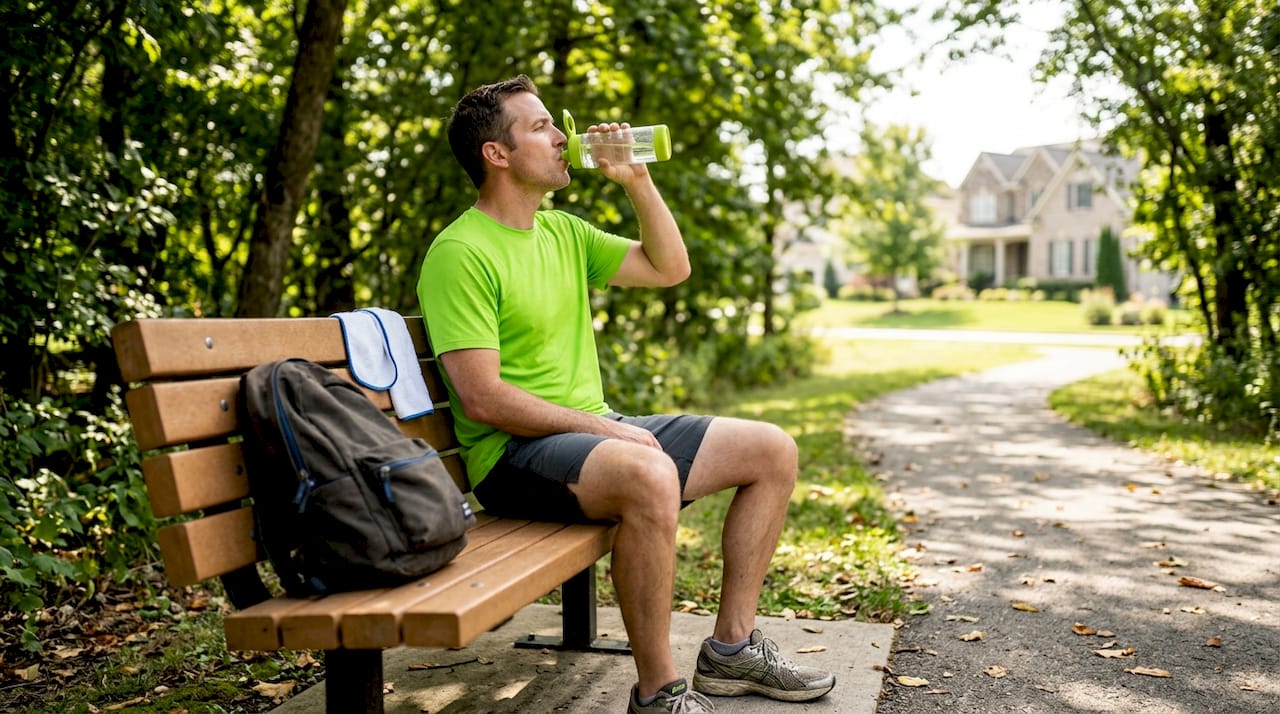
Here is a summary of key factors that raise your fluid needs:
| Factor | Impact on fluid needs | Practical adjustment |
|---|---|---|
| Intense exercise | High sweat losses, increased need | Drink before, during, and after |
| Hot or humid climate | Sweat rate increases sharply | Add 1 to 2 extra cups per hour in heat |
| High-altitude environments | Increased respiratory water loss | Raise intake proactively |
| Pregnancy | Blood volume expands significantly | Higher daily fluid targets recommended |
| Illness with fever, vomiting, or diarrhea | Rapid fluid and electrolyte loss | Prioritize fluid replacement immediately |
| Older adults | Diminished thirst sensation | Schedule regular fluid intake |
Follow these steps to assess your current hydration status accurately:
- Check urine color first thing in the morning. Pale straw to light yellow means you started the day in a good hydration state. Darker shades indicate you are already behind.
- Track performance cues during exercise. Feeling heavy, slowing down significantly, or getting unusual headaches during moderate workouts can signal dehydration.
- Weigh yourself before and after exercise. Each pound lost during a session equals roughly 16 ounces of fluid. Replace it gradually over the following hours.
- Note food intake. Many fruits and vegetables like cucumber, watermelon, strawberries, and celery are 90% water or more. A diet rich in produce can contribute 20% or more of your daily fluid needs.
- Account for your environment. Traveling by plane, spending time at altitude, or working in air-conditioned offices (which are often very dry) all increase water loss without obvious sweating.
Pro Tip: Use the hydration calculator on Dietium to get a personalized daily fluid estimate based on your body weight, activity level, and climate.
Risks of overhydration: Understanding and preventing hyponatremia
As important as staying hydrated is, drinking too much water is a real and underappreciated risk. Overhydration is most common among endurance athletes who drink large volumes of plain water during races or long training sessions, but it can affect anyone who follows rigid “drink as much as possible” rules.
Hyponatremia occurs when blood sodium concentration drops too low because fluid intake dilutes the mineral beyond a safe range. Overhydration can lead to hyponatremia, and correcting sodium too quickly creates its own serious complications, including osmotic demyelination, a dangerous neurological condition.
Symptoms of hyponatremia can be subtle and easy to misread as dehydration:
- Nausea and bloating
- Headache and confusion
- Fatigue and muscle weakness
- In severe cases: seizures, coma, or death
Important: Never try to rapidly correct low sodium by drinking salty fluids or taking electrolyte tablets without medical guidance. Sodium levels must be restored gradually by trained medical personnel.
Understanding why balance matters is central to smart hydration practice. The lesson here is not to fear water but to respect your body’s actual signals. During endurance events exceeding 90 minutes, consider electrolyte solutions rather than plain water alone. For daily life and moderate workouts, trust your thirst and urine color. Review your recovery nutrition approach to ensure sodium and electrolyte balance is addressed after intense sessions.
Pro Tip: During endurance events like marathons or triathlons, drink to thirst rather than on a fixed schedule. This simple adjustment significantly reduces hyponatremia risk without affecting performance.
Smart hydration strategies: Practical tips for everyday wellness
Armed with both the science and the risks, you can now build a practical, sustainable hydration routine. This is not about counting ounces. It is about responding intelligently to your body and your environment.
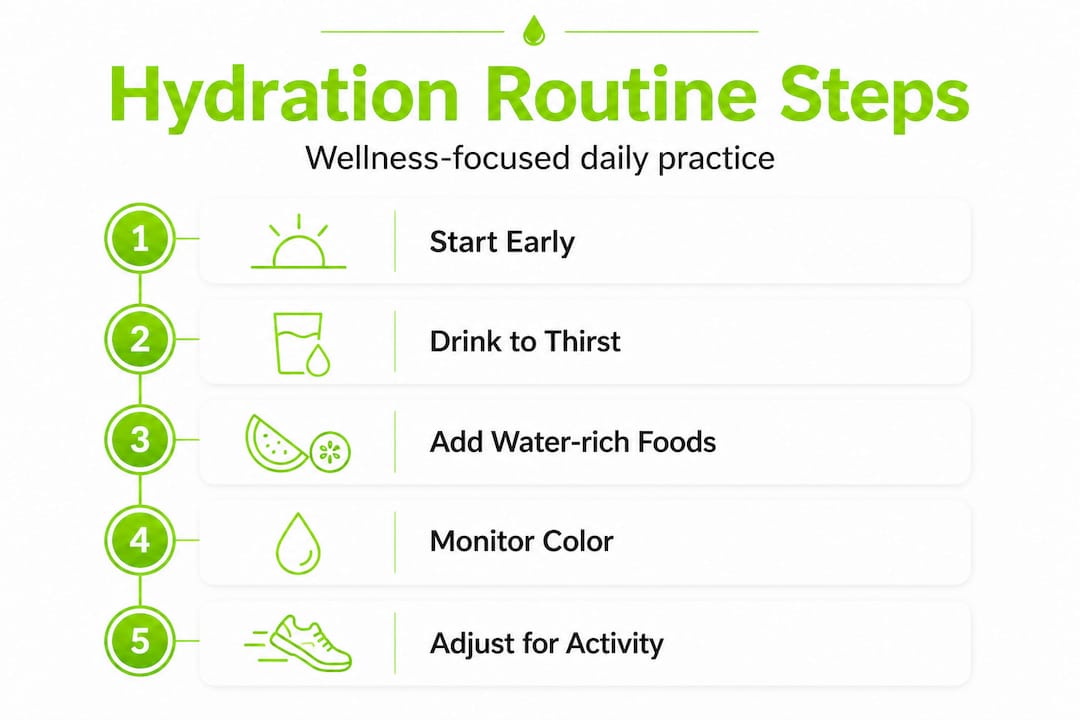
The importance of hydration for daily routines is well-established, and so is the fact that activity and fluid needs are directly linked. For most people doing moderate activity, water consumed with regular meals is sufficient. Special drinks are usually not needed unless you are training hard in heat or for long durations.
Follow these practical steps to build better hydration habits:
- Start your day with a glass of water. You wake up mildly dehydrated after 7 to 8 hours without fluids. A 12 to 16 ounce glass first thing resets your baseline.
- Drink a glass before each meal. This habit ensures regular intake, supports digestion, and helps you distinguish hunger from thirst, a mix-up that is extremely common.
- Carry a reusable bottle. Availability is one of the biggest barriers to consistent hydration. Having water nearby makes frequent sipping effortless.
- Pre-hydrate before exercise. Aim to drink 16 to 20 ounces of water about 2 hours before a workout. Avoid starting sessions already behind.
- Drink during exercise, not in excess. For sessions under 60 minutes at moderate intensity, small sips every 15 to 20 minutes are sufficient. For longer or more intense sessions, match fluid intake more closely to sweat losses.
- Rehydrate after activity. Replace fluid losses gradually over the 2 to 4 hours following exercise. Add a sodium-containing food or electrolyte supplement for sessions over 90 minutes.
- Plan for travel, heat, and illness. Airplane cabins are extremely dry. Heat waves increase your sweat rate before you even start moving. Fever, vomiting, or diarrhea can deplete fluids rapidly. Raise your awareness and intake proactively in these scenarios.
Statistic to know: Water-rich foods, including fruits, vegetables, soups, and yogurt, account for roughly 20 to 30% of total daily fluid intake for people following a balanced diet. Eating well is, in part, hydrating well.
Pro Tip: If you frequently confuse thirst with hunger, try drinking 8 to 12 ounces of water before reaching for a snack. If the urge to eat subsides within 10 to 15 minutes, you were thirsty, not hungry.
A smarter way to hydrate: Beyond the one-size-fits-all approach
Here is the real issue with mainstream hydration advice: it treats everyone the same. A rigid daily water quota is easy to communicate but almost useless as a practical guide. Someone who runs 10 miles in July heat will need three or four times more fluid than someone who works at a desk in a climate-controlled office. Applying the same number to both is not helpful. It is noise.
The personalized hydration framework that works in real life is context-driven. It asks: What is your activity today? How hot is it? How is your digestion? Have you been sweating more than usual? Are you traveling or stressed? These are the inputs that actually matter.
There is also a generation-level problem worth acknowledging. Decades of diet culture have caused many people to misread their body’s signals entirely. Hunger and thirst share similar neural pathways, and years of ignoring or overriding these signals through calorie restriction or eating schedules has left many people genuinely out of touch with their physiological cues. Retraining that awareness takes deliberate practice, and it is worth the effort.
Context-dependent hydration, which factors in activity, heat, illness, and body size, is not a complicated system. It is just a smarter, more honest way to manage something your body has been doing automatically for your entire life. Support that system instead of overriding it with a fixed quota.
The takeaway is simple: trust your body more, trust generic formulas less. Use tools and data to calibrate your awareness. And build habits that flex with your real life, not a mythological average person who drinks exactly 8 glasses of water every day under identical circumstances.
Optimize your wellness journey with personalized nutrition
Hydration is one pillar of a broader, personalized approach to health. When you align your fluid intake with your nutrition, activity, and body metrics, the results are measurable and meaningful. Dietium provides the tools to make that alignment practical. Explore personalized diet solutions to tailor your nutrition strategy beyond just water intake. Access custom meal plans that factor in your hydration needs through food choices, macros, and timing. Use the nutritional assessment tools to establish a complete picture of where you are and what your body needs to perform at its best.
Frequently asked questions
How do I know if I’m drinking enough water?
Monitor your thirst throughout the day and check your urine color regularly. Pale yellow urine signals good hydration, while dark yellow or amber indicates you need more fluids.
Can I drink too much water, and what happens if I do?
Yes. Drinking excessive amounts of water can dilute blood sodium and cause hyponatremia, which leads to serious risks including confusion, seizures, and in extreme cases, coma.
Are sports drinks necessary for staying hydrated?
For most people doing moderate exercise, plain water is sufficient. Sports drinks are only recommended for intense or prolonged activity in hot or humid conditions where significant electrolyte losses occur.
Does food contribute to my hydration?
Yes, many foods contribute meaningful amounts of water to your daily intake. Fruits and vegetables in particular are 80 to 95% water and can account for 20 to 30% of total fluid intake.
How do exercise and climate affect hydration needs?
Both increase fluid losses through sweat and respiration. Exercise and heat conditions raise dehydration risk significantly, making it essential to increase fluid intake before, during, and after activity in warm or humid environments.


