 Skip to content

TL;DR:
- Managing food allergies requires meticulous label reading and strict avoidance of common allergens.
- Building organized meal plans with safe substitutions and nutrient replacements supports healthy growth.
- Preparing for emergencies and involving children in safety practices promote confidence and allergy management.
Managing food allergies for your child is one of the most demanding responsibilities a parent faces. 8-10% of US children have a diagnosed food allergy, and 40% of those children are allergic to more than one food. Every grocery run, school lunch, and family dinner carries real risk. The good news is that with the right knowledge, tools, and planning structure, you can feed your child safely and nutritiously without constant anxiety. This guide covers everything from understanding the core challenges to building weekly menus, replacing key nutrients, and handling real-life surprises.
Table of Contents
- Understanding the challenges of allergic meal planning
- Essential tools and safe ingredients for allergen-free meals
- How to create weekly allergen-safe meal plans
- Nutrition strategies: Meeting needs and avoiding deficiencies
- Troubleshooting and adapting for real-life challenges
- Our perspective: What most allergy meal planning guides overlook
- Get personalized help and easy meal planning support
- Frequently asked questions
Key Takeaways
| Point | Details |
|---|---|
| Allergen avoidance | Careful label reading, separate tools, and vigilance are crucial for safety at every meal. |
| Smart substitutions | Safe, nutritionally complete alternatives can successfully replace top allergens like milk, eggs, and nuts. |
| Batch meal prep | Batch cooking, portioning, and labeling meals help save time and prevent accidental exposure. |
| Nutrient tracking | Regular monitoring and consultation with a dietitian can prevent growth and nutrition problems for children with allergies. |
| Empowering kids | Teaching children about their allergies and involving them in meal prep boosts safety and confidence. |
Understanding the challenges of allergic meal planning
Allergic meal planning is uniquely difficult because the stakes are high and the rules are strict. There is no margin for guessing. One missed label or one shared utensil can trigger a reaction ranging from hives to anaphylaxis.
The nine most common allergens, known as the “top 9,” are milk, eggs, fish, shellfish, tree nuts, peanuts, wheat, soybeans, and sesame. These top allergens cause 90% of all allergic reactions in the United States, and food allergy rates have risen 50% since the 1990s. That rise means more families are navigating this challenge than ever before.
Common allergy types and their complexity:
| Allergen | Common Hidden Sources | Risk Level |
|---|---|---|
| Milk | Breads, deli meats, soups | High |
| Egg | Pasta, baked goods, sauces | High |
| Peanut | Asian sauces, candies, cereals | Very High |
| Tree Nut | Pesto, granola, spreads | Very High |
| Wheat | Soy sauce, coatings, soups | High |
| Soy | Canned tuna, crackers, broths | Moderate |
| Sesame | Breads, hummus, Asian foods | High |
Label reading is non-negotiable, and it must happen every single purchase. Food manufacturers change formulas without major announcements. A product that was safe last month may contain a new ingredient today. This is not paranoia. It is essential practice.
Cross-contact (not to be confused with cross-contamination) is another serious risk. Cross-contact happens when an allergen transfers to a food that should be allergen-free through shared surfaces, utensils, or cooking equipment. It can happen on a cutting board, inside a toaster, or even from a shared jar of peanut butter.
Less obvious risks include:
- Craft supplies like playdough that contain wheat
- Shared cooking oils used in restaurants
- Family gatherings where well-meaning relatives add unknown ingredients
- Takeout meals prepared in kitchens that handle multiple allergens
The psychological toll is real too. Many parents report high levels of anxiety and what specialists call “vigilance fatigue,” the exhaustion that comes from constant alertness. Incorporating structured family meal planning strategies can reduce decision fatigue and build a reliable safety system over time.
Essential tools and safe ingredients for allergen-free meals
To manage allergy risks at home, you need the right physical setup and a solid base of safe ingredients. Preparation is your best protection.
Safe staple ingredients to keep stocked:
- Fresh fruits and vegetables (naturally allergen-free)
- Rice, quinoa, millet, and oats (certified gluten-free if wheat is a concern)
- Unprocessed meats and poultry
- Legumes (if tolerated) such as lentils and chickpeas
- Fortified plant-based milks and seeds like sunflower and pumpkin seeds
Separate utensils and storage reduce cross-contact risk significantly, and using fortified plant-based milks and seeds helps replace nutrients lost from avoiding dairy or nuts.
Allergen substitution guide:
| Allergen removed | Substitution | Notes |
|---|---|---|
| Dairy milk | Oat, rice, or hemp milk (fortified) | Check for added allergens |
| Eggs | Flaxseed gel or chia gel | 1 tbsp seed + 3 tbsp water |
| Wheat flour | Rice flour or almond flour blend | Test texture in recipes |
| Peanut butter | Sunflower seed butter | Great 1:1 swap |
| Tree nuts | Pumpkin or hemp seeds | Different texture, similar nutrition |
For allergy-friendly recipe ideas that use these substitutions in practice, there are curated collections that break down each swap step by step.
How to read food labels correctly:
- Check the ingredient list first, looking for your child’s specific allergens by name
- Read the “Contains” statement below the ingredient list
- Check for “May contain” or “Processed in a facility” warnings
- Verify every purchase, even if you bought the same product before
- When in doubt, contact the manufacturer directly
Kitchen organization matters as much as ingredients. Use color-coded cutting boards (one color per food group or allergen-free use), store allergen-free items on separate shelves, and label all containers clearly. Explore batch cooking for allergies to build a safe, efficient prep routine.
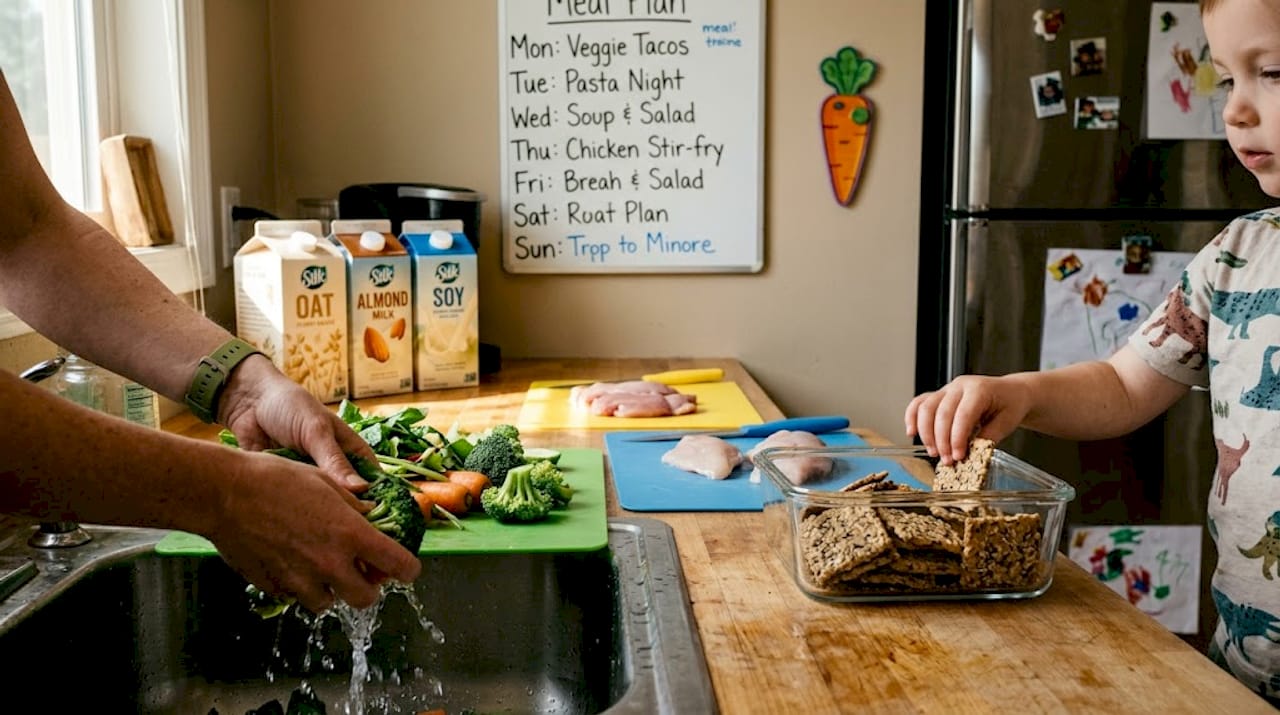
Pro Tip: Spend 30 minutes each weekend preparing allergen-free snack packs like cut vegetables, safe crackers, and seed butter portions. Having grab-and-go options ready dramatically reduces the temptation to reach for unsafe convenience foods during the week.
How to create weekly allergen-safe meal plans
With your kitchen organized and your safe ingredient list ready, building a structured weekly plan is the next step. Structure removes guesswork and prevents last-minute unsafe choices.
Batch cooking, meal freezing, and rotating menus improve variety and safety while saving time and minimizing risk across the week.
Step-by-step weekly planning guide:
- Choose 3 to 4 protein sources safe for your child (e.g., chicken, lentils, salmon)
- Select 4 to 5 vegetable and grain combinations as side rotations
- Plan 2 breakfasts, 2 lunches, and 2 dinners, then rotate throughout the week
- Prep large batches of safe proteins and grains on Sunday
- Freeze labeled, dated portions for backup meals
- Keep a “safe snack station” stocked at all times
Quick allergen-free menu ideas:
- Breakfast: Certified oat porridge with banana and hemp seeds; rice flour pancakes with maple syrup
- Lunch: Bento box with rice cakes, sliced turkey, cucumber sticks, and safe hummus
- Dinner: Grilled chicken with roasted sweet potato and steamed broccoli; lentil soup with rice
- Snacks: Sunflower seed butter with apple slices; roasted pumpkin seeds; safe fruit pouches
For hands-on kid-friendly allergy-free recipes with detailed prep instructions, there are resources designed specifically for families managing multiple restrictions.
Useful meal planning tips help you build rotating menus that stay varied without requiring daily creativity.
Pro Tip: Involve your child in age-appropriate meal prep tasks like washing vegetables, mixing dry ingredients, or picking their lunch components from a safe list. Children who participate in food preparation are more likely to eat what is made and develop confidence in managing their own needs.
Also use meal prep for parents strategies to turn one cooking session into four to five days of safe, ready meals.
Nutrition strategies: Meeting needs and avoiding deficiencies
When you eliminate major allergens from your child’s diet, key nutrients can disappear with them. Replacing those nutrients intentionally is essential for healthy growth.
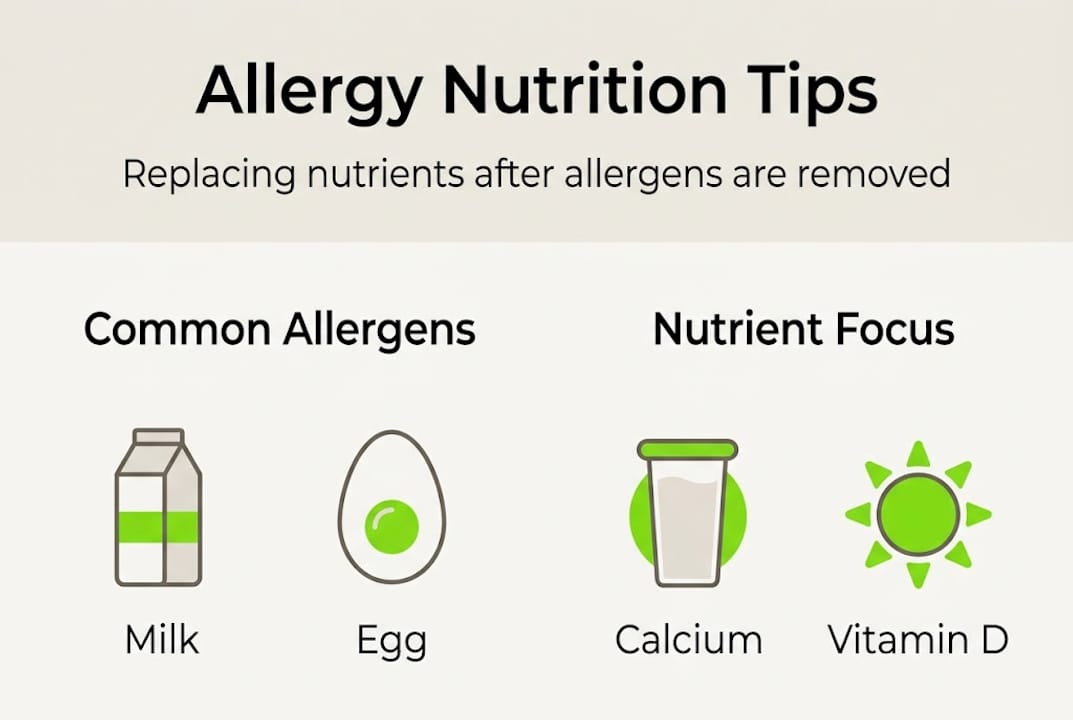
Children with multiple allergies are at higher risk of nutritional gaps but thrive when nutrients are replaced systematically through whole foods, fortified products, and appropriate supplementation.
Nutrient replacement guide by allergen removed:
| Allergen eliminated | At-risk nutrients | Best replacements |
|---|---|---|
| Dairy | Calcium, Vitamin D, B12 | Fortified oat milk, fortified OJ, salmon |
| Egg | Protein, choline, B12 | Legumes, meat, sunflower seeds |
| Fish/Shellfish | Omega-3, iodine, zinc | Flaxseed, chia, iodized salt |
| Wheat | Iron, fiber, B vitamins | Fortified rice, quinoa, lentils |
| Tree nut/Peanut | Vitamin E, magnesium | Sunflower seeds, pumpkin seeds |
For detailed nutrient strategies for allergies, evidence-based guidance is available to help you fill each specific gap.
Signs of nutritional deficiency to monitor:
- Persistent fatigue or low energy
- Slow growth or weight gain concerns
- Brittle nails or hair thinning
- Frequent illness or slow wound healing
- Irritability or difficulty concentrating
“Children following elimination diets should have their growth monitored regularly. Partnering with a registered dietitian who specializes in pediatric allergies is one of the most effective steps parents can take to prevent nutritional shortfalls.” — Pediatric Nutrition Guidance
If your child follows an importance of health-focused meal planning approach, gaps are easier to spot and address proactively. For picky eaters who are also allergy-restricted, specific meal planning for picky eaters strategies can help expand variety safely.
Troubleshooting and adapting for real-life challenges
Even the best-planned week hits unexpected moments. Knowing how to respond quickly and calmly is just as important as planning ahead.
Multiple allergies, FPIES (food protein-induced enterocolitis syndrome), and baked milk or egg tolerance require nuanced, individualized approaches that go beyond standard elimination advice.
Common unexpected allergen sources:
- Art and craft materials (playdough, finger paints)
- Oral care products like flavored toothpaste
- Medications with fillers or coatings
- Takeout containers coated with wheat-based starch
- Holiday candies and seasonal foods from unknown brands
If your child reacts unexpectedly, stay calm, administer prescribed medications (including epinephrine if indicated), call emergency services if needed, and document what was eaten to review with your allergist. Having a written allergy action plan at home, school, and with caregivers is critical.
For families managing two or more allergens, menu adaptation requires layering restrictions. A dairy-plus-egg-free child needs recipes that use neither butter nor eggs, which rules out many baked goods. The solution is recipe-testing with proven allergen-free substitutions and building a trusted recipe library over time.
Review school allergy management guidelines to prepare formal action plans for educators and school staff.
For travel or social events, pack a dedicated allergen-free food bag and communicate clearly with hosts or venues in advance. Budget-friendly meal planning approaches can help offset the cost of specialty allergy-free foods.
Pro Tip: Teach your child simple, direct phrases like “I cannot eat that, I have an allergy” as early as developmentally appropriate. Self-advocacy is a safety skill, and the earlier children learn it, the safer they are in independent settings.
Our perspective: What most allergy meal planning guides overlook
Most allergy meal planning resources stop at restriction. They list what to remove and how to avoid it, but rarely address when and how to ease those restrictions safely over time.
The truth is that over-restriction can create its own problems. Highly limited diets cause nutritional gaps, social isolation at mealtimes, and anxiety that outlasts the allergy itself. The goal is not to build the most restrictive possible diet. It is to build the most nutritious, socially functional diet that is still safe.
Allergists and dietitians now know that many children tolerate baked forms of milk and egg even when they react to the raw versions. These “baked milk” and “baked egg” protocols can significantly expand a child’s diet when supervised medically.
We believe the best allergy families use how to personalize meal planning principles to adapt their approach as the child grows and circumstances change. Safety is the floor, not the ceiling.
Get personalized help and easy meal planning support
If you’re ready to make meal planning simpler and safer, Dietium is here to help. Our family meal planning guide provides structured frameworks built for real families with real dietary restrictions. You can access personalized meal plans designed around your child’s specific allergy profile, nutritional needs, and food preferences. For caregivers who want a data-driven starting point, our nutritional assessment methods tools help identify gaps before they become problems. Dietium removes the guesswork from allergy meal planning so you can focus on what matters most: raising a healthy, happy child.
Frequently asked questions
How do I ensure my child’s meals are truly allergen-free?
Strict avoidance, meticulous label reading every purchase, and separate cooking tools greatly reduce the risk of allergen exposure in home-prepared meals.
What are the best substitutes for milk, eggs, or nuts in recipes?
Plant milks, flaxseed gel, and sunflower or pumpkin seeds are reliable alternatives for dairy, eggs, and nuts when confirmed safe for your child’s specific allergy profile.
Should I use supplements if my child has multiple food allergies?
If nutrient gaps persist after using safe whole foods and substitutes, consult a dietitian about targeted supplements for calcium, vitamin D, or other at-risk nutrients.
How can I help my child eat allergy-free at school or events?
Create a written allergy action plan, teach regular handwashing, and send clearly labeled safe foods for school or outings based on school allergy management guidelines.
Can children outgrow food allergies?
Many children outgrow milk, egg, soy, and wheat allergies by age five, though peanut and tree nut allergies persist more often into adulthood.
Recommended
- Meal Planning for Picky Eaters: A Simple Success Guide – Dietium
- Meal Planning for Families: A Practical Step-by-Step Guide – Dietium
- Simplify Your Diet: Meal Planning Automation Saves Hours – Dietium
- Master meal planning for fitness goals: boost results – Dietium
- Optimal fôringsrutine for allergihund – steg for steg guide — Dr-Clauder Norge


