 Skip to content

Many fitness enthusiasts train hard but struggle with inconsistent nutrition, which stalls progress and leaves gains on the table. Without a structured meal plan aligned with your specific goals, you risk underfueling workouts, missing recovery windows, and losing motivation. This guide provides a research-backed, practical approach to meal planning that optimizes nutrition, supports performance, and makes healthy eating sustainable so you can finally see the results your training deserves.
Table of Contents
- Key takeaways
- Understanding your fitness nutrition needs
- Practical meal prep techniques to save time and improve adherence
- Balancing macros for performance and recovery
- Monitoring progress and adjusting your meal plan
- Explore personalized meal planning solutions at Dietium
- FAQ
Key Takeaways
| Point | Details |
|---|---|
| Periodized macros | Adjust carbohydrate intake to match training demands to optimize performance, recovery, and metabolic flexibility. |
| Calculate TDEE | Use a calorie baseline from your total daily energy expenditure to set protein, carbohydrate, and fat targets. |
| Batch cooking | Frontload cooking by preparing proteins, grains, and vegetables in one or two sessions to save time and reduce waste. |
| Flexible templates | Choose base ingredients and rotate sauces and sides for variety with minimal planning. |
Understanding your fitness nutrition needs
Before you fill your meal prep containers, you need to know what your body actually requires. Start by calculating your total daily energy expenditure (TDEE), which accounts for your basal metabolic rate plus activity level. This number gives you a calorie baseline to work from, whether you want to build muscle, lose fat, or maintain performance. Once you have your TDEE, set macronutrient targets based on your specific goals: protein to preserve and build muscle, carbohydrates to fuel training intensity, and fats for hormone health and satiety.
The real game changer is periodized nutrition, which means adjusting your intake to match training demands. On high-intensity or volume days, you might consume 6 to 12 grams of carbohydrates per kilogram of body weight to support performance and glycogen replenishment. On lighter or rest days, you scale back to promote recovery without excess. This approach, often called the 4Ps framework (Personalize, Periodize, Prefuel, Prepare), enhances metabolic flexibility and prevents the fatigue that comes from static meal plans.
Avoid cookie-cutter programs that ignore your unique metabolism, training schedule, and preferences. Personalization and periodization are critical for sustainable results, so use apps or spreadsheets to track your intake and adjust as you learn how your body responds. Tools like Dietium’s calculators can simplify TDEE estimation and macro distribution, making it easier to stay consistent without constant mental math.
Pro Tip: Start with a moderate calorie target and track for two weeks before making changes. This baseline data reveals your true maintenance level and prevents guesswork.
Key steps to personalize your nutrition:
- Calculate TDEE using an online calculator or app that includes activity multipliers
- Set protein at 1.6 to 2.2 grams per kilogram for most fitness goals
- Adjust carbohydrates based on training intensity and volume for that day
- Fill remaining calories with healthy fats to support hormones and satiety
- Reassess every 2 to 4 weeks based on progress and how you feel
For more guidance on defining targets, check out our setting nutrition goals resource. If you want help choosing the right tracking tool, explore our meal planning apps comparison to find one that fits your workflow.
Practical meal prep techniques to save time and improve adherence
Knowing your macros is one thing, but executing them consistently is where most people stumble. Meal prep solves this by frontloading cooking effort so healthy meals are ready when hunger or fatigue hits. Batch cooking involves preparing multiple servings of proteins, grains, and vegetables in one or two sessions per week, typically taking 60 to 120 minutes total. This meal prep approach improves diet quality, saves time and money, and reduces food waste by using ingredients efficiently.

Start by choosing a few base ingredients that you can mix and match throughout the week. For example, cook a large batch of chicken breast, brown rice, and roasted vegetables on Sunday. Then rotate sauces, spices, and sides to create variety without extra work. This flexible template strategy keeps meals interesting while minimizing decision fatigue and prep time.
Organize your fridge and freezer so prepped meals are easy to grab. Use clear containers, label everything with dates, and store similar items together. Proper storage prevents spoilage and helps you see what you have at a glance, which reduces the temptation to order takeout when you think there’s nothing to eat.
Pro Tip: Prep ingredients rather than full meals if you prefer spontaneity. Having cooked proteins, chopped veggies, and cooked grains ready lets you assemble fresh meals in minutes without the monotony of eating the same dish all week.
Effective meal prep strategies:
- Dedicate 1 to 2 hours on a weekend day for batch cooking staples
- Use one-pan or slow-cooker recipes to minimize cleanup and effort
- Freeze extra portions in single-serve containers for busy weeks
- Rotate spices and sauces to keep flavors fresh without extra cooking
- Prep snacks like portioned nuts, yogurt, or fruit to avoid impulsive choices
| Meal Prep Method | Time Investment | Flexibility | Best For |
|---|---|---|---|
| Full meal batch | 90-120 min/week | Low | Busy schedules, consistent eaters |
| Ingredient prep | 60-90 min/week | High | Variety seekers, spontaneous cooks |
| Hybrid approach | 75-105 min/week | Medium | Balanced routine, mixed preferences |
For step-by-step guidance, visit our meal prep for beginners guide. If you have a family or want to scale up, check out our batch cooking tips. You can also explore food prep techniques for additional strategies to streamline your process.
Balancing macros for performance and recovery
Protein is the foundation of any fitness-focused meal plan because it supports muscle repair, immune function, and satiety. Research shows that protein intake between 2.3 and 3.1 grams per kilogram of fat-free mass preserves lean tissue during a caloric deficit, which is crucial when you’re trying to lose fat without sacrificing strength. Even if you’re not cutting, hitting 1.6 to 2.2 grams per kilogram ensures you maximize muscle protein synthesis after training.
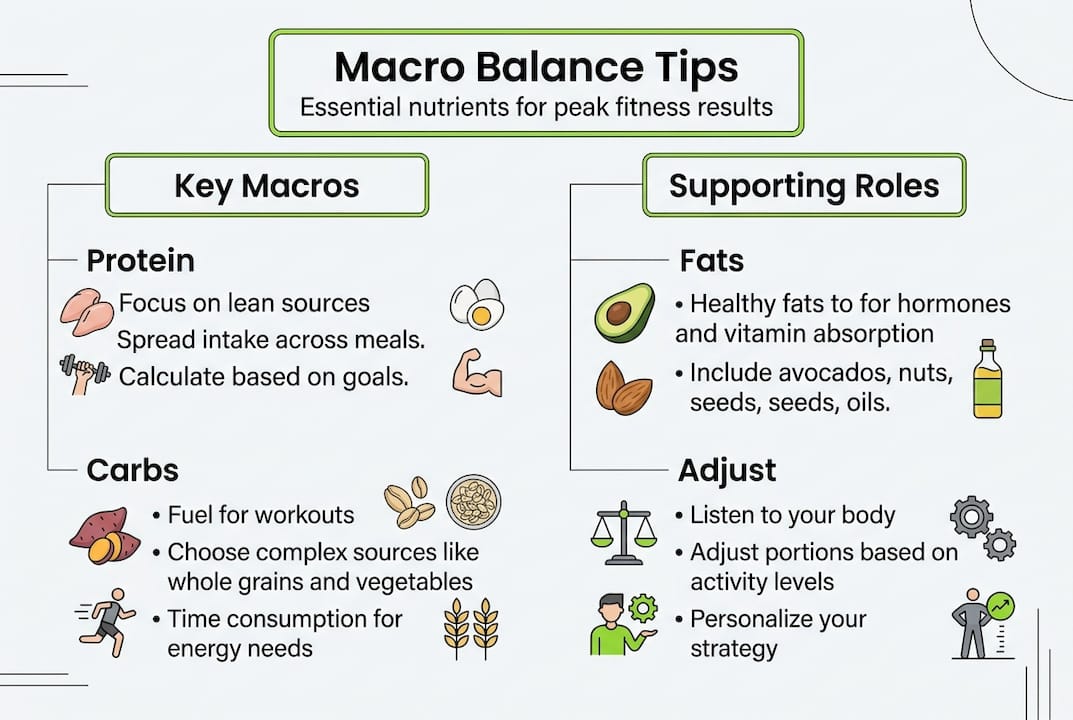
Carbohydrates fuel high-intensity efforts and replenish glycogen stores, making them essential for anyone doing strength training, sprints, or endurance work. Endurance athletes often consume 6 to 12 grams per kilogram on heavy training days to maintain performance and recovery. However, comparing high-carb versus low-carb diets reveals that while low-carb or ketogenic approaches boost fat oxidation, they can impair high-intensity performance. There’s no universal winner, so your carb intake should match your training demands and personal response.
Fats often get neglected, but they’re vital for hormone production, vitamin absorption, and long-term energy. Aim for 0.5 to 1 gram per kilogram of body weight, prioritizing sources like avocados, nuts, olive oil, and fatty fish. Avoid going too low on fats, as this can disrupt hormones and leave you feeling sluggish.
Consistently tracking your intake and adjusting based on how you feel and perform is the key to finding your ideal balance. Some people thrive on higher carbs, while others do better with moderate carbs and higher fats. Experimentation and honest self-assessment will guide you to what works.
| Macronutrient | Role | Recommended Range (per kg body weight) |
|---|---|---|
| Protein | Muscle repair, satiety, immune function | 1.6-3.1 g (higher in deficit) |
| Carbohydrates | Energy for training, glycogen replenishment | 3-12 g (periodize by intensity) |
| Fats | Hormones, vitamin absorption, sustained energy | 0.5-1 g |
Key considerations for macro balance:
- Prioritize protein across all meals to maintain muscle and control hunger
- Time higher carb intake around training sessions for better performance
- Don’t fear fats, but choose quality sources and monitor total intake
- Avoid extreme low-carb diets if your training includes high-intensity intervals or heavy lifting
- Adjust macros based on energy levels, recovery quality, and body composition changes
For practical tracking strategies, see our tracking macros guide to simplify logging and stay consistent without obsessing over every gram.
Monitoring progress and adjusting your meal plan
A meal plan is only as good as the feedback loop you create around it. Regularly measuring body composition, strength benchmarks, and subjective energy levels tells you whether your nutrition strategy is working or needs tweaking. Use methods like progress photos, body measurements, and performance logs rather than relying solely on scale weight, which fluctuates daily due to water, food volume, and hormones.
Effective tracking enhances adherence and predicts long-term success, so find a system that fits your lifestyle. Apps like MyFitnessPal, Cronometer, or Dietium’s built-in tools make logging quick and provide instant feedback on your macro distribution. If apps feel tedious, a simple journal noting meals, workouts, and how you felt can reveal patterns just as effectively.
Adjust your calorie and macro targets based on what the data shows. If you’re losing strength or feeling constantly fatigued, you might be undereating or timing carbs poorly. If fat loss stalls for more than two weeks despite consistency, a small calorie reduction or reallocation of macros might reignite progress. The goal is gradual, sustainable change, not drastic cuts that tank performance and motivation.
Maintain flexibility by periodizing your nutrition around training cycles, travel, social events, and life stress. Rigid plans breed guilt and burnout, while adaptable frameworks keep you consistent over months and years. Planning meals frequently, even if it’s just a rough outline for the week, improves adherence and reduces the cognitive load of daily food decisions.
Pro Tip: Schedule a weekly 10-minute review session to compare your planned meals against what you actually ate, note any challenges, and adjust next week’s plan accordingly. This habit builds self-awareness and prevents small slip-ups from becoming long-term patterns.
Steps to monitor and adjust effectively:
- Weigh yourself 3 to 5 times per week and track the average, not individual readings
- Take progress photos and body measurements every 2 to 4 weeks under consistent conditions
- Log key lifts or performance markers to ensure strength is maintained or improving
- Rate your energy, sleep quality, and mood weekly to catch early signs of overtraining or undereating
- Adjust calories or macros by 5 to 10 percent if progress stalls for more than two weeks
- Revisit your meal prep routine and template variety to prevent boredom and maintain motivation
For more on tracking methods, explore why track progress and our guide on tracking body measurements to ensure you’re capturing the right data points.
Explore personalized meal planning solutions at Dietium
Applying these principles becomes effortless when you have the right tools and guidance. Dietium offers personalized meal plans tailored to your unique fitness goals, training schedule, and food preferences, so you never have to guess what to eat. Our platform includes advanced calculators that estimate your TDEE, recommend macro splits, and suggest meal timing strategies based on your activity level.
Beyond meal plans, Dietium provides comprehensive nutritional assessment methods to evaluate your current intake, identify gaps, and track improvements over time. Whether you’re new to meal planning or looking to refine an existing routine, our setting nutrition goals guide walks you through defining realistic, measurable targets that align with your fitness ambitions. With seamless device integration, real-time tracking, and access to expert guidance, Dietium transforms meal planning from a chore into a streamlined, data-driven process that supports your long-term success.
FAQ
What are the best macros for muscle gain and fat loss?
Protein between 1.6 and 3.1 grams per kilogram of fat-free mass helps preserve muscle, especially during a caloric deficit. Carbohydrates should be periodized with training intensity, consuming more on heavy training days to fuel performance and less on rest days to support fat oxidation. Fats should remain moderate, around 0.5 to 1 gram per kilogram, to support hormones without crowding out protein and carbs. Individual responses vary, so track your progress and adjust based on energy levels and body composition changes.
How often should I meal prep to stay consistent?
Batch cooking once or twice weekly usually balances time savings and freshness, with most people spending 60 to 120 minutes per session. Prepping full meals works well if you enjoy routine, while prepping base ingredients offers more flexibility for spontaneous cooking. Regularly updating your meal templates and rotating flavors helps maintain variety and prevents boredom, which is crucial for long-term adherence. The best frequency is the one you can sustain without feeling overwhelmed or restricted.
Is low-carb or high-carb better for endurance training?
High-carb intake, often 6 to 12 grams per kilogram on training days, supports high-intensity endurance performance by maintaining glycogen stores and delaying fatigue. Low-carb or ketogenic diets enhance fat oxidation, which can benefit ultra-endurance events at lower intensities, but they may reduce peak power output during hard efforts. Neither approach is universally superior, so your choice should align with your event demands, training intensity, and how your body responds. Periodizing carbs based on workout type often provides the best of both worlds.
How can I track my meal plan progress effectively?
Use body composition measures like progress photos, waist circumference, and body fat percentage alongside strength benchmarks such as key lifts or performance tests. Subjective markers like energy levels, sleep quality, and mood provide early signals that your nutrition needs adjustment before objective measures change. Leverage apps or journals for consistent and easy tracking, logging meals and workouts in one place to spot patterns. Weekly reviews of your data help you make informed adjustments rather than reacting to daily fluctuations or guesswork.


