 Skip to content

Pushing through a grueling session leaves every athlete searching for ways to feel stronger and bounce back faster. Recovery nutrition is more than refueling. It is how competitors restore energy, repair muscle, and prepare the body for the next challenge. When you use strategies like rapid protein and carbohydrate intake post-workout to accelerate muscle recovery and reduce fatigue you gain a measurable edge in both performance and injury prevention. This guide reveals practical, evidence-based approaches that help serious athletes and trainers turn smart nutrition into real results.
Table of Contents
- What Recovery Nutrition Means For Athletes
- Macronutrients And Their Role In Recovery
- Optimal Timing And Nutrient Windows Post-Activity
- Hydration And Electrolyte Replenishment Explained
- Common Recovery Nutrition Mistakes To Avoid
Key Takeaways
| Point | Details |
|---|---|
| Recovery Nutrition Importance | Recovery nutrition is crucial for athletes, impacting muscle repair, glycogen replenishment, and overall performance. Proper timing and nutrient balance are key. |
| Macronutrient Roles | Protein, carbohydrates, and fats each play vital roles in recovery, with specific intake timings enhancing their effectiveness. Aim for the right ratios post-exercise. |
| Hydration Necessity | Adequate hydration and electrolyte balance are essential for recovery; simply drinking water is not enough. A comprehensive fluid replacement strategy is required. |
| Common Mistakes | Athletes often underfuel or neglect micronutrients, which significantly impede recovery. Calculating caloric needs and focusing on whole foods can mitigate these issues. |
What Recovery Nutrition Means for Athletes
Recovery nutrition is not just about eating after your workout. It’s a deliberate, science-backed strategy that determines how quickly your body bounces back, how effectively you repair muscle damage, and how ready you are for your next training session. When you push hard in competition or training, your body enters a state of physiological stress. Your muscle fibers break down, your glycogen stores deplete, and your fluid and electrolyte balance shifts. Recovery nutrition is the process of systematically restoring what your training session took from you.
Think of your body after intense exercise like a damaged structure. The construction materials are gone, the workers are exhausted, and the blueprint needs updating. Post-exercise recovery strategies work to replenish energy stores, repair muscle damage, and promote adaptations that improve your next performance. This happens through three core mechanisms. First, carbohydrates restore your glycogen, the primary fuel your muscles rely on during intense activity. Without this replenishment, your training quality drops the next day, your strength diminishes, and your endurance suffers. Second, protein provides the amino acids your muscle fibers need to rebuild stronger than before. This is where adaptation happens. Your muscles don’t get stronger during the workout itself. They get stronger during recovery, when protein synthesis is elevated and your body is actively repairing the microdamage caused by training. Third, hydration maintains fluid balance and supports every physiological process your body uses to recover. When you combine carbohydrates with protein or fats, something powerful occurs. The carbs accelerate glycogen resynthesis while the protein enhances muscle repair, creating a synergistic effect that beats either nutrient alone.
Beyond these three pillars, micronutrients like omega-3 fatty acids and antioxidants play emerging roles in reducing inflammation and supporting faster recovery, particularly when you’re competing frequently or training hard several times per week. Proper nutrition also modulates how your immune system responds to the stress of training, shortens the downtime between sessions, and helps you maintain consistent training quality across weeks and months. Tailored nutrition plans are critical because no two athletes have identical needs. Your recovery nutrition depends on your sport, training intensity, body composition goals, and competition schedule. An endurance athlete needs different carbohydrate timing than a strength athlete. A competitor with back-to-back matches has different micronutrient demands than someone with a week between competitions.
What makes recovery nutrition so powerful is that it’s measurable and manageable. Unlike genetics or talent, which you can’t control, recovery nutrition is something you can optimize immediately. You can track your carbohydrate intake, monitor your protein consumption, measure your hydration status, and adjust based on performance outcomes. This is why nutrition acts as a dynamic, measurable process that directly influences how long you stay healthy, how consistently you can train, and how close you get to your physiological potential. Recovery nutrition isn’t optional for serious athletes. It’s the difference between marginal improvements and significant performance gains.
Pro tip: Begin your recovery nutrition within 30 minutes after finishing your workout, when your muscles are primed to absorb nutrients and your glycogen resynthesis rate is highest.
Macronutrients and Their Role in Recovery
Macronutrients are the foundation of recovery. Protein, carbohydrates, and fats work together to restore your body after training, but they each play distinct roles that you need to understand if you want to optimize your results. When you finish an intense workout, your body is in a state of metabolic demand. Your muscles are primed to absorb nutrients, your glycogen stores are depleted, and your protein synthesis is elevated. This window is your opportunity to feed your recovery strategically. The macronutrient balance you choose during this period directly determines how quickly you bounce back, how much muscle you preserve, and how well you perform in your next session.
Protein: The Muscle Repair Engine
Protein is non-negotiable for recovery. After training, your muscle fibers have incurred microscopic damage that requires amino acids to rebuild and adapt. Protein intake offsets anabolic resistance and maintains muscle mass, especially when you’re training hard or recovering from injury. Most research suggests consuming between 0.3 to 0.5 grams of protein per kilogram of body weight within the first few hours after training. For a 180 pound athlete, that’s roughly 25 to 40 grams of protein. This amount stimulates muscle protein synthesis without overwhelming your digestive system. Omega-3 fatty acids enhance anabolic sensitivity, meaning your muscles become more responsive to the protein you consume and better able to utilize it for repair and growth. This is why pairing lean protein with foods containing omega-3s like fatty fish or flaxseeds creates a powerful recovery combination.

Carbohydrates: Refueling Your Energy Reserves
Carbohydrates replenish glycogen, the stored carbohydrate your muscles burned during training. Without adequate carbohydrate intake post-workout, your glycogen remains depleted, compromising your performance the next day and potentially triggering muscle breakdown as your body searches for energy sources. The timing matters here. Consuming carbohydrates immediately after training accelerates glycogen restoration because your muscles are sensitive to glucose uptake. However, the real magic happens when you combine carbohydrates with protein. Simultaneous intake inhibits muscle breakdown and improves recovery outcomes beyond what either nutrient achieves alone. This synergy occurs because insulin, released in response to carbohydrates, drives amino acids from the protein into muscle cells more efficiently. Most athletes benefit from 1 to 1.2 grams of carbohydrates per kilogram of body weight in the first four hours after training. For that same 180 pound athlete, this translates to roughly 80 to 100 grams of carbohydrates. Simple carbohydrates like white rice, potatoes, or fruit work well immediately post-workout because they digest quickly and raise insulin rapidly.
Fats: The Often-Overlooked Recovery Component
While protein and carbohydrates dominate recovery conversations, fats deserve attention too. Fats slow gastric emptying, meaning they help you feel satisfied longer, but they also contain essential fatty acids that reduce inflammation and support hormonal balance. Combining proteins and carbohydrates in appropriate ratios enhances recovery, but adding healthy fats from nuts, avocados, or seeds can further optimize this process. The key is proportion. A typical post-workout meal might include 25 to 40 grams of protein, 80 to 100 grams of carbohydrates, and 10 to 15 grams of fat. This ratio supports glycogen replenishment, muscle tissue regeneration, and hormonal normalization without causing digestive discomfort.
Think of macronutrient timing and ratios as a recipe. Protein provides the building blocks, carbohydrates fuel the process, and fats support the underlying biology. Get the proportions wrong, and your recovery suffers. Get them right, and your adaptations accelerate.
Pro tip: Consume your post-workout meal within 60 to 90 minutes after finishing exercise, combining 25 to 40 grams of protein with 80 to 100 grams of carbohydrates for optimal glycogen restoration and muscle repair.
Here’s a quick reference summarizing the roles of each macronutrient and recovery nutrient timing:
| Nutrient | Main Role in Recovery | Optimal Intake Timing | Example Food Sources |
|---|---|---|---|
| Protein | Muscle repair & growth | Within 30-60 mins post-exercise | Greek yogurt, chicken |
| Carbohydrate | Glycogen replenishment | Within 30-90 mins post-exercise | Rice, fruit, potatoes |
| Fat | Inflammation control & satiety | With main post-exercise meal | Avocado, nuts, seeds |
| Sodium (Electrolyte) | Fluid retention & nerve function | During and after training | Sports drinks, salted nuts |
| Water | Restore hydration | Throughout recovery window | Water, electrolyte drinks |
Optimal Timing and Nutrient Windows Post-Activity
Timing matters more than most athletes realize. You could eat the perfect macronutrient combination, but consume it at the wrong time, and you lose a significant portion of its recovery benefit. The period immediately following exercise is when your body is most receptive to nutrients. Your muscles are depleted, your blood flow to muscle tissue is elevated, and your cells are primed to absorb glucose and amino acids. This is your recovery window, and understanding how to use it separates athletes who recover well from those who recover slowly.
The concept of the anabolic window has evolved over the years. Originally, sports scientists believed you had only 30 minutes after exercise to consume nutrients before recovery benefits disappeared. Current research shows the window is more forgiving than that, but the advantage of rapid nutrient intake remains clear. Timing of protein and carbohydrate supplementation immediately after exercise significantly accelerates muscle recovery, glycogen replenishment, and reduces fatigue compared to delayed supplementation. The difference between consuming nutrients within 30 to 60 minutes versus several hours later can be substantial. When you consume carbohydrates and protein soon after training, your body experiences a spike in insulin, which facilitates glucose uptake into muscle cells and drives amino acids into those same cells for protein synthesis. This coordinated response creates an optimal environment for recovery. Delay your nutrition by several hours, and you miss this peak window. Your muscles still recover, but the speed and efficiency diminish.
The Practical Recovery Timeline
Understanding the timing framework helps you plan your recovery strategy. Within the first 30 to 60 minutes post-exercise, your muscles are most insulin-sensitive, meaning they respond most readily to carbohydrates and protein. This is when consuming a meal or shake produces the greatest glycogen restoration and muscle protein synthesis response. Aim for 20 to 40 grams of protein and 40 to 80 grams of carbohydrates during this window. Your body remains receptive to nutrients for several hours afterward, but the urgency and efficiency decrease. Protein doses of 20 to 40 grams within 1 to 2 hours post-exercise are recommended, with continued intake spaced evenly throughout the day for sustained recovery. This means your first post-workout meal should be your priority, but it doesn’t mean recovery ends there. Spread your total daily protein intake across multiple meals for continued muscle protein synthesis. An athlete consuming 120 grams of protein daily should distribute it as 30 grams at breakfast, 30 grams at lunch, 40 grams at dinner, and 20 grams as a snack, rather than loading all 120 grams into a single meal.
Individual factors influence your optimal timing. If you trained fasted or depleted your glycogen significantly, the urgency increases. If you ate a substantial meal two hours before training, your glycogen stores remained partially filled, and you have slightly more flexibility. Your exercise type matters too. Endurance athletes deplete glycogen heavily and benefit from rapid carbohydrate intake. Strength athletes focus more on protein synthesis, which remains elevated for 24 to 48 hours post-workout, giving them more flexibility in timing. The reality is that the optimal nutrient timing varies with individual factors and exercise type, but the principle remains constant. Consume nutrients as soon as practically possible after finishing your session. Bringing a protein shake or having a meal ready within an hour of training removes the guesswork and ensures you capture the recovery advantage your body is offering.
Pro tip: Prepare a portable post-workout meal like a protein shake, Greek yogurt with granola, or a chicken and rice bowl before you train so you can consume it within 30 to 60 minutes of finishing your session, maximizing your recovery window.
Hydration and Electrolyte Replenishment Explained
Hydration is the forgotten pillar of recovery nutrition. Athletes obsess over protein and carbohydrates but overlook fluid balance, which is equally critical for performance and recovery. When you exercise, you lose fluids through sweat. This fluid loss impacts your blood volume, your body’s ability to regulate temperature, and your muscle’s access to oxygen and nutrients. Without adequate rehydration, your performance crashes the next session, your recovery slows, and your injury risk climbs. Recovery is not just about replacing calories. It’s about restoring the internal environment your body needs to function optimally.
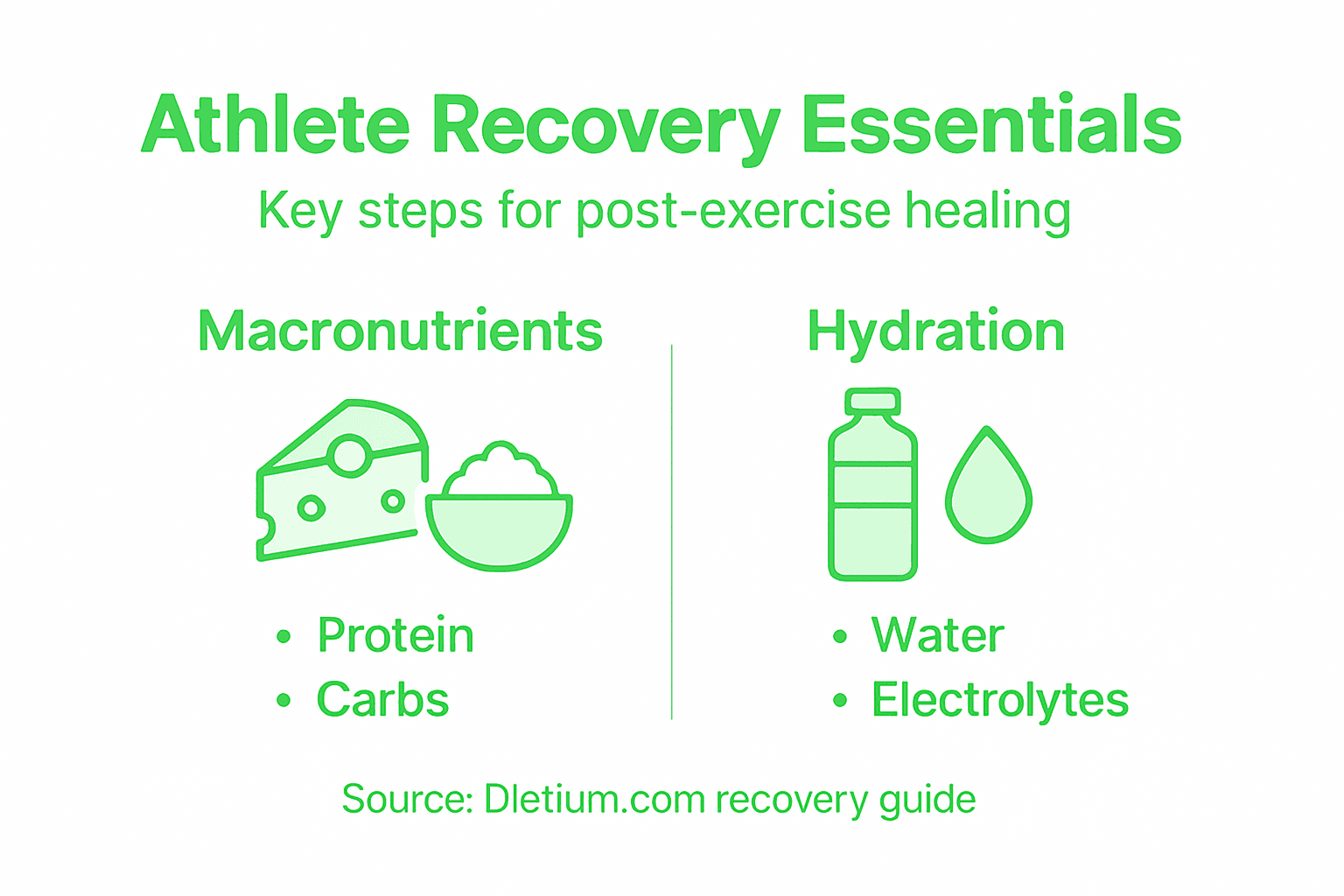
Electrolytes are minerals dissolved in your blood and body fluids that conduct electrical signals essential for muscle contraction, nerve function, and fluid balance. When you sweat, you lose sodium, potassium, magnesium, and calcium. Simply drinking water after exercise is not enough. Plain water dilutes your remaining electrolytes, which can actually impair your body’s ability to retain fluid and restore plasma volume. This is why electrolyte solutions with appropriate sodium levels enhance intestinal water absorption, maintain plasma osmolality, and improve fluid retention during recovery. A recovery beverage containing carbohydrates, protein, and sodium works synergistically. The carbohydrates stimulate insulin release, which helps your muscles absorb glucose and amino acids. The sodium enhances water absorption in your small intestine, allowing your body to retain more of the fluid you consume. The combination accelerates both energy restoration and hydration recovery. Most athletes who experience poor recovery are actually mildly dehydrated without realizing it. They feel fatigued, their muscles remain sore longer, and their strength doesn’t return quickly. Often, the problem is not their macronutrient intake but their fluid intake.
Understanding Your Individual Hydration Needs
Your hydration needs depend on multiple factors. How much you sweat varies based on your genetics, your fitness level, the intensity of your exercise, the environmental temperature, and your humidity exposure. An athlete training outdoors in summer loses significantly more fluid than one training indoors in winter. A strength athlete performing short, intense sets may sweat less than an endurance athlete running for an hour. This is why hydration strategies incorporate individualized fluid intake tailored to your sweat rate and electrolyte loss. Here’s how to find your baseline. Weigh yourself before training. Perform your typical workout. Weigh yourself immediately after. The difference between pre and post weights, plus any fluid you consumed during training, equals your sweat loss. If you lost 2 pounds during a 60 minute workout, you lost roughly one liter of fluid. During recovery, you should consume approximately 150 percent of the fluid you lost. So if you lost one liter, drink 1.5 liters over the next 4 to 6 hours. This 150 percent replacement accounts for ongoing urinary fluid losses. Consuming exactly what you lost leaves you still dehydrated because your body continues eliminating fluid through urine.
The timing and composition of your recovery hydration matter. Consume most of your fluid intake within the first two hours after training when your gut is most receptive to fluid absorption. Include sodium in your beverage at a concentration between 400 to 700 milligrams per liter. This level stimulates thirst, encouraging continued fluid intake, and enhances water retention. Carbohydrate-electrolyte beverages support both hydration and energy needs, particularly after prolonged or intense exercise. If you trained for over 90 minutes or performed very high intensity work, consume a beverage containing 4 to 8 percent carbohydrates. This is roughly 10 to 20 grams of carbohydrates per 250 milliliter bottle. Pair this with 20 to 40 grams of protein to enhance recovery further. The combination restores fluid volume, replenishes glycogen, and supports muscle repair simultaneously.
Dehydration impairs endurance, cognitive function, and increases your risk of heat illness. Even mild dehydration undermines your performance the next session. This is why monitoring your hydration status should be part of your standard recovery protocol. One practical marker is your urine color. Pale yellow indicates good hydration. Dark yellow or amber indicates dehydration. Track this for a few days to establish your baseline. Your body weight also provides feedback. If your weight drops more than 2 percent from your normal baseline, increase your daily fluid intake. Most athletes benefit from drinking enough fluids to maintain their body weight and achieve pale yellow urine within a few hours of training.
Pro tip: Use a daily water intake calculator to establish your baseline hydration needs, then add an extra 500 to 750 milliliters for every hour of intense training you perform to account for sweat loss during recovery.
Common Recovery Nutrition Mistakes to Avoid
Most athletes sabotage their recovery without realizing it. They train hard, push their limits, and then undo weeks of progress through poor nutrition choices. The mistakes are predictable and fixable. Understanding what goes wrong helps you avoid the traps that undermine countless athletes. Your recovery nutrition is only as effective as your weakest decision.
Underfueling Your Body
The most damaging mistake is eating too little. Many athletes restrict calories trying to lose weight or maintain a lean physique, not realizing this destroys recovery. When you undereat relative to your training demands, your body cannot repair muscle damage, restore glycogen, or maintain immune function. Your cortisol rises, your testosterone drops, and your muscle breaks down for energy. You feel perpetually fatigued. Your performance plateaus. You catch every cold that circulates your gym. The solution sounds obvious but requires discipline. Underfueling leads to fatigue and poor recovery, making it one of the most critical errors to address. Calculate your true energy needs based on your training volume, not some arbitrary calorie target. Most competitive athletes need 2400 to 3500 calories daily depending on their sport, body size, and training intensity. If you’re restricting to 1800 calories while training five days per week, you’re creating a metabolic disaster. Eat enough to support your training. Your body composition goals are secondary to your recovery and performance.
Neglecting Carbohydrates
Carbohydrates get unnecessary criticism from athletes influenced by diet trends. Low carbohydrate approaches work for sedentary people, not competitive athletes. Your muscles depend on carbohydrates for high intensity work. Your brain depends on carbohydrates for focus and decision making. Your nervous system depends on carbohydrates for recovery signaling. When you neglect carbohydrate intake post-workout, you compromise everything that follows. Your glycogen remains depleted. Your insulin response diminishes. Your protein synthesis declines. Your recovery stalls. This is why inadequate carbohydrate consumption post-exercise hinders recovery. Athletes often acknowledge the importance of protein but ignore carbohydrates, a fundamental error. Your recovery shake should contain roughly a two to one ratio of carbohydrates to protein. That 40 gram protein shake needs 80 grams of carbohydrates alongside it. Your post-workout meal should emphasize carbs over everything else. Rice, potatoes, oats, and fruit should dominate your plate, not just chicken or steak.
The Micronutrient and Hydration Blindspots
Athletes obsess over macronutrients but ignore micronutrients. Vitamins and minerals regulate every physiological process that enables recovery. Inadequate vitamin D impairs muscle function and immune response. Low iron diminishes oxygen transport to muscles. Insufficient zinc slows protein synthesis. Magnesium deficiency undermines sleep quality and muscle relaxation. Most athletes eating processed, convenient foods develop micronutrient gaps without knowing it. The solution requires eating whole foods across diverse categories. Colorful vegetables provide antioxidants. Fatty fish provides omega-3s. Nuts and seeds provide magnesium. Berries provide polyphenols. These foods cost more and require planning, which is why convenience foods and fast nutrition compromise recovery for so many athletes.
Dehydration compounds these problems. Athletes who drink inadequate fluid throughout the day and then fail to rehydrate properly after training enter a chronic dehydration state. This impairs nutrient delivery, slows muscle repair, and undermines performance. Many athletes believe a single water bottle after training addresses fluid loss. It does not. You need a deliberate rehydration strategy consuming 150 percent of your fluid loss over four to six hours post-exercise, including electrolytes.
The Timing Error
Finally, athletes consume their recovery nutrition hours after training when the anabolic window has narrowed considerably. Preparing meals takes time. Grocery shopping takes planning. It’s easier to skip recovery nutrition entirely or delay it until much later. This decision cuts your recovery efficiency significantly. Your muscles are primed to absorb nutrients immediately after exercise. Waiting three or four hours means missing peak insulin sensitivity and muscle responsiveness. Prepare your recovery meal before training. Have a shake ready. Pack your food. The convenience of proper timing pays dividends in recovery speed and adaptation.
Compare common recovery mistakes with their consequences and solutions below:
| Mistake | Impact on Recovery | How to Fix |
|---|---|---|
| Underfueling | Prolonged fatigue, slow healing | Calculate true calorie needs |
| Low carbohydrates | Muscle breakdown, poor energy | Emphasize post-workout carbs |
| Skipping micronutrients | Weak immune, slow adaptation | Eat colorful whole foods |
| Inadequate hydration | Soreness, risk of injury | Monitor fluid & electrolyte intake |
| Delayed nutrition | Missed recovery window | Pre-plan & pack meals |
Pro tip: Create a simple post-workout recovery protocol that includes a prepared meal or shake with specific carbohydrate and protein targets, then consume it within 60 minutes of finishing your session to eliminate guesswork and capture the maximum recovery benefit.
Maximize Your Recovery Nutrition with Personalized Support
Struggling to optimize your recovery nutrition after intense workouts can leave you feeling fatigued and slow your progress. This article highlights key challenges like timing your macronutrient intake, balancing carbohydrates and protein, and maintaining proper hydration and electrolyte levels to enhance muscle repair and performance. If you want to avoid common mistakes such as underfueling or neglecting the recovery window, a tailored approach that adapts to your unique training intensity, goals, and body metrics is essential.
At Dietium.com, our advanced AI-powered Recipians app helps you craft personalized meal plans that hit the precise protein and carbohydrate targets within optimal nutrient windows for your recovery. With smart recipe suggestions and fitness routines aligned to your body composition and sweat loss, you can seamlessly integrate hydration and electrolyte strategies into your daily routine. Dont wait to fall behind on recovery gains. Take control today and discover how customized nutrition plans paired with smart tracking tools can accelerate your healing and boost your athletic performance.
Visit Dietium.com now to start your personalized recovery journey and experience the difference that science-driven nutrition and effortless convenience make in achieving your healthiest, strongest self.
Frequently Asked Questions
What is recovery nutrition and why is it important for athletes?
Recovery nutrition refers to the deliberate intake of specific nutrients after intense exercise to replenish energy stores, repair muscle damage, and enhance overall recovery. It’s crucial for athletes as it determines how quickly they bounce back and how prepared they are for their next training session.
What macronutrients should I focus on for optimal recovery?
Athletes should prioritize protein for muscle repair, carbohydrates for glycogen replenishment, and healthy fats for inflammation control. Combining these macronutrients in the right ratios enhances recovery outcomes significantly.
When should I consume recovery nutrition for the best results?
It’s recommended to begin your recovery nutrition within 30 to 60 minutes after exercising, as this is when your muscles are most receptive to absorbing nutrients. Quick intake during this anabolic window accelerates recovery processes.
How can I determine my hydration needs after a workout?
To assess your hydration needs, weigh yourself before and after training to determine fluid loss. To restore hydration, aim to consume 150% of the fluid lost in the hours following exercise, including electrolyte replenishment to enhance fluid retention.


