 Skip to content

You might think only severe thirst signals dehydration, but research shows that losing just 2% of your body water significantly impairs both physical endurance and mental sharpness. This subtle fluid deficit happens faster than you realize during workouts or hot days, affecting everything from muscle power to decision-making. Understanding the science behind optimal hydration helps you maintain peak performance in fitness and daily life while avoiding both dehydration and the lesser-known risks of drinking too much.
Table of Contents
- How Dehydration Affects Physical Performance
- Hydration’s Role In Cognitive And Neuromuscular Function
- Risks Of Overhydration: Understanding Exercise-Associated Hyponatremia
- Optimizing Hydration Strategies For Performance And Wellness
- Enhance Your Hydration And Nutrition Journey With Dietium
Key takeaways
| Point | Details |
|---|---|
| Dehydration threshold | Losing more than 2% body mass from fluid loss reduces muscle power and endurance during exercise. |
| Cognitive impact | Even 1-3% fluid loss impairs attention, coordination, and brain efficiency, requiring extra mental effort. |
| Overhydration risk | Excessive fluid intake can cause exercise-associated hyponatremia, a dangerous low sodium condition. |
| Fluid composition | Carbohydrate solutions enhance fluid absorption more effectively than plain water or electrolytes alone. |
| Individual needs | Hydration strategies should match exercise intensity, duration, environmental heat, and personal sweat rates. |
How dehydration affects physical performance
Your body relies on sweat evaporation to maintain safe core temperature during exercise, especially in heat. When sweat losses exceed 2% of body mass, your physiological responses break down. Blood volume decreases, making your heart work harder to deliver oxygen to working muscles. Skin blood flow drops, reducing your cooling capacity and raising core temperature dangerously.
The performance consequences show up fast. Research demonstrates that dehydration beyond 2% body mass specifically impairs endurance capacity and muscle power output. You’ll notice reduced time to exhaustion, slower running pace, and diminished strength. These effects follow a dose-response pattern, meaning greater fluid deficits cause progressively worse impairment.
Heat amplifies every negative effect. When you exercise in warm environments while dehydrated, your body faces a double challenge: generating metabolic heat while lacking the fluid needed for effective cooling. This combination explains why maintaining hydration supports athletic performance and prevents heat-related illness.
“Sweating is the major avenue for cooling during exercise in heat, and body water losses exceeding 2% of body mass impair physiological responses.”
Key physical impacts of dehydration include:
- Reduced cardiovascular efficiency and elevated heart rate
- Impaired thermoregulation and increased core temperature
- Decreased muscle endurance and power generation
- Elevated perceived effort for the same workload
- Greater risk of heat exhaustion or heat stroke
Hydration’s role in cognitive and neuromuscular function
Your brain needs proper hydration just as much as your muscles do. Studies show that mild to moderate fluid loss impairs cognitive functions including sustained attention, executive decision-making, and motor coordination. These deficits matter whether you’re navigating complex game situations, making strategic workout decisions, or simply driving home after training.

The neuroscience reveals fascinating adaptation mechanisms. When you’re hypohydrated, your prefrontal cortex shows increased brain activity, suggesting your neurons work harder to maintain performance. This compensatory effort explains why tasks feel more mentally exhausting when you’re dehydrated. You can still function, but at a metabolic cost that reduces efficiency.
Cerebral blood flow changes add another dimension. Exercise and environmental conditions influence how dehydration affects brain perfusion. Reduced blood delivery to brain tissue can impair information processing speed and reaction time. These effects combine with direct cellular impacts to create measurable cognitive and neuromuscular deficits.
Cognitive functions affected by dehydration:
- Sustained attention and focus during prolonged tasks
- Executive function and strategic decision-making
- Working memory and information processing speed
- Motor coordination and movement precision
- Mood regulation and perceived task difficulty
Pro Tip: Monitor your cognitive sharpness as a hydration indicator. If you notice reduced focus, slower thinking, or coordination issues during workouts, you’re likely dehydrated before thirst becomes obvious. Understanding hydration’s impact on body function helps you recognize early warning signs.
Risks of overhydration: understanding exercise-associated hyponatremia
While dehydration dangers get plenty of attention, drinking too much fluid creates its own serious risks. Exercise-associated hyponatremia (EAH) occurs when excessive fluid intake dilutes blood sodium levels below normal ranges. This condition was once considered rare but affects athletes across various sports and exercise durations, from marathons to football practice.
The physiology involves more than simple dilution. Non-osmotic vasopressin secretion during prolonged exercise makes your kidneys retain water even when you’re overhydrated. This hormonal response combined with excessive fluid intake creates the perfect storm for sodium imbalance. Your cells swell with excess water, and when brain cells swell inside the rigid skull, intracranial pressure rises dangerously.
Symptoms range from mild to life-threatening. Early signs include headache, nausea, and vomiting that many athletes mistakenly attribute to exertion or heat. Severe cases progress to confusion, seizures, pulmonary edema, and coma. The challenge lies in distinguishing EAH from heat illness or dehydration, which require opposite treatments.
Recognizing and preventing EAH requires understanding these risk factors:
- Drinking beyond thirst during prolonged exercise lasting over 4 hours
- Consuming excessive plain water without adequate sodium replacement
- Slower exercise pace allowing more drinking opportunities
- Smaller body size with less total body water volume
- Non-steroidal anti-inflammatory drug use affecting kidney function
Pro Tip: Use your body weight as a guide. Gaining weight during exercise signals excessive fluid intake beyond sweat losses. Aim to finish workouts at roughly the same weight you started, maybe slightly lighter for longer sessions. This approach prevents both dehydration and overhydration.
Optimizing hydration strategies for performance and wellness
Effective hydration goes beyond drinking water whenever you remember. Evidence-based strategies consider exercise characteristics, environmental conditions, and individual physiology. Your hydration needs during a 30-minute strength workout differ dramatically from a 3-hour outdoor endurance session in summer heat.
Fluid composition significantly affects absorption and performance benefits. Research shows that carbohydrate solutions improve fluid delivery compared to plain water. Moderate carbohydrate concentrations (around 6-8%) enhance intestinal absorption while providing energy substrate for working muscles. Electrolytes play a supporting role, but carbohydrates drive the absorption advantage.
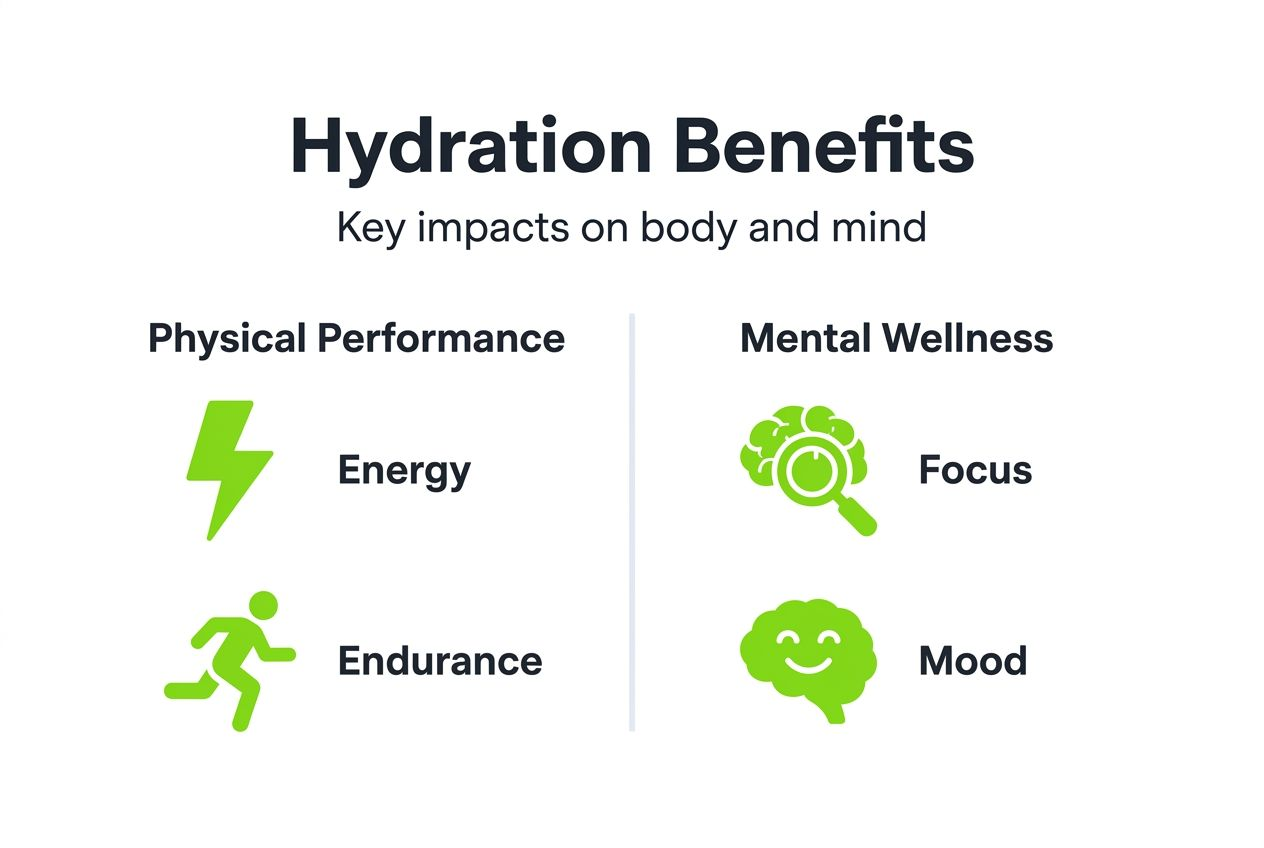
Timing matters as much as quantity. Starting exercise well-hydrated provides a buffer against early fluid deficits. During activity, drinking according to thirst and exercise demands maintains performance without risking overhydration. Post-exercise fluid replacement supports recovery and prepares you for the next training session.
| Beverage Type | Best For | Key Benefits | Limitations |
|---|---|---|---|
| Plain water | Short duration exercise under 60 minutes | Simple hydration, no calories | Slower absorption, no energy |
| Electrolyte drinks | Moderate duration, normal conditions | Sodium replacement, taste appeal | Limited absorption enhancement |
| Carbohydrate-electrolyte | Prolonged exercise, high intensity | Enhanced absorption, energy delivery | Caloric content, GI tolerance |
Practical hydration strategies:
- Pre-hydrate 2-3 hours before exercise with 400-600 ml fluid
- During exercise, drink 150-250 ml every 15-20 minutes for activities over 60 minutes
- Choose carbohydrate beverages for sessions exceeding 90 minutes
- Monitor urine color aiming for pale yellow
- Weigh yourself before and after long workouts to gauge fluid loss
- Replace 150% of sweat losses post-exercise to account for ongoing urine production
Pro Tip: Environmental heat dramatically increases sweat rates and hydration demands during running or cycling. Adjust fluid intake upward on hot days, but avoid forcing fluids beyond comfort. Learning to recognize your personal sweat patterns through natural hydration practices helps you fine-tune your strategy.
Enhance your hydration and nutrition journey with Dietium
Optimizing hydration works best within a comprehensive nutrition and wellness plan tailored to your unique goals. Dietium offers evidence-based nutritional assessment methods that evaluate your current habits and identify opportunities for improvement. Our platform integrates hydration guidance with broader dietary strategies, ensuring your fluid intake supports rather than undermines your fitness objectives.
Whether you’re training for competition or pursuing general wellness, personalized meal plans help you coordinate nutrition timing with hydration needs. Understanding when to emphasize fluid intake versus nutrient delivery maximizes both performance and recovery. Our nutrition goal setting guide provides structured approaches to building sustainable habits that incorporate optimal hydration as a cornerstone of health.
FAQ
How much water should I drink daily to stay hydrated?
Daily hydration needs vary based on body size, activity level, climate, and individual metabolism. General guidelines suggest approximately 3.7 liters for men and 2.7 liters for women, including fluids from food sources. However, these represent averages, not prescriptions. Listen to your thirst signals and monitor urine color, aiming for pale yellow as an indicator of adequate hydration status.
What are the signs of dehydration I should watch for during exercise?
Early dehydration signals include thirst, dry mouth, reduced urine output, and darker urine color. During exercise, watch for unusual fatigue, dizziness, headache, and declining performance beyond normal exertion. Muscle cramps and elevated heart rate at familiar intensity levels also suggest fluid deficit. Recognizing these signs early allows you to adjust intake and maintain performance. Practicing natural hydration strategies helps you stay ahead of deficits.
Can drinking too much water be harmful during workouts?
Yes, excessive fluid intake during prolonged exercise can cause exercise-associated hyponatremia, a dangerous condition where blood sodium drops too low. Symptoms progress from nausea and confusion to severe neurological effects including seizures. This risk increases when drinking beyond thirst during events lasting several hours. Balance your hydration by drinking to thirst rather than forcing fluids, and understand overhydration risks to avoid this serious but preventable condition.
What role do carbohydrates play in hydration?
Carbohydrates in beverages enhance fluid absorption more effectively than electrolytes alone. Moderate carbohydrate concentrations (6-8%) improve intestinal uptake while providing energy for working muscles. This dual benefit makes carbohydrate-electrolyte drinks superior to plain water for exercise lasting over 90 minutes. However, higher concentrations can slow absorption and cause gastrointestinal discomfort. Finding your optimal balance through natural hydration approaches helps you leverage carbohydrates without digestive issues.
Recommended
- Importance of Hydration: Unlocking Peak Body Function – Dietium
- Hydration and Performance: The Athlete’s Key to Peak Results – Dietium
- How to Stay Hydrated Naturally for Optimal Wellness – Dietium
- Sports Nutrition Basics: Fueling Fitness Performance – Dietium
- Why clean regularly: health, stress, and home benefits


