 Skip to content

TL;DR:
- Gut health involves optimal gastrointestinal function, immunity, and mucosal integrity, not just microbiome composition. It requires consistent dietary habits, stress management, sleep, and exercise to support a resilient, diverse microbiome and overall well-being. Long-term lifestyle changes, including fiber intake and fermented foods, are more effective than quick fixes or supplements alone.
Gut health is defined as a state of normal gastrointestinal function without active disease or gut-related symptoms that reduce quality of life. According to the ISAPP consensus, this definition spans multiple physiological domains, including digestion, immunity, and mucosal barrier integrity, not just microbiome composition. That distinction matters. Most people searching for gut health basics focus narrowly on bacteria counts or probiotic supplements, missing the fuller picture that researchers at UC Davis and the International Scientific Association for Probiotics and Prebiotics have spent years clarifying. Your gut is a system, and understanding how it works is the first step toward improving it.
What are gut health basics, really?
Gut health basics refer to the foundational principles governing how your gastrointestinal system functions, recovers, and interacts with the rest of your body. The ISAPP consensus is explicit: gut health must be measured through symptom burden and quality-of-life assessments, not microbiome tests alone. A person can have a diverse microbiome and still experience chronic bloating, irregular bowel movements, or fatigue that signals something is off. Conversely, someone with modest microbial diversity may feel and function well.

The gut connects directly to immune function, mental health via the gut-brain axis, and nutrient absorption. Maria Marco and Eamonn E. Quigley at UC Davis have both emphasized that comprehensive gut health evaluation requires clinical and patient-centered approaches, not a single biomarker. That framing should guide how you think about every gut health tip you encounter.
What is the gut microbiome and why does it matter?
The gut microbiome is the collective community of trillions of bacteria, fungi, viruses, and other microorganisms living in your digestive tract, primarily in the large intestine. It is one of the most studied ecosystems in human biology, and its influence on health extends well beyond digestion.
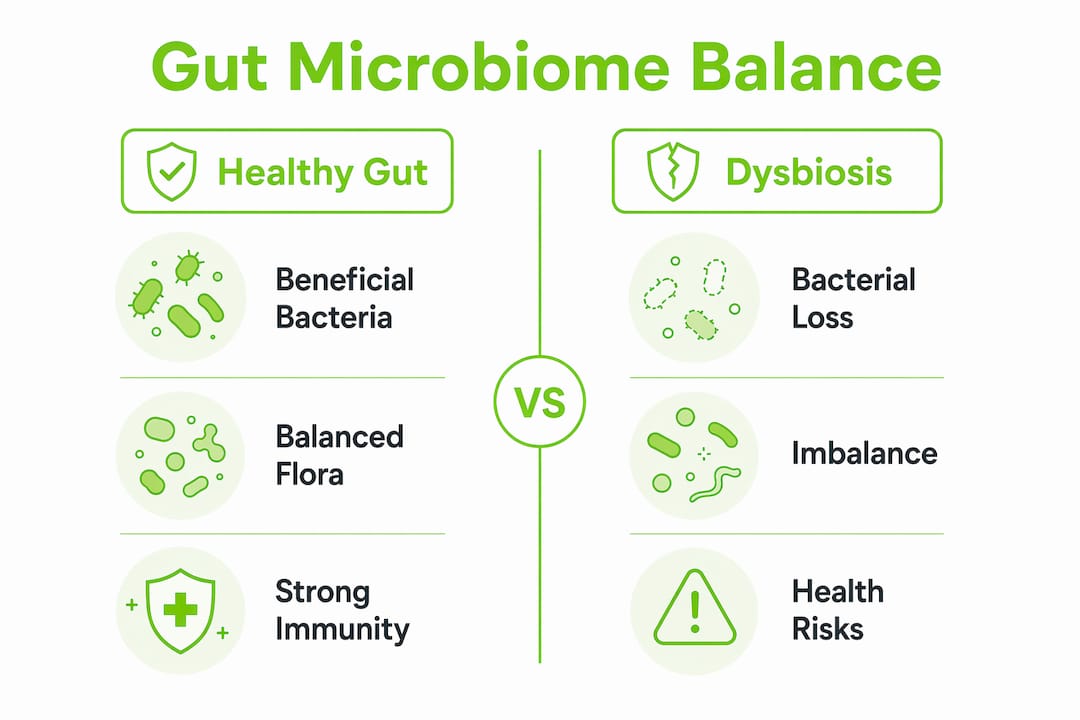
A healthy microbiome is characterized by three markers, according to USDA ARS research:
- Beneficial bacteria levels: Strains like Lactobacillus and Bifidobacterium dominate a healthy gut and crowd out harmful microbes.
- Short-chain fatty acid (SCFA) production: Bacteria ferment dietary fiber into SCFAs like butyrate, propionate, and acetate, which fuel colon cells, reduce inflammation, and regulate immune responses.
- Microbial diversity: A broader range of species correlates with resilience against disease and better metabolic function.
- Absence of disease-associated microbes: Pathogens like Clostridioides difficile are kept in check by a balanced microbial community.
When this balance breaks down, the result is dysbiosis. The USDA ARS defines dysbiosis as a loss of beneficial bacteria, overgrowth of harmful microbes, and reduced diversity that causes digestive symptoms. Dysbiosis is not a single condition. It presents in different patterns, which is why a broad, consistent lifestyle approach works better than targeting one bacterial strain. Your microbiome is also uniquely yours. No two people share an identical microbial fingerprint, and it shifts daily based on what you eat, how you sleep, and how much stress you carry.
How diet and lifestyle influence gut health
Diet is one of the strongest influencers on gut microbiota. Colorado State University Extension research confirms that short-term diet changes produce rapid but transient microbiome shifts, while long-term dietary patterns create subtle, lasting structural changes in microbial communities. That means a single day of eating well does not transform your gut, but consistent habits over weeks and months genuinely do.
Here is what the evidence supports most clearly:
- Dietary fiber: Fiber acts as a prebiotic, feeding beneficial bacteria and driving SCFA production. Harvard Health links higher fiber intake to better bowel regularity and lower GI disorder risk. Aim for 5 to 7 servings of fiber-rich fruits and vegetables daily, as outlined by the Cleveland Clinic.
- Fermented foods: Yogurt, kefir, kimchi, sauerkraut, and miso introduce live microorganisms (probiotics) directly into the gut. These foods are distinct from probiotic supplements and often deliver a broader range of strains.
- Prebiotics vs. probiotics: The Linus Pauling Institute stresses a critical distinction: probiotics are live microorganisms, prebiotics are selectively utilized substrates (often fermentable fibers), and fiber is the broader carbohydrate category. Conflating these leads to poor purchasing and dietary decisions.
- Hydration: Water supports the mucosal lining of the intestines and helps move fiber through the colon efficiently.
- Sleep and stress management: Chronic stress and poor sleep both alter gut motility and microbial composition. Harvard Health identifies stress management and sleep as non-negotiable pillars of gut support.
- Exercise: Regular physical activity increases microbial diversity and SCFA production, independent of diet.
Pro Tip: Combining prebiotic and probiotic intake produces better microbial support than focusing on either alone. Pair a fiber-rich food like oats or bananas with a fermented food like kefir at the same meal for a practical synbiotic effect.
The balanced diet approach that Dietium recommends aligns directly with these principles. Variety in plant foods, adequate hydration, and consistent meal timing all contribute to a more stable and diverse microbiome over time.
What disrupts gut health and how does recovery work?
Antibiotics are the most well-documented disruptors of gut microbiome balance. They eliminate harmful pathogens but also kill beneficial bacteria indiscriminately. CSU Extension research shows that after short-term antibiotic use, the microbiome tends to return toward baseline within about two weeks. However, full normalization timelines vary considerably based on antibiotic type, treatment duration, and individual host factors.
Recovery is not automatic or guaranteed. Here is what the evidence says about supporting it:
- Reintroduce fermented foods early. Kefir, yogurt with live cultures, and kombucha can help repopulate beneficial strains during the recovery window.
- Increase prebiotic fiber intake. Foods like garlic, onions, leeks, asparagus, and Jerusalem artichokes feed the bacteria trying to reestablish themselves.
- Avoid unnecessary antimicrobial exposure. Overuse of antibacterial soaps and repeated antibiotic courses compound microbiome disruption.
- Monitor symptoms actively. Bloating, loose stools, fatigue, and increased food sensitivities after antibiotic use are common signals that your microbiome is still recovering.
- Consider a targeted probiotic. CSU Extension notes that probiotics may help prevent harmful pathogen recolonization during recovery, though individual responses vary.
Pro Tip: Recovery after antibiotics may feel complete within days, but microbiome normalization often takes longer. Give your gut at least four to six weeks of consistent dietary support before concluding that recovery is complete.
Symptoms of poor gut health extend beyond digestion. Persistent fatigue, skin issues, frequent illness, and mood disruptions can all trace back to a compromised gut. Tracking these quality-of-life indicators, not just GI symptoms, gives you a more complete picture of where you stand.
Practical starter tips for maintaining and improving gut health
Building a sustainable foundation does not require a complete diet overhaul. The most effective approach combines a few high-impact habits applied consistently over time. Dietium’s simple eating habits guide reinforces this: small, repeatable changes outperform aggressive short-term interventions.
The five evidence-backed habits that matter most:
- Eat 5 to 7 servings of fiber-rich produce daily. The Cleveland Clinic identifies this as a foundational gut health habit, alongside choosing whole grains over refined carbohydrates.
- Add one fermented food per day. Rotate between yogurt, kefir, kimchi, and miso to diversify the strains you introduce.
- Drink enough water. Fiber without adequate hydration can worsen constipation rather than relieve it.
- Prioritize 7 to 9 hours of sleep. Sleep deprivation measurably alters gut motility and microbial composition within days.
- Move your body consistently. Even 30 minutes of moderate exercise five days a week increases microbial diversity.
Here is a quick comparison of common gut health approaches to help you prioritize:
| Approach | Time to see effect | Evidence strength | Practical difficulty |
|---|---|---|---|
| High-fiber diet | 2 to 4 weeks | Very strong | Low |
| Fermented foods daily | 1 to 3 weeks | Strong | Low |
| Probiotic supplements | Variable | Moderate | Low |
| Stress reduction | 4 to 8 weeks | Strong | Moderate |
| Regular exercise | 3 to 6 weeks | Strong | Moderate |
One common misconception worth addressing: probiotic supplements are not a substitute for dietary fiber or fermented foods. The Linus Pauling Institute is clear that individual responses to probiotics vary significantly. A supplement that works for one person may produce no measurable effect for another. Food-first strategies are more consistent across populations.
For those looking to go deeper on how to improve gut health, Dietium’s research-backed resources provide structured guidance on microbiome-supporting nutrition.
Key takeaways
A healthy gut requires consistent dietary habits, adequate sleep, stress management, and exercise working together, not any single supplement or food.
| Point | Details |
|---|---|
| Gut health is multidimensional | It includes digestion, immunity, and quality of life, not microbiome metrics alone. |
| Fiber is the top dietary lever | Aim for 5 to 7 daily servings of fiber-rich produce to feed beneficial bacteria. |
| Antibiotics disrupt, recovery takes time | Microbiome normalization after antibiotics can take weeks; support it with fermented foods and prebiotics. |
| Probiotics are not universal | Individual responses vary; food-based sources are more consistently effective than supplements. |
| Consistency beats intensity | Long-term dietary patterns reshape the microbiome; short-term changes produce only transient effects. |
Why quick fixes keep failing your gut
I have reviewed a lot of gut health content, and the pattern that frustrates me most is the emphasis on single-solution fixes. Someone reads that kimchi is good for the gut, eats it for a week, notices nothing dramatic, and concludes it does not work. That is not how gut health operates.
The gut microbiome responds to cumulative inputs over weeks and months. A person who adds fermented foods, increases fiber, manages stress, and sleeps consistently will see meaningful changes in digestion, energy, and immune resilience. Someone who adds only one element and ignores the rest will likely see little. The lifestyle changes that produce lasting gut health are the same ones that support cardiovascular health, metabolic function, and mental well-being. They are not gut-specific hacks.
What I find genuinely underappreciated is the role of quality-of-life tracking. Most people measure gut health by whether they feel bloated after meals. But energy levels, skin clarity, mood stability, and frequency of illness are equally valid signals. Tracking these over 30 to 60 days while making dietary changes gives you far more useful feedback than any microbiome test kit currently on the market.
The other thing worth saying directly: do not expect your gut to respond the way someone else’s does. Responses to probiotics, fiber increases, and fermented foods are individually variable. Build your approach around your own symptom patterns and quality-of-life indicators, not someone else’s results.
— Srasti
Build a gut-friendly diet with Dietium’s personalized plans
Knowing the principles of gut health is one thing. Applying them consistently within your actual eating patterns is another. Dietium’s personalized diet plans are built around your specific health goals, food preferences, and lifestyle constraints, making it practical to hit fiber targets, incorporate fermented foods, and maintain the dietary consistency your gut needs. The Recipians app generates custom meal plans and recipe suggestions that align with evidence-based nutrition, so you are not guessing at what to eat each day. If you want a structured path toward better digestion and immune function, tailored meal planning removes the guesswork entirely.
FAQ
What does gut health actually mean?
Gut health is defined as normal gastrointestinal function without active disease or symptoms that reduce quality of life. The ISAPP consensus specifies that it spans digestion, immunity, and mucosal barrier integrity, not microbiome composition alone.
What are the most common symptoms of poor gut health?
Common symptoms include bloating, irregular bowel movements, fatigue, frequent illness, and skin issues. These signals reflect disruptions in gut motility, microbial balance, or mucosal function.
How long does it take to improve gut health through diet?
Short-term dietary changes produce rapid but transient microbiome shifts, while consistent long-term patterns create lasting structural changes. Most people notice meaningful improvements in digestion and energy within four to eight weeks of sustained dietary changes.
Are probiotic supplements necessary for gut health?
Probiotic supplements are not necessary for most people. Food-based sources like yogurt, kefir, and kimchi deliver live microorganisms alongside fiber and other nutrients. Individual responses to supplements vary significantly, making food-first strategies more reliable.
What foods most directly support gut health?
Fiber-rich fruits, vegetables, and whole grains feed beneficial bacteria. Fermented foods like kefir, sauerkraut, and miso introduce live microorganisms. The Cleveland Clinic recommends combining both categories daily for the strongest gut health benefit.


