 Skip to content

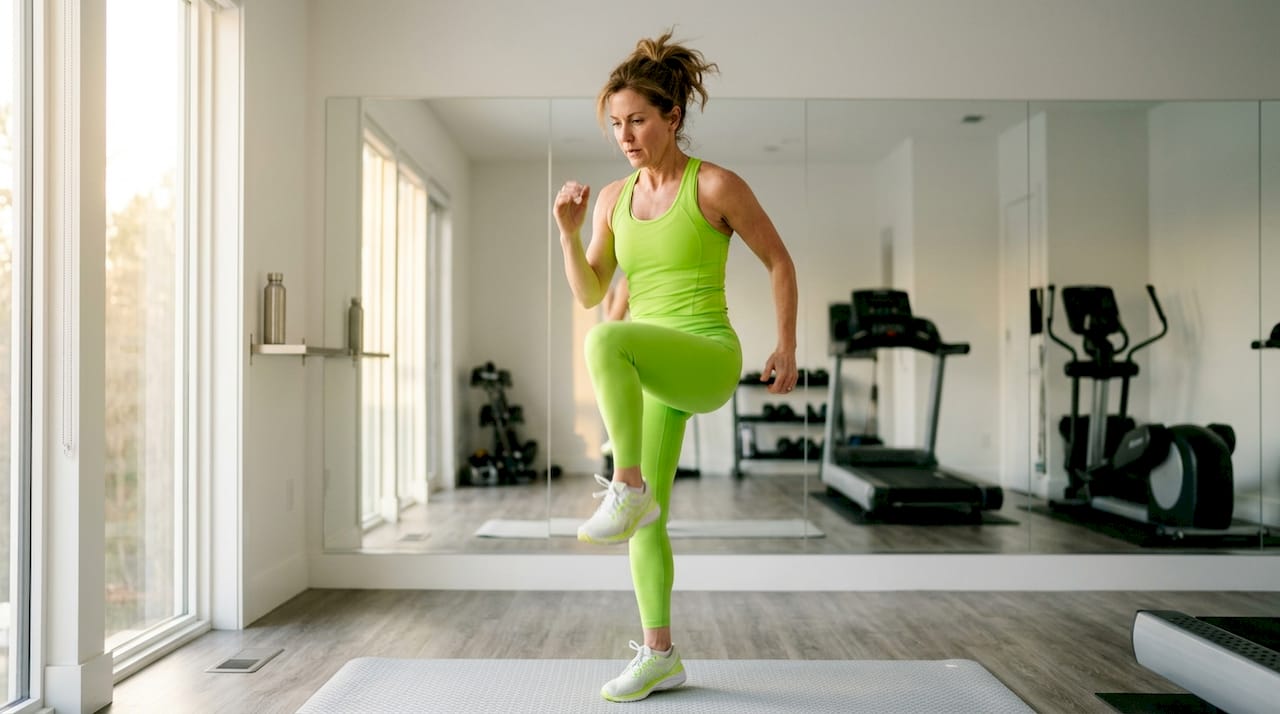
High-intensity interval training delivers more measurable health improvements per minute than almost any other exercise format. Research confirms that HIIT boosts cardiovascular fitness, accelerates fat loss, preserves lean muscle, sharpens cognitive function, and improves insulin sensitivity, often in sessions lasting a relatively short duration appropriate for many exercisers. For health-conscious adults who want real results without spending hours in the gym, the advantages of HIIT are hard to ignore.
Here is what the evidence shows you can expect:
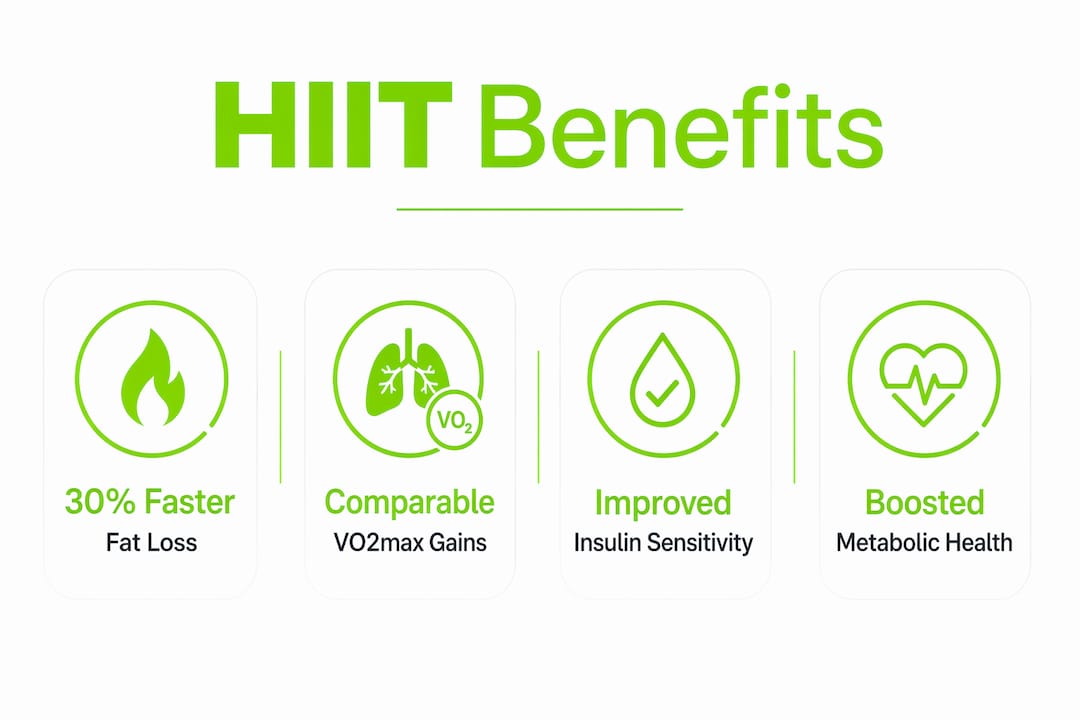
- Faster cardiovascular gains: VO2max improvements comparable to traditional cardio in a fraction of the time
- Fat loss: EPOC (excess post-exercise oxygen consumption) keeps your metabolism elevated after each session
- Muscle preservation: Compound movements protect lean mass while reducing body fat
- Blood sugar control: Improved insulin sensitivity and glucose tolerance, especially relevant for metabolic syndrome
- Cognitive boost: Reduced anxiety, better memory, and stronger executive function
- Time efficiency: Equivalent or superior fitness outcomes in significantly less weekly training time
What the science says about HIIT workout benefits for your body
HIIT produces cardiovascular fitness gains comparable to moderate-intensity continuous training (MICT) in one-fifth of the training time, according to research from Stanford Lifestyle Medicine. A 2024 meta-analysis further found that HIIT improves VO2 max nearly twice as much as moderate-intensity continuous training in equivalent time spans, offering both comparable and, in some cases, superior efficiency per unit time. That efficiency comes from how HIIT stresses the cardiovascular system: repeated bursts at 90% or more of maximal oxygen uptake force central cardiac adaptations, including increased stroke volume and maximal cardiac output, that steady-state cardio tends not to trigger as strongly.
Fat loss is another area where HIIT consistently performs. The afterburn effect means your body continues burning calories for hours after a session ends, driven by elevated oxygen consumption during recovery. A meta-analysis cited by Stanford found that HIIT protocols were more time-efficient than MICT for reducing whole-body fat mass and waist circumference in overweight individuals, with running protocols outperforming cycling because running recruits more total muscle mass.
Metabolic health markers also respond well. Interval training improves insulin sensitivity and glucose tolerance across a range of populations, including people with metabolic syndrome. Interval programs ranging from five days to 12 months have shown improvements in resting metabolic rate, substrate metabolism, and body composition.

| Health Marker | HIIT Outcome | Compared to MICT |
|---|---|---|
| VO2max | Significant increase | Equal or greater gain in less time |
| Body fat | Reduced, especially visceral | More time-efficient |
| Insulin sensitivity | Improved | Superior in multiple meta-analyses |
| Lean muscle mass | Preserved | Comparable |
| Resting metabolic rate | Elevated | Similar or better |
Pro Tip: If fat loss is your primary goal, running-based HIIT protocols tend to outperform cycling-based ones because they engage more muscle groups simultaneously.
How HIIT improves your mental health and cognitive function
HIIT’s effects on the brain are among its most underappreciated benefits. A 2025 systematic review on mental health outcomes confirmed that HIIT reduces depressive symptoms and enhances executive function, two outcomes that matter as much as any physical metric for long-term quality of life.
Memory improvements are particularly striking. One study found that older adults who completed a 12-week HIIT protocol (four-minute running intervals on a 5% incline, three times weekly) showed significantly greater memory gains than participants doing MICT or stretching. A separate study found that young adults also showed stronger memory improvements after HIIT sessions compared to moderate-intensity training, with improvements correlating to blood lactate release during exercise.
- Reduced anxiety and depression symptoms
- Enhanced executive function and working memory
- Mood elevation through endorphin release during high-intensity intervals
- Potential reduction in cognitive decline risk with age
- Improved quality of life alongside physical fitness gains
“Even short stints of high-intensity exercise appear to trigger the release of endorphins — the brain’s ‘feel good’ chemicals. In our clinic, we certainly see patients who say that HIIT workouts bring them the most joy.” — Dr. Sawalla Guseh, Director of the Cardiovascular Performance Program, Harvard-affiliated Massachusetts General Hospital
Pairing HIIT with outdoor exercise environments may amplify these mental health effects, since natural settings independently reduce cortisol and improve mood.
How to start HIIT safely if you’re new to high-intensity training
Beginners should start with scalable interval formats before attempting demanding protocols like Tabata. A 30-second work / 30-second rest structure (30/30) or a 40-second work / 20-second rest structure (40/20) builds conditioning without overwhelming the cardiovascular system. Research supports sessions of 15–25 minutes, including warm-up and cool-down, as the optimal range for safety and effectiveness.
The best HIIT exercises for beginners use compound, full-body movements that elevate heart rate without requiring technical skill. Burpees, mountain climbers, squat jumps, and thrusters all recruit large muscle groups while keeping injury risk low. Avoid exercises that demand precise form under fatigue until you have built a base level of conditioning.
Sample beginner HIIT session (20 minutes total):
- Warm-up: 3–5 minutes of light jogging or dynamic stretching
- Work interval: 30 seconds of burpees at hard effort
- Rest interval: 30 seconds of slow walking or standing rest
- Repeat for 6–8 rounds with exercises like mountain climbers, squat jumps, and high knees
- Cool-down: 3–5 minutes of walking and static stretching
Frequency matters as much as intensity. Daily HIIT is not recommended; two to three sessions per week with rest days between them allows recovery and prevents the cortisol elevation that stalls progress. If you experience heart palpitations or unusual chest discomfort, review exercise intensity risk factors before continuing.
Pro Tip: Rate your effort on a 1–10 scale during work intervals. Beginners should target a 7–8 out of 10 — hard enough to limit conversation, but not so intense that form breaks down.
What experts say about HIIT’s effectiveness and real-world limits
HIIT’s main practical advantage is time efficiency, not across-the-board superiority. Meta-analyses show that HIIT and MICT produce comparable results for systolic blood pressure and triglyceride reduction, meaning HIIT does not automatically outperform traditional cardio on every health marker. What it does deliver is equivalent or better outcomes in less total training time.
“Research has confirmed that IT is a more time-efficient method than MICT for improved muscle, cardiorespiratory, and cardiometabolic health in the short-term. As with many aspects of life, balance is key. Integrating IT into a well-rounded fitness plan is probably healthier and more advantageous in the long-term than doing IT as your only training method.” — Anne Friedlander, PhD, Exercise Physiologist, Stanford Lifestyle Medicine
Safety depends heavily on individualized intensity. Incrementally increasing effort benefits people with lower fitness levels or chronic conditions most, and an individualized intensity approach reduces dropout risk and injury. High-risk individuals should work with a qualified professional to set appropriate starting intensities.
Pro Tip: If you are managing a chronic condition, consult your physician before starting HIIT. Many cardiac rehabilitation programs now incorporate interval training precisely because it is adaptable to individual capacity.
Does HIIT actually stick? Long-term adherence and sustainability
HIIT has a better adherence record than many people expect. A meta-analysis found lower dropout rates from HIIT-based programs compared to traditional exercise programs among previously sedentary individuals, suggesting the format is both tolerable and appealing over time. The key variable is recovery management: a single HIIT session performed at extreme intensity with minimal rest tends to reduce enjoyment, while well-structured sessions with adequate rest intervals sustain positive affect.
Higher enjoyment compared to steady-state cardio has been reported across multiple studies, partly because the varied pace prevents the monotony that causes many people to abandon moderate-intensity programs. Shorter sessions also reduce the psychological barrier of starting a workout. That said, doing HIIT exclusively without any lower-intensity training increases burnout risk over months. Mixing two to three HIIT sessions weekly with active recovery days produces the most sustainable long-term pattern.
How HIIT affects inflammation and your immune system
HIIT produces a nuanced effect on inflammation. Acute bouts of high-intensity exercise temporarily elevate inflammatory markers, which is a normal physiological response to exercise stress. With consistent training, however, the body adapts and chronic low-grade inflammation tends to decrease. This reduction in baseline inflammation is linked to lower risk of cardiovascular disease, metabolic syndrome, and certain cancers, all conditions associated with persistent inflammatory activity.
Immune function follows a similar pattern. Moderate, well-recovered HIIT supports immune surveillance and reduces the risk of chronic disease. Overtraining without adequate rest, on the other hand, suppresses immune function and raises susceptibility to illness. The two-to-three sessions per week guideline protects against this. Tracking your recovery with tools like fitness monitoring apps helps you identify when fatigue is accumulating before it becomes a problem.
How HIIT reshapes your hormonal environment
HIIT triggers a distinct hormonal response that differs from steady-state exercise. Growth hormone secretion spikes sharply during and after high-intensity intervals, supporting fat oxidation and lean tissue repair. Testosterone also rises acutely following HIIT sessions, contributing to muscle preservation and recovery. These hormonal shifts are part of why HIIT tends to protect lean mass even during caloric deficits, a key advantage for anyone pursuing fat loss without sacrificing muscle.
Cortisol, the primary stress hormone, rises during HIIT as well. In the short term, this is normal and necessary for energy mobilization. Chronic overtraining without recovery, however, keeps cortisol elevated, which suppresses testosterone, impairs sleep, and stalls metabolic adaptation. Managing session frequency and sleep quality keeps the hormonal response working in your favor rather than against you.
How HIIT compares to other exercise formats
HIIT outperforms MICT on time efficiency for VO2max gains, fat loss, and insulin sensitivity. Strength training, by contrast, produces greater absolute gains in muscular hypertrophy and bone density, areas where HIIT offers only modest improvements. Steady-state cardio remains valuable for active recovery, aerobic base building, and lower-intensity days that support overall training volume without taxing the nervous system.
The most effective fitness programs combine all three modalities. HIIT provides the metabolic and cardiovascular stimulus; strength training builds structural capacity; and lower-intensity movement supports recovery and daily caloric expenditure. Pairing HIIT with high-protein nutrition accelerates body composition changes by ensuring adequate amino acid availability for muscle repair after intense sessions. For anyone tracking body composition changes alongside their training, Dietium’s body composition tools provide a clear picture of how each modality is contributing to your results.
HIIT delivers the most value when you treat it as one tool in a broader fitness plan, not the entire plan itself.
Dietium’s personalized nutrition plans are built to complement training programs like HIIT, aligning your calorie targets, macros, and meal timing with your specific fitness goals so your diet supports every session, not just your workouts in general.
Key Takeaways
HIIT delivers cardiovascular, metabolic, and cognitive benefits in significantly less time than traditional moderate-intensity training, making it one of the most efficient exercise formats available for health-conscious adults.
| Point | Details |
|---|---|
| Time efficiency | HIIT achieves VO2max gains comparable to MICT in as little as one-fifth of the training time. In equivalent training time spans, HIIT can also improve VO2 max nearly twice as much as moderate-intensity continuous training, making it highly efficient for cardiorespiratory fitness gains. |
| Fat loss and metabolism | The EPOC afterburn effect elevates calorie burn for hours post-session, supporting fat loss and metabolic health. |
| Cognitive and mental health | Research links HIIT to reduced depressive symptoms, improved executive function, and stronger memory performance. |
| Safe starting frequency | Two to three sessions per week with rest days prevents overtraining and supports long-term adherence. |
| Optimal session length | Sessions of 15–25 minutes, including warm-up and cool-down, deliver maximum benefit with minimal injury risk. |


