 Skip to content

TL;DR:
- Transitioning to veganism involves replacing animal foods with plant-based options at your own pace, ensuring nutritional adequacy. Preparing with key supplements like vitamin B12 and stocking your pantry promotes sustainable eating habits and satisfaction. Flexibility and gradual changes help long-term adherence by reducing social friction and preventing burnout.
Transitioning to veganism is defined as the process of replacing animal-based foods with plant-based alternatives in a way that fits your schedule, preferences, and health goals. The Academy of Nutrition and Dietetics and the Vegan Society both confirm that well-planned vegan diets are nutritionally adequate for every stage of life. Knowing that gives you a solid starting point. Most people learn how to transition to veganism over 4 to 6 weeks, though a gradual approach spread over 3 to 6 months works just as well. The key is finding a pace that feels sustainable, not punishing.
What nutritional foundations do you need before going vegan?
Nutrition preparation is the single most important step before you change what’s on your plate. Without it, you risk fatigue, hunger, and nutrient gaps that make the whole process feel harder than it needs to be.
Vitamin B12: the non-negotiable supplement
B12 is the one nutrient a vegan diet cannot reliably provide through food alone. Effective B12 maintenance options include 2,500 mcg weekly, 1,000 mcg two to three times per week, or 25–200 mcg daily. All three formats work. Pick the one that fits your routine and stick with it from day one.
Fat, fiber, and hydration
Healthy fat intake should make up 20–35% of your daily calories, which equals roughly 44–77 grams per day. Nuts, seeds, avocados, and olive oil are your primary sources. Fat keeps you full and supports the absorption of fat-soluble vitamins like D, E, and K.
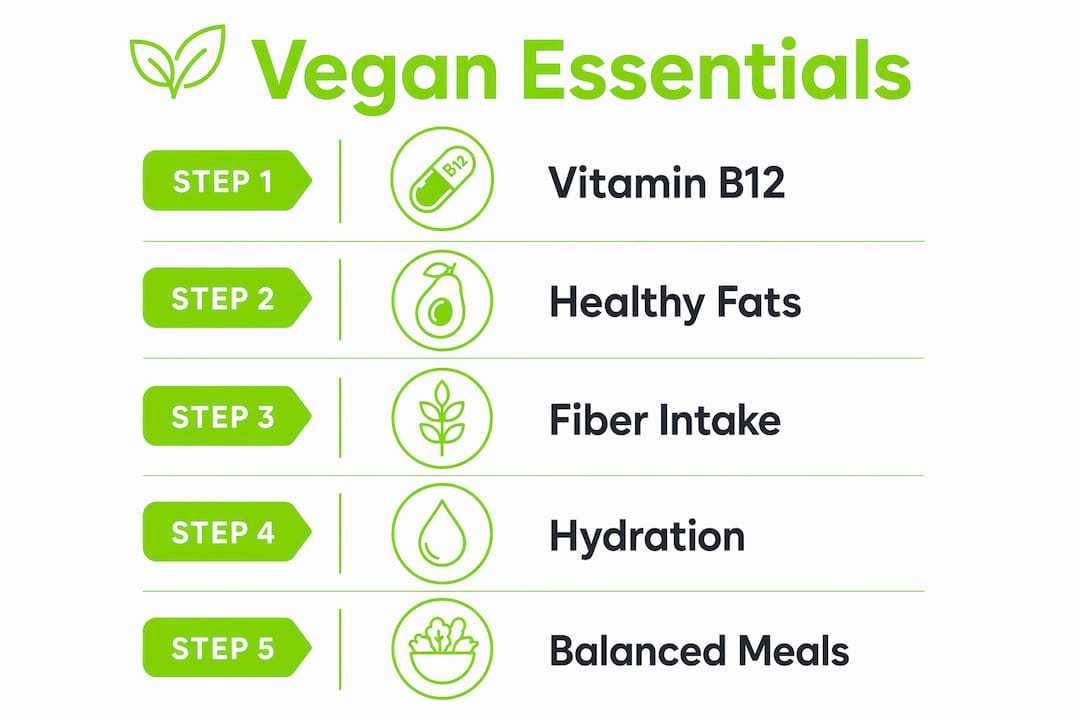
Fiber increases significantly on a plant-based diet, and that shift can cause bloating if you move too fast. Add high-fiber foods like lentils, chickpeas, and whole grains gradually over two to three weeks. Drink at least eight cups of water daily to help your digestive system adjust.
Pantry essentials to stock now
Set your kitchen up before you start. A well-stocked pantry removes the friction of figuring out what to eat at 6:00 PM on a Tuesday.
- Proteins: canned lentils, black beans, chickpeas, firm tofu, tempeh, edamame
- Grains: brown rice, quinoa, rolled oats, whole wheat pasta
- Fats: olive oil, tahini, almond butter, mixed nuts, chia seeds
- Flavor builders: nutritional yeast, soy sauce, smoked paprika, cumin, garlic
- Fortified staples: plant milk with added calcium and D, fortified cereals and foods
| Nutrient | Why it matters | Best plant sources | Supplement needed? |
|---|---|---|---|
| Vitamin B12 | Nerve function, red blood cells | Fortified foods only | Yes |
| Omega-3 (ALA) | Heart and brain health | Flaxseed, walnuts, chia | Consider algae oil |
| Iron | Energy, oxygen transport | Lentils, tofu, spinach | Only if deficient |
| Calcium | Bone density | Fortified plant milk, kale | Usually not |
| Vitamin D | Immunity, bone health | Fortified foods, sunlight | Often yes |
Pro Tip: Pair iron-rich foods like lentils or spinach with a vitamin C source such as lemon juice or bell peppers. Vitamin C increases non-heme iron absorption by up to three times.
How do you implement a gradual, personalized transition method?
Gradual transition with incremental plant-based meal additions is more sustainable than switching overnight, but both approaches can work depending on your personality and lifestyle. There is no single correct method. The best approach is the one you will actually follow.
Four proven transition strategies
-
One meal at a time. Start by making breakfast vegan for one week. Oatmeal with fruit and nut butter, or a tofu scramble, replaces eggs and dairy with zero drama. Add a vegan lunch in week two, then dinner in week three.
-
One food category at a time. Remove dairy first, then meat, then eggs. This method lets your palate and habits adjust category by category rather than all at once.
-
Add before you subtract. Spend two weeks adding new plant-based meals to your existing diet without removing anything. Once those meals feel normal, start phasing out animal products.
-
The overnight switch. Some people find a clean break easier than a slow fade. This works best when you have strong motivation, a stocked kitchen, and a few go-to recipes already memorized.
Pro Tip: Meal prepping vegan on Sundays takes about 90 minutes and covers most of your weekday meals. Cook a large pot of grains, roast two sheet pans of vegetables, and prep a protein like baked tofu or cooked lentils. Mix and match throughout the week.
The biggest beginner mistake is calorie restriction rather than satiety-focused eating. Pairing fiber-rich grains and legumes with healthy fats prevents unintentional hunger and keeps energy stable. Eat enough. A vegan diet is not automatically a low-calorie diet, and treating it like one is the fastest route to quitting.
| Transition method | Pros | Cons |
|---|---|---|
| One meal at a time | Low stress, builds habits gradually | Takes 3+ weeks to be fully vegan |
| One category at a time | Targeted, manageable | Can feel slow for motivated beginners |
| Add before subtract | No deprivation feeling | Requires planning two types of meals |
| Overnight switch | Fast, clear commitment | Higher risk of gaps without preparation |
How do you plan balanced, satisfying vegan meals as a beginner?

Meeting protein needs on a plant-based diet is straightforward. Legumes, tofu, tempeh, nuts, and whole grains each contribute meaningful protein, and most people eating a varied vegan diet meet their daily requirements without tracking every gram.
Building a complete vegan plate
Every meal should include three components: a plant protein, a whole grain or starchy vegetable, and a colorful vegetable. This structure keeps meals filling and nutritionally balanced without requiring a nutrition degree.
A practical example: a bowl of brown rice, roasted chickpeas, steamed broccoli, and tahini dressing covers protein, complex carbs, fiber, calcium, and healthy fat in one dish. South Indian, Lebanese, and Thai cuisines are naturally rich in plant-based dishes and provide built-in variety without forcing you to invent new recipes from scratch.
Cooking techniques that actually make vegan food taste good
Tofu is the most misunderstood ingredient in plant-based cooking. Pressing out excess water, marinating for at least 30 minutes, and pan-frying in a hot skillet transforms it from bland to genuinely satisfying. The same principle applies to tempeh: slice thin, marinate in soy sauce and garlic, and bake or pan-fry until crispy.
Batch cooking and managing leftovers prevents daily cooking fatigue and keeps consistent eating habits in place. Cook larger portions at dinner and use them for lunch the next day. This single habit removes the most common excuse for slipping back to old patterns.
Quick flavor enhancers to keep on hand:
- Nutritional yeast for a savory, cheesy flavor
- Miso paste stirred into soups and dressings
- Smoked paprika for depth in stews and roasted vegetables
- Lemon zest and fresh herbs to brighten any dish
- Chili flakes and toasted sesame oil for heat and richness
Explore balanced vegan meal ideas when you need fresh inspiration beyond your usual rotation.
How do you handle social situations and stay motivated?
Managing social situations is the most common struggle for new vegans. The food itself becomes manageable quickly. The social friction takes longer to navigate.
Practical strategies for dining out and social events
- Pre-eat before events where vegan options are uncertain. Arriving hungry at a barbecue sets you up for a difficult evening.
- Call restaurants ahead. Most kitchens will accommodate a plant-based request if you give them notice. Asking on arrival puts staff in an awkward position.
- Bring a dish to share at gatherings. A crowd-pleasing vegan dish like a lentil dip or roasted vegetable platter removes the spotlight from your dietary choices.
- Keep explanations short. “I eat plant-based” lands better than a detailed ethical monologue at a dinner table.
Pro Tip: Reframe veganism as a personal health choice rather than a statement about others’ habits. Phrases like “I feel better eating this way” redirect the conversation without creating defensiveness.
Reframing veganism as self-care rather than a burden on others reduces social friction significantly. The first two weeks carry the most psychological weight due to habit inertia. By week three, the new eating pattern typically feels natural rather than restrictive. Slips happen. One non-vegan meal does not erase your progress. Treat it as data, not failure, and move on.
Key Takeaways
A successful vegan transition depends on nutritional preparation, a gradual personalized method, satisfying meal planning, and practical strategies for social situations.
| Point | Details |
|---|---|
| Supplement B12 immediately | Start B12 on day one using 2,500 mcg weekly or 25–200 mcg daily. |
| Choose your transition pace | Gradual methods over 4–6 weeks are sustainable; overnight switches work for highly motivated beginners. |
| Build meals around three components | Combine a plant protein, whole grain, and colorful vegetable at every meal for balance. |
| Prepare for social friction | Pre-eat, call ahead, and bring a dish to reduce stress at social events. |
| Batch cook weekly | Preparing grains, proteins, and vegetables in one session prevents daily cooking fatigue. |
Why flexibility is the real secret to staying vegan long term
Most people who quit veganism do not quit because of the food. They quit because they set an impossible standard and then felt like failures the first time they fell short. That pattern is predictable, and it is entirely avoidable.
What I have observed consistently is that the people who thrive long term are not the most disciplined. They are the most adaptable. They find two or three vegan meals they genuinely love, they learn to cook one or two things well, and they build outward from there. Perfection is not the goal. Progress is.
The social challenges that feel enormous in week one become routine by month three. You learn which restaurants work, which friends are curious rather than hostile, and which situations need a little advance planning. Long-term vegan success depends on making the lifestyle your own, including flexibility and self-compassion. That is not a soft suggestion. It is the most evidence-supported predictor of sticking with any dietary change.
Cook something you actually enjoy eating. Experiment with cuisines that already center plants. Celebrate the fact that you are making a meaningful change, even on the days when it feels imperfect.
— Srasti
Dietium’s tools for a nutritionally sound vegan transition
Dietium offers personalized diet plans built around your specific health goals, including full support for plant-based eating patterns. The platform’s nutritional assessment tools identify gaps in your current diet before they become problems, covering key nutrients like B12, iron, omega-3s, and calcium. Dietium’s Recipians app generates custom vegan meal plans and recipe suggestions matched to your calorie needs and preferences. For anyone who wants data-driven guidance rather than generic advice, Dietium’s personalized meal plans provide a clear, structured path from day one through long-term maintenance.
FAQ
How long does it take to transition to a vegan diet?
Most people settle into a vegan eating pattern within 4 to 6 weeks, though a gradual transition over 3 to 6 months is equally valid and often more sustainable.
Do vegans need to take supplements?
Vitamin B12 is the one supplement all vegans need. Vitamin D and an algae-based omega-3 are worth considering depending on sun exposure and dietary variety.
How do I get enough protein on a vegan diet?
Legumes, tofu, tempeh, nuts, seeds, and whole grains together provide adequate protein for most adults. Eating a variety of these foods across the day covers all essential amino acids.
What is the biggest mistake new vegans make?
The most common mistake is unintentional calorie restriction. Pairing fiber-rich foods with healthy fats at every meal keeps energy stable and prevents hunger-driven relapses.
Is it normal to struggle socially when going vegan?
Social friction is the most frequently reported challenge for new vegans. Pre-eating before uncertain events, calling restaurants ahead, and keeping explanations brief all reduce that friction significantly.


