 Skip to content

TL;DR:
- Fad diets are restrictive, nutritionally unbalanced plans that often cause serious health risks and long-term metabolic damage. Most individuals cannot sustain these diets, leading to muscle loss, nutrient deficiencies, and psychological harm, which frequently result in weight regain. Personalized nutrition approaches, tailored to individual needs, offer safer, more sustainable, and effective long-term weight management solutions.
Fad diets are defined as restrictive, nutritionally unbalanced eating plans that promise rapid weight loss through extreme caloric cuts, food group elimination, or rigid meal rules. The dangers of fad diets extend far beyond temporary discomfort. Clinical evidence links these diets to cardiomyopathy, electrolyte imbalances, metabolic slowdown, and serious psychological harm. Restrictive ketogenic diets alone show dropout rates of 28–50% in adults, with side effects appearing as early as three weeks in. That statistic tells you something critical: most people cannot sustain these diets long enough to see real results, yet they still absorb the physical and mental costs of trying.
The term “fad diet” is the common label, but nutrition professionals use the term “nutritionally inadequate diet” to describe the same pattern. Both refer to eating plans that prioritize short-term weight loss over long-term health. Examples include the ketogenic diet in its most extreme forms, very low-calorie diets under 800 calories per day, the cabbage soup diet, and juice cleanses. The British Dietetic Association, Health Canada, and clinical researchers all flag these approaches as high-risk for most adults.
What are the most common health risks of fad diets?
The health issues from fad diets fall into two categories: short-term side effects that appear within weeks and long-term complications that develop over months or years.
Short-term side effects include:
- Fatigue and brain fog from inadequate carbohydrate intake
- Constipation and gastrointestinal distress from fiber restriction
- Nausea, headaches, and dizziness during the first weeks of extreme caloric cuts
- Muscle cramps from electrolyte depletion, particularly potassium and magnesium
These symptoms are not signs the diet is “working.” They are signs the body is under physiological stress.
Long-term risks are considerably more serious. Prolonged extreme dieting is linked to cardiomyopathy (weakening of the heart muscle), optic neuropathy, pancreatitis, and life-threatening electrolyte imbalances that can trigger sudden cardiac events. These are not rare edge cases. They are documented outcomes in systematic reviews of patients who followed restrictive diets for extended periods without medical supervision.

Rapid weight loss adds another layer of risk. Fast weight loss causes excess cholesterol secretion into bile, which significantly raises the risk of gallstones. Beyond gallstones, repeated cycles of losing and regaining weight increase long-term risk for type 2 diabetes, hypertension, and low bone density. The weight may come off quickly, but the metabolic damage accumulates silently.
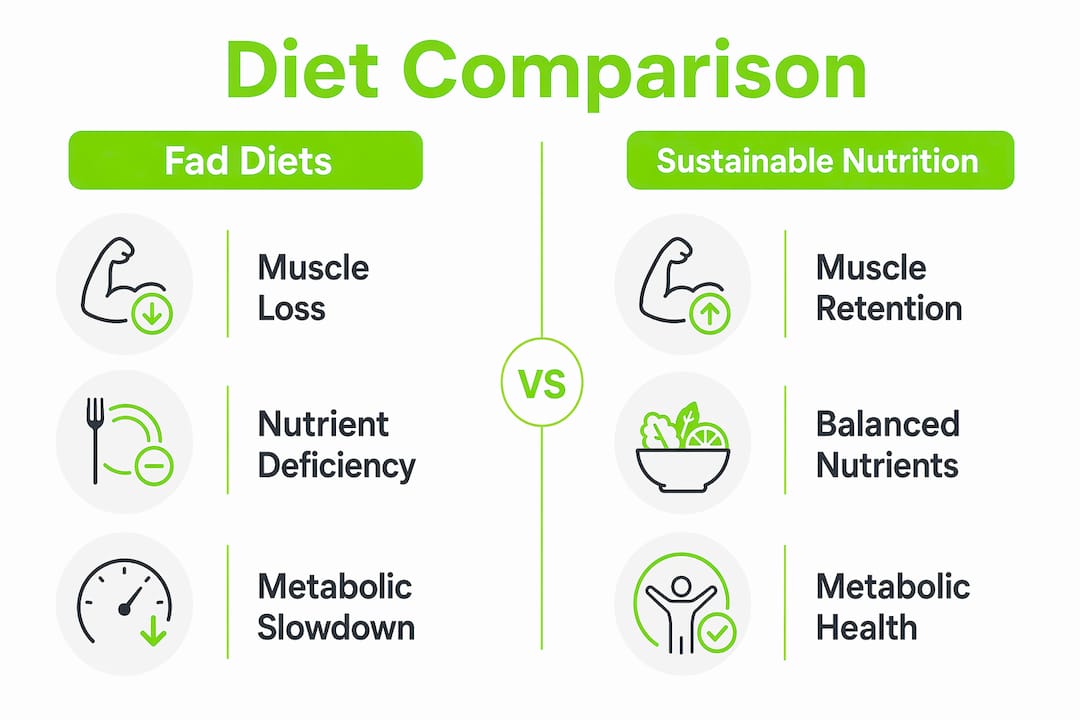
Nutrient deficiencies are a consistent outcome across most fad diets. Eliminating entire food groups strips the body of vitamins D, B12, iron, calcium, and omega-3 fatty acids. These deficiencies compromise immune function, reduce bone density, and accelerate muscle loss, which creates a compounding problem for anyone trying to manage their weight sustainably.
How do metabolic and psychological factors cause fad diets to fail?
Fad diets fail not just because of willpower. They fail because the body actively fights back through measurable biological and psychological mechanisms.
-
Metabolic adaptation: Severe caloric restriction triggers adaptive thermogenesis, a process where the body lowers its resting energy expenditure to conserve fuel. Excessive caloric restriction also causes hypercortisolemia, meaning elevated cortisol levels that paradoxically promote visceral fat storage even while you are eating less. The body interprets the calorie deficit as a threat and responds by storing more fat around the abdomen.
-
Muscle loss: Fad diets cause initial weight loss primarily from muscle tissue and water, not fat. The British Dietetic Association confirms this pattern directly. Less muscle mass means a lower resting metabolic rate, which makes future weight management harder and weight regain almost inevitable.
-
Cravings and food preoccupation: Cutting out rewarding foods triggers intensified cravings and food preoccupation, not because of weak willpower but because of neurological reward pathways. Demonizing entire food groups amplifies psychological stress and disrupts long-term adherence.
-
Yo-yo dieting: Weight cycling, the pattern of losing and regaining weight repeatedly, raises chronic disease risk including diabetes and hypertension. Each cycle also tends to result in a higher body fat percentage than before.
-
Psychological damage: Chronic dieting is linked to low self-esteem, increased anxiety, and a measurably higher risk of disordered eating. Repeated diet failures damage self-efficacy, the belief that you can succeed, which makes each subsequent attempt harder and more emotionally costly.
Pro Tip: If you notice you are thinking about food constantly, feeling guilty after eating, or swinging between strict restriction and overeating, these are early warning signs of a disordered relationship with food. Consult a registered dietitian before starting any new eating plan.
Fad diets vs. sustainable nutrition: what the evidence shows
The core problem with fad diets is that they treat weight loss as a single event rather than a biological process that requires ongoing management. Sustainable nutrition approaches work differently, and the differences are measurable.
| Factor | Fad diets | Sustainable personalized nutrition |
|---|---|---|
| Weight loss source | Primarily muscle and water | Primarily body fat |
| Metabolic effect | Lowers resting metabolic rate | Preserves or improves metabolic rate |
| Adherence rate | 28–50% dropout within months | Higher long-term compliance |
| Nutrient adequacy | Frequently deficient | Designed for nutritional completeness |
| Psychological impact | Increases anxiety and food preoccupation | Supports a healthy relationship with food |
| Long-term outcomes | Weight regain, chronic disease risk | Sustainable weight management |
Personalized meal plans aligned with individual metabolic needs produce better health outcomes and reduce the risk of adverse events compared to generic restrictive diets. This is not a marketing claim. It reflects the clinical reality that no single diet works for every body, because calorie needs, food tolerances, activity levels, and health conditions vary significantly between individuals.
The British Dietetic Association states directly that there is no magic solution and that sustainable health requires personalized nutrition that respects hunger and fullness cues. Health professionals increasingly call for a shift away from aggressive weight loss targets toward physiologically aligned approaches that avoid systemic harm.
Pro Tip: Before starting any eating plan, use a calorie needs calculator to establish your actual energy requirements. Building a plan around your specific numbers is more effective than following a generic protocol designed for an average person who may not resemble you at all.
Dietium’s custom meal plan resources offer a structured way to build a nutrition approach around your actual goals, food preferences, and health markers rather than a one-size-fits-all template.
Who is at highest risk from fad diets?
Not everyone faces the same level of danger from restrictive dieting. Certain groups face significantly higher risks and should treat fad diets as medically contraindicated without professional oversight.
High-risk populations include:
- Adolescents: Teenagers are still developing bone density and lean muscle mass. Restrictive diets during this period can cause permanent deficits in both, with consequences that extend into adulthood.
- People with type 2 diabetes: Extreme carbohydrate restriction or severe caloric cuts can cause dangerous blood sugar fluctuations. Medication interactions add another layer of risk.
- Individuals with heart disease: Electrolyte imbalances from fad diets directly affect cardiac function. People with pre-existing heart conditions face elevated risk of arrhythmia and cardiomyopathy.
- People with kidney disease: High-protein diets, a common feature of many fad diets, place additional strain on kidneys that are already compromised.
- Pregnant and breastfeeding women: Nutrient restriction during pregnancy or lactation affects fetal development and milk quality in ways that cannot be corrected after the fact.
Individuals with chronic conditions should only change their diet under direct medical supervision. Health Canada’s guidance is explicit on this point: fad diets lacking expert guidance can worsen pre-existing health issues and lead to severe complications. The risks are not theoretical. They are documented in clinical records.
Watch for these signs that a diet is causing harm: persistent fatigue lasting more than two weeks, hair thinning, irregular heartbeat, mood changes including depression or irritability, and significant muscle weakness. Dietium’s guide on signs of unhealthy weight loss covers these warning signals in detail.
How to avoid fad diet risks and manage weight safely
Avoiding the negative effects of diet trends does not require a perfect eating plan. It requires a realistic one that your body can sustain without fighting back.
- Prioritize nutrient adequacy over calorie restriction. Your body needs adequate protein, healthy fats, fiber, vitamins, and minerals to function. A diet that cuts calories but strips nutrients creates deficiencies that undermine the goal.
- Make gradual changes. Reducing daily intake by 300 to 500 calories through food quality improvements produces steady fat loss without triggering the metabolic adaptations that derail extreme diets.
- Respect hunger and fullness signals. Eating in response to physical hunger rather than a rigid schedule helps maintain the hormonal balance that regulates appetite and metabolism.
- Avoid eliminating entire food groups without clinical justification. Unless you have a diagnosed intolerance or allergy, removing carbohydrates, fats, or dairy entirely creates nutritional gaps and intensifies cravings.
- Consult a registered dietitian for personalized guidance. A dietitian can assess your actual nutritional needs, health history, and goals to build a plan that works for your specific body. This is especially important if you have any chronic health condition.
- Use evidence-based tools to track progress. Monitoring body metrics like BMI, body fat percentage, and calorie balance gives you objective data to adjust your approach without guessing. Dietium’s tailored diet tools are built specifically for this purpose.
The goal is not rapid weight loss. The goal is a body composition and metabolic health profile that you can maintain for years, not weeks.
Key takeaways
Fad diets cause measurable physiological and psychological harm, and sustainable weight management requires personalized nutrition aligned with individual metabolic needs.
| Point | Details |
|---|---|
| Fad diets defined | Restrictive, nutritionally unbalanced plans that promise rapid weight loss but cause documented health harm. |
| Metabolic damage is real | Extreme caloric restriction lowers resting metabolic rate and raises cortisol, promoting fat storage and weight regain. |
| Psychological costs are high | Chronic dieting increases anxiety, damages self-efficacy, and raises eating disorder risk. |
| High-risk groups need supervision | Adolescents, diabetics, and people with heart or kidney disease face severe complications without medical oversight. |
| Personalized nutrition outperforms fad diets | Tailored meal plans improve adherence, preserve muscle mass, and produce better long-term health outcomes. |
Why fad diet culture keeps winning, even when the science says otherwise
I have spent years reviewing nutrition research and watching people cycle through the same restrictive plans with the same outcomes. The pattern is consistent: initial enthusiasm, early weight loss from water and muscle, metabolic slowdown, cravings, dropout, and then guilt. The diet gets blamed last. The person blames themselves first.
What strikes me most is how fad diet culture exploits a real and legitimate desire to feel better in your body. The marketing is sophisticated. The promises are specific. And the short-term results, even if they come from muscle loss rather than fat, feel like confirmation that the approach is working. By the time the weight returns and the metabolic damage becomes apparent, the next diet trend has already launched.
The evidence from the British Dietetic Association and clinical researchers is unambiguous: there is no shortcut that bypasses the body’s biological systems. Personalized nutrition, built around your actual calorie needs, food preferences, and health markers, is not a slower path to the same destination. It is a fundamentally different approach that works with your physiology rather than against it.
If you are considering a restrictive diet because you want to feel healthier, I would ask you to reframe the goal. Focus on what you are adding to your diet, more protein, more fiber, more whole foods, rather than what you are cutting. That shift alone changes the psychological relationship with eating and makes the process sustainable. Avoiding yo-yo dieting patterns starts with that single reframe.
— Srasti
Build a smarter nutrition plan with Dietium
Fad diets offer a shortcut that costs more than it delivers. Dietium offers a different approach: personalized nutrition plans built around your specific health goals, body metrics, and food preferences. The Recipians app generates custom meal plans and recipe suggestions aligned with your calorie needs and macros, so you are not guessing or following a generic protocol. Dietium’s AI-powered calculators track BMI, body fat, and calorie balance in real time, giving you the data to make informed adjustments. If you are ready to move away from restrictive dieting and toward a plan that actually fits your body, explore personalized diet options at Dietium and see what evidence-based nutrition looks like in practice.
For additional context on what evidence-based weight management looks like in 2026, current weight loss research offers a useful comparison point.
FAQ
What are the main dangers of fad diets?
Fad diets cause nutrient deficiencies, metabolic slowdown, muscle loss, and psychological harm including increased anxiety and disordered eating risk. Long-term use is linked to cardiomyopathy, electrolyte imbalances, and gallstones.
Is intermittent fasting safe compared to other fad diets?
Intermittent fasting is safer than extreme caloric restriction for most healthy adults, but it carries risks for people with diabetes, heart disease, or a history of disordered eating. Medical supervision is recommended before starting any fasting protocol.
Why do fad diets cause weight regain?
Fad diets trigger adaptive thermogenesis, which lowers resting metabolic rate, and cause muscle loss that further reduces calorie burn. These metabolic adaptations make weight regain nearly inevitable once normal eating resumes.
Who should never follow a fad diet without medical supervision?
Adolescents, pregnant women, and individuals with diabetes, heart disease, or kidney disease face the highest risks from fad diets. Health Canada explicitly advises these groups to change their diet only under direct medical supervision.
How is a personalized meal plan different from a fad diet?
A personalized meal plan is built around individual calorie needs, health markers, and food preferences, preserving nutrient adequacy and metabolic function. Fad diets apply a generic, restrictive template that ignores individual biology and produces short-term results at long-term cost.


