 Skip to content

Trying to crack the code to lasting weight loss can leave even the most health-conscious millennial feeling frustrated. Diets often unravel when old myths and quick-fix promises run headfirst into the reality of metabolic adaptation, psychological triggers, and the limitations of our digital nutrition apps. By recognizing these hidden pitfalls and understanding the science behind diet failure, you can reshape your strategy, build healthier habits, and make your tech work smarter—not harder—for real, long-term results.
Table of Contents
- Defining Diet Failure And Popular Myths
- Types Of Diets And Key Differences
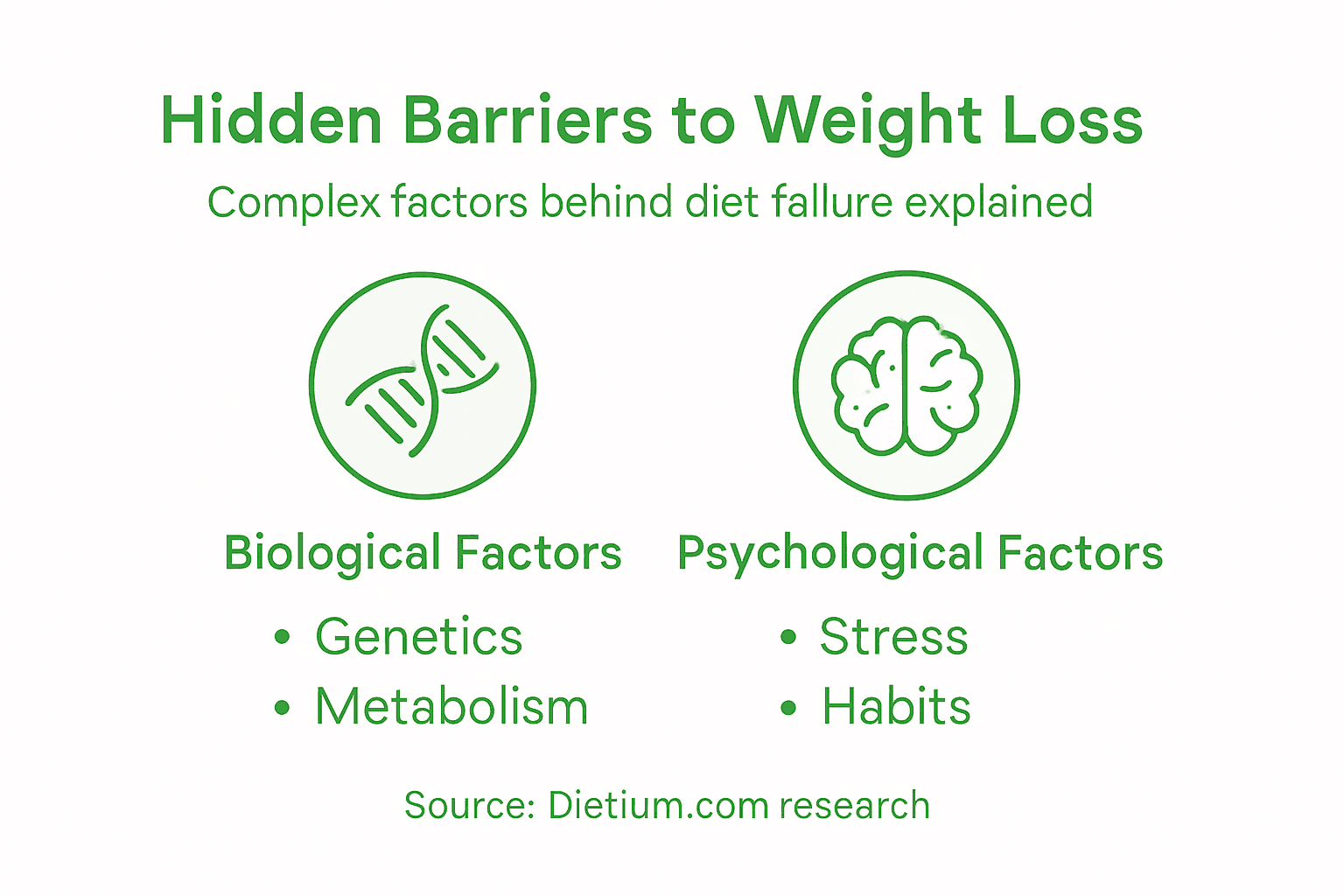
- Biological And Psychological Drivers Of Diet Failure
- The Impact Of Restriction And Metabolic Adaptation
- Technology’s Role In Diet Success And Pitfalls
Key Takeaways
| Point | Details |
|---|---|
| Diet Failure Is Complex | Realize that diet failure is influenced by physiological, psychological, and environmental factors, not just willpower. |
| Understand Diet Myths | Recognize common myths about calories and dieting that can hinder sustainable weight loss efforts. |
| Personalized Nutrition Matters | Embrace personalized dietary approaches as the effectiveness of diets varies greatly among individuals. |
| Leverage Technology Wisely | Utilize digital nutrition tools for monitoring and planning, but ensure they complement professional guidance. |
Defining Diet Failure and Popular Myths
The road to successful weight loss is often paved with misconceptions and unrealistic expectations. Diet failure is not just about willpower or discipline—it’s a complex interplay of physiological, psychological, and environmental factors that sabotage our best intentions. Common dietary misconceptions frequently undermine sustainable weight management strategies.
Most individuals approach dieting with a reductionist mindset, focusing on isolated nutrients or quick-fix solutions rather than holistic lifestyle changes. This narrow perspective leads to several persistent myths that derail weight loss efforts:
- Calorie counting is the ultimate weight loss strategy
- Low-carb diets guarantee rapid fat loss
- Detox cleanses reset metabolism
- All calories are created equal
In reality, metabolic adaptation and complex bodily responses make weight loss far more nuanced than simple arithmetic. Our bodies are sophisticated systems that adapt to dietary changes, making traditional dieting approaches increasingly ineffective.
Popular diet myths often emerge from oversimplified scientific interpretations or marketing strategies that promise quick results. These myths create unrealistic expectations and psychological barriers that prevent individuals from developing sustainable, long-term health habits. Understanding these misconceptions is the first step toward breaking the cycle of repeated diet failures.
Pro tip: Shift your perspective from short-term dieting to comprehensive lifestyle transformation, focusing on whole foods, balanced nutrition, and gradual, sustainable changes.
Types of Diets and Key Differences
Diets are not one-size-fits-all solutions, but rather complex nutritional approaches with unique characteristics and potential health implications. Popular diet variations demonstrate remarkable diversity in their nutritional strategies, targeting different metabolic pathways and health objectives.
The most prominent diet types include:
- Mediterranean Diet: Emphasizes plant-based foods, olive oil, fish
- Ketogenic Diet: High fat, extremely low carbohydrate intake
- Plant-Based Diet: Focuses on whole vegetables, fruits, legumes
- Low-Carb Diet: Restricts carbohydrate consumption, increases protein
- Intermittent Fasting: Cycles between eating and fasting periods
Vegetarian and vegan dietary patterns reveal fascinating nuances in nutritional composition and potential health outcomes. While both exclude meat, they differ significantly in their approach to animal products, with vegans eliminating all animal-derived foods and vegetarians maintaining more flexible dietary boundaries.
Understanding these dietary approaches requires recognizing that each diet has unique metabolic impacts. Macronutrient ratios, food quality, and individual metabolic responses play crucial roles in determining diet effectiveness. Some diets work exceptionally well for certain individuals while producing minimal results for others, highlighting the importance of personalized nutrition strategies.

Here’s a concise comparison of major diet types and their primary health effects:
| Diet Type | Main Focus | Potential Benefits | Potential Challenges |
|---|---|---|---|
| Mediterranean | Plant-based, olive oil | Heart health, longevity | Accessibility for some |
| Ketogenic | High fat, low carbs | Weight loss, energy | Nutrient deficiency risks |
| Plant-Based | Whole plants, legumes | Lower inflammation | Protein adequacy concerns |
| Low-Carb | Reduced carbs, more protein | Weight loss support | Sustainability long-term |
| Intermittent Fasting | Cyclic eating patterns | Metabolic flexibility | Hunger, social disruption |
Pro tip: Consult a registered nutritionist to develop a personalized diet plan tailored to your specific metabolic profile, genetic predispositions, and health goals.
Biological and Psychological Drivers of Diet Failure
Diet failure is far more complex than simple willpower or discipline. Behavioral and psychological factors reveal a sophisticated web of influences that dramatically impact weight loss success, extending far beyond basic nutritional choices.
The primary psychological drivers of diet failure include:
- Emotional Eating: Using food as a coping mechanism
- Stress-Induced Metabolic Changes: Cortisol’s impact on weight gain
- Low Self-Efficacy: Diminished belief in personal ability to change
- External Food Triggers: Environmental and social eating patterns
- Negative Self-Image: Psychological barriers preventing sustainable change
Multidimensional determinants of diet outcomes demonstrate that weight loss is not just a physical challenge but a deeply psychological journey. Biological mechanisms interact with psychological constructs, creating a complex system where motivation, coping strategies, and individual perception dramatically influence nutritional behaviors.
Genetic predispositions, metabolic adaptations, and individual psychological profiles collectively shape diet success. Some individuals possess biological advantages that make weight loss easier, while others face inherent metabolic challenges that require more nuanced, personalized approaches to nutrition and lifestyle modification.
Pro tip: Develop a holistic approach to weight management by addressing both psychological triggers and biological factors, creating a comprehensive strategy that supports long-term health transformation.
The Impact of Restriction and Metabolic Adaptation
Metabolic adaptation represents a sophisticated biological defense mechanism that dramatically complicates weight loss efforts. Caloric restriction mechanisms reveal how the human body actively resists significant weight reduction through complex physiological responses.
The primary metabolic adaptation responses include:
- Reduced Basal Metabolic Rate: Decreased energy expenditure
- Hormonal Downregulation: Lowered thyroid and leptin production
- Muscle Mass Preservation: Conserving energy through tissue modification
- Increased Metabolic Efficiency: Enhanced nutrient absorption
- Stress Hormone Activation: Cortisol-driven survival mechanisms
Individual metabolic variations demonstrate that metabolic adaptation is not a universal experience but a highly personalized physiological response. Genetic background, body composition, and previous dietary history significantly influence how an individual’s metabolism responds to caloric restriction.
When individuals drastically reduce calorie intake, the body interprets this as a potential threat to survival. This triggers a cascade of adaptive responses designed to prevent further weight loss, including slowing down metabolism, reducing muscle mass, and increasing hunger signals. These mechanisms explain why many people experience plateaus or weight regain after initial diet success.
Pro tip: Create gradual, sustainable dietary changes that work with your metabolism instead of against it, allowing for slow and steady adaptation that preserves muscle mass and metabolic health.
Technology’s Role in Diet Success and Pitfalls
Digital nutrition technologies are transforming how individuals approach weight management and dietary goals. AI-driven diet monitoring represents a groundbreaking approach to personalized nutrition, offering unprecedented insights into individual metabolic responses and dietary patterns.
Technology’s potential diet management tools include:
- Mobile Tracking Applications: Real-time calorie and nutrition monitoring
- AI Nutritional Recommendation Systems: Personalized meal planning
- Wearable Fitness Devices: Metabolic and activity tracking
- Genetic Testing Platforms: Customized dietary insights
- Virtual Nutrition Coaching: On-demand professional guidance
Technological interventions in dietary management reveal both remarkable potential and significant challenges. While artificial intelligence promises revolutionary personalization, concerns about data privacy, algorithmic bias, and technology accessibility remain critical considerations in widespread adoption.
The digital nutrition landscape demands a nuanced approach. Technology should complement, not replace, human expertise and individual metabolic understanding. Successful digital diet strategies require sophisticated algorithms that account for complex physiological variations, psychological factors, and personal health contexts.
This summary highlights common digital nutrition tools and their distinctive advantages:
| Technology | Core Function | User Benefit | Limitation |
|---|---|---|---|
| Mobile Apps | Track food and calories | Real-time monitoring | Data accuracy varies |
| AI Diet Systems | Personalized meal planning | Adaptive recommendations | Algorithmic bias potential |
| Fitness Wearables | Activity & metabolic tracking | Automated insights | Requires consistent use |
| Genetic Platforms | DNA-based dietary analysis | Custom nutrition advice | Data privacy concerns |
| Virtual Coaching | Online nutrition guidance | Access to experts | Quality depends on provider |
Pro tip: Select digital nutrition tools that offer holistic, personalized approaches and maintain a balanced perspective that integrates technological insights with professional nutritional guidance.
Overcome Hidden Barriers to Weight Loss with Personalized Support
Understanding why diets fail is the first step toward breaking free from frustration and setbacks. Whether it is metabolic adaptation, emotional eating, or the challenge of unsustainable restriction, many hidden factors stand in the way of lasting weight loss success. If you want to move beyond myths like calorie counting alone or one-size-fits-all plans, you need a tailored approach that works with your body’s unique biology and psychology.
At Dietium.com, our advanced AI-powered tools help you uncover what truly drives your nutrition needs and weight management journey. With the Recipians app, you get custom meal plans and fitness routines designed to align with your metabolic profile and lifestyle challenges. Track your progress using precise body metrics like BMI, body fat, and calorie needs while receiving expert guidance that addresses both biological and emotional barriers. Take control now and transform your weight loss experience into a sustainable lifestyle change. Start your personalized journey today at Dietium.com and discover the difference tailored nutrition can make.
Frequently Asked Questions
Why do most diets fail?
Most diets fail due to a combination of psychological and physiological factors, including metabolic adaptation, emotional eating, and unrealistic expectations. These elements create barriers that hinder sustainable weight loss.
What are some common diet myths?
Common diet myths include the belief that calorie counting is the ultimate weight loss strategy, low-carb diets guarantee rapid fat loss, and that all calories are created equal. These misconceptions can derail effective weight management.
How does metabolic adaptation affect weight loss?
Metabolic adaptation affects weight loss by decreasing the body’s basal metabolic rate and altering hormonal functions in response to calorie restriction. This means the body conserves energy and makes weight loss more challenging over time.
What role does technology play in dieting success?
Technology plays a significant role in dieting success by offering tools like mobile tracking apps, AI-driven meal planners, and fitness wearables. These tools can provide insights into dietary patterns and help individuals make informed choices, but they should complement professional guidance.
Recommended
- Common Dieting Mistakes That Hinder Progress – Dietium
- Common Weight Loss Mistakes That Sabotage Results – Dietium
- Understanding Weight Loss Challenges: A Deep Dive – Dietium
- Understanding Weight Loss Plateau Solutions and Their Impact – Dietium
- What Is Drug Addiction – Impact on Health and Life | Glendora Recovery Center


