 Skip to content

Most American adults aiming for healthier lifestyles grapple with misinformation about dieting and nutrition. A bold survey shows over 60 percent of global consumers rely on outdated or restrictive diet advice, risking stubborn setbacks and frustration. Getting real about common misconceptions is key if you want to personalize your journey and sidestep mistakes. This article uncovers the truth behind popular dieting errors and reveals how AI-powered nutrition tools help you achieve sustainable weight management.
Table of Contents
- Defining Dieting Mistakes And Common Misconceptions
- Fad Diets Versus Personalized Nutrition Approaches
- Nutritional Gaps: What Diets Often Miss
- Behavioral Traps: Unrealistic Goals And Mindless Eating
- Leveraging Digital Tools For Smarter Dieting
- Avoiding Setbacks: Building Sustainable Habits
Key Takeaways
| Point | Details |
|---|---|
| Understanding Dieting Misconceptions | Recognize that sustainable weight management requires balanced nutrition, and quick-fix solutions often lead to unrealistic expectations. |
| Fad Diets vs. Personalized Nutrition | Embrace personalized nutrition, as it considers individual metabolic needs and promotes long-term health over temporary weight loss. |
| Mindful Eating Practices | Develop mindful eating habits to combat mindless consumption and support more intentional dietary choices. |
| Building Sustainable Habits | Focus on small, achievable changes that integrate into daily life to establish lasting habits for health and wellness. |
Defining Dieting Mistakes and Common Misconceptions
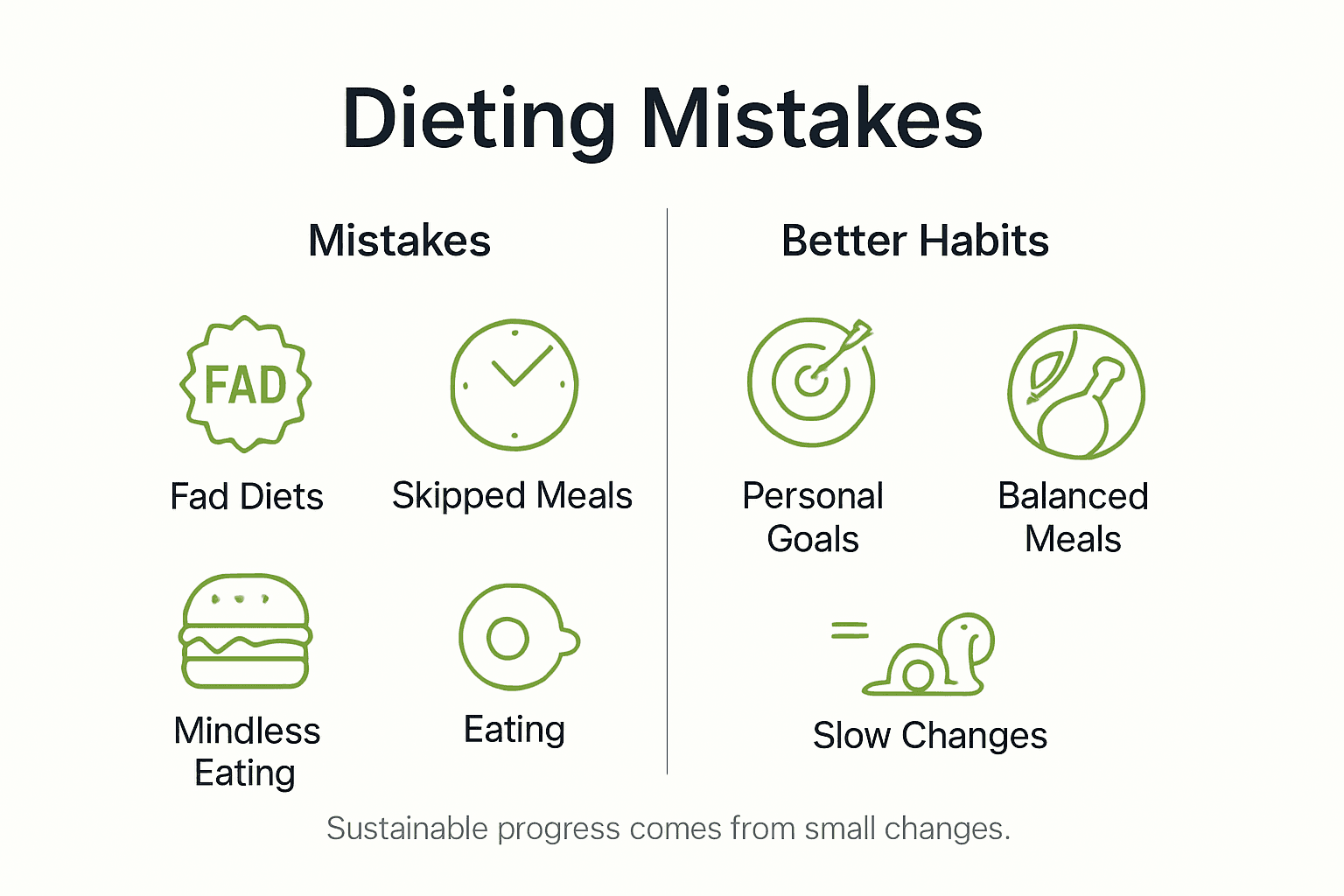
Dieting mistakes are often rooted in widespread misconceptions about nutrition and weight loss. Many individuals embark on weight management journeys without understanding the fundamental principles of healthy eating and metabolic science. Common nutritional myths/02%3A_Nutritional_Health/2.02%3A_Myths_and_Misconceptions_about_Nutrition) can significantly derail progress and lead to counterproductive behaviors.
One primary misconception is the belief that restrictive dieting equals successful weight loss. Extreme calorie reduction or eliminating entire food groups rarely produces sustainable results. The human body requires balanced nutrition to maintain metabolism, muscle mass, and overall health. Nutritional research consistently demonstrates that balanced, moderate approaches are far more effective than radical dietary interventions.
Psychological factors play a critical role in understanding dieting misconceptions. Many people view dieting as a temporary solution rather than a long-term lifestyle adjustment. This mindset often leads to yo-yo dieting, where individuals repeatedly lose and regain weight, which can negatively impact metabolic health and psychological well-being. Understanding that sustainable weight management requires consistent, holistic lifestyle changes is crucial for success.
Pro Tip: Approach dietary changes as gradual, sustainable lifestyle modifications rather than quick-fix solutions, focusing on balanced nutrition and consistent habits.
Fad Diets Versus Personalized Nutrition Approaches
Fad diets have long dominated the weight loss landscape, promising quick results through extreme restrictions and magical solutions. However, scientific research increasingly demonstrates the limitations of these one-size-fits-all approaches. Precision nutrition represents a revolutionary shift, acknowledging that every individual’s nutritional needs are as unique as their genetic makeup.
Traditional fad diets typically rely on dramatic dietary changes that are neither sustainable nor scientifically sound. These approaches often eliminate entire food groups, drastically reduce calorie intake, or promote unrealistic eating patterns. In contrast, personalized nutrition considers multiple complex factors including genetic predispositions, metabolic variations, lifestyle patterns, and individual health goals. This approach recognizes that what works effectively for one person might be completely ineffective or even harmful for another.
The fundamental difference between fad diets and personalized nutrition lies in their underlying philosophy. Fad diets seek rapid, short-term results through restrictive measures, while personalized nutrition focuses on long-term health optimization. By integrating comprehensive data about an individual’s metabolism, microbiome, genetic profile, and lifestyle, personalized approaches can develop truly targeted nutritional strategies that support sustainable wellness and weight management.
Pro Tip: Invest time in understanding your unique metabolic profile and work with nutrition professionals who can design a personalized eating plan tailored to your specific health needs and goals.
Here’s a comparison of fad diets versus personalized nutrition approaches:
| Aspect | Fad Diets | Personalized Nutrition | Health Impact |
|---|---|---|---|
| Dietary Flexibility | Very restrictive | Tailored to individual | Long-term sustainability |
| Scientific Basis | Lacks research support | Based on genetic and data | Better overall health |
| Longevity of Results | Temporary weight loss | Sustainable progress | Maintained wellness |
| Nutrient Coverage | Often incomplete | Balanced and adaptive | Fewer deficiencies |
Nutritional Gaps: What Diets Often Miss
Many popular diets overlook the critical importance of comprehensive nutritional intake. Global research indicates billions of people consume inadequate micronutrients, creating significant health challenges that extend far beyond simple weight management. These nutritional gaps can compromise immune function, metabolic efficiency, and overall wellness, often going unnoticed until more serious health complications emerge.
Typical restrictive diets frequently eliminate entire food groups, which inadvertently creates nutritional deficiencies. For instance, low-carbohydrate diets might reduce essential fiber intake, while extreme protein-focused plans can limit critical vitamin and mineral consumption. The human body requires a delicate balance of macronutrients and micronutrients, including vitamins like B12, D, and minerals such as iron, calcium, and magnesium, which support fundamental physiological processes.

Understanding nutritional complexity means recognizing that weight loss is not just about calorie reduction, but about providing the body with comprehensive, high-quality nutrients. Optimal nutrition involves consuming diverse food sources that offer a wide spectrum of vitamins, minerals, antioxidants, and essential compounds. This holistic approach ensures metabolic efficiency, supports muscle maintenance, boosts energy levels, and promotes long-term health beyond temporary weight loss goals.
Pro Tip: Conduct a comprehensive nutritional assessment with a registered dietitian to identify potential micronutrient deficiencies and develop a personalized eating strategy that addresses your specific metabolic needs.
This table summarizes key nutrients often missed in restrictive diets:
| Nutrient | Common Deficiency Risk | Symptoms of Low Intake | Typical Dietary Source |
|---|---|---|---|
| Vitamin D | Low-carb/vegan diets | Fatigue, bone pain | Eggs, salmon, dairy |
| Iron | Plant-based diets | Weakness, anemia | Lean meats, spinach |
| Calcium | Dairy-free diets | Muscle cramps, fractures | Milk, yogurt, leafy greens |
| Magnesium | High-protein diets | Cramps, poor sleep | Nuts, seeds, whole grains |
Behavioral Traps: Unrealistic Goals and Mindless Eating
Weight loss journeys are frequently derailed by psychological barriers that extend far beyond nutrition and exercise. The Goal Conflict Model of Eating Behavior reveals how internal motivational conflicts can systematically undermine sustainable weight management strategies. These behavioral traps often emerge from unrealistic expectations and unconscious eating patterns that sabotage even the most well-intentioned diet plans.
Unrealistic goals typically manifest as extreme weight loss targets or rigid dietary restrictions that are physiologically unsustainable. Many individuals set arbitrary timelines or weight targets without considering their body’s natural metabolic processes, leading to frustration and eventual abandonment of healthy lifestyle changes. The psychological toll of these unachievable expectations creates a cycle of disappointment, where each perceived failure reinforces negative self-perception and reduces motivation for future attempts.
Mindless eating represents another critical behavioral trap that disrupts weight management efforts. Unconscious consumption driven by environmental cues, emotional triggers, and habitual responses can completely derail nutritional strategies. Research demonstrates that most individuals consume significant calories without active awareness, often eating in response to stress, boredom, or social situations rather than genuine physiological hunger. Developing mindful eating practices and creating intentional, structured eating environments can dramatically improve dietary discipline and support long-term health goals.
Pro Tip: Practice mindful eating by eliminating distractions during meals, chewing slowly, and regularly checking in with your body’s genuine hunger and fullness signals.
Leveraging Digital Tools for Smarter Dieting
The digital revolution has transformed weight management strategies, offering unprecedented opportunities for personalized nutrition tracking and analysis. Artificial intelligence innovations are reshaping nutritional science by creating custom diet plans that integrate genetics, biomarkers, and lifestyle data with remarkable precision. These advanced technologies provide individuals with insights that were previously unavailable, enabling more targeted and effective dietary interventions.
Modern digital tools go beyond simple calorie counting, offering comprehensive health monitoring capabilities. Wearable devices and smartphone applications can now track metabolic rates, analyze nutrient intake, monitor physical activity, and provide real-time feedback on dietary choices. These technologies leverage machine learning algorithms to generate personalized recommendations that adapt to an individual’s unique physiological responses, making nutrition management more dynamic and responsive than traditional one-size-fits-all approaches.
The integration of digital health technologies represents a paradigm shift in personal nutrition management. By combining data from multiple sources such as genetic testing, blood biomarkers, fitness trackers, and dietary logs, these tools can create nuanced dietary strategies that account for individual metabolic variations. The result is a more holistic approach to nutrition that considers not just weight loss, but overall health optimization, providing users with actionable insights that support long-term wellness goals.
Pro Tip: Choose digital nutrition tools that offer comprehensive tracking and personalization, prioritizing platforms that integrate multiple data sources and provide evidence-based, adaptive recommendations.
Avoiding Setbacks: Building Sustainable Habits
Successful weight management is less about dramatic transformations and more about consistent, incremental changes that become integrated into daily life. Building healthy habits requires a strategic approach that focuses on gradual adaptation rather than radical, unsustainable lifestyle modifications. The most effective nutrition and fitness strategies are those that feel natural and align with an individual’s existing routines and preferences.
Establishing sustainable habits involves understanding the psychological mechanisms behind behavior change. Most individuals fail in their health goals not because of a lack of motivation, but due to unrealistic expectations and overly complex strategies. Successful habit formation requires breaking down larger objectives into smaller, manageable actions that can be consistently executed. This might involve simple interventions like preparing meals in advance, scheduling regular physical activity, or developing mindful eating practices that become second nature over time.
Resistance to change is a natural human response, and overcoming this requires a compassionate, patient approach to personal development. Instead of viewing setbacks as failures, successful individuals reframe them as learning opportunities. This means creating flexible strategies that accommodate occasional deviations, developing resilience, and maintaining a long-term perspective on health and wellness. By cultivating a growth mindset and focusing on progress rather than perfection, individuals can create lasting behavioral changes that support their overall health objectives.
Pro Tip: Start with one or two small, achievable health habits and gradually build momentum by consistently practicing them, allowing natural progression and self-confidence to develop.
Overcome Dieting Mistakes with Personalized Support from Dietium
Struggling with common dieting mistakes like restrictive fad diets or nutritional gaps can make weight loss frustrating and unsustainable. If you find yourself caught in behavioral traps such as unrealistic goals or mindless eating, you are not alone. The key to real progress is understanding your unique metabolic needs and adopting sustainable habits that fit your lifestyle.
Dietium.com offers a powerful solution tailored to address exactly these challenges. With the innovative Recipians app, you can access customized meal plans and recipe suggestions designed around your personal health metrics such as body fat, BMI, and calorie needs. Our platform integrates advanced AI-driven tools that go beyond generic advice, helping you avoid nutritional gaps and build mindful eating practices that last.
Take control of your health journey by exploring our expert-backed resources and personalized nutrition tracking features today. Stop guessing and start thriving by visiting Dietium.com now and experience how smart technology and personalized guidance transform dieting mistakes into lasting wellness gains.
Frequently Asked Questions
What are common dieting mistakes that can hinder weight loss progress?
Many dieting mistakes stem from misconceptions, such as believing restrictive diets are the only way to lose weight. These may include unrealistic weight loss goals, emotional eating, and failing to address nutritional gaps in one’s diet.
Why do fad diets often fail to deliver sustainable results?
Fad diets typically focus on short-term gains through extreme restrictions and lack a scientifically-supported approach. They often eliminate entire food groups, leading to nutritional deficiencies and rebound weight gain when normal eating resumes.
How can I avoid the mindless eating trap during my weight loss journey?
To avoid mindless eating, practice mindful eating techniques. Eliminate distractions during meals, take your time while eating, and regularly check in with your body’s hunger and fullness signals to improve awareness of your food intake.
What role does personalized nutrition play in successful dieting?
Personalized nutrition focuses on individual needs, considering factors such as genetics, lifestyle, and specific health goals. Unlike fad diets, this approach helps create sustainable dietary habits that cater to an individual’s unique metabolic profile, promoting better overall health.


