 Skip to content

How to prevent muscle loss starting today
The most effective way to prevent muscle loss is a combination of progressive resistance training 2–4 times per week and consistent protein intake of 20–40 grams per meal, distributed evenly throughout the day. These two actions, backed by research from Ohio State University and Harvard Health, address both the mechanical and nutritional drivers of muscle decline. Everything else, from sleep to micronutrients, amplifies their effect.
Start here if you want results fast:
- Lift or resistance train 2–4 times weekly, targeting major muscle groups
- Eat 20–40 grams of high-quality protein at every meal, including snacks
- Stay hydrated, since about 76% of muscle mass is water
- Prioritize sleep and limit long periods of inactivity
- Address hormonal and age-related factors early, before significant loss occurs
Why your body starts losing muscle earlier than you think
Muscle loss, clinically called sarcopenia, begins as early as age 30. Adults can lose 3–5% of muscle mass per decade if they are not actively countering it with physical activity and adequate nutrition. By the time most people notice the change, the process has been underway for years.
Hormonal shifts accelerate the problem. Declining testosterone, estrogen, and growth hormone reduce the body’s ability to synthesize new muscle protein efficiently. This creates what researchers call anabolic resistance, a state where the muscle’s response to protein and exercise stimulus is blunted. Older adults face a compounded challenge: their muscles need more frequent protein delivery and more consistent training stimulus just to maintain what they already have.
The practical takeaway is that waiting until your 50s or 60s to address muscle health puts you at a real disadvantage. Starting resistance training and optimizing protein intake in your 30s and 40s builds a larger baseline to draw from as the natural decline accelerates.
Progressive resistance training: the most direct way to preserve muscle
Resistance training 2–4 times weekly is the single most direct intervention for maintaining muscle mass. The mechanism is straightforward: lifting or pushing against a load creates micro-tears in muscle fibers. When you eat enough protein, your body repairs those tears and builds the fibers back slightly thicker and stronger. Repeat that cycle consistently, and you preserve or even grow muscle tissue.
Progressive overload is what separates effective training from going through the motions. You need to gradually increase the challenge, whether that means adding weight, doing more reps, or reducing rest time. Without progression, muscles adapt and stop responding.
Effective exercises to include in your routine:
- Squats and lunges for legs and glutes
- Push-ups for chest, shoulders, and triceps
- Planks for core stability
- Resistance band exercises for full-body work with lower joint stress
- Dumbbell or barbell rows for back and biceps
- Overhead press for shoulders and upper body strength
Pro Tip: If you are new to strength training or returning after a long break, start with resistance bands. Research shows that lower-load, higher-volume training with bands is effective for muscle hypertrophy in older adults and carries a much lower injury risk than jumping straight to heavy weights.
Stretching before and after each session protects joint health and keeps you training consistently. Skipping it is one of the most common reasons people drop out of resistance programs after an injury.

Protein intake: how much you actually need and when to eat it
Protein is the raw material for muscle repair. Without enough of it, even the best training program produces limited results. The research is clear: aim for 20–40 grams of high-quality protein per meal, spread evenly across the day. A large protein breakfast followed by low-protein meals does not work because the body can only process so much at once.

Leucine, an amino acid found in dairy, eggs, meat, and soy, is particularly effective at triggering muscle protein synthesis. Plant-based eaters can meet their needs by combining sources like beans, nuts, lentils, and whole grains throughout the day. Variety matters more than any single “superfood” protein.
| Meal | Protein target | Example sources |
|---|---|---|
| Breakfast | 20–40 g | Eggs, Greek yogurt, cottage cheese |
| Lunch | 20–40 g | Chicken, tofu, lentil soup |
| Dinner | 20–40 g | Salmon, lean beef, tempeh |
| Snacks | 20–40 g | Protein shake, edamame, string cheese |
HMB (beta-hydroxy beta-methylbutyrate) is a compound derived from leucine metabolism that has shown promise in supporting muscle maintenance, particularly during periods of caloric restriction or reduced activity. It activates pathways that slow muscle protein breakdown, making it a useful supplement for older adults or anyone recovering from illness or injury. Check Dietium’s evidence-based supplement guide for a full breakdown of what the research actually supports.
One caution: excess protein is not harmless for everyone. If you have chronic kidney disease, high protein intake forces your kidneys to work harder than they should. Talk to a physician before significantly increasing intake.
Beyond protein: the nutrients that protect your muscles
Protein gets most of the attention, but Dr. Frank Hu of the Harvard T.H. Chan School of Public Health puts it plainly: “Getting enough protein is necessary for health, but it’s not sufficient.” Several other nutrients play direct roles in keeping muscles functional and resilient.
Key nutrients to prioritize:
- Carbohydrates: Carbs replenish muscle glycogen during exercise. Without adequate glycogen, the body breaks down muscle tissue for energy instead. Prioritize whole grains, vegetables, fruits, and legumes.
- Omega-3 fatty acids: Chronic low-grade inflammation drives sarcopenia. Omega-3s, found in salmon, sardines, walnuts, and flaxseeds, reduce that inflammation and support muscle protein synthesis.
- Vitamin D: Muscle cells contain vitamin D receptors, and deficiency links directly to weaker muscles, slower walking speed, and higher fall risk. Most Americans need supplementation, especially in winter months.
- Calcium: Works alongside vitamin D to support muscle contraction. Dairy, fortified plant milks, and leafy greens are reliable sources.
- Magnesium: Involved in muscle contraction, relaxation, and protein creation. Leafy greens, beans, nuts, and seeds supply it well.
- Iron: Delivers oxygen to muscle cells via myoglobin. Low iron weakens muscle performance independent of aging effects.
- Water: Dehydration accelerates muscle protein breakdown, and thirst perception weakens with age, making proactive hydration critical. Aim for at least four to six cups of water daily, with fluids at every meal.
A personalized meal plan built around these nutrients, rather than protein alone, gives your muscles the full spectrum of support they need.
Lifestyle habits that keep your muscles working long-term
Training and nutrition do the heavy lifting, but daily habits determine whether those gains hold. Sleep is where muscle repair actually happens. During deep sleep, the body releases growth hormone and carries out the cellular repair triggered by your workouts. Consistently poor sleep blunts recovery and accelerates the hormonal decline that drives muscle loss.
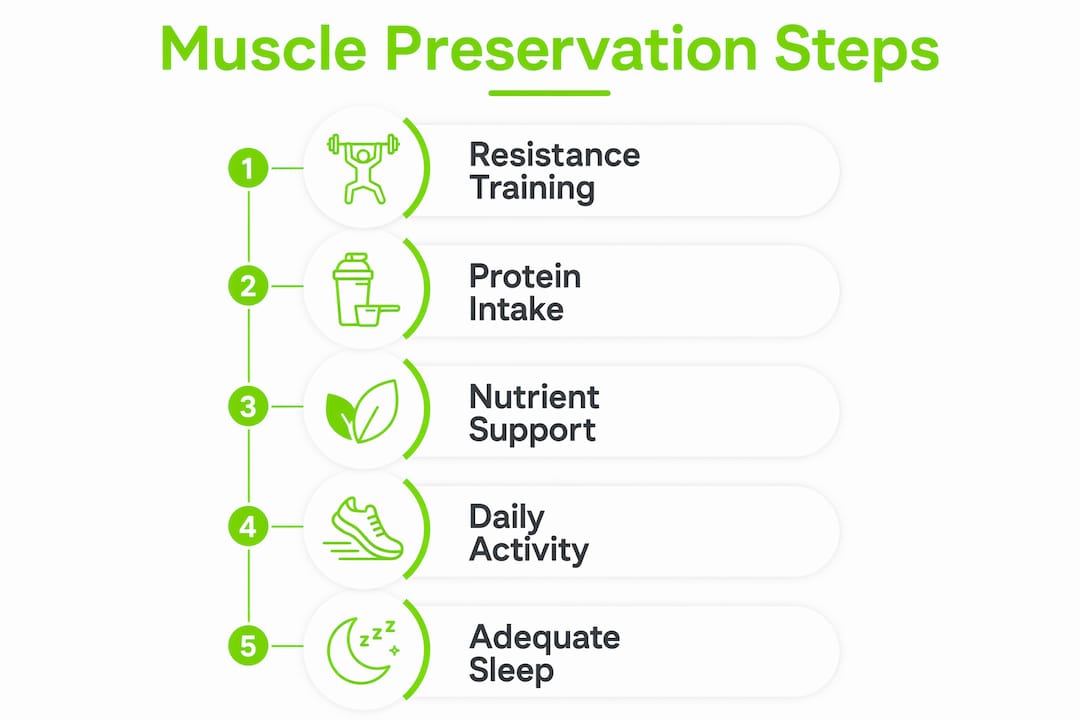
Sedentary behavior is a direct threat. Disuse atrophy, the muscle loss that comes from prolonged inactivity, can begin within days of reduced movement. If your job keeps you at a desk, short walks, standing breaks, and bodyweight movements throughout the day all help counteract that effect.
Chronic stress raises cortisol, a hormone that, at persistently high levels, breaks down muscle tissue. Managing stress through regular physical activity, adequate sleep, and structured recovery time is not optional if you want to maintain muscle health over years, not just weeks.
Monitoring your progress keeps you accountable and helps you catch decline early. Practical methods include:
- Tracking grip strength with a hand dynamometer (a reliable proxy for overall muscle function)
- Monitoring body composition through periodic DEXA scans or a calibrated body fat scale
- Noting changes in workout performance, such as whether you can lift the same weight or walk the same distance with the same effort
- Scheduling an annual check-in with a physician or registered dietitian if you are over 50
If you notice a rapid, unexplained drop in strength or muscle mass, consult a healthcare provider. Conditions like thyroid disorders, vitamin deficiencies, or medication side effects can accelerate muscle loss beyond what lifestyle changes alone can address.
Losing weight while preserving muscle requires a careful pace. Rapid weight loss of more than 2 pounds per week increases muscle breakdown significantly. Slower, steady loss combined with resistance training and adequate protein keeps muscle intact while fat drops.
Quick summary
Preventing muscle loss is not a single intervention. It requires consistent action across training, nutrition, and daily habits, and the earlier you start, the more muscle you protect.
- Commit to resistance training 2–4 times weekly, using progressive overload to keep muscles adapting
- Distribute 20–40 grams of protein across every meal throughout the day
- Fill your plate with carbohydrates, omega-3-rich fats, and micronutrients like vitamin D, magnesium, and iron
- Drink water consistently throughout the day, especially if you are over 50 and thirst signals have weakened
- Sleep 7–9 hours nightly, limit prolonged sitting, and manage chronic stress to protect hormonal balance
- Track your strength and body composition regularly, and seek professional guidance if decline accelerates
Key Takeaways
Preventing muscle loss requires consistent resistance training paired with distributed protein intake and a nutrient-complete diet, supported by sleep, hydration, and active stress management.
| Point | Details |
|---|---|
| Start resistance training early | Adults can lose 3–5% of muscle mass per decade from age 30; training counteracts that decline. |
| Distribute protein across meals | Eat 20–40 g of protein per meal to sustain muscle protein synthesis all day. |
| Hydrate proactively | About 76% of muscle mass is water; dehydration accelerates muscle protein breakdown, especially in older adults. |
| Address micronutrients | Vitamin D, magnesium, iron, and omega-3s each play direct roles in muscle function beyond protein alone. |
| Lose weight slowly | Losing more than 2 pounds per week increases muscle breakdown; combine gradual loss with resistance training. |
Dietium’s personalized diet tool helps you build a nutrition plan that accounts for your protein targets, micronutrient gaps, and fitness goals in one place, so you are not guessing at what your muscles actually need.


