 Skip to content

TL;DR:
- Personalized nutrition outperforms generic diets in weight loss, mood, sleep, and metabolic health.
- Custom meal plans increase adherence by aligning with individual preferences, biology, and lifestyle.
- Advanced methods like AI and multi-omics data enhance personalization and long-term effectiveness.
Generic diet advice is built for the average person, which means it’s optimized for no one in particular. Research confirms that personalized nutrition outperforms standard government dietary guidance across multiple health markers, including weight, energy, mood, and sleep. If you’ve followed a popular diet plan and felt like something was missing, the science suggests you weren’t doing it wrong. The plan itself may not have been built for you. This guide breaks down exactly why custom meal plans work better, who benefits most, and how modern technology is making personalized nutrition more accessible than ever before.
Table of Contents
- Why personalized meal plans outshine generic diets
- Core health benefits of custom meal plans
- Who benefits most: Key groups and conditions
- How custom plans work: Personalization methods and trends
- The real-world impact: What most articles miss about meal plans
- Ready to experience the benefits of custom meal plans?
- Frequently asked questions
Key Takeaways
| Point | Details |
|---|---|
| Better results than generic diets | Evidence shows custom meal plans consistently outperform generic diets for weight, energy, and mood. |
| Ideal for complex needs | People with chronic conditions or special goals see dramatic improvement from tailored nutrition. |
| Built on your unique data | Personalization uses your biology, lifestyle, and preferences to create more effective plans. |
| Ongoing support matters | Continuous feedback and plan adjustments are key to long-term meal plan success. |
Why personalized meal plans outshine generic diets
Most generic diets apply the same calorie targets, macronutrient ratios, and food rules to every person who follows them. The problem is that two people eating identical meals can have completely different metabolic responses. Your gut microbiome, hormones, activity level, and food preferences all shape how your body processes nutrients. A plan that ignores these factors is leaving results on the table.
A personalized nutrition study found that individuals following custom plans experienced greater weight loss, reduced triglycerides, improved mood, less hunger, better sleep, and higher energy compared to those following standard dietary advice. Those aren’t minor improvements. They represent a meaningful shift in daily quality of life.
Personalized meal plans also drive better adherence. When food choices align with your lifestyle and taste preferences, you’re far more likely to stick with the plan long enough to see results. Generic diets often fail not because the nutrition science is wrong, but because the plan doesn’t fit the person.
Here’s what personalization factors actually address:
- Biology: Metabolic rate, hormonal profile, and gut microbiome composition
- Medical history: Existing conditions, food intolerances, and medication interactions
- Lifestyle: Work schedule, cooking ability, and activity patterns
- Taste preferences: Favorite foods, cultural cuisine, and texture preferences
- Goals: Weight loss, muscle gain, blood sugar control, or general wellness
Using evidence-based nutrition strategies that account for all these variables produces plans that feel sustainable rather than restrictive.
| Factor | Generic diet | Personalized plan |
|---|---|---|
| Calorie targets | Fixed for all | Adjusted to your metabolism |
| Food choices | Standardized | Based on preferences and intolerances |
| Meal timing | General guidelines | Aligned with your schedule |
| Progress tracking | Minimal | Ongoing and adaptive |
| Adherence rate | Lower | Significantly higher |
Pro Tip: Use a platform that tracks your progress and adjusts your plan over time. Static plans lose effectiveness as your body adapts and your goals shift.
Core health benefits of custom meal plans
Now that we’ve compared approaches, let’s dig into the specific health benefits custom meal plans deliver.
The evidence is clear and consistent. Personalized nutrition interventions result in small but significant body weight reductions, with longer program durations producing greater effects. This matters because even modest weight loss, when maintained, reduces the risk of type 2 diabetes, cardiovascular disease, and joint stress.
Beyond weight, the benefits of meal planning extend to metabolic health markers that many people overlook. Triglycerides, a type of fat found in your blood, drop more significantly on personalized plans. High triglycerides are a known risk factor for heart disease, so this is a clinically meaningful outcome.
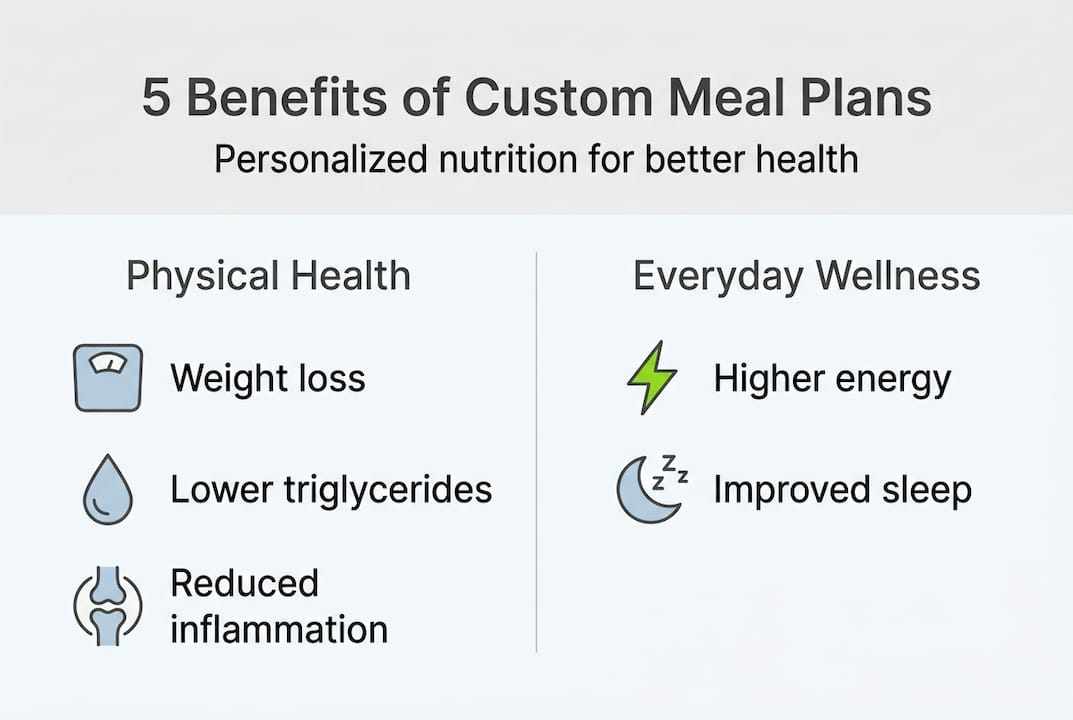
Here’s a summary of documented improvements across key health markers:
| Health marker | Generic diet result | Custom plan result |
|---|---|---|
| Body weight | Modest reduction | Greater and sustained reduction |
| Triglycerides | Minimal change | Significant decrease |
| Hunger levels | Often unchanged | Noticeably reduced |
| Sleep quality | Variable | Improved |
| Mood and energy | Inconsistent | Consistently better |
The improvements aren’t limited to one type of person. Research shows benefits across diverse populations, including working adults, older individuals, and people managing chronic conditions. The common thread is that the plan fits the person rather than forcing the person to fit the plan.
Additional benefits documented in research include:
- Better blood sugar regulation for people managing insulin sensitivity
- Reduced inflammation markers linked to chronic disease
- Improved gut health through targeted fiber and probiotic food choices
- Higher diet quality scores compared to self-directed eating
Incorporating functional foods in meal planning, such as fermented foods, omega-3 rich fish, and high-fiber legumes, amplifies these outcomes when chosen based on your specific health profile rather than generic recommendations.
Who benefits most: Key groups and conditions
While everyone can benefit, certain groups experience especially dramatic results from meal personalization.
-
Fitness-focused individuals: Athletes and active people have higher protein needs, specific pre and post-workout fueling requirements, and recovery nutrition demands that generic plans rarely address. Custom meal planning for fitness aligns macros and meal timing with training schedules for measurable performance gains.
-
People with diabetes or insulin resistance: Blood sugar response to food varies significantly between individuals. A personalized plan that accounts for glycemic index, meal timing, and carbohydrate distribution helps stabilize glucose levels far more effectively than standard low-carb or low-fat advice.
-
Older adults: Aging changes nutrient absorption, muscle maintenance needs, and appetite regulation. Personalized diets for seniors who are malnourished show improvements in nutritional status, muscle strength, physical performance, and overall quality of life. These are outcomes that generic senior nutrition guidelines rarely achieve.
-
Post-hospital and medically complex patients: People recovering from illness or surgery have acute nutritional needs that standard diets can’t address. Medically tailored meal benefits include reduced mortality and fewer heart failure hospitalizations, making personalized nutrition a genuine clinical tool, not just a wellness trend.
Key finding: In malnourished older adults, personalized diets improve nutritional status, muscle strength, physical performance, and quality of life, outcomes that standard dietary guidance consistently fails to achieve.
Using proper nutritional assessment methods is the starting point for identifying which group you fall into and what your plan should prioritize.
Pro Tip: If you’re managing a chronic condition or recovering from illness, work with a registered dietitian alongside any digital tool. Complex health needs benefit from professional oversight in addition to technology-driven personalization.
How custom plans work: Personalization methods and trends
What actually goes into building a meal plan tailored just for you?

The process starts with data collection. A quality personalized plan draws from multiple sources to build an accurate picture of your nutritional needs. The more data points included, the more precise the recommendations become.
Key personalization factors and their impact:
- Medical history and current health status: Identifies conditions, medications, and nutrient deficiencies that must be addressed
- Metabolic rate: Determines accurate calorie needs rather than relying on population averages
- Genetic data: Reveals how your body processes specific nutrients like caffeine, saturated fat, or folate
- Gut microbiome analysis: Shows which foods support your unique digestive ecosystem
- Activity level and type: Adjusts macronutrient ratios to match your energy expenditure
- Food preferences and cultural background: Ensures the plan is practical and enjoyable to follow
The next generation of personalized nutrition goes even further. Accounting for biology, lifestyle, and preferences leads to superior adherence and outcomes, and multi-omics analysis, which combines genetic, metabolic, and microbiome data, enhances this precision significantly. This approach moves nutrition from educated guessing to data-driven decision making.
AI meal planning tools are accelerating this shift. Platforms powered by artificial intelligence can process large amounts of personal health data, identify patterns, and generate meal plans that adapt in real time as your metrics change. This removes the guesswork and manual effort traditionally required to maintain a truly personalized approach.
Pro Tip: Choose a platform that updates your meal plan as your goals, activity, and health data evolve. A plan built for your starting point six months ago may not serve your current needs.
The real-world impact: What most articles miss about meal plans
The research on personalized nutrition is genuinely encouraging. But most articles present the findings without addressing a critical nuance: effectiveness in a study and effectiveness in real life are two different things.
Randomized controlled trials show clear benefits, but they also involve structured support, regular check-ins, and motivated participants. In the real world, adherence drops, life gets complicated, and plans go untouched. Personalized nutrition effectiveness research notes that while interventions produce meaningful results, some fail to reduce all-cause hospitalization, and long-term maintenance data remains limited.
What this means practically is that the plan itself is only part of the equation. Ongoing feedback, flexibility, and adjustment are what separate short-term results from lasting change. A custom plan that isn’t updated as your body and goals shift becomes just another static diet over time.
The platforms and approaches that produce durable results treat personalization as a continuous process, not a one-time setup. Meal planning for long-term success requires built-in mechanisms for reassessment, not just a strong starting point. That’s the piece most articles skip entirely.
Ready to experience the benefits of custom meal plans?
The science is clear: personalized nutrition consistently outperforms generic dietary advice across weight, energy, mood, and metabolic health. The next step is putting that science to work for your specific goals.
Dietium gives you the tools to do exactly that. Explore personalized meal plans built around your body metrics, health goals, and food preferences. Start with one of the available nutritional assessment options to establish your baseline, then let the platform generate and adapt a plan that fits your life. Whether you’re focused on weight loss, fitness performance, or long-term wellness, the right starting point is understanding your unique nutritional needs.
Frequently asked questions
Are custom meal plans more effective for weight loss than standard diets?
Yes. Scientific studies show that personalized meal plans generally lead to greater weight loss and better long-term adherence than generic diet advice, largely because they account for individual biology and preferences.
Can custom meal plans improve energy and sleep?
Research shows that individuals following personalized nutrition report better sleep and higher energy levels, along with reduced hunger compared to those on standard dietary plans.
What makes a meal plan truly personalized?
A genuinely custom plan uses your medical history, metabolic rate, lifestyle, food preferences, and ideally genetic or microbiome data to build recommendations that yield superior adherence and outcomes.
Are personalized meal plans useful for seniors or people with health conditions?
Personalized plans are especially effective for older adults, post-hospital patients, and those managing chronic conditions. Personalized diets for seniors improve muscle strength and quality of life, while medically tailored meals reduce mortality and heart failure hospitalizations.


