 Skip to content

TL;DR:
- Creating a healthy eating environment at home by stocking nutrient-rich foods influences children’s food choices early. Establishing predictable routines, involving kids in meal prep, and modeling positive behavior promote sustainable, stress-free habits. Avoid pressure and restrictive rules, focusing instead on consistent schedules, autonomy, and patience to foster lasting acceptance of nutritious foods.
Getting kids to eat well is one of the most consistent frustrations parents report, and the reasons are rarely simple. Picky eating, packed schedules, and conflicting nutrition advice all pile on at once. Research confirms that children’s eating patterns are shaped early and are strongly influenced by what’s available at home and how parents model food behavior. This guide gives you a clear, step-by-step path: set up your kitchen for success, build daily routines that stick, handle picky eating without battles, and use simple technology to reduce the mental load.
Table of Contents
- Prep for success: Setting up your kitchen and planning toolkit
- Step-by-step: Building daily healthy eating routines
- Picky eaters: Strategies that actually work
- Real-life hurdles: Fast food, sugary drinks, and feeding ages
- Using technology to keep everyone on track
- Our take: The only healthy eating rule that always works
- Want support on your healthy eating journey?
- Frequently asked questions
Key Takeaways
| Point | Details |
|---|---|
| Set up for success | A well-stocked kitchen and simple meal-planning tools lay the foundation for healthy eating with kids. |
| Rely on routines | Consistent meal and snack patterns, with positive modeling, encourage better eating habits. |
| Stay stress-free with picky eaters | Offer new foods without pressure; low-stress, repeated exposure leads to better results. |
| Make smart swaps | Limiting sugary drinks and fast food in favor of water and home meals has big health payoffs. |
| Use tech mindfully | Leverage technology for easy planning and reminders, but don’t obsess over tracking every bite. |
Prep for success: Setting up your kitchen and planning toolkit
The environment your child eats in matters more than most parents realize. Before any routine can work, your kitchen and your planning process need to support healthy choices automatically.
Parents can shape children’s eating by consistently offering nutrient-rich foods and limiting added sugars, saturated fat, and salt. That means the pantry does a lot of the work. Stock the front of your refrigerator with precut fruits and vegetables, low-fat dairy, and ready-to-grab proteins like hard-boiled eggs or hummus. Keep chips, candy, and sweetened drinks out of immediate sight or out of the house altogether.
Key pantry and fridge essentials:
- Fresh and frozen vegetables (frozen retains nutrients and is budget-friendly)
- Whole grain bread, oats, brown rice, and whole wheat pasta
- Lean proteins: chicken, eggs, beans, and low-sodium canned fish
- Low-fat dairy or fortified dairy alternatives
- Fresh, frozen, or unsweetened canned fruit
- Water as the primary drink, with low-fat milk as a secondary option
A grocery list for kids built around these staples makes shopping faster and reduces impulse buys that undermine your goals. When the right foods are simply there, kids default to them.
Top meal-planning tools at a glance:
| Tool type | Best use | Good for |
|---|---|---|
| Meal planning app | Weekly menu creation | Reducing daily decision fatigue |
| Recipe database | Finding family-friendly options | Identifying healthy recipes |
| Visual schedule chart | Posting snack/meal times | Setting expectations with kids |
| Nutrition calculator | Tracking macros and portions | Monitoring calorie and nutrient goals |
| Shared grocery list | Collaborative shopping | Reducing forgotten items |
Healthy routines for kids include family-based modeling and practical daily choices. One of the most effective modeling tools is a visible meal and snack schedule posted in the kitchen. Kids feel calmer when they know what to expect.
Pro Tip: Print a simple visual snack and meal schedule with pictures for younger children. Post it at their eye level. When kids know what comes next, they’re less likely to beg for snacks outside of planned times, which reduces overall conflict.
Involving kids in the process pays off quickly. Let them help choose two or three items from the produce section during grocery trips. When children pick the food, they’re more willing to eat it. Even simple tasks like washing vegetables or mixing ingredients build ownership and reduce resistance at the table. For more ideas on building their lunchbox routine, see these healthy lunchbox tips that work for all ages.
Step-by-step: Building daily healthy eating routines
With your kitchen and toolkit in place, the next phase is implementing daily structures for success. Predictability is the foundation of healthy eating for children. When meals and snacks happen at consistent times, kids arrive hungry but not ravenous, and they’re more open to trying what’s on their plate.
How to build your family’s daily eating routine:
- Set fixed meal and snack times. Aim for three meals and two planned snacks per day, spaced two to three hours apart. Consistent timing regulates appetite and prevents grazing.
- Model the behavior you want. Eat the same foods you serve your children. Kids are wired to imitate adults, and your plate sends a powerful message.
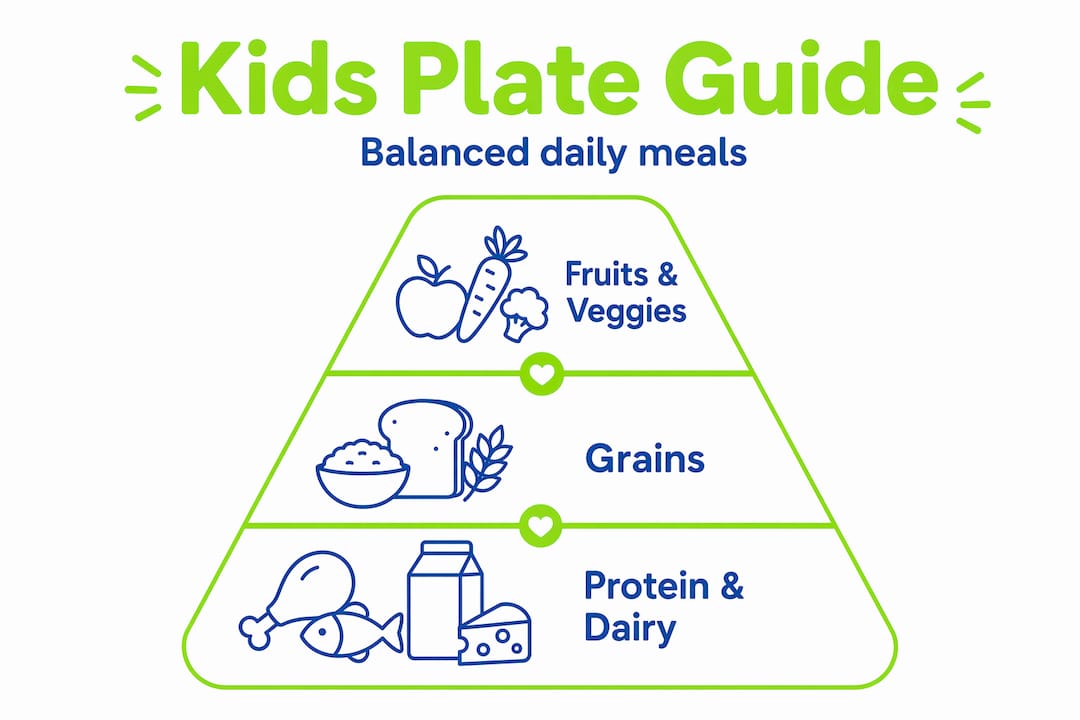
- Use the plate model for every meal. A MyPlate approach fills half the plate with fruits and vegetables, one quarter with grains, and one quarter with protein. Adjust portion sizes by age.
- Rotate new foods alongside favorites. Introduce one new food per meal while keeping one familiar option present. This removes the all-or-nothing pressure.
- Let kids serve themselves. Offer the food; let them decide how much goes on their plate. This builds simple eating habits around self-regulation and hunger awareness.
- Serve water and low-fat milk at every meal. Healthy eating routines for kids should replace sugary drinks with vegetables, fruits, whole grains, quality proteins, dairy, and water as standard components.
- End meals on a neutral note. Avoid praise for eating or punishment for not finishing. Keep the tone matter-of-fact and positive.
Sample daily schedule for school-age kids:
| Time | Meal or snack | What to include |
|---|---|---|
| 7:00 AM | Breakfast | Whole grain, fruit, dairy or protein |
| 10:00 AM | Morning snack | Fruit or vegetable plus a protein |
| 12:30 PM | Lunch | Balanced plate using plate model |
| 3:30 PM | Afternoon snack | Whole food option, water |
| 6:00 PM | Dinner | Full balanced meal, family together |
For broader guidance on structuring family meal planning, consider working from a weekly template that rotates proteins, grains, and vegetables. This cuts down prep time and prevents the nightly “what do we eat?” scramble.
Pro Tip: Ask your kids to serve their own portions using child-sized serving utensils. Studies consistently show children eat more variety and feel more in control when they have agency at the table. It also eliminates the “too much on my plate” complaint before the meal even starts.
Explore these healthy eating strategies for more detail on balancing macronutrients for different age groups.
Picky eaters: Strategies that actually work
Routines can get derailed by picky eating, so here is how to navigate common pitfalls and turn the tide. Picky eating is developmentally normal, especially between ages two and six. The challenge for parents is responding in a way that helps rather than reinforces the behavior.
What helps vs. what backfires:
| Strategy | Result |
|---|---|
| Repeated low-pressure exposure | Gradually builds acceptance over time |
| Predictable meal and snack timing | Reduces anxiety and increases willingness to try |
| Letting kids help prepare food | Increases investment in eating it |
| Pressuring kids to eat | Creates negative associations with food |
| Bribing with dessert | Elevates “reward” food and devalues main meal |
| Hiding vegetables in every dish | Misses the chance to build real acceptance |
| Forcing “clean plate” rule | Disconnects kids from their own hunger cues |
Evidence-based guidance emphasizes low-pressure exposure, predictable meal and snack timing, and avoiding pressure or bribery. This means serving a disliked food alongside familiar ones, without comment, repeatedly over weeks or months.
Practical approaches for picky eaters:
- Offer the same food in multiple forms. Raw broccoli and roasted broccoli taste completely different to a child.
- Pair new foods with accepted dips like hummus, guacamole, or low-fat ranch.
- Keep mealtimes pleasant. Talk about the day, not about what is or is not being eaten.
- If a child refuses a meal, stay calm. The next snack or meal is not far away.
- Avoid making a separate “kid’s meal.” Serve one family meal with at least one item you know they’ll likely accept.
“Children often need to see a new food many times before they’ll try it. The key is offering it without drama, pressure, or reward.”
For a full breakdown of how to approach meal planning around picky preferences, the picky eater meal planning guide walks through specific meal structures that reduce resistance while expanding variety.
Real-life hurdles: Fast food, sugary drinks, and feeding ages
Even the best meal plans run up against outside influences. Here is how to manage the curveballs modern life throws at healthy eating.

The fast food and sugary drink reality:
Sugar-sweetened beverage consumption among young children remains substantial, and data shows that 36.3 percent of youth ages 2 to 19 consumed fast food on a typical day. These numbers translate directly into excess calories, added sugars, and sodium that crowd out nutrient-dense food.
The answer is not eliminating fast food from family life entirely. That approach often backfires. Instead, build practical habits that reduce frequency and volume.
Actionable swaps that work:
- Replace juice with water or sparkling water with a squeeze of citrus
- Swap soda for milk or unsweetened flavored water at meals
- When ordering fast food, choose grilled over fried, and substitute a side salad or apple slices for fries
- Cook a simple “fast food style” meal at home: homemade burgers on whole grain buns with veggie toppings
- Batch cook proteins and grains on weekends so weeknight dinners come together in under 15 minutes
- Keep portable healthy snacks in the car to avoid drive-through temptation during after-school pickups
Age-specific feeding guidance:
Solid food introduction should align with developmental readiness, generally around six months, and should not follow a one-size-fits-all rule. Toddlers need smaller portions with stronger flavors introduced gradually. Preschoolers can begin to understand simple food categories. Grade-schoolers benefit from learning where food comes from and why certain choices support their energy and focus.
Customizing your approach to your child’s developmental stage makes the habits more likely to stick. For foundational guidance on habit formation across all ages, these resources on how to build healthy habits naturally apply directly to family nutrition. A practical grocery list planner can also help you consistently buy the right foods to support age-appropriate nutrition without overcomplicating your shopping trip.
Using technology to keep everyone on track
With basic challenges addressed, the final piece is leveraging smart technology to simplify routines and foster independence. Technology works best as a support tool, not a control system. The goal is reducing your mental load, not adding new tasks.
Meal planning and nutrition tracking tools must align with children’s developmental stage and readiness. That means parents do the tracking and planning, while kids stay focused on the experience of eating, not the numbers behind it.
What technology actually helps with:
- Generating weekly meal plans based on your family’s preferences and dietary needs
- Sending reminders for meal and snack times to maintain the routine
- Suggesting recipes based on ingredients you already have
- Logging your own nutrition to model healthy awareness for older children
- Tracking grocery inventory to reduce food waste and repeat buying
What to avoid:
- Requiring children to log their own food, which can create anxiety around eating
- Apps that turn eating into a points-based game, which gamifies food in unhealthy ways
- Over-monitoring calorie intake for growing children without professional guidance
- Using screens at the table under the guise of tracking
For guidance on managing healthy screen time habits alongside nutrition tech, the key principle is the same: technology should serve the family’s well-being, not create new stress.
Pro Tip: Set up app reminders for family meal and snack times instead of calorie logs. A simple notification that says “snack time in 10 minutes” keeps the routine consistent without making food a data exercise. This is especially helpful on weekends when schedules vary.
Our take: The only healthy eating rule that always works
Most parents come to us having tried the detailed food journals, the color-coded nutrition charts, and the strict no-junk-food rules. The ones who see lasting change in their kids’ eating habits are almost never the parents who tracked every macro. They’re the ones who made mealtimes calm, consistent, and low-stakes.
The science backs this fully. Repeated, pressure-free exposure to a variety of foods builds acceptance far more reliably than any tracking system. The sustainable eating habits that carry into adulthood are built through routine and autonomy, not restriction and monitoring.
Here is what actually moves the needle for most families:
- Consistency: Same meal times, same general structure, every day
- Joy: Mealtimes that feel like connection, not correction
- Autonomy: Kids who control their portion sizes develop better self-regulation
- Exposure: Repeated contact with a variety of whole foods without pressure
The uncomfortable truth is that most food battles are battles of control, not nutrition. When you shift the goal from “my child must eat this vegetable today” to “my child will be comfortable with this vegetable over the next six months,” everything gets easier. You stop counting bites. They stop resisting. The food becomes normal.
Detailed meal tracking has a place, especially for parents managing a child with specific dietary needs or health conditions. But for most families, the biggest gains come from structure, calm modeling, and patience. Track your routines, not your toddler’s macros.
Want support on your healthy eating journey?
Building healthy eating habits for your kids does not have to be a solo effort. Dietium offers a full set of resources to support family nutrition, from a family meal planning guide with practical templates to tools for creating personalized diet plans aligned with your household’s real needs. Whether you want to simplify your weekly meal prep, find recipes your whole family will eat, or track progress with less stress, Dietium’s platform connects you with the right tools. Explore wellness tracking techniques that reduce your mental load while keeping your family’s nutrition goals on track.
Frequently asked questions
How do I handle a child who refuses all vegetables?
Consistently offer small portions, model eating vegetables yourself, and avoid pressure or bribes. Children often need repeated exposure to a new food many times before they’ll try it, and pressure only slows that process.
What is the best plate model or portion guide for kids?
MyPlate guides are effective: fill half the plate with fruits and vegetables, one quarter with grains, and one quarter with protein. Portion sizes should be adapted by age and adjusted as children grow.
Are apps or nutrition trackers safe for children’s use?
Tech tools can support routines and planning when used to reduce parental stress, not to monitor children’s intake closely. Avoid creating over-monitoring habits that may cause food anxiety in children.
What age should my child start eating solids?
Most experts recommend introducing solid foods around six months, when your child shows developmental readiness. Solid foods are recommended at about six months and not before four months.
How much fast food is too much for my child?
Fast food should be an occasional treat rather than a daily habit. 36.3 percent of youth ages 2 to 19 consumed fast food on a typical day, contributing to excess sugar, sodium, and calorie intake.


