 Skip to content

Every parent faces the question of what truly defines healthy screen time for kids as digital devices weave into learning, friendships, and family life. The growing presence of tablets, smartphones, and computers from infancy shapes how children think and interact. With research revealing that screen use can begin as early as six months, awareness of both risks and benefits is key. This guide offers evidence-based strategies for balancing screen time that focus on age, content quality, and positive family engagement.
Table of Contents
- Defining Healthy Screen Time for Kids
- Types of Screen Activities and Their Impact
- Age-Based Guidelines and Recommendations
- Setting Boundaries and Family Media Plans
- Risks of Excessive Screen Use
- Building Positive Tech Habits Together
Key Takeaways
| Point | Details |
|---|---|
| Screen Time Quality Over Quantity | Prioritize active and educational digital interactions for children rather than simply limiting screen time. |
| Age-Specific Guidelines are Essential | Tailor screen time recommendations based on developmental stages to promote healthy engagement and learning. |
| Family Media Plans Foster Healthy Use | Implement family media plans to establish clear boundaries and facilitate open communication about digital habits. |
| Awareness of Risks is Crucial | Recognize and address the potential physical, mental, and cognitive risks associated with excessive screen time. |
Defining Healthy Screen Time for Kids
Digital devices have become ubiquitous in modern childhood, transforming how children learn, play, and interact. Recent trends from pediatric research indicate that screen interactions now start incredibly early, with children encountering digital media as young as six months old.
Screen time encompasses a broad range of digital interactions, including:
- Educational activities and online learning
- Social media engagement
- Entertainment through gaming
- Passive content consumption like video streaming
- Communication with friends and family
Understanding screen time requires distinguishing between active and passive digital experiences. Active screen time involves interactive learning, creative tasks, or skill-building activities. Passive screen time typically includes mindless scrolling, binge-watching, or background media consumption.
Here’s how active and passive screen time experiences compare:
| Interaction Type | Key Characteristics | Examples | Developmental Impact |
|---|---|---|---|
| Active Screen Time | Interactive, skill-building, goal-directed | Educational games, digital creation | Enhances cognitive and problem-solving skills |
| Passive Screen Time | Non-interactive, mostly receptive, continuous | Binge-watching, scrolling social feeds | Possible attention and emotional regulation issues |
UK educational research highlights the complexity of modern digital environments, where screens serve multiple developmental purposes beyond simple entertainment. This nuanced landscape demands a sophisticated approach to managing children’s digital experiences.
Key developmental considerations for healthy screen time include age-appropriate usage, content quality, and balanced interaction with physical and social environments. Parents must recognize that not all screen time is equivalent, and thoughtful, intentional digital engagement can support learning and growth.

Pro tip: Create a personalized digital interaction plan that adapts with your child’s developmental stages, emphasizing quality content and meaningful engagement over arbitrary time limits.
Types of Screen Activities and Their Impact
Screen activities have evolved dramatically, presenting both opportunities and challenges for children’s development. European educational research reveals that not all digital interactions are created equal, with significant variations in their developmental impacts.
Digital screen activities can be categorized into several key types:
- Educational Activities
- Online learning platforms
- Interactive educational games
- Research and homework support
- Creative Engagement
- Digital art creation
- Music and video production
- Coding and programming projects
- Entertainment
- Video gaming
- Streaming movies and shows
- Social media browsing
- Communication
- Video calls with family
- Messaging friends
- Online collaborative projects
UK research publications highlight crucial distinctions between active and passive screen interactions. Active screen time involves direct engagement, skill development, and interactive learning. Passive screen time, conversely, represents mindless consumption with potentially limited cognitive benefits.
Developmental impacts vary significantly across different screen activity types. Educational and creative digital interactions can enhance cognitive skills, problem-solving abilities, and technological literacy. However, excessive entertainment-focused screen time may negatively impact attention spans, social skills, and emotional regulation.
Screen time quality matters more than quantity. Intentional, supervised digital interactions can transform potential risks into meaningful learning opportunities.
Pro tip: Implement a balanced screen time approach by establishing clear guidelines that prioritize educational and creative digital activities over passive entertainment.
Age-Based Guidelines and Recommendations
Screen time guidelines require nuanced approaches that evolve with a child’s developmental stages. Understanding age-specific digital interactions becomes crucial for parents navigating modern technology’s complex landscape.
Recommended screen time guidelines by age group include:
Infants (0-18 months)
- No screen time except video chatting
- Prioritize in-person interactions
- Avoid background media exposure
Toddlers (18-24 months)
- Limited high-quality educational content
- Parent co-viewing and interaction mandatory
- Maximum 15-30 minutes daily
Preschoolers (3-5 years)
- Structured educational programming
- Maximum 1 hour daily
- Interactive, supervised digital experiences
School-Age Children (6-12 years)
- Balanced mix of educational and entertainment content
- Consistent screen time limits
- Parental content monitoring
Teenagers (13-18 years)
This table summarizes age-based recommendations and areas of focus for digital engagement:
| Age Group | Daily Time Guideline | Parental Focus |
|---|---|---|
| Infants (0-18 mo.) | Video calls only | Direct supervision, no background media |
| Toddlers (18-24 mo.) | 15-30 min, co-viewed | Select quality content, co-engage |
| Preschoolers (3-5 yrs) | Up to 1 hour | Structure, interactive learning |
| School Age (6-12 yrs) | Consistent, balanced limits | Mix education/entertainment, regular monitoring |
| Teens (13-18 yrs) | Flexible, guided autonomy | Teach digital literacy, encourage healthy boundaries |
- Gradual increase in autonomous digital management
- Focus on digital literacy
- Establish healthy boundary protocols
UK research publications emphasize that cognitive outcomes vary dramatically across different age groups. Interactive digital experiences can support learning when carefully curated and supervised, while excessive passive consumption may negatively impact developmental trajectories.
Developmental sensitivity matters more than strict time limitations. Quality of digital interaction trumps quantity.
Pro tip: Create a dynamic screen time management strategy that adapts to your child’s evolving developmental needs, regularly reassessing digital interaction patterns.
Setting Boundaries and Family Media Plans
Family media plans represent a crucial strategy for establishing healthy digital habits in modern households. These customizable frameworks help parents proactively manage technology interactions and create balanced media environments.
Key components of an effective family media plan include:
Digital Boundary Strategies
- Establish clear screen time limits
- Create device-free zones in home
- Define specific technology usage windows
- Implement consistent consequences
Communication and Involvement Techniques
- Include children in rule-setting process
- Explain rationale behind digital guidelines
- Encourage open dialogue about media use
- Regularly review and adjust family media plan
Digital Wellness Lab research recommends five critical strategies for effective digital boundaries. Parents should actively engage by co-viewing content, modeling positive digital behavior, and maintaining transparent communication about technology use.
Successful media plans require flexibility and mutual understanding. They are not rigid restrictions but collaborative agreements that evolve with family dynamics and individual developmental needs.
Technology boundaries are not about control, but about creating healthy digital environments that support learning and connection.
Pro tip: Schedule monthly family technology discussions to review and adapt your media plan, ensuring it remains relevant and responsive to changing family needs.
Risks of Excessive Screen Use
Comprehensive health research reveals multiple significant risks associated with prolonged screen exposure in children and adolescents. Understanding these potential negative impacts becomes crucial for parents navigating modern digital environments.
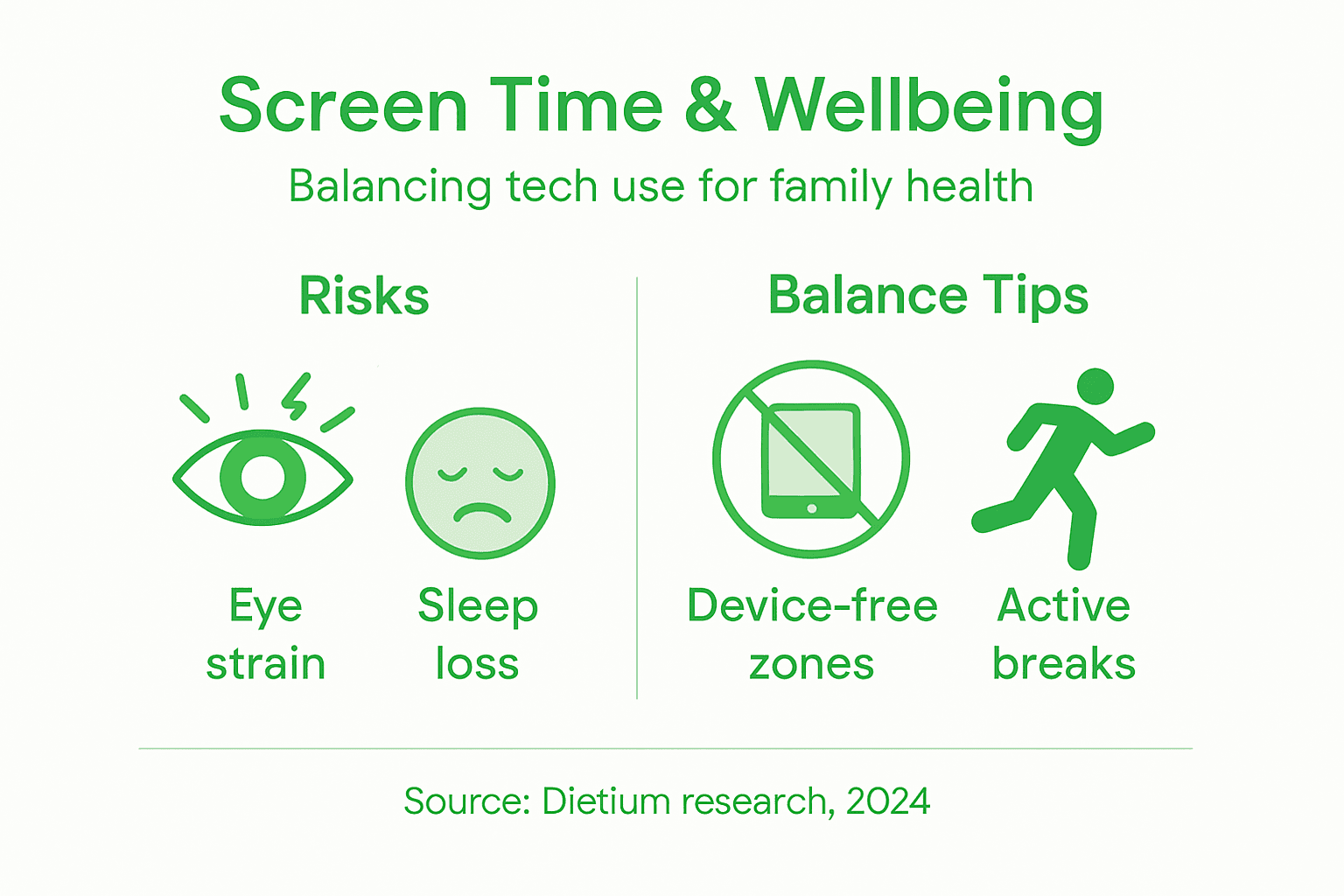
Major risks of excessive screen use include:
Physical Health Risks
- Increased obesity rates
- Reduced physical activity levels
- Potential disruption of sleep patterns
- Higher energy intake and unhealthy dietary habits
Mental Health Challenges
- Higher likelihood of depressive symptoms
- Decreased self-esteem
- Potential attention deficit issues
- Reduced overall quality of life
Cognitive Development Concerns
- Diminished memory retention
- Decreased ability to concentrate
- Potential interference with learning processes
- Reduced cognitive flexibility
Swedish government studies highlight profound academic consequences of prolonged digital exposure. Students experiencing excessive screen time demonstrate measurable declines in focus, information processing, and cognitive development.
Digital interactions are tools, not replacements for fundamental human experiences and developmental processes.
Pro tip: Implement periodic screen-free days to help children reconnect with offline activities and reset their digital consumption patterns.
Building Positive Tech Habits Together
Digital citizenship education represents a critical strategy for helping families develop healthy technology relationships. Collaborative approaches that involve both parents and children can transform digital interactions from potential risks to meaningful learning opportunities.
Key strategies for building positive tech habits include:
Family Collaboration Techniques
- Create shared technology agreements
- Develop mutual understanding of digital boundaries
- Practice transparent communication about online experiences
- Establish consistent family technology rules
Personal Digital Awareness Skills
- Track and reflect on personal screen time
- Understand digital content design impacts
- Practice mindful technology engagement
- Develop emotional intelligence around digital interactions
Skill Development Approaches
- Learn digital literacy together
- Explore technology’s positive potential
- Discuss online safety and privacy
- Balance digital and offline experiences
K-12 digital wellbeing research emphasizes creating supportive environments where technology becomes a tool for growth rather than a potential developmental obstacle. Families can transform digital interactions by focusing on intentional, balanced engagement.
Healthy technology habits emerge from open communication, mutual respect, and shared learning experiences.
Pro tip: Schedule weekly family technology reflections where everyone shares insights, challenges, and learnings from their digital experiences.
Take Control of Your Family’s Health and Screen Time Balance
Struggling to find the right balance between digital engagement and healthy living for your family The article highlights key challenges like managing screen time quality versus quantity and establishing healthy digital boundaries. These concerns often tie directly to lifestyle habits such as nutrition and physical activity Your goal is to support wellbeing without feeling overwhelmed by constant tech exposure or losing control over your child’s development.
At Dietium.com, we understand how intertwined technology use and wellness have become. Our platform helps you create personalized meal plans, track your family’s fitness progress, and maintain a balanced lifestyle that complements intentional screen time habits. With tools like the Recipians app that suggest nutritious recipes and fitness routines tailored to your goals you can foster healthier routines alongside mindful media use. Explore educational resources and use AI-powered calculators to stay informed about body metrics in real time.
Ready to transform your family’s screen time challenges into opportunities for greater health Start today with customized wellness plans designed for busy households navigating digital and physical wellbeing. Visit Dietium.com now and take the first step toward holistic health management that supports both mindful tech use and thriving lifestyles.
Frequently Asked Questions
What is considered healthy screen time for kids?
Healthy screen time includes a mix of active and passive digital experiences. Active screen time involves educational activities and creative tasks, while passive screen time includes mindless consumption. Balancing both types based on age-appropriate guidelines is essential for supporting child development.
How can parents set effective screen time limits for their children?
Parents can establish clear screen time limits by creating a family media plan that includes device-free zones and specific technology usage windows. It’s also beneficial to involve children in the rule-setting process to promote understanding and cooperation.
What types of screen activities are beneficial for children’s development?
Beneficial screen activities include educational platforms, interactive games, digital art creation, and online communication with family and friends. These activities encourage cognitive skills and creativity while fostering social connections.
How can families build positive tech habits together?
Families can build positive tech habits by creating shared technology agreements, practicing transparent communication about digital use, and reflecting on personal screen time together. Establishing consistent technology rules helps promote a culture of healthy engagement with devices.


