 Skip to content

TL;DR:
- A strict gluten-free diet is essential for managing celiac disease and gluten sensitivity.
- Identifying hidden gluten sources and reading labels carefully prevents accidental ingestion.
- Proper meal planning and nutritional monitoring ensure long-term health and minimize deficiencies.
For millions of Americans, going gluten-free is not a lifestyle choice. It is a medical requirement. A strict gluten-free diet is the only proven treatment for celiac disease and non-celiac gluten sensitivity, meaning daily food choices carry real health consequences. Without clear guidance, the learning curve can feel steep. This guide cuts through the noise and gives you the foundational knowledge, practical food lists, label reading skills, and meal planning tools you need to eat safely, stay nourished, and build a routine that actually holds up in real life.
Table of Contents
- Understanding gluten and who needs to avoid it
- Essential foods: What to eat and what to avoid
- Mastering label reading for gluten-free safety
- Building a balanced, sustainable gluten-free meal plan
- Why most people overcomplicate gluten-free living
- Get expert support for your gluten-free journey
- Frequently asked questions
Key Takeaways
| Point | Details |
|---|---|
| Gluten-free is essential | People with celiac disease or gluten sensitivity must avoid gluten for health, not as a trend. |
| Read labels carefully | FDA gluten-free labeling, ingredient terms, and cross-contact are key for safe shopping. |
| Watch for hidden gluten | Processed foods, sauces, or even medications can contain gluten unless certified otherwise. |
| Plan meals strategically | A balanced gluten-free diet with expert guidance ensures essential nutrients and eases stress. |
Understanding gluten and who needs to avoid it
Gluten is a group of proteins found naturally in wheat, barley, and rye. It acts like a binding agent in foods, giving bread its chew and pasta its structure. For most people, it causes no harm. For others, it triggers a serious immune response.
Celiac disease (CD) is an autoimmune condition where gluten causes the immune system to attack the small intestine’s lining. Over time, this damages the villi, tiny finger-like projections that absorb nutrients. Non-celiac gluten sensitivity (NCGS) produces similar symptoms without the autoimmune damage. Both conditions require the same solution: complete gluten removal from the diet.
The only proven treatment for celiac disease and NCGS is a strict, lifelong gluten-free diet. There are no medications that substitute for it. Even small exposures can cause intestinal damage in people with celiac disease, even without obvious symptoms.
Common symptoms to watch for include:
- Bloating, gas, and abdominal pain
- Chronic diarrhea or constipation
- Fatigue and brain fog
- Unexplained weight loss or poor growth in children
- Anemia, bone loss, and skin rashes in more severe or long-standing cases
Left untreated, celiac disease raises the risk of nutrient deficiencies, infertility, osteoporosis, and certain cancers. This is why strict adherence matters far beyond symptom relief.
Gluten also hides in unexpected places. Packaged soups, soy sauce, salad dressings, and even some medications can contain wheat derivatives. Shared cooking surfaces and utensils introduce cross-contact risk. Understanding where gluten hides is the first step toward truly safe eating.
“Gluten-free living is not just about avoiding bread. It requires awareness of every ingredient, every surface, and every label in your daily environment.”
Essential foods: What to eat and what to avoid
Now that you know what gluten is and why it must be avoided, let’s look at exactly what belongs and what does not belong on your grocery list.
The good news: many whole, naturally occurring foods are completely gluten-free. Building your diet around these staples makes the process far more manageable.
Naturally gluten-free foods:
- Fresh fruits and vegetables (all varieties)
- Plain meat, poultry, and fish (unbreaded, unmarinated)
- Eggs and most plain dairy products
- Beans, lentils, and legumes
- Rice, corn, potatoes, and quinoa
- Most plain nuts and seeds
- Gluten-free grains: millet, sorghum, buckwheat, amaranth, and teff
| Category | Safe choices | Avoid |
|---|---|---|
| Grains | Rice, corn, quinoa, buckwheat | Wheat, barley, rye, spelt |
| Bread and pasta | Labeled gluten-free versions | Regular bread, pasta, crackers |
| Sauces and condiments | Plain olive oil, vinegar, labeled GF sauces | Soy sauce, malt vinegar, gravies |
| Oats | Certified gluten-free oats only | Conventional oats (cross-contact risk) |
| Processed foods | Labeled gluten-free snacks | Most packaged chips, cookies, mixes |
Oats deserve special attention. Certified gluten-free oats are safe in limited amounts, with newly diagnosed individuals advised to limit intake to 1/2 cup per day. Conventional oats are frequently contaminated through shared farming and processing equipment. Try easy gluten-free oat recipes to incorporate them safely into your routine.
Hidden gluten sources catch many people off guard. Sauces thickened with flour, malt-flavored products, imitation seafood, and even biodegradable tableware can contain gluten. Use gluten-free shopping guidance to build a reliable grocery habit.

Pro Tip: Keep a small stash of clearly labeled gluten-free snacks in your bag or car. When you are out and unsure about available food options, having a safe backup prevents accidental gluten ingestion.
Mastering label reading for gluten-free safety
Understanding which foods are safe is only half the battle. Here’s how to decode food labels to stay 100% gluten-free.
In the United States, the FDA defines a gluten-free label as containing fewer than 20 parts per million (ppm) of gluten. This threshold is considered safe for most people with celiac disease. However, not all safe products carry this label, and not all labeled products are equally low in gluten.
Ingredients and terms that signal hidden gluten:
- Wheat, wheat starch, wheat germ, wheat bran
- Barley, barley malt, malt extract, malt vinegar
- Rye and triticale
- Spelt, kamut, einkorn, emmer, farro
- Modified food starch (unless specified as corn-based)
- Hydrolyzed wheat protein
Always check the allergen statement at the bottom of ingredient lists. Phrases like “may contain wheat” or “processed in a facility with wheat” indicate cross-contact risk.
Step-by-step label reading guide:
- Scan for a certified gluten-free logo or FDA gluten-free claim first.
- Read the full ingredient list, not just the front label.
- Check the allergen warning statement for wheat disclosure.
- Look for any malt, barley, or rye derivatives in flavoring or additives.
- If the product contains oats, confirm they are certified gluten-free.
- When in doubt, skip the product or contact the manufacturer directly.
For a deeper look at interpreting nutrition panels, reading nutrition labels is a practical skill that goes beyond just gluten avoidance.
Pro Tip: Several free apps allow you to scan barcodes and instantly check gluten status. Use them when shopping in unfamiliar stores or buying new products.
Building a balanced, sustainable gluten-free meal plan
Knowing what to eat and how to check labels is powerful. Let’s tie it together with practical meal planning for real-world success.
One of the most overlooked risks of a gluten-free diet is nutritional deficiency. Many gluten-containing foods are fortified with B vitamins and iron. When you remove them without replacing those nutrients, gaps develop. Key nutrients to monitor include:
- B vitamins (especially B1, B2, B3, B9/folate): found in fortified grains, leafy greens, and legumes
- Iron: found in red meat, lentils, spinach, and pumpkin seeds
- Fiber: found in vegetables, fruits, beans, and gluten-free whole grains
- Calcium: found in dairy, fortified plant milks, and leafy greens
Gluten-free whole grains and nutrient boosters to include regularly:
- Quinoa (complete protein, high in iron and magnesium)
- Buckwheat (rich in fiber and B vitamins)
- Amaranth (high in calcium and protein)
- Brown rice and wild rice (fiber and B vitamins)
- Teff (excellent source of iron and calcium)
Balanced meals combine a gluten-free grain, a protein source, and at least two vegetables. This cross-food group approach supports satiety and prevents the blood sugar spikes common with refined gluten-free products.
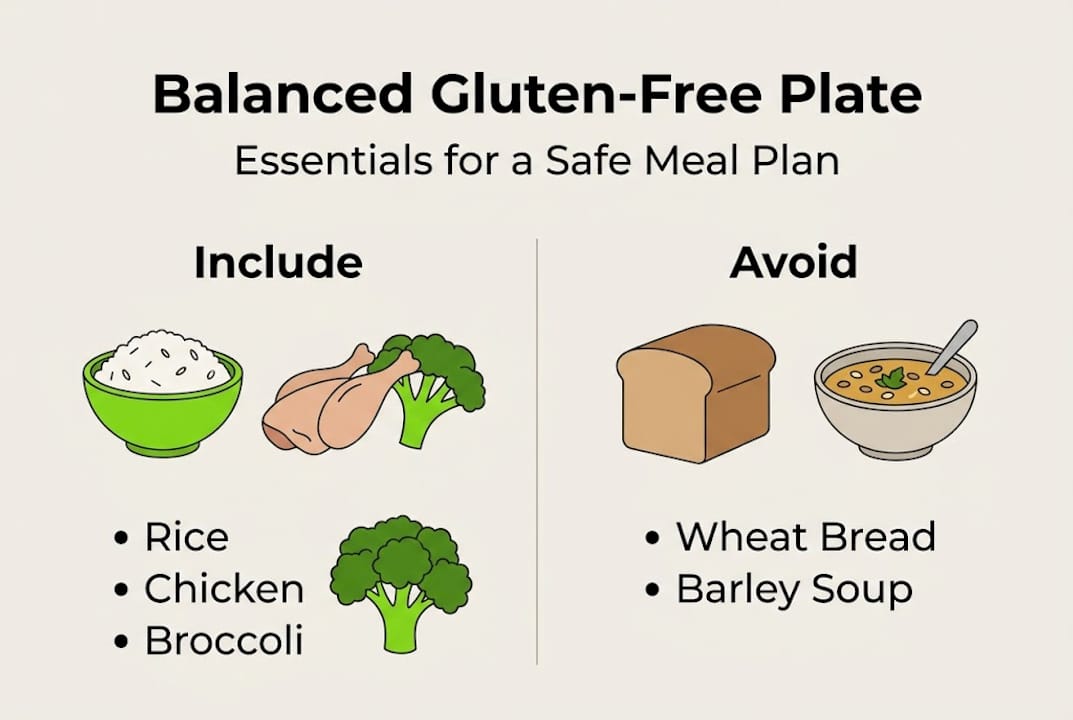
Meal prep is your best tool for consistency. Batch cook grains and proteins on weekends, portion snacks in advance, and keep a rotation of five to seven go-to meals. Understanding the importance of meal planning shows how structure reduces daily decision fatigue and prevents risky last-minute food choices.
Regular nutritional assessment helps you identify gaps before they become deficiencies. Tracking serum ferritin, folate, vitamin D, and calcium levels annually is standard practice for people managing celiac disease long-term. The micronutrient deficiency risks associated with poorly managed gluten-free diets are real and preventable.
As NIDDK guidelines recommend, working with a registered dietitian for meal planning, label training, and nutrient monitoring gives you the most reliable path to long-term health.
Pro Tip: Keep a food diary for the first three months. Log what you eat, how you feel, and any suspected reactions. This data is invaluable when working with a dietitian to fine-tune your plan.
Why most people overcomplicate gluten-free living
With these essentials in mind, it is worth reflecting on why a gluten-free lifestyle does not have to be overwhelming.
Most people struggle not because the diet is impossibly difficult, but because they approach it without a system. Anxiety about hidden gluten, fear of eating out, and information overload from conflicting online sources create stress that makes the diet feel harder than it is.
The truth is straightforward. When you follow a consistent meal planning routine and apply a reliable label reading process, the daily risk of accidental gluten exposure drops significantly. Consistency matters far more than perfection. One slip does not undo your progress, but building repeatable habits does protect your health over time.
The meal planning perspective we recommend is simple: structure your week around foods you know are safe, expand gradually, and document what works. Partnering with a registered dietitian turns an overwhelming process into a manageable, personalized routine. The goal is not a perfect diet. It is a sustainable one.
Get expert support for your gluten-free journey
If you want guidance or peace of mind in your gluten-free lifestyle, consider these next steps.
Dietium offers personalized gluten-free meal plans built around your health goals, food preferences, and nutritional needs. Instead of guessing which foods are safe or nutritionally complete, you get a structured plan that removes the daily decision burden. Pair that with a full nutritional assessment to identify any existing deficiencies and track your recovery over time. From ingredient swaps to weekly meal prep routines, Dietium’s tools and resources are designed to make gluten-free living practical, nourishing, and sustainable for the long term.
Frequently asked questions
How quickly do symptoms improve after starting a gluten-free diet?
Most people notice improvement within days to weeks, but full intestinal healing takes longer. Mucosal healing in children occurs in 74% of cases within 15 months, while adults heal more slowly, with only 34% fully healed at 2 years and 66% at 5 years.
Can oats be included in a gluten-free diet?
Only oats labeled certified gluten-free are safe, and even then in limited amounts. Cross-contact with gluten is common in conventional oat production, making certification essential.
What should I do if a food label does not say gluten-free?
Check the ingredient list for wheat, barley, rye, and their derivatives, then review the allergen statement. The FDA gluten-free standard requires less than 20 ppm, but unlabeled products may not meet that threshold.
Are there hidden sources of gluten besides food?
Yes. Medications, pet food, and Play-Doh can all contain gluten, as can biodegradable tableware made from wheat starch. Always check non-food products if you have celiac disease.


