 Skip to content

TL;DR:
- Small, consistent dietary changes significantly reduce health risks without requiring drastic overhauls.
- Setting realistic goals like five servings of fruits and vegetables daily supports sustainable progress.
- Building habits through meal planning and environment adjustments ensures long-term success.
Eating better does not require a complete lifestyle overhaul. In fact, 500g of fruits and vegetables daily reduces heart disease risk by 24% and stroke risk by 33%. That is a powerful result from one simple habit. Many beginners feel overwhelmed by conflicting advice, trendy diets, and complicated meal plans. The truth is, small, consistent changes built on solid evidence are far more effective than dramatic short-term fixes. This guide breaks down realistic nutrition goals, essential nutrients, practical habit-building strategies, and how to overcome common roadblocks so you can start improving your diet with confidence.
Table of Contents
- What are realistic nutrition goals for beginners?
- Understanding essential nutrients and their impact
- Practical strategies for building healthy habits
- Addressing common challenges: processed foods and balance
- Our perspective: the overlooked truths about beginner nutrition goals
- Take your nutrition journey further with personalized solutions
- Frequently asked questions
Key Takeaways
| Point | Details |
|---|---|
| Set measurable goals | Aim for clear nutrition targets using evidence-backed benchmarks for fruits, veggies, sugars, and fiber. |
| Prioritize healthy patterns | Focusing on whole foods and balanced meals beats obsessing over individual nutrients. |
| Build habits gradually | Track one nutrition habit per week for sustainable change and long-term success. |
| Minimize processed foods | Reducing processed food intake boosts overall health and helps achieve goals faster. |
| Use practical strategies | Meal planning and the plate method make healthy eating easier for beginners. |
What are realistic nutrition goals for beginners?
Setting goals that are too ambitious is one of the most common beginner mistakes. When you aim to change everything at once, you burn out fast. Realistic, measurable targets give you a clear direction and make progress visible.
Evidence-based targets give you something concrete to work toward. Start with these key benchmarks:
- Fruits and vegetables: Aim for 400 to 500g (about 5 servings) daily
- Added sugar: Keep it below 10% of your total daily energy intake
- Salt: Limit to under 5g per day (roughly 1 teaspoon)
- Red meat: Stay under 350g per week (cooked weight)
- Fiber: Target 25 to 30g daily from whole grains, legumes, and vegetables
These are not arbitrary numbers. They reflect decades of nutrition research and are achievable for most people.
Small steps, big results. Changing one habit at a time is more sustainable than overhauling your entire diet overnight.
Here is a sample weekly nutrition goal tracker to help you stay on course:
| Goal | Target | Frequency |
|---|---|---|
| Fruit and vegetable servings | 5 servings (400 to 500g) | Daily |
| Fiber intake | 25 to 30g | Daily |
| Added sugar | Under 10% of calories | Daily |
| Salt intake | Under 5g | Daily |
| Red meat | Under 350g cooked | Weekly |
| Whole grains | At least 50% of grains | Daily |
The healthy plate method is one of the most practical visual tools available. Fill half your plate with fruits and vegetables, one quarter with whole grains, and one quarter with lean proteins. Limit processed foods as much as possible. This single framework handles most of your nutrition decisions without requiring calorie counting or complex math.
Building simple eating habits early on creates a strong foundation. Pair that with smart meal planning tips and you have a repeatable system that takes the guesswork out of eating well.
Understanding essential nutrients and their impact
With clear goals in mind, understanding nutrients makes better food choices simple. You do not need a nutrition degree. You just need to know what each major nutrient does and where to find it.
The four key nutrients for beginners:
- Protein builds and repairs muscle, supports immune function, and keeps you full longer. Sources include chicken, fish, eggs, beans, and tofu.
- Carbohydrates are your body’s primary energy source. Choose complex carbs like oats, brown rice, and sweet potatoes over refined options.
- Fats support brain health, hormone production, and vitamin absorption. Focus on unsaturated fats from avocado, nuts, and olive oil.
- Fiber feeds beneficial gut bacteria, regulates blood sugar, and supports digestive health. Choose whole grains over refined and aim for 25 to 30g of fiber daily.
Limiting certain inputs matters just as much as adding the right ones. Limit added sugars to under 10% of total energy, keep salt below 5g per day, and reduce red meat to under 350g per week. These limits directly lower risk for heart disease, type 2 diabetes, and high blood pressure.
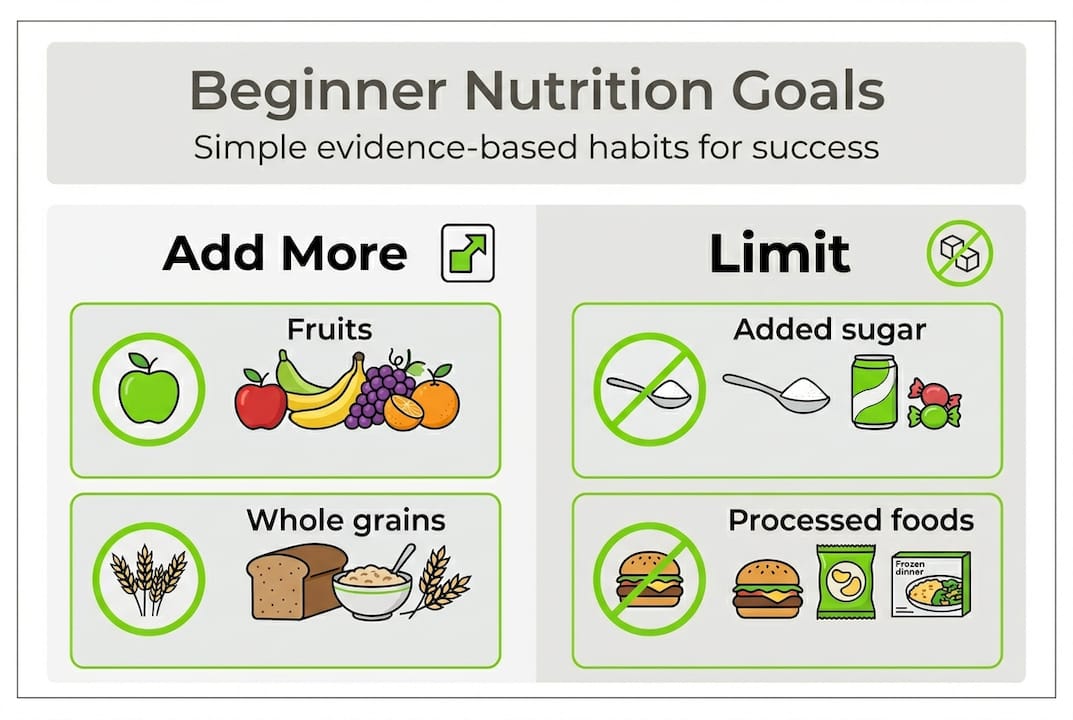
Here is a quick comparison of whole versus processed foods:
| Food type | Examples | Key benefit |
|---|---|---|
| Whole grains | Brown rice, oats, quinoa | Higher fiber, stable blood sugar |
| Refined grains | White bread, white pasta | Lower fiber, faster digestion |
| Whole protein | Chicken breast, lentils, eggs | Nutrient-dense, less sodium |
| Processed protein | Deli meats, sausages | High sodium, additives present |
| Whole fats | Avocado, nuts, olive oil | Heart-healthy unsaturated fats |
| Processed fats | Margarine, fried snacks | Often contain trans or saturated fats |
Pro Tip: Do not fixate on a single nutrient. Research consistently shows that overall dietary patterns predict health outcomes far better than any one food or ingredient. Focus on what your whole diet looks like over a week, not just one meal.
Learning about avoiding processed foods is a practical next step. Understanding meal planning and nutrition together helps you apply this knowledge consistently.
Practical strategies for building healthy habits
Knowing what to eat is powerful. But habit building is the true secret to lasting change. Information alone does not create results. Consistent action does.
Here is a step-by-step approach to building nutrition habits without feeling overwhelmed:
- Start with the plate method. Use it as your visual anchor at every meal. Half vegetables and fruit, one quarter whole grains, one quarter lean protein. No measuring required.
- Pick one change per week. Track one change weekly instead of trying to fix everything at once. Week one could be adding a daily piece of fruit. Week two could be swapping white bread for whole grain.
- Plan your meals in advance. Decide what you will eat for the week on Sunday. This removes daily decision fatigue and reduces the chance of grabbing processed convenience food.
- Prep ingredients ahead of time. Wash and chop vegetables, cook a batch of grains, and portion out proteins. Preparation removes friction when you are tired or busy.
- Track your progress simply. Use a notebook, an app, or a simple checklist. Seeing your streak of daily vegetable servings builds momentum.
- Adjust, do not quit. If you miss a day, restart the next meal. Progress is not linear, and that is completely normal.
The data is clear. Eating 500g of fruits and vegetables daily cuts heart disease risk by 24% and stroke risk by 33%. That single habit alone justifies the effort.

Pro Tip: Start with the easiest habit first, not the most important one. Quick wins build confidence and make harder changes feel more achievable.
For structured support, explore meal prep for beginners to get started efficiently. If you have specific preferences, meal planning for picky eaters offers tailored strategies. Households with multiple people can benefit from family meal planning approaches that work for everyone.
Addressing common challenges: processed foods and balance
With healthy habits underway, tackling common pitfalls ensures long-term success. Most beginners face the same obstacles, and knowing them in advance puts you ahead.
Common beginner challenges:
- Time pressure: Cooking whole foods feels slow compared to grabbing packaged meals
- Cravings: Sugar and salt in processed foods are designed to be habit-forming
- Confusion: Conflicting nutrition advice online makes it hard to know what is actually true
- Social situations: Eating out or at gatherings makes healthy choices harder to control
- Cost perception: Whole foods are often assumed to be more expensive, though bulk buying and seasonal produce change that equation
One of the most debated topics in beginner nutrition is plant-heavy eating versus animal protein. The healthy plate framework recommends filling half your plate with fruits and vegetables and one quarter with lean proteins, which can come from either plant or animal sources. Neither approach is universally superior. What matters most is the overall quality of your diet.
Focus on dietary patterns over single nutrients. Minimally processed whole foods are the foundation of both health and performance, regardless of whether your protein comes from plants or animals.
Gradually shifting away from processed foods works better than going cold turkey. Start by replacing one processed item per week with a whole food alternative. Swap chips for a handful of nuts. Replace a sugary drink with water and a slice of lemon. These micro-swaps accumulate into significant dietary change over time.
Building simple eating habits for health helps you stay consistent without feeling restricted. If you are leaning toward plant-based eating, vegetarian meal planning provides a structured starting point.
Our perspective: the overlooked truths about beginner nutrition goals
Most nutrition content tells beginners what to eat. Far less of it addresses why so many people start strong and then stall. The real issue is almost never knowledge. It is the all-or-nothing mindset that treats one imperfect meal as a full reset.
Experience shows that beginners who succeed long-term are not the ones with the strictest plans. They are the ones who build flexible systems. They stack habits incrementally, celebrate small wins, and treat nutrition as a long-term practice rather than a short-term fix.
Obsessing over single nutrients, like demonizing carbs or chasing protein grams, misses the bigger picture entirely. Research consistently supports the idea that meal planning matters more than any individual food choice. A diet built around whole foods, reasonable portions, and consistent variety will outperform any rigid elimination plan over time.
The most underrated nutrition advice for beginners is this: make it easy, not perfect. Lower the barrier to entry. Keep fruit on the counter. Keep pre-washed greens in the fridge. Design your environment so that the healthy choice is also the convenient one.
Take your nutrition journey further with personalized solutions
Understanding nutrition principles is the first step. Applying them consistently is where real results happen. Dietium.com offers practical tools to help you move from learning to action. Explore structured guidance through meal planning for families to build routines that work for your whole household. Use evidence-based nutritional assessment methods to get a clear picture of where you stand today. Then put a system in place for tracking nutrition progress so you can measure what is working and adjust with confidence. Every step forward counts.
Frequently asked questions
How quickly can beginners see results from nutrition changes?
Many people notice improved energy and better well-being within 1 to 2 weeks of consistent changes. Dietary changes reduce disease risk trends over months with sustained effort.
Do beginners need to count calories for nutrition goals?
Calorie counting is not required for most beginners. The plate method applies nutrition guidance effectively without tracking numbers, making it a practical starting point.
What are the easiest nutrition goals to start with?
Adding one extra serving of fruits or vegetables each day is one of the simplest and most impactful starting points. Aim for 5 daily servings and build from there.
Does choosing whole grains really make a difference?
Yes. Whole grains boost fiber intake and are linked to lower risk for heart disease and type 2 diabetes compared to refined grain options.
How do I reduce my intake of processed foods without feeling deprived?
Swap one processed item per week for a whole food alternative and use meal planning to stay consistent. Dietary patterns over single nutrients drive the best long-term outcomes.


