 Skip to content

Processed foods dominate modern diets, contributing to rising rates of heart disease, diabetes, and mental health disorders. Many people struggle to identify which foods are truly harmful and how to make practical changes in their busy lives. This guide provides evidence-backed strategies to help you recognize ultra-processed foods, prepare your kitchen for success, and implement sustainable dietary changes that protect your health. You’ll learn simple swaps, label-reading techniques, and meal planning approaches that make avoiding processed foods realistic and rewarding.
Table of Contents
- Understanding Processed Foods And Their Health Impacts
- Preparing To Avoid Processed Foods: What You Need To Know And Have
- Step-By-Step Guide To Eliminating Processed Foods From Your Meals
- Troubleshooting Common Challenges And Monitoring Your Progress
- Discover Personalized Nutrition Support To Reduce Processed Foods
- Frequently Asked Questions
Key takeaways
| Point | Details |
|---|---|
| Health risks are serious | Ultra-processed foods increase risks of heart disease, diabetes, and mental health disorders significantly. |
| NOVA classification guides choices | This system categorizes foods by processing level, helping you identify which items to avoid or minimize. |
| Whole food swaps are practical | Replacing processed items with fresh produce, whole grains, and home-cooked meals is achievable with planning. |
| Label reading is essential | Long ingredient lists with additives, preservatives, and artificial substances signal ultra-processed products. |
| Gradual changes work best | Substituting one processed item weekly builds sustainable habits without overwhelming your routine. |
Understanding processed foods and their health impacts
Processed foods exist on a spectrum, and understanding this range helps you make informed choices. The NOVA classification system categorizes foods into four groups based on processing extent. Group 1 includes unprocessed or minimally processed foods like fresh vegetables, fruits, and plain meats. Group 2 covers processed culinary ingredients such as oils, butter, and salt used in cooking. Group 3 encompasses processed foods like canned vegetables or cheese, which combine Group 1 and 2 items with preservation methods. Group 4 represents ultra-processed foods, the category linked to serious health problems.
| NOVA Group | Description | Examples |
|---|---|---|
| Group 1 | Unprocessed or minimally processed | Fresh fruits, vegetables, plain meats, eggs |
| Group 2 | Processed culinary ingredients | Oils, butter, salt, sugar |
| Group 3 | Processed foods | Canned vegetables, cheese, bread |
| Group 4 | Ultra-processed foods | Sugary drinks, packaged snacks, instant meals |
Ultra-processed foods contain ingredients rarely used in home cooking. Common additives include high-fructose corn syrup, hydrogenated oils, modified starches, artificial sweeteners, emulsifiers, and synthetic colorings. These substances enhance flavor, texture, and shelf life but offer minimal nutritional value. Research shows direct associations between ultra-processed foods and 32 health parameters spanning mortality, cancer, mental health issues, and metabolic disorders.
The health risks stem from harmful nutrient combinations. Ultra-processed foods deliver excessive salt, sugars, and unhealthy fats, making overconsumption effortless. Your body processes these foods differently than whole foods, triggering inflammation and insulin resistance. Studies link regular consumption to cardiovascular disease, type 2 diabetes, cognitive decline, anxiety, and depression. The convenience factor makes these products appealing, but the long-term consequences outweigh short-term benefits.
Recognizing ultra-processed foods empowers better decisions. When you understand what makes these products harmful, you can prioritize whole food diet benefits and protect your health. The key lies in reading labels carefully and choosing minimally processed alternatives whenever possible.
Preparing to avoid processed foods: what you need to know and have
Successful dietary changes start with proper preparation. Your kitchen setup and shopping habits determine how easily you can avoid processed foods. Begin by evaluating your pantry and refrigerator, removing items with long ingredient lists full of unfamiliar chemicals. This creates physical and mental space for healthier options.
Label reading becomes your most powerful tool. Check ingredient lists before nutritional panels. Foods with five or fewer recognizable ingredients typically fall into safer categories. Watch for hidden sugars under names like dextrose, maltose, or cane syrup. Avoid products containing partially hydrogenated oils, artificial colors (Red 40, Yellow 5), or preservatives like BHA and BHT. The ingredient order matters too, as manufacturers list components by weight, so items appearing first dominate the product.
Essential kitchen tools simplify whole food preparation:
- Sharp knives for efficient vegetable chopping
- Cutting boards in multiple sizes
- Quality pots and pans for various cooking methods
- Food storage containers for batch cooking
- Blender or food processor for sauces and smoothies
- Measuring cups and spoons for recipe accuracy
Stock your pantry with minimally processed staples. Whole grains like brown rice, quinoa, and oats provide fiber and sustained energy. Dried beans and lentils offer affordable protein. Canned tomatoes, low-sodium broths, and plain frozen vegetables give you shortcuts without additives. Nuts, seeds, and nut butters (with only nuts and salt listed) make satisfying snacks. Olive oil, vinegar, and basic spices let you create flavorful meals from scratch.

Grocery shopping strategy matters enormously. Shop the store perimeter where fresh produce, meats, and dairy typically live. Venture into center aisles only for specific whole food items. Visit farmers markets when possible for seasonal produce at peak freshness. Planning healthy grocery shopping trips with a detailed list prevents impulse purchases of processed convenience foods.
Pro Tip: Keep a running shopping list on your phone organized by store sections, adding items as you run low. Check weekly supermarket flyers for deals on fresh produce and plan meals around these sales to save money while eating better.
Meal planning eliminates the “what’s for dinner” panic that leads to processed food reliance. Dedicate 30 minutes weekly to outline breakfasts, lunches, dinners, and snacks. Consider your schedule, choosing quick meals for busy nights and more involved recipes when you have time. Prep ingredients in advance by washing and chopping vegetables, cooking grains, or marinating proteins. This preparation makes understanding healthy food swaps practical rather than theoretical.
Step-by-step guide to eliminating processed foods from your meals
Removing processed foods requires systematic changes to daily eating patterns. Follow these steps to transform your diet gradually and sustainably.
-
Audit your current diet for one week. Track everything you eat without judgment, noting which items are ultra-processed. This awareness reveals patterns and identifies your biggest processed food sources.
-
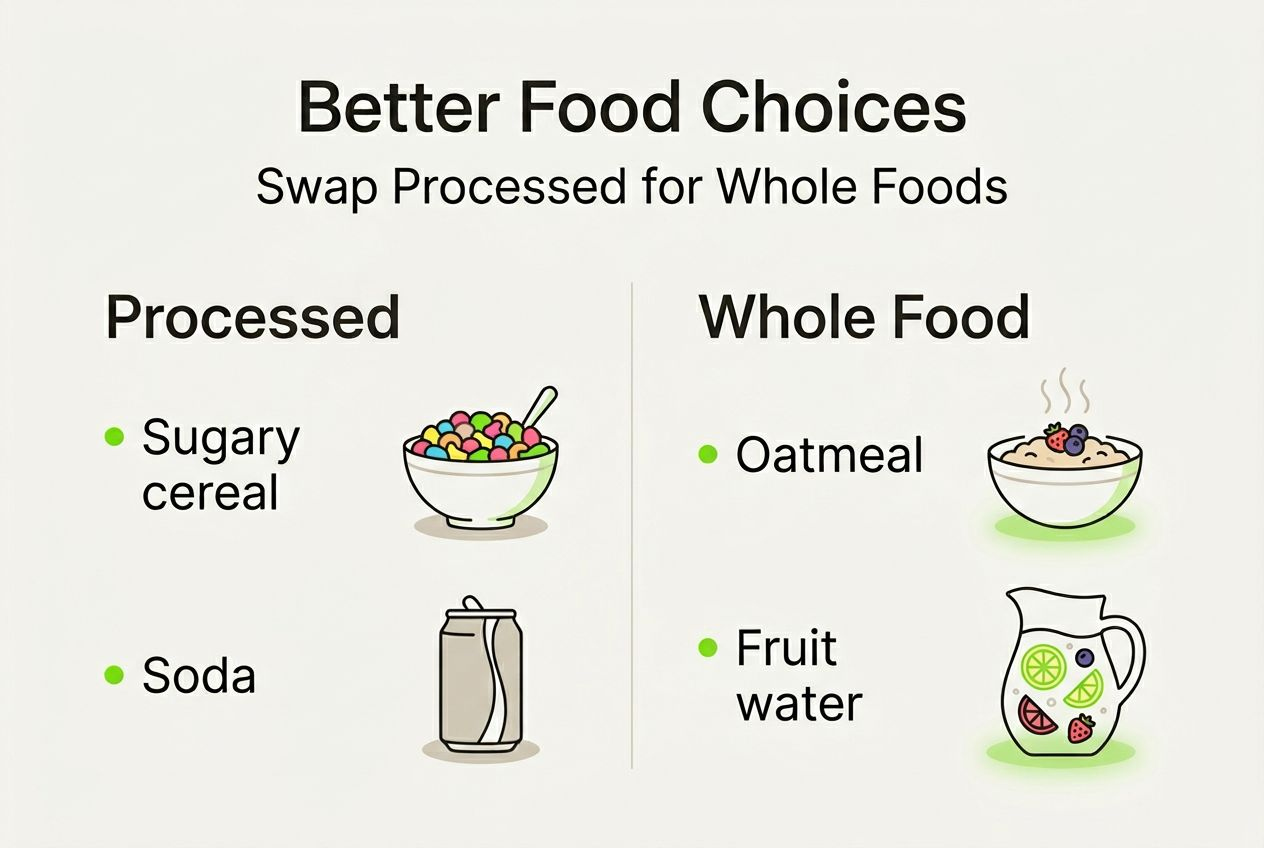
Replace one processed item weekly. Start with your most frequent ultra-processed choice. If you eat sugary cereal daily, switch to oatmeal with fresh fruit. This gradual approach prevents feeling overwhelmed.
-
Cook at home five days weekly. Home cooking gives you complete ingredient control. Simple recipes with five to seven ingredients work perfectly. Roasted vegetables, grilled proteins, and whole grain sides create balanced meals quickly.
-
Prepare healthy snacks in advance. Cut vegetables with hummus, portion nuts into small containers, or prepare hard-boiled eggs. Having smart snack food ideas ready prevents vending machine temptations.
-
Master basic cooking techniques. Learning to sauté, roast, steam, and bake expands your meal options dramatically. These healthy cooking methods preserve nutrients while creating delicious flavors.
-
Batch cook staples on weekends. Prepare large quantities of brown rice, quinoa, beans, or roasted vegetables. These components become building blocks for quick weeknight meals.
-
Navigate restaurant menus strategically. Choose grilled or baked proteins, request sauces on the side, and substitute vegetables for fries. Most restaurants accommodate simple modifications.
Comparing processed and whole food alternatives clarifies practical swaps:
| Category | Processed Option | Whole Food Alternative |
|---|---|---|
| Breakfast | Sugary cereal | Steel-cut oats with berries |
| Snacks | Chips or cookies | Fresh fruit with nut butter |
| Lunch | Frozen pizza | Whole grain wrap with vegetables |
| Dinner | Instant pasta meal | Whole wheat pasta with homemade sauce |
| Beverages | Soda or juice | Water with lemon or herbal tea |
| Condiments | Bottled dressing | Olive oil and vinegar |
The philosophy behind these changes is simple. Choosing less-processed food whenever possible reduces health risks without requiring perfection. You don’t need to eliminate every processed item immediately. Focus on progress, not perfection.
Pro Tip: Dedicate Sunday afternoons to batch cooking. Prepare three to four base ingredients like roasted chicken, cooked grains, chopped vegetables, and a simple sauce. Mix and match these throughout the week for varied meals without repetitive cooking.
Drink choices deserve attention too. Sugary beverages represent some of the worst ultra-processed offenders. Replace soda with sparkling water and fresh fruit. Swap sweetened coffee drinks for black coffee with a splash of milk. These simple beverage changes eliminate significant added sugar and artificial ingredients.
Breakfast often relies heavily on processed convenience foods. Transform this meal by preparing overnight oats, egg muffins, or smoothie ingredients in advance. Whole grain toast with avocado and eggs takes five minutes but provides lasting energy without processed additives.
Troubleshooting common challenges and monitoring your progress
Even with solid preparation, obstacles arise when changing dietary habits. Recognizing common challenges and having solutions ready keeps you on track.
Cravings for processed foods feel intense initially. Your taste buds adapted to artificial flavors and excessive salt or sugar over time. Combat cravings by:
- Eating balanced meals with adequate protein and fiber to maintain stable blood sugar
- Drinking water first, as thirst often masquerades as hunger
- Keeping healthy alternatives immediately available
- Allowing occasional small portions of favorite treats to prevent feeling deprived
Social situations present unique challenges. Family gatherings, workplace events, and dining out with friends often center on processed foods. Navigate these scenarios by eating a healthy snack beforehand so you’re not starving, bringing a whole food dish to share at potlucks, and focusing on conversation rather than food at social events. Most people won’t notice or care about your food choices when you handle them confidently.
Time constraints remain the most cited barrier. Processed foods promise convenience, but whole food cooking becomes faster with practice and planning. Invest time upfront in meal prep, and you’ll save time during busy weekdays. Simple meals require no more effort than heating processed alternatives once you establish routines.
Budget concerns worry many people attempting dietary improvements. Whole foods can cost less than processed options when you shop strategically. Buy seasonal produce, choose frozen vegetables without sauces, purchase dried beans instead of canned, and compare unit prices. Cooking from scratch almost always costs less than buying prepared meals.
Research emphasizes the importance of limiting ultra-processed foods:
The study highlights the importance of dietary guidelines and policies aimed at limiting UPF consumption to reduce the risk of all-cause mortality.
This scientific consensus should motivate persistence through difficult moments. You’re not just changing habits; you’re actively protecting your longevity and quality of life.
Monitoring progress helps maintain motivation. Track improvements through multiple methods. Keep a food journal noting meals, energy levels, and how you feel physically and mentally. Many people report better sleep, clearer thinking, and stable moods within weeks of reducing processed food intake. Take progress photos or measurements if weight management matters to you, though remember that health improvements extend far beyond appearance.
Set specific, measurable nutrition goals using setting nutrition goals strategies. Examples include cooking dinner at home five nights weekly, eating three servings of vegetables daily, or limiting restaurant meals to once weekly. Concrete targets provide clear success markers.
Develop body awareness through intuitive eating techniques. Notice how different foods affect your energy, digestion, and mood. Whole foods typically provide sustained energy without crashes, while processed foods often trigger fatigue and cravings shortly after eating. This internal feedback becomes your most reliable guide.
Celebrate non-scale victories. Maybe you successfully packed lunch all week, tried three new vegetable recipes, or felt energized through an afternoon without caffeine. These achievements matter more than any single number on a scale. Sustainable change comes from building positive habits, not achieving perfection.
Relapses happen to everyone. You might grab fast food during a stressful week or overindulge in processed snacks at a party. View these moments as temporary detours, not failures. Resume your whole food habits at the next meal without guilt or punishment. Consistency over time matters far more than occasional imperfect choices.
Discover personalized nutrition support to reduce processed foods
Transitioning away from processed foods becomes easier with professional guidance tailored to your unique needs and preferences. Dietium offers comprehensive support through personalized meal plans designed around whole food principles. These plans consider your health goals, dietary restrictions, cooking skills, and time constraints, providing realistic roadmaps for sustainable change.
Our platform includes detailed nutritional assessment methods that evaluate your current eating patterns and identify specific areas for improvement. Understanding where you stand nutritionally helps create targeted strategies rather than generic advice. Expert nutritionists can address your specific challenges, whether managing cravings, navigating social eating, or optimizing nutrient intake.
Explore our extensive resources on whole food diet benefits to deepen your understanding of how dietary changes impact overall wellness. With AI-powered tools, recipe databases, and ongoing support, you’ll have everything needed to make lasting improvements to your health through better food choices.
Frequently asked questions
What are processed foods and why should I avoid them?
Processed foods undergo industrial alterations adding preservatives, artificial flavors, or excessive salt and sugar. Ultra-processed foods increase risks of chronic diseases including heart disease, diabetes, and mental health disorders. Avoiding them protects your long-term health and improves daily energy levels.
How can I identify processed foods when shopping?
Read ingredient labels carefully, looking for long lists with unfamiliar chemical names, artificial colors, or multiple types of added sugars. The NOVA classification system helps categorize foods by processing level, with Group 4 ultra-processed items being those to minimize. Products with five or fewer recognizable ingredients typically represent better choices.
What are easy swaps to reduce processed food consumption?
Replace sugary breakfast cereals with oatmeal topped with fresh fruit, substitute packaged snacks with raw nuts or cut vegetables, and choose whole grain bread instead of white bread. Swap processed meats for beans or grilled chicken, and drink water or unsweetened tea rather than soda. These simple changes significantly reduce ultra-processed food intake.
Can avoiding processed foods improve mental health?
Diets high in ultra-processed foods link to mental health disorders including anxiety, depression, and cognitive decline. Whole foods provide nutrients that support brain function and mood regulation. Many people report improved mental clarity, stable moods, and better stress management after reducing processed food consumption.


