 Skip to content

TL;DR:
- Yo-yo dieting results from biological and psychological factors, not just willpower failures.
- Sustainable weight loss involves modest goals of 5–10% reduction and building supportive habits.
You lose the weight. You feel great. Then, a few months later, it’s all back. If that cycle sounds familiar, you are not alone. Learning how to avoid yo-yo dieting is one of the most searched and most misunderstood topics in weight management. The frustration is real, and so is the biology working against you. This article breaks down exactly why the cycle keeps repeating, and more importantly, gives you a clear, practical path to stop it for good without extreme restrictions or unsustainable rules.
Table of Contents
- Key Takeaways
- How to avoid yo-yo dieting: understanding the root causes
- Setting realistic goals and building the right environment
- Practical nutrition, exercise, and self-monitoring strategies
- Troubleshooting the most common pitfalls
- Measuring progress beyond the scale
- My take on what actually breaks the cycle
- Build a plan that sticks with Dietium
- FAQ
- Quick summary
Key Takeaways
| Point | Details |
|---|---|
| Yo-yo dieting is biological | Metabolic and hormonal changes after weight loss actively drive regain, not just willpower failures. |
| Target modest weight loss first | Aiming to lose 5–10% of baseline weight reduces metabolic stress and improves long-term success rates. |
| Habits beat motivation | Small, repeatable daily behaviors reduce decision fatigue and outperform short-term willpower bursts. |
| Exercise volume matters for maintenance | Increasing activity to 200–300 minutes per week supports long-term weight stability after initial loss. |
| Non-scale progress is real progress | Tracking energy, strength, and mood gives a fuller, healthier picture of success than the scale alone. |
How to avoid yo-yo dieting: understanding the root causes
Most people assume yo-yo dieting happens because of weak willpower or poor discipline. The truth is more complicated, and far more forgiving. Weight cycling affects up to 80% of individuals who attempt restrictive weight-loss methods, often within five years. That is not a character flaw. That is biology.
When you cut calories drastically, your body reads it as a threat. It responds by slowing your resting metabolic rate, the number of calories you burn just existing. At the same time, hunger hormones like ghrelin increase, pushing you toward cravings even when you are technically eating enough. Your body is not broken. It is doing exactly what evolution designed it to do: protect you from starvation.
There is also a muscular component most diets ignore. Rapid weight loss does not just shed fat. It strips lean muscle tissue too. Less muscle means a lower metabolic rate, which means your body now burns fewer calories at rest than it did before the diet. That creates a calorie gap that grows wider the longer you maintain the loss.
The psychological layer compounds all of this:
- All-or-nothing thinking turns one missed meal or one indulgent dinner into a full collapse of the entire plan.
- Restrictive rules around food create obsession and heightened focus on eating, making cravings harder to manage.
- Emotional eating often resurfaces under diet stress, especially when social situations or fatigue lower your defenses.
- Unrealistic timelines set people up to quit before sustainable habits have time to form.
“The problem is not that people fail to lose weight. It’s that the methods they use to lose it make regain almost inevitable.”
Understanding these forces is not discouraging. It is the foundation for building a strategy that actually works with your biology rather than fighting it.
Setting realistic goals and building the right environment
Before changing what you eat, you need to change what you expect. One of the most practical tips to prevent weight cycling is adjusting your definition of success. Research from the Obesity Medicine Association shows that targeting 5–10% of baseline weight loss is more sustainable and reduces the metabolic stress that typically triggers regain. For someone at 200 pounds, that means 10–20 pounds, not 60.
Here is a structured approach to getting the foundation right before diving into diet changes:
- Set a modest initial target. Pick a weight loss goal of 5–10% of your current body weight. Write it down and commit to it before moving the goalposts.
- Audit your environment. Remove high-temptation foods from your home. Stock your kitchen with foods that make healthy choices the default, not the effort.
- Build a social layer of support. Tell one or two people about your goals. Research consistently shows that social accountability improves follow-through.
- Identify your triggers. Stress, boredom, and loneliness are the top drivers of emotional eating. Knowing yours gives you the chance to interrupt the pattern.
- Drop the all-or-nothing mindset. One bad day does not erase a week of good choices. Mental health support is as crucial as dietary changes for breaking the cycle long-term.
Pro Tip: Reduce daily decision fatigue by pre-planning three meals the night before. You do not have to meal-prep perfectly. Just knowing what you will eat tomorrow removes one of the most common reasons people default to fast food or overeating.
The goal at this stage is not perfection. The goal is to make healthy choices easier than unhealthy ones, consistently. That shift in your environment does more work than motivation ever will.

Practical nutrition, exercise, and self-monitoring strategies
This is where strategies for sustainable dieting get concrete. The good news is that the tactics with the strongest evidence are also the most manageable. You do not need to overhaul your entire life. You need to build the right structure.
Nutrition that works with your body
A balanced, nutrient-dense diet does more than help you lose weight. It preserves muscle, stabilizes hunger hormones, and keeps your metabolism functioning properly. Protein is the single most important macronutrient for this purpose. Protein intake of 1.2–2.0g per kg of body weight combined with resistance training preserves lean mass during weight loss, which directly protects your metabolic rate.
Avoid skipping meals. Skipping breakfast or lunch to “save calories” typically backfires by triggering compensatory overeating later in the day. Mindful eating techniques like eating without screens, chewing slowly, and pausing mid-meal to check hunger levels can reduce total calorie intake without any formal tracking.
Exercise: the numbers that matter
| Phase | Activity Target | Primary Focus |
|---|---|---|
| Weight loss initiation | 150 minutes per week | Cardio and movement habit building |
| Weight maintenance | 200–300 minutes per week | Sustained cardio plus strength training |
| Muscle preservation | 2–3 strength sessions per week | Resistance training to protect metabolism |
Most people do the work to lose weight and then drop their activity level, assuming the job is done. That is when regain begins. Long-term weight management tips from clinical guidelines are consistent here: maintenance requires more activity than loss, not less.
Incorporate Pilates or strength-based movement as part of your weekly routine. Both build the lean mass that keeps your metabolism running efficiently.
Self-monitoring without obsession
Self-monitoring behaviors like regular weighing and food logging link directly to better weight maintenance outcomes. The key is consistency without rigidity. Weigh yourself once or twice per week at the same time of day, and track the trend over four-week periods rather than reacting to daily fluctuations.
Pro Tip: If food logging feels overwhelming, try a three-day snapshot instead of daily tracking. Log everything you eat for three days each month. This gives you accurate data on patterns without the psychological burden of daily logging.
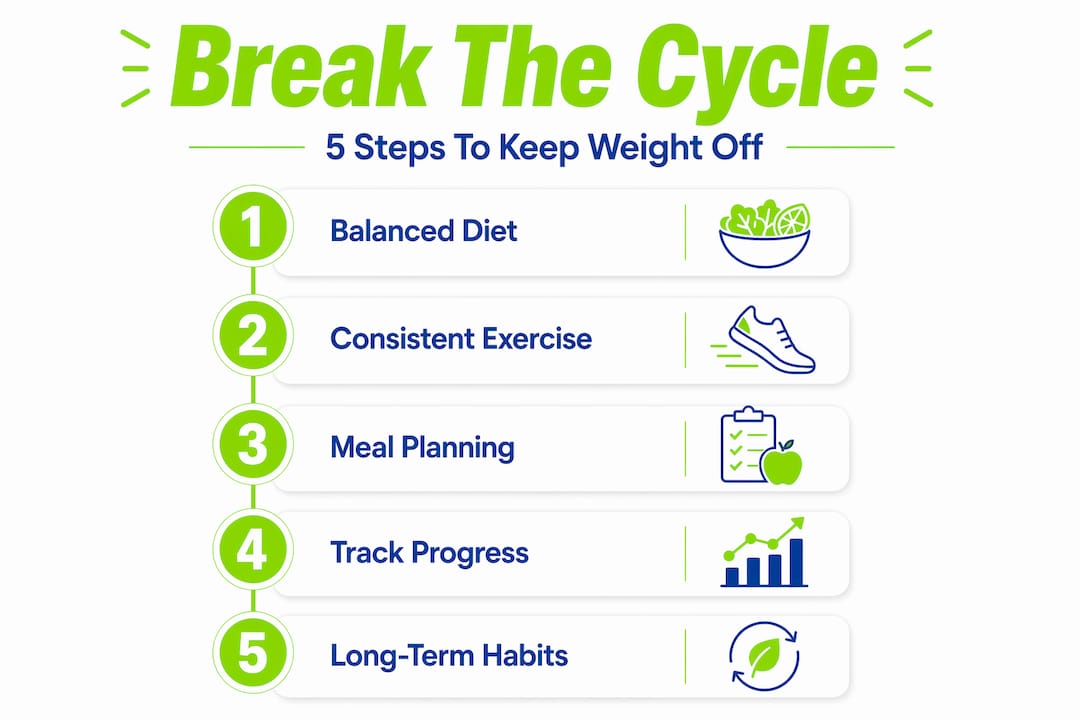
Focusing on three small habits improves consistency more reliably than dramatic overhauls. Pick your three: a protein-first lunch, a 20-minute walk after dinner, and a weekly weigh-in. Repeat them until they require no thought. That is how sustainable weight loss actually gets built.
Troubleshooting the most common pitfalls
Even with the right plan, you will hit rough patches. That is not failure. That is the process. Knowing what to expect makes it far easier to push through. Here are the most common obstacles and how to handle them:
- Intense cravings in the first two to three weeks. This is the hunger hormone peak. Eat adequate protein, stay hydrated, and keep high-temptation foods out of your immediate environment. The intensity drops significantly after week three.
- A slip after a bad day. Do not try to compensate by restricting the next day. That restriction-and-overeat pattern is exactly how yo-yo dieting perpetuates itself. Return to your normal eating pattern at the next meal, not the next Monday.
- A weight loss plateau at week four to six. Your body is adjusting. This is normal. Rather than cutting more calories, review your protein intake and add one strength training session per week.
- Motivation running low after the novelty wears off. This is the most critical test. Motivation fluctuates. Habits do not. Return to your environment setup: does your kitchen, schedule, and social support still make healthy choices easy?
- Feeling like it is taking too long. This is where professional support can change outcomes. A registered dietitian, therapist familiar with eating disorder risk, or an obesity specialist provides accountability and adjustments that self-directed efforts often miss.
“Progress over perfection is not a motivational slogan. It is the clinical principle behind every successful long-term weight management program.”
One more thing worth knowing: current evidence from The Lancet Diabetes & Endocrinology shows no convincing causal link between weight cycling and permanent metabolic damage. Even temporary weight loss provides real health benefits. That means every effort counts, even if the past included regain. You are not starting from a worse position than someone who has never dieted.
Measuring progress beyond the scale
One of the most powerful healthy eating habits to adopt is redefining what counts as a win. The scale gives you one data point. Your body gives you many more.
Track these non-scale victories consistently:
- Energy levels throughout the day, especially in the afternoon when dips are most common
- Sleep quality, which improves measurably with modest weight loss and regular exercise
- Clothing fit, which reflects body composition changes that the scale can obscure during muscle-building phases
- Strength benchmarks, such as how many push-ups or squats you can complete compared to last month
- Mood and stress tolerance, both of which improve with consistent physical activity and stable blood sugar
For structured weight maintenance, a gradual calorie reintroduction phase with continued resistance training reduces metabolic adaptation after weight loss. Rather than jumping from a calorie deficit directly to your normal intake, increase calories by 100–150 per week over a month. This stabilizes metabolic rate and reduces the hormonal rebound that drives regain.
When standard approaches are not enough, weight loss medications used safely under medical supervision can provide meaningful support. The goal is always the same: preserve the progress through consistent habits while the body recalibrates.
Knowing how to prevent weight regain long-term comes down to one consistent truth: the habits you build during weight loss must become the habits you keep, not the habits you retire once you hit a target number.
My take on what actually breaks the cycle
I have reviewed a lot of weight management research, and one thing stands out above everything else: the people who succeed long-term are almost never the ones who followed the most aggressive plan. They are the ones who found the most boring, repeatable version of healthy behavior they could sustain without feeling deprived.
In my experience, the biggest misconception is that motivation is the missing ingredient. It is not. Motivation gets you started. Environment, habit structure, and a realistic relationship with food keep you going. I have seen highly motivated people regain weight within months because they built a plan they could not maintain past week eight.
What I have also observed is that mental health is chronically underestimated in weight management. Body image anxiety, stress eating, and all-or-nothing thinking are not side issues. They are central to why the cycle repeats. Anyone who has struggled with weight cycling for years and has not addressed the psychological layer is working with an incomplete toolkit.
The most empowering shift I have seen in people who finally break free is when they stop asking “how much do I weigh?” and start asking “how do I feel, how do I perform, how well am I sleeping?” Weight becomes one metric among many, and that reframing alone changes the relationship with food and exercise in ways that last.
Sustainable weight management does not feel like sacrifice. It feels like a life you actually want to live.
— Srasti
Build a plan that sticks with Dietium
Understanding what causes yo-yo dieting is a strong start. But putting it into practice is where most people need structure. Dietium’s personalized meal plans and nutrition assessments are built to do exactly that. Rather than a generic calorie target, you get a diet plan matched to your body metrics, goals, and lifestyle. The Recipians app provides daily meal recommendations, fitness routines, and diet customization tools that make it easier to stay consistent without constant guesswork. If you are ready to stop cycling and start building habits that hold, Dietium gives you the data-driven structure to make that happen.
FAQ
What is yo-yo dieting?
Yo-yo dieting, also called weight cycling, is the repeated pattern of losing weight and regaining it, typically driven by unsustainable restrictive diets that trigger metabolic and hormonal responses promoting regain.
Why do people keep regaining weight after dieting?
After weight loss, the body lowers its metabolic rate and increases hunger hormones like ghrelin, making regain biologically likely unless sustainable habits and adequate activity levels are maintained long-term.
How much weight loss is sustainable without triggering regain?
Research supports targeting 5–10% of baseline body weight as an initial goal, as it reduces metabolic stress and provides meaningful health benefits while remaining achievable with lifestyle changes.
How much exercise is needed to maintain weight loss?
Clinical guidelines recommend increasing physical activity to 200–300 minutes per week for weight maintenance, which is higher than the 150 minutes per week typically recommended during the initial weight loss phase.
Does yo-yo dieting permanently damage metabolism?
Current evidence, including analysis published in The Lancet Diabetes & Endocrinology, shows no convincing causal link between weight cycling and long-term metabolic harm, meaning past dieting cycles do not permanently prevent future success.
Quick summary
Yo-yo dieting is driven by real biological and psychological forces, not willpower failures. Metabolic slowdown, rising hunger hormones, and muscle loss all work against you after rapid weight loss. The most effective ways to stop yo-yo dieting involve setting modest 5–10% weight loss goals, building supportive environments, adopting a protein-rich balanced diet, and increasing physical activity progressively. Self-monitoring, strength training, and mindful eating techniques reinforce sustainable habits. Addressing mental health is non-negotiable. Track non-scale victories, embrace gradual progress, and focus on habits you can maintain for years, not weeks.


