 Skip to content

Most american young professionals overlook one simple truth—almost 60 percent of athletes unknowingly make basic sports nutrition mistakes that hinder progress. Whether you are new to fitness or curious about what fuels top performers from Canada to Brazil, understanding these concepts can completely reshape your approach. You will find actionable, science-backed guidance to help you make informed choices on nutrition, hydration, and meal timing to maximize your results.
Table of Contents
- Defining Sports Nutrition and Key Concepts
- Essential Nutrients Athletes Need Most
- Hydration and Electrolyte Balance in Exercise
- Meal Timing for Training and Recovery
- Common Sports Nutrition Mistakes to Avoid
Key Takeaways
| Point | Details |
|---|---|
| Understanding Sports Nutrition | Sports nutrition focuses on optimizing athletic performance and recovery through targeted dietary strategies tailored to individual needs. |
| Essential Nutritional Components | Athletes require a balanced intake of macronutrients and micronutrients, with specific sources providing unique benefits for performance and recovery. |
| Hydration and Timing | Proper hydration and meal timing are crucial for maximizing energy levels and facilitating recovery, underscoring the importance of personalized nutrition plans. |
| Avoiding Common Mistakes | Athletes should be mindful of nutrition education and supplementation to prevent energy deficits and ensure optimal performance outcomes. |
Defining Sports Nutrition and Key Concepts
Sports nutrition represents a specialized field focused on understanding how dietary strategies optimize athletic performance and physical recovery. Sports nutrition involves comprehensive study of nutrition and diet designed to maintain and improve athletic capabilities, encompassing complex interactions between food intake and exercise physiology.
At its core, sports nutrition examines how specific nutrients impact an athlete’s energy levels, muscle development, and overall performance. The discipline considers multiple critical factors including exercise type, body composition, gender, and precise nutrient timing. Athletes require targeted nutritional strategies that go beyond standard dietary recommendations, focusing on macronutrient roles where carbohydrates provide energy and proteins support muscle repair.
Key conceptual elements of sports nutrition include understanding macronutrients (carbohydrates, proteins, fats), micronutrients (vitamins, minerals), and hydration strategies. These components work synergistically to support different athletic goals ranging from endurance performance to muscle strength and rapid recovery. Professional athletes and fitness enthusiasts alike benefit from personalized nutrition plans that strategically balance these nutritional elements based on individual physiological needs and training objectives.
Pro tip: Consult a registered sports nutritionist to develop a personalized nutrition plan tailored specifically to your unique athletic goals and metabolic profile.
Essential Nutrients Athletes Need Most
Athletes require a carefully balanced nutritional approach that goes beyond standard dietary recommendations. Proper nutrient intake is critical for maintaining energy levels, supporting muscle repair, and optimizing overall athletic performance, with specific requirements varying based on sport type, intensity, and individual physiological needs.
The foundational nutrients for athletic performance include macronutrients and micronutrients. Carbohydrates serve as the primary energy source, proteins support muscle growth and repair, and fats provide essential metabolic support. Macronutrient balance is crucial, with carbohydrates fueling high-intensity activities, proteins facilitating muscle recovery, and healthy fats supporting hormonal function and long-duration energy needs.
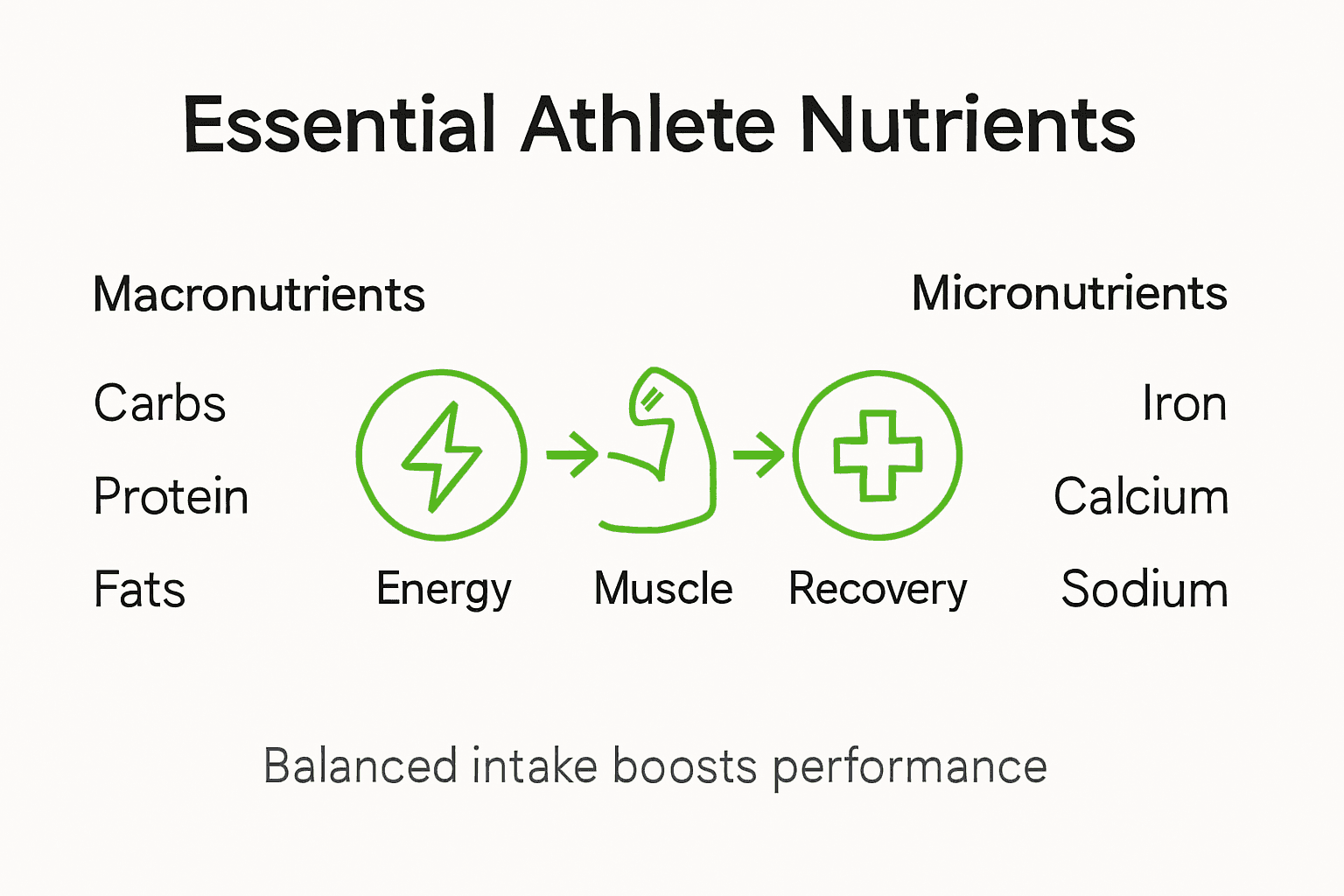
Micronutrients play equally vital roles in athletic performance. Essential minerals like iron are critical for oxygen transport, calcium supports bone health, and various vitamins regulate metabolic processes. Electrolyte balance is particularly important, helping athletes maintain hydration, prevent muscle cramps, and sustain performance during intense training or competition. Professional athletes often work with nutritionists to develop personalized nutrition plans that precisely match their specific metabolic requirements and training demands.
Pro tip: Consult a sports nutritionist to develop a customized nutrient intake plan that matches your specific athletic goals and individual metabolic profile.
Here’s a concise summary of macronutrient and micronutrient roles for athletes:
| Nutrient Type | Key Function | Example Sources | Unique Athletic Benefit |
|---|---|---|---|
| Carbohydrates | Primary energy production | Whole grains, fruits | Fuels high-intensity activity |
| Proteins | Muscle repair and growth | Lean meats, eggs | Supports recovery and strength |
| Fats | Hormonal and metabolic support | Avocados, nuts | Sustains long-duration energy |
| Micronutrients | Regulation and prevention | Leafy greens, dairy | Prevents fatigue and cramping |
Hydration and Electrolyte Balance in Exercise
Maintaining proper hydration and electrolyte balance is fundamental to athletic performance and physiological function, representing a critical aspect of sports nutrition that directly impacts an athlete’s endurance, strength, and cognitive capabilities. The human body relies on precise fluid and mineral interactions to sustain optimal physical performance, making strategic hydration more complex than simply drinking water.

Electrolytes play a pivotal role in exercise physiology, with key minerals like sodium, potassium, magnesium, and calcium governing critical bodily functions. Fluid intake strategies must be carefully tailored to exercise intensity, duration, and environmental conditions to ensure effective oral rehydration and performance maintenance. Athletes experience significant electrolyte loss through sweat, particularly during high-intensity or prolonged activities, which can lead to decreased muscle function, increased fatigue, and potential cramping if not properly managed.
Effective hydration requires a multifaceted approach that extends beyond simple water consumption. Athletes should consider factors such as individual sweat rates, exercise duration, ambient temperature, and personal metabolic characteristics when developing their hydration strategy. This might involve a combination of water, electrolyte-enhanced drinks, and strategic fluid intake timing to maintain optimal physiological balance and prevent performance degradation.
Pro tip: Weigh yourself before and after exercise to calculate precise fluid loss and develop a personalized hydration replacement strategy.
Meal Timing for Training and Recovery
Meal timing represents a critical strategy for athletes to optimize training performance and recovery, transforming nutrition from a basic necessity into a precise performance enhancement tool. Understanding the intricate relationship between nutrient intake and exercise demands allows athletes to strategically fuel their bodies for maximum efficiency and minimal metabolic stress.
Pre-exercise nutrition requires careful planning, with athletes recommended to consume a balanced meal 3-4 hours before training. Strategic carbohydrate and protein intake supports energy production, muscle preservation, and prepares the body for upcoming physical demands. Carbohydrates serve as the primary energy source, while proteins help prevent muscle breakdown and support immediate recovery processes. The ideal pre-workout meal should balance complex carbohydrates, lean proteins, and moderate healthy fats to provide sustained energy without causing digestive discomfort.
Post-exercise nutrition is equally critical, with a crucial window of 30-60 minutes after training representing an optimal period for nutrient absorption and muscle recovery. During this time, the body is primed to replenish glycogen stores and repair muscle tissue. Consuming a combination of quickly digestible proteins and carbohydrates helps accelerate recovery, reduce muscle soreness, and prepare the body for subsequent training sessions. Professional athletes often use specialized recovery drinks or carefully constructed meals to maximize this critical nutritional window.
Pro tip: Prepare post-workout nutrition in advance to ensure immediate nutrient intake within the critical 30-minute recovery window.
Below is a comparison of pre- and post-exercise nutrition strategies for optimal results:
| Timing | Purpose | Recommended Foods | Core Benefits |
|---|---|---|---|
| Pre-exercise | Prepare for training | Oats, chicken, berries | Stable energy, minimal fatigue |
| Post-exercise | Recover and rebuild | Greek yogurt, bananas | Faster recovery, muscle repair |
Common Sports Nutrition Mistakes to Avoid
Sports nutrition mistakes can significantly undermine an athlete’s performance and long-term health, creating barriers to achieving optimal physical potential. Understanding and avoiding these common pitfalls is crucial for athletes seeking consistent improvement and sustainable training outcomes.
One of the most prevalent errors athletes encounter is insufficient nutrition education and inappropriate nutrient consumption, which can lead to energy deficits and compromised recovery. Many athletes mistakenly believe that drastically reducing calorie intake will enhance performance, when in fact, this approach often results in decreased muscle strength, impaired metabolic function, and increased injury risk. Proper nutrient balance involves consuming adequate calories from high-quality sources, with a strategic mix of carbohydrates, proteins, and healthy fats tailored to individual training demands.
Supplementation represents another critical area where athletes frequently make significant mistakes. While supplements can provide targeted nutritional support, many individuals rely too heavily on these products without understanding their specific needs. Excessive or inappropriate supplement use can lead to unnecessary financial expenditure, potential health risks, and a false sense of nutritional security. Professional athletes and coaches recommend prioritizing whole food nutrition and using supplements only as a targeted, evidence-based complement to a well-designed dietary strategy.
Pro tip: Consult a registered sports nutritionist to develop a personalized nutrition plan that addresses your specific metabolic needs and athletic goals.
Take Command of Your Sports Nutrition Journey Today
Struggling to balance macronutrients, hydration, and meal timing for peak athletic performance can feel overwhelming. This article highlights the challenges of tailoring nutrient intake, electrolyte balance, and recovery meals to your unique exercise needs. You deserve a personalized approach that breaks through generic advice and delivers targeted nutrition strategies designed to fuel your fitness and accelerate recovery.
At Dietium.com, our advanced AI-powered Recipians app transforms sports nutrition basics into your custom nutrition plan. Easily track your calorie needs, body metrics, and fitness goals while receiving recipe suggestions and meal plans crafted to optimize energy, muscle repair, and hydration. Don’t let common sports nutrition mistakes derail your progress. Explore how personalized meal planning and expert tools can empower your fitness journey with data-driven precision.
Ready to take your performance further? Start your personalized nutrition plan today at Dietium.com Recipians and experience nutrition designed for your unique athletic goals.
Frequently Asked Questions
What are the key components of sports nutrition?
Sports nutrition focuses on the balance of macronutrients (carbohydrates, proteins, fats) and micronutrients (vitamins, minerals) to optimize athletic performance and recovery. Proper hydration also plays a crucial role in sustaining energy levels and reducing fatigue.
How does meal timing affect athletic performance?
Meal timing is essential for maximizing performance and recovery. Athletes are advised to consume a balanced meal 3-4 hours before exercise and to intake protein and carbohydrates within 30-60 minutes after training to replenish glycogen stores and repair muscles effectively.
What are common mistakes in sports nutrition?
Common mistakes include insufficient nutrition education, inappropriate nutrient consumption, and over-reliance on supplements. Athletes often underestimate the importance of a balanced diet, leading to energy deficits and compromised recovery.
Why is hydration important for athletes?
Hydration is vital for maintaining physical performance and regulating body functions. Proper fluid and electrolyte balance helps prevent muscle cramps, fatigue, and performance degradation during intense training or competition.


