 Skip to content

TL;DR:
- Counting calories alone does not account for how carbohydrate, protein, and fat ratios influence energy, body composition, and health outcomes. Understanding and balancing macronutrients is essential for optimizing performance, recovery, and overall well-being. Effective nutrition integrates macro proportions with food quality, lifestyle, and individual goals for sustainable health results.
Counting calories tells only part of the story. Two people eating identical calorie totals can have completely different energy levels, body composition, and health outcomes if they’re consuming different ratios of carbohydrates, protein, and fat. These three nutrients, collectively called macronutrients, are the foundation of how your body generates fuel, builds tissue, and regulates virtually every biological process. Whether you’re training for a race, managing your weight, or simply trying to feel better day to day, understanding macros is the most direct path to eating smarter and getting real results.
Table of Contents
- What are macronutrients? Defining the essentials
- How macronutrients fuel your body: Roles and digestion
- How much of each macro do you need? The AMDR explained
- Macronutrients in real life: Making healthy choices
- Why the obsession with macro numbers misses the big picture
- Put your macro knowledge into action with personalized nutrition
- Frequently asked questions
Key Takeaways
| Point | Details |
|---|---|
| Macronutrients defined | Carbohydrates, protein, and fat are the core nutrients your body needs in large amounts for energy and growth. |
| AMDR targets | Use the AMDR guideline ranges for a healthy balance: carbs 45–65%, protein 10–35%, fat 20–35% of calories. |
| Focus on food quality | Choosing nutrient-rich foods and balanced meals matters more than hitting exact macro percentages. |
| Personalization is key | Adapt your macro intake based on lifestyle, activity, and personal health goals. |
What are macronutrients? Defining the essentials
Now that we’ve established why macronutrients matter, let’s break down what they actually are.
Macronutrients are the three primary nutrients your body requires in large amounts: carbohydrates, protein, and fat. Unlike micronutrients, which include vitamins and minerals needed in trace quantities, macronutrients provide the actual energy (measured in calories) that keeps your body running. Understanding the difference between micronutrients vs macronutrients helps you see why both categories matter, but macros form the structural and energetic base of any diet.
Here’s a quick overview of each:
- Carbohydrates: Found in grains, fruits, vegetables, and legumes. They break down into glucose, the body’s most readily available fuel source. Each gram provides 4 calories.
- Protein: Found in meat, fish, eggs, dairy, and plant sources like beans and tofu. Proteins break into amino acids used to build and repair tissues, enzymes, and hormones. Each gram provides 4 calories.
- Fat: Found in oils, nuts, seeds, avocado, and animal products. Fat is the most energy-dense macro, providing 9 calories per gram. It supports cell structure, hormone production, and fat-soluble vitamin absorption.
Macronutrients are not interchangeable. Each one performs specific functions that the others cannot replicate. Eliminating any single macronutrient entirely tends to create nutritional gaps that affect performance, mood, and long-term health.
While these three macros provide all your dietary calories, they serve very different physiological purposes. A 500-calorie meal built around white rice and soda delivers energy fast but lacks the amino acids your muscles need to recover. A 500-calorie meal with salmon, quinoa, and olive oil delivers sustained fuel, structural building blocks, and anti-inflammatory fats. The difference is enormous, even though the calorie counts match.
How macronutrients fuel your body: Roles and digestion
With an understanding of what macronutrients are, let’s dive into how each one impacts your body and energy.
The speed at which your body processes each macro varies significantly. Carbohydrates digest quickly. Simple carbs like sugar enter the bloodstream within minutes, creating a fast spike in blood glucose. Complex carbs, such as oatmeal or sweet potatoes, digest more slowly due to their fiber content, providing a steadier energy release. Your muscles and liver store a limited amount of glucose as glycogen, which gets used first during exercise.
Protein digests more slowly than carbohydrates. After a protein-rich meal, your digestive system breaks proteins into individual amino acids, which are then distributed to tissues that need repair or growth. This process takes longer and has a higher thermic effect, meaning your body burns more calories just digesting protein than it does processing carbs or fat.

Fat is the slowest to digest and the most energy-dense. The body’s macronutrient fuel hierarchy prioritizes carbs first, then fat, with protein being used for energy mainly as a last resort. Because fat takes longer to leave the stomach, fat-containing meals keep you feeling full for longer periods, which has real practical value for appetite control.
| Macronutrient | Calories per gram | Digestion speed | Primary function |
|---|---|---|---|
| Carbohydrate | 4 | Fast | Quick energy, brain fuel |
| Protein | 4 | Moderate | Muscle repair, enzymes, hormones |
| Fat | 9 | Slow | Long-term energy, cell structure |
What happens when you eat more than your body needs? Excess intake from any macro gets stored. Carbohydrates are first stored as glycogen in muscles and the liver. Once glycogen stores are full, the body converts the surplus to fat. Excess dietary fat is stored directly in adipose tissue. Even excess protein, if consumed far beyond what muscles can use, gets converted and stored as fat. This is why total intake still matters, even when your macro ratios are on point.
Pro Tip: If fat loss is your goal, pay attention to fat’s 9 calories per gram. A small handful of mixed nuts can deliver 200 calories. Being mindful of portion size on fat-dense foods gives you far more flexibility in hitting your daily targets without feeling deprived.
For a deeper look at how each nutrient is processed, the nutrient breakdown guide walks through digestion, absorption, and metabolic use in practical terms.
How much of each macro do you need? The AMDR explained
Understanding each macronutrient’s function helps, but knowing how much you need daily is equally important. Let’s explore how to set balanced targets.
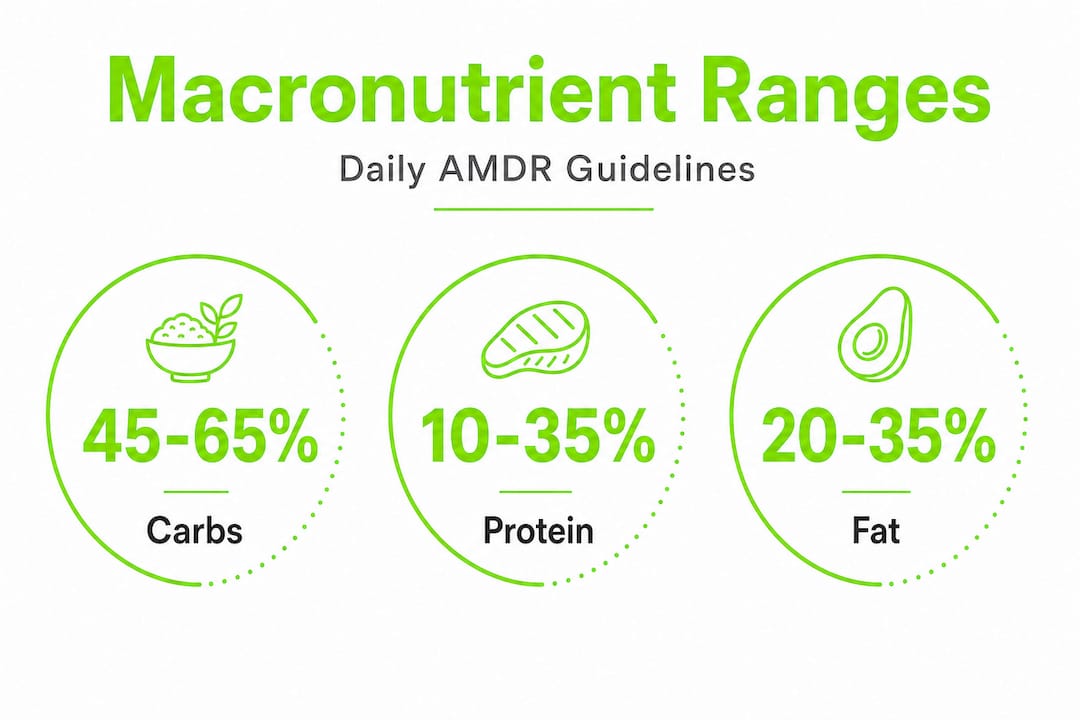
Health authorities use a framework called the Acceptable Macronutrient Distribution Range, or AMDR, to define healthy intake boundaries. These are evidence-based percentage ranges set by nutrition scientists to ensure people get enough of each macro without consuming amounts that increase disease risk.
For healthy adults, the AMDR recommendations are:
| Macronutrient | AMDR (% of daily calories) | Example: 2,000-calorie diet |
|---|---|---|
| Carbohydrates | 45 to 65% | 225 to 325 grams |
| Protein | 10 to 35% | 50 to 175 grams |
| Fat | 20 to 35% | 44 to 78 grams |
These ranges are intentionally broad. A sedentary office worker and a competitive cyclist can both fall within the AMDR while eating very different amounts. The ranges accommodate different lifestyles, preferences, and health goals.
For active individuals and athletes, the picture gets more specific. Macronutrient needs are context-dependent, and sport science research supports additional per-kilogram guidance layered on top of AMDR percentages. Here’s how to think about adjustments based on your activity level:
- Sedentary to lightly active: Stay within standard AMDR ranges. Focus on food quality and avoid excess added sugars and saturated fat.
- Moderately active (3 to 5 days of exercise per week): Carbohydrate intake toward the higher end of the AMDR, around 55 to 65%, supports glycogen replenishment. Protein at 1.2 to 1.6 grams per kilogram of body weight supports muscle maintenance.
- Highly active or athletes (intense training 6 to 7 days per week): Carbohydrate needs can reach 6 to 10 grams per kilogram of body weight per day. Protein needs rise to 1.6 to 2.2 grams per kilogram depending on training type. Fat stays moderate, around 20 to 30%, to leave room for the higher carb intake.
- Strength and power athletes: Prioritize protein at the higher end of the range, above 1.8 grams per kilogram, and moderate carbohydrates to support both performance and recovery.
- Weight loss goals: A modest calorie deficit with protein at the higher end of AMDR (25 to 35%) helps preserve muscle mass while fat stores are reduced.
If you want a personalized starting point based on your body weight and fitness goals, explore guidance on macronutrient ratios for weight loss to see how ratios shift depending on your specific target.
Macronutrients in real life: Making healthy choices
Now that you know your macronutrient targets, let’s apply this knowledge to everyday eating. Food choices matter as much as numbers.
Knowing that you need 50% of your calories from carbohydrates doesn’t automatically tell you which carbohydrates to eat. A diet built on white bread, pastries, and soda technically hits a carb target, but it delivers minimal fiber, few vitamins, and rapid blood sugar spikes. A diet centered on oats, brown rice, lentils, and vegetables hits the same percentage target with vastly different health results.
Effective weight management and general health come from approaching macros as part of an overall eating pattern. That pattern should emphasize whole foods and limit specific risk nutrients. Here’s what that looks like in practice:
- Prioritize complex carbohydrates: Whole grains, legumes, fruits, and starchy vegetables provide fiber, which slows digestion, feeds gut bacteria, and reduces the risk of blood sugar crashes.
- Choose lean and varied protein sources: Chicken, fish, eggs, Greek yogurt, legumes, and tofu give you full amino acid profiles without excessive saturated fat. Rotating sources ensures you get a broad range of nutrients.
- Favor unsaturated fats: Olive oil, avocado, nuts, and fatty fish like salmon provide heart-healthy omega-3 and omega-9 fatty acids. These support brain function, reduce inflammation, and improve cholesterol profiles.
- Limit added sugars: The American Heart Association recommends no more than 25 grams of added sugar per day for women and 36 grams for men. Most processed foods contain far more than people realize.
- Watch sodium intake: Excess sodium raises blood pressure and increases cardiovascular risk. Whole foods naturally contain far less sodium than packaged or restaurant foods.
- Reduce saturated and trans fats: Found in processed snacks, fast food, and fatty cuts of meat, these fats raise LDL cholesterol and are associated with increased heart disease risk.
Pro Tip: Build meals around a simple framework: half your plate from vegetables and fruits, one quarter from a lean protein source, and one quarter from a whole grain or starchy vegetable. Add a small portion of healthy fat such as a drizzle of olive oil or sliced avocado. This structure naturally hits reasonable AMDR targets without requiring you to count every gram.
For practical guidance on building this approach into a weekly routine, the resource on meal planning for fitness offers step-by-step strategies that align with your macro and performance goals.
Why the obsession with macro numbers misses the big picture
Macro tracking has become almost a competitive sport in fitness communities. People log every gram, hit custom ratios, and swap meals based on whether they’ve “hit their macros” for the day. There’s a place for that level of precision, particularly for competitive athletes or people managing specific medical conditions. But for most people, the obsession with exact percentages creates more stress than results.
Here’s what the evidence actually supports: overall eating patterns built around food quality and variety drive better long-term health than hitting precise macro percentages. The research doesn’t show that 47% carbs outperforms 52% carbs for the average person. What it consistently shows is that diets rich in whole foods, vegetables, lean proteins, and healthy fats produce better outcomes across metabolic health, body composition, and longevity.
The AMDR ranges themselves are intentionally wide for a reason. They acknowledge that macronutrient needs vary significantly by activity level, body size, age, and health status. Chasing a specific ratio without accounting for food quality, sleep, stress, and consistency is like optimizing the fuel mixture in a car while ignoring a flat tire.
Another underappreciated issue: strict macro tracking can displace attention from micronutrients. A diet perfectly hitting AMDR targets could still be deficient in magnesium, zinc, vitamin D, or omega-3 fatty acids if it’s not built from nutrient-dense foods. Resources like micronutrients for athletes highlight how gaps in vitamins and minerals often explain performance plateaus that macro adjustments alone can’t fix.
The most effective approach treats macro awareness as a tool for building structure, not a rigid ruleset. Use the AMDR as a framework. Understand roughly how much of each macro you’re eating. But prioritize whole foods, consistent meal timing, and variety. That combination will outperform any perfectly optimized ratio built from processed ingredients.
Put your macro knowledge into action with personalized nutrition
Understanding macronutrients is a strong first step. Applying that knowledge to your specific body, goals, and lifestyle is where real progress happens. Generic AMDR ranges give you a solid framework, but your ideal macro split depends on your body weight, activity level, health history, and whether you’re aiming for fat loss, muscle gain, or maintenance.
At Dietium, you can personalize your diet using tools designed to calculate your specific calorie and macro targets based on your real metrics, not population averages. The Recipians app builds custom meal plans aligned with your targets, suggesting recipes and portion sizes that take the guesswork out of daily eating. You can also explore meal plan personalization to see how different dietary preferences, from high-protein to plant-based, can be structured to meet your macro needs. For a structured starting point, the nutrition assessment methods section outlines how to evaluate your current intake and identify where adjustments will make the biggest difference.
Frequently asked questions
What are the main types of macronutrients?
The three main macronutrients are carbohydrates, protein, and fat, each serving a distinct role in energy production and bodily function.
How do I know if I’m eating the right amount of each macro?
Start with the AMDR guidelines: 45 to 65% of calories from carbs, 10 to 35% from protein, and 20 to 35% from fat, then adjust based on your activity level and specific health goals.
Do athletes or active individuals need different macro ratios?
Yes. Macronutrient needs shift with training intensity, and athletes typically require higher carbohydrate and protein intake expressed in grams per kilogram of body weight.
Do I need to track macros to eat healthily?
No. CDC guidance on healthy eating focuses on overall food patterns rather than precise macro counts, and consistently choosing whole, nutrient-dense foods delivers strong results without detailed tracking.
What happens if I eat too much of one macronutrient?
Excess energy from any macro gets stored primarily as body fat, which is why total intake and food quality both matter regardless of which macro is overconsumed.


