 Skip to content

Most American adults are surprised to learn that over 60 percent fail to meet recommended daily macronutrient needs. Understanding what macronutrients are and how they affect your health is more than a nutrition fad. Knowing about carbohydrates, proteins, and fats can help you make smarter choices for lasting energy, better metabolism, and real progress with your fitness goals. This guide breaks down the essentials, making nutrition science practical for any American striving for healthier living.
Table of Contents
- Defining Macronutrient Breakdown And Its Importance
- Types Of Macronutrients: Carbs, Proteins, Fats
- How Macronutrients Affect Body Functions
- Calculating Your Daily Macronutrient Needs
- Common Mistakes In Macronutrient Distribution
Key Takeaways
| Point | Details |
|---|---|
| Understanding Macronutrients | Macronutrients include carbohydrates, proteins, and fats, each playing essential roles in energy production, muscle growth, and hormone regulation. |
| Macronutrient Tracking | Tracking macronutrient intake helps individuals adjust their diets to meet personal health and fitness goals effectively. |
| Common Distribution Errors | Avoid extreme dietary restrictions of any macronutrient, as balanced intake is crucial for maintaining health and metabolic efficiency. |
| Individualized Nutrition Plans | Calculate daily macronutrient needs based on personal factors like age, weight, and activity level for optimal results. |
Defining Macronutrient Breakdown and Its Importance
Macronutrients are the foundational nutritional components that power every single bodily function and energy requirement. These critical nutrients include carbohydrates, proteins, and fats, each playing a unique and indispensable role in maintaining human health and metabolism. Understanding your macronutrient breakdown is like having a roadmap for optimal nutrition, helping you make strategic dietary choices that align with your specific health and fitness goals.
At its core, a macronutrient breakdown represents the proportional intake of these three essential nutrient groups. Tracking macros for personal health goals allows individuals to precisely balance their nutritional intake, supporting everything from muscle development and weight management to sustained energy levels and metabolic efficiency. Unlike micronutrients, which are required in smaller quantities, macronutrients provide the bulk of our dietary energy, with each serving distinct physiological functions.
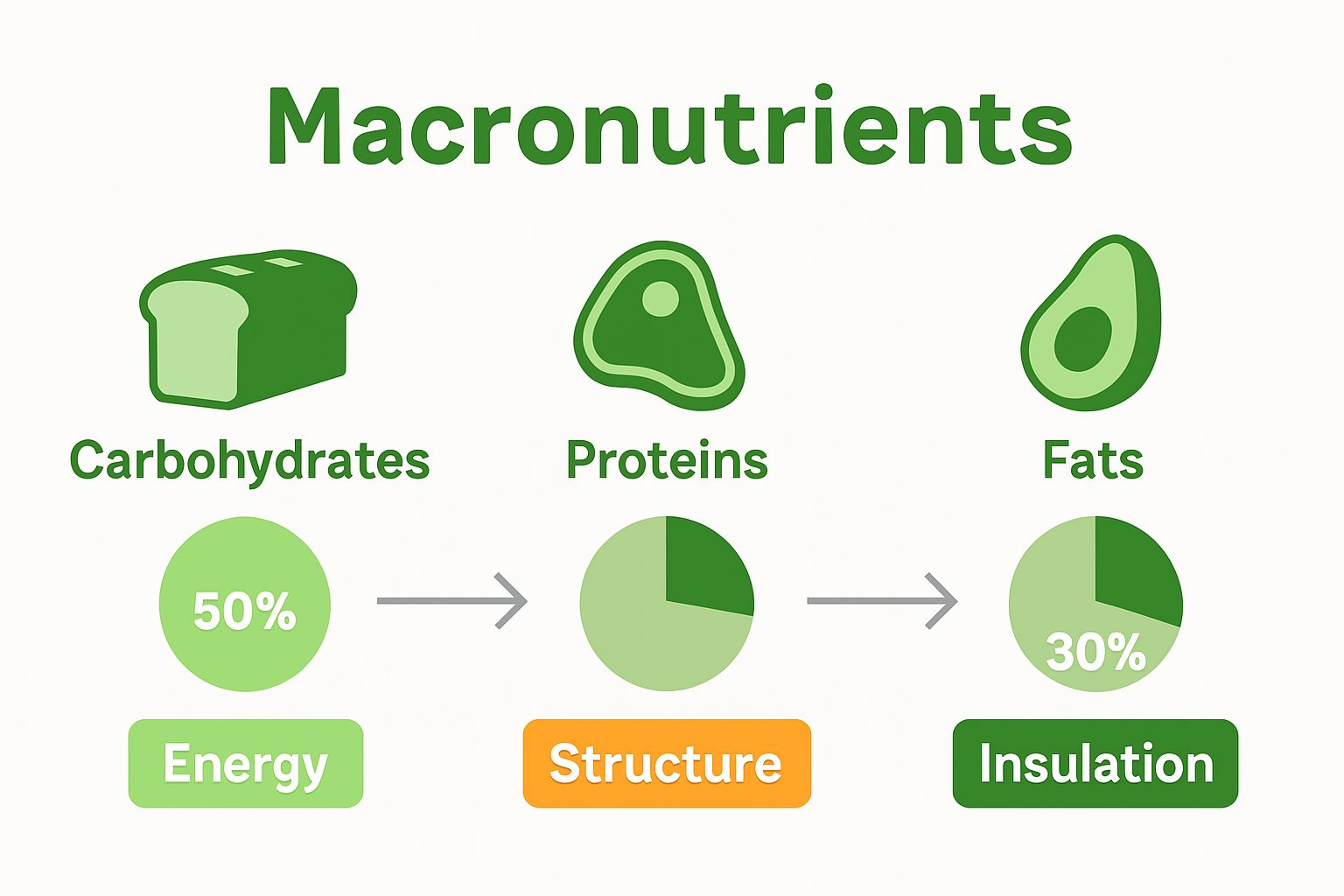
The importance of understanding macronutrients cannot be overstated. Researchers confirm that these nutrients are essential components of food that the body requires for energy, maintaining structural integrity, and supporting systemic functions. Carbohydrates serve as the primary energy source, proteins facilitate cellular repair and muscle growth, and fats play crucial roles in hormone production, nutrient absorption, and providing concentrated energy reserves. By comprehending how these macronutrients interact and impact your body, you can make more informed nutritional decisions that optimize your overall health and wellness.
While the concept might seem complex, breaking down macronutrients is surprisingly straightforward. Think of them as the building blocks that fuel your body’s daily operations – much like how different types of fuel power various machines. Some key aspects to remember about macronutrients include:
- They provide energy measured in calories
- Each macronutrient has a specific caloric value
- Carbohydrates and proteins provide 4 calories per gram
- Fats provide 9 calories per gram
- Individual macronutrient needs vary based on age, gender, activity level, and health goals
Types of Macronutrients: Carbs, Proteins, Fats
The three primary macronutrients – carbohydrates, proteins, and fats – form the cornerstone of human nutrition, each playing a critical and unique role in maintaining optimal health and bodily function. Nutrition experts confirm that understanding these macronutrients is essential for developing a balanced and effective dietary strategy that supports overall wellness, energy production, and physiological performance.
Carbohydrates serve as the body’s preferred and most readily available energy source. These nutrients break down into glucose, fueling everything from brain function to muscular activity. Proteins, on the other hand, are the fundamental building blocks of cellular structure, crucial for muscle repair, immune system support, and creating essential enzymes and hormones. Tracking macros for optimal health can help individuals strategically balance these nutrients to meet their specific physiological needs.
Fats, often misunderstood, are equally vital to human health. They play a multifaceted role in hormone production, nutrient absorption, and providing concentrated energy storage. Research indicates that fats are crucial for supporting cell function, maintaining body temperature, and protecting vital organs. Unlike popular misconceptions, not all fats are harmful – in fact, certain types like omega-3 and omega-6 fatty acids are essential for maintaining optimal health.
Understanding the unique characteristics of each macronutrient can help you make more informed dietary choices. Here’s a quick breakdown of their key functions:
- Carbohydrates:
- Primary energy source
- 4 calories per gram
- Found in grains, fruits, vegetables
- Proteins:
- Muscle repair and growth
- 4 calories per gram
- Found in meat, fish, eggs, legumes
- Fats:
- Energy storage and hormone production
- 9 calories per gram
- Found in nuts, oils, avocados, fatty fish
How Macronutrients Affect Body Functions
Researchers confirm that macronutrients are not just food components, but intricate biological regulators that orchestrate complex bodily functions. Each macronutrient – carbohydrates, proteins, and fats – operates like a specialized workforce, performing critical roles that maintain our physiological harmony and support every aspect of human performance.
Carbohydrates are the body’s primary energy currency, powering everything from intense physical activities to subtle cellular processes. Using a macro calculator can help individuals precisely track their carbohydrate intake to optimize energy levels. These nutrients break down into glucose, immediately fueling brain function, muscle contractions, and metabolic activities. When consumed, carbohydrates trigger insulin release, which helps regulate blood sugar and ensures cells receive the energy they need to function efficiently.

Proteins serve as the body’s construction and repair team, playing a pivotal role in maintaining and rebuilding bodily tissues. Nutrition experts highlight their crucial function in muscle repair, immune system support, and creating essential enzymes and hormones. Proteins are composed of amino acids that act as building blocks for muscle growth, cellular regeneration, and supporting complex physiological processes like enzyme production and immune response.
Fats, often misunderstood, are far more than just energy storage. They are essential for hormone production, cellular membrane structure, and nutrient absorption. Certain fats, particularly omega-3 and omega-6 fatty acids, play critical roles in:
- Regulating inflammatory responses
- Supporting brain health
- Maintaining cell membrane flexibility
- Protecting vital organs
- Facilitating hormone production
- Enabling absorption of fat-soluble vitamins (A, D, E, K)
Calculating Your Daily Macronutrient Needs
Nutrition experts recommend a personalized approach to determining daily macronutrient needs, recognizing that individual requirements vary dramatically based on factors like age, weight, activity level, and specific health goals. Calculating macronutrients is not a one-size-fits-all formula, but a strategic process of understanding your body’s unique nutritional demands.
The foundational step in calculating macronutrients involves determining your total daily calorie requirements. Counting macros for targeted health goals can help transform this complex process into a manageable strategy. Typically, this involves multiplying your body weight by a specific factor that accounts for your activity level – sedentary individuals might use a lower multiplier, while athletes or highly active people will use a higher calculation to ensure adequate energy intake.
Macronutrient distribution follows general guidelines that can be customized to individual objectives. A standard breakdown might look like 50% carbohydrates, 30% proteins, and 20% fats, but this can shift dramatically depending on specific goals. Nutrition guidance emphasizes the importance of understanding portion sizes and reading nutrition labels to accurately track macronutrient intake.
To help you navigate this process, here’s a simplified approach to calculating your daily macronutrient needs:
- Calculate Total Daily Calorie Needs:
- Determine base metabolic rate (BMR)
- Multiply by activity factor
- Establish Macronutrient Percentages:
- Weight loss: Lower carbohydrate, higher protein
- Muscle gain: Higher protein, moderate carbohydrates
- Maintenance: Balanced distribution
- Convert Percentages to Grams:
- Carbohydrates: 4 calories per gram
- Proteins: 4 calories per gram
- Fats: 9 calories per gram
Common Mistakes in Macronutrient Distribution
Nutrition experts warn that one of the most prevalent errors in dietary planning is the extreme restriction or complete elimination of entire macronutrient groups. Many individuals fall into the trap of pursuing trendy diets that vilify carbohydrates, fats, or proteins, ultimately compromising their body’s nutritional balance and overall health.
Overemphasizing protein intake while neglecting other macronutrients is a common misconception. Athletes seeking muscle growth often mistakenly believe that consuming massive amounts of protein will automatically translate to muscle development. However, without adequate carbohydrates for energy and fats for hormone production, protein metabolism becomes inefficient, potentially leading to metabolic complications and reduced athletic performance.
Extreme dietary approaches can trigger significant physiological disruptions. Performance nutrition research indicates that macronutrient balance is crucial for maintaining stable energy levels, supporting metabolic functions, and preventing nutritional deficiencies. Dramatic macro imbalances can result in:
- Decreased metabolic efficiency
- Hormonal imbalances
- Reduced immune function
- Compromised muscle recovery
- Potential nutrient deficiencies
- Decreased overall athletic performance
Understanding the nuanced role of each macronutrient is key to avoiding these common nutritional pitfalls. Balanced, personalized nutrition strategies that consider individual metabolism, activity levels, and health goals will always triumph over one-size-fits-all dietary approaches.
Master Your Macronutrients with Personalized Support
Understanding your macronutrient breakdown is essential for unlocking better energy, improved muscle repair, and balanced hormone production. The challenge many face is accurately calculating daily macros tailored to unique goals like weight loss, muscle gain, or maintaining overall wellness. Common struggles include tracking carbohydrates, proteins, and fats effectively while avoiding common diet pitfalls that disrupt metabolic efficiency.
Dietium.com offers a scientifically backed solution through its innovative Recipians app that simplifies this complex process. With AI-powered tools designed to personalize your meal planning and fitness routines, you can confidently align your macronutrient intake with your body’s real needs. Explore tools to accurately track your macros and body metrics like BMI and calorie needs so you avoid nutritional imbalances highlighted in this guide. Take control of your nutrition today by visiting Dietium’s comprehensive platform and start crafting the precise nutrition plan your body deserves.
Frequently Asked Questions
What are macronutrients and why are they important?
Macronutrients are essential nutrients that provide energy and support various bodily functions. They include carbohydrates, proteins, and fats, each playing a unique role in maintaining overall health and metabolism.
How do I calculate my daily macronutrient needs?
To calculate your daily macronutrient needs, first determine your total daily calorie requirements by calculating your basal metabolic rate (BMR) and multiplying it by your activity level. Then, establish macronutrient percentages based on your health goals and convert those percentages into grams using their caloric values.
What role do carbohydrates play in the body?
Carbohydrates serve as the body’s primary energy source. They break down into glucose, which fuels essential functions such as brain activity and muscle contractions.
Can you explain the differences between carbohydrates, proteins, and fats?
Carbohydrates provide 4 calories per gram and are the main energy source. Proteins also provide 4 calories per gram and are crucial for muscle repair and growth. Fats offer 9 calories per gram and are important for hormone production and nutrient absorption.


