 Skip to content

Did you know that over half of children worldwide under five suffer from vitamin and mineral deficiencies? Many people overlook the impact of micronutrients, yet these tiny nutrients are the backbone of energy, immunity, and healthy development. Understanding what micronutrients are, why your body absolutely needs them, and how to keep your levels in check can make a real difference in your health and daily performance.
Table of Contents
- Micronutrients Defined And Core Concepts
- Types Of Micronutrients And Their Roles
- Daily Recommendations And Absorption Factors
- Micronutrient Deficiencies And Health Risks
- Improving Intake Through Diet And Supplements
Key Takeaways
| Point | Details |
|---|---|
| Importance of Micronutrients | Micronutrients are crucial for bodily functions, requiring trace amounts for optimal health and development. |
| Types and Roles | Micronutrients include vitamins (organic) and minerals (inorganic), each serving essential functions like immune support and bone health. |
| Daily Recommendations | Intake varies by age, gender, health status, and activity level; understanding these factors is vital for addressing deficiencies. |
| Dietary Strategies | Diverse, nutrient-rich foods and strategic combinations can enhance absorption, while targeted supplementation may be necessary for specific deficiencies. |
Micronutrients Defined and Core Concepts
Micronutrients are essential, tiny nutritional powerhouses your body needs in minuscule quantities to function optimally. According to the World Health Organization, these vitamins and minerals perform critical roles in enabling the body to produce enzymes, hormones, and other substances necessary for normal growth and development.
Unlike macronutrients like proteins, carbohydrates, and fats consumed in large amounts, micronutrients are required in trace quantities. As the CDC highlights, most micronutrients cannot be produced by the human body and must be obtained directly through diet. This makes nutrition planning crucial for maintaining health and preventing potential deficiencies.
Micronutrients can be broadly categorized into two main groups:
- Vitamins: Organic compounds that support metabolic processes
- Minerals: Inorganic elements essential for various bodily functions
These microscopic nutrients play massive roles in supporting immune function, bone health, energy production, and cellular repair. While they’re needed in small quantities, their impact on overall wellness is profound. For a deeper understanding of how micronutrients specifically support athletic performance, check out our guide on understanding micronutrients for athletes.
Types of Micronutrients and Their Roles
Vitamins and minerals represent two fundamental categories of micronutrients that play critical roles in human health and development. CDC research highlights that certain populations like infants, children, adolescent girls, women of reproductive age, and pregnant women are most susceptible to micronutrient deficiencies.
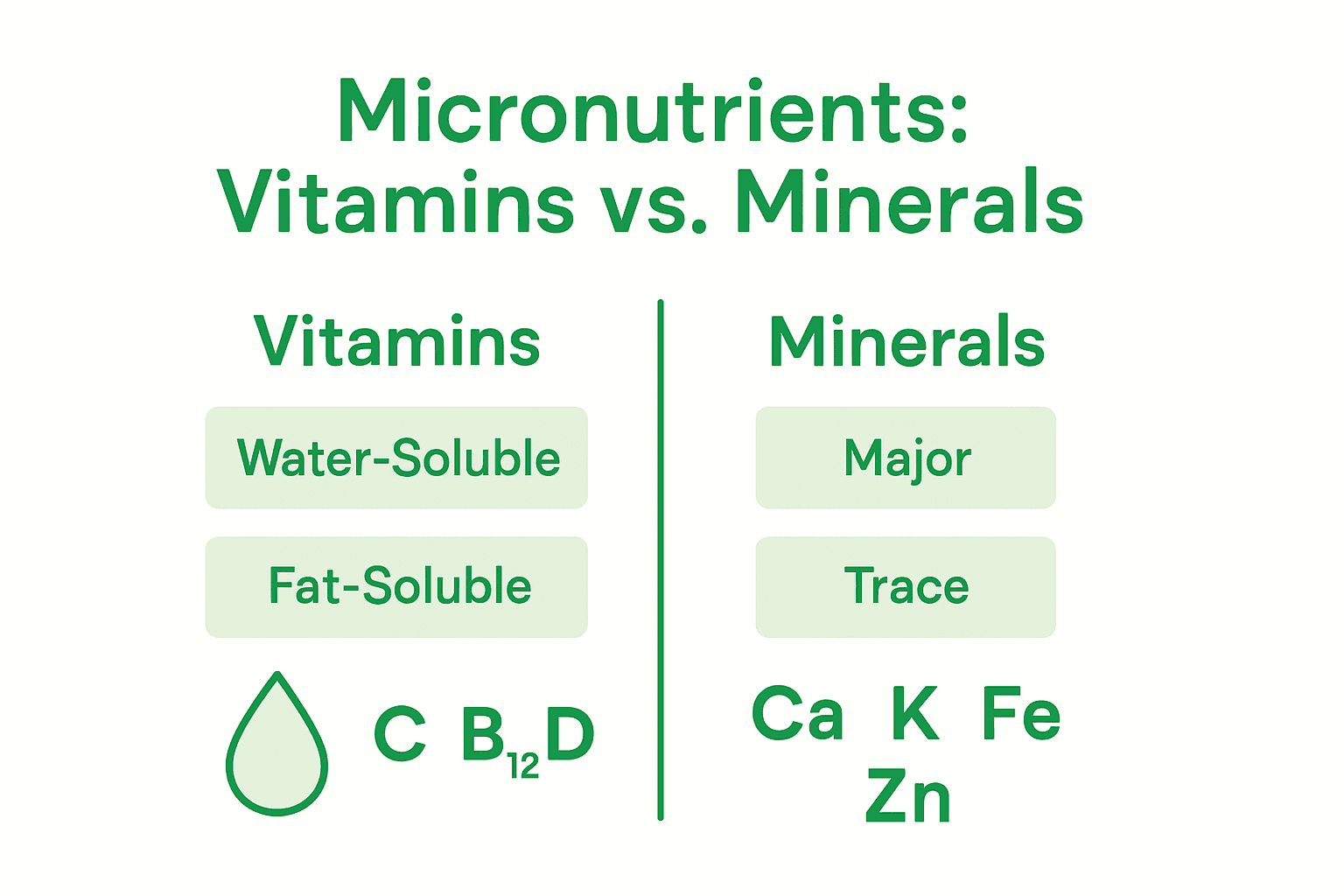
Vitamins are organic compounds essential for numerous metabolic processes. They are typically classified into two groups:
Here’s a summary comparing the main types of micronutrients and their key roles:
| Micronutrient Type | Examples | Classification | Primary Functions |
|---|---|---|---|
| Vitamins | Vitamin A Vitamin C B Vitamins Vitamin D Vitamin E Vitamin K | Fat-soluble Water-soluble | Metabolic processes Immune support Cellular repair Bone health |
| Minerals | Calcium Iron Zinc Magnesium Potassium Selenium | Major minerals Trace minerals | Bone strength Enzyme activation Oxygen transport Fluid balance |
- Fat-soluble Vitamins (A, D, E, K): Stored in body fat, require dietary fat for absorption
- Water-soluble Vitamins (B-complex, C): Dissolve in water, not stored long-term, need regular replenishment
Minerals, the inorganic counterparts, are divided into major and trace minerals:
- Major Minerals (needed in larger amounts): Calcium, phosphorus, magnesium, sodium, potassium
- Trace Minerals (required in tiny quantities): Iron, zinc, selenium, copper, iodine
Understanding these micronutrient categories helps create targeted nutrition strategies.
For a comprehensive overview of how these nutrients impact overall health, explore our guide on understanding micronutrients for health.
Daily Recommendations and Absorption Factors
Micronutrient intake is crucial for maintaining optimal health, but achieving the right balance can be challenging. PubMed research highlights that micronutrient deficiencies can occur through various dietary patterns, including calorie restriction, limited food intake, elimination of food groups, or consuming a diet low in nutrient-rich foods.
Daily recommended intake varies significantly based on several key factors:
- Age: Nutritional needs change throughout life stages
- Gender: Men and women have different micronutrient requirements
- Health Status: Pregnancy, illness, and chronic conditions impact nutritional needs
- Activity Level: Physical demands influence micronutrient absorption and requirements
Absorption of micronutrients is not a straightforward process. Multiple factors can enhance or inhibit how effectively your body processes these essential nutrients:
- Dietary Combinations: Some nutrients work synergistically, while others compete for absorption
- Gut Health: Digestive system condition significantly impacts nutrient uptake
- Cooking Methods: Preparation techniques can increase or decrease nutrient bioavailability
- Existing Deficiencies: Low levels of certain minerals can impair absorption of others
To optimize your micronutrient intake, explore our nutrient-dense foods guide for practical dietary strategies that support comprehensive nutrition.

Micronutrient Deficiencies and Health Risks
Micronutrient deficiencies pose significant global health challenges that extend far beyond surface-level symptoms. World Health Organization research reveals that these deficiencies can cause subtle yet profound impacts on human potential, including reduced energy levels, diminished mental clarity, and decreased overall capacity.
CDC studies underscore the severity of this issue, highlighting that at least half of children worldwide under 5 years old suffer from vitamin and mineral deficiencies. These deficiencies can manifest through various health risks:
- Immune System Compromise: Increased susceptibility to infections
- Cognitive Impairment: Reduced learning capabilities and mental performance
- Growth Stunting: Particularly critical in children’s developmental stages
- Metabolic Disorders: Disrupted energy production and cellular functions
Micronutrient deficiencies often develop silently, making early detection crucial. Risk factors include:
- Restricted diets
- Limited food access
- Chronic health conditions
- Increased metabolic demands
To understand how nutrition impacts overall health beyond traditional metrics, explore our guide on why normal BMI doesn’t always mean you’re nourished.
Improving Intake Through Diet and Supplements
Dietary strategies are fundamental in addressing micronutrient needs. World Health Organization emphasizes that many nutritional deficiencies are preventable through targeted nutrition education and consumption of diverse, nutrient-rich foods.
Effective micronutrient intake can be achieved through multiple approaches:
- Whole Food Nutrition: Prioritizing diverse, colorful food sources
- Strategic Food Combinations: Pairing nutrients for enhanced absorption
- Fortified Foods: Selecting products intentionally enriched with essential micronutrients
- Targeted Supplementation: Using high-quality supplements under professional guidance
Nutrient absorption is a complex process that requires careful consideration. Key strategies include:
- Consuming vitamin C with iron-rich foods to improve absorption
- Avoiding excessive caffeine and alcohol that can inhibit nutrient uptake
- Cooking methods that preserve nutritional content
- Maintaining a balanced gut microbiome
For those seeking comprehensive guidance on building a nutrient-dense diet, explore our guide on understanding healthy eating strategies to optimize your nutritional approach.
Achieve Optimal Micronutrient Balance with Personalized Nutrition Support
Micronutrient deficiencies can silently undermine your energy, immune health, and overall wellbeing. This guide highlights the crucial role of vitamins and minerals and the challenges in meeting daily recommendations due to absorption factors and lifestyle demands. If you struggle with understanding how to balance these tiny but mighty nutrients, you are not alone. Many face the frustrating puzzle of choosing the right foods, combining nutrients effectively, and ensuring consistent intake for lasting health benefits.
Take control of your micronutrient intake today by exploring tailored solutions designed to fit your unique needs. With Dietium’s Recipians, you get custom meal plans and recipe suggestions that prioritize nutrient-dense foods and optimal combinations to maximize absorption. Our platform also includes AI-powered tools for tracking your nutrition and fitness progress, helping you bridge the gap between knowledge and action. Don’t wait to nourish your body better. Visit Dietium’s complete guide on micronutrients for health and start your personalized journey now at Dietium Recipians.
Frequently Asked Questions
What are micronutrients and why are they important?
Micronutrients are essential vitamins and minerals that your body needs in small amounts for optimal functioning. They play crucial roles in processes like immune support, energy production, and cellular repair.
How can I ensure I am getting enough micronutrients in my diet?
To ensure adequate micronutrient intake, focus on a diverse diet that includes plenty of colorful fruits and vegetables, whole grains, lean proteins, and healthy fats. Consider the use of fortified foods or targeted supplements if necessary, but consult with a healthcare professional for personalized advice.
What factors can affect the absorption of micronutrients?
Several factors can affect micronutrient absorption, including dietary combinations, gut health, cooking methods, and existing deficiencies. Pairing certain foods together, such as vitamin C-rich foods with iron sources, can enhance absorption.
What are the common signs of micronutrient deficiencies?
Common signs of micronutrient deficiencies include fatigue, weakened immune response, cognitive impairment, growth stunting in children, and metabolic disorders. It is vital to seek medical advice for diagnosis and management if you suspect a deficiency.


