 Skip to content

TL;DR:
- Meal prepping simplifies food choices, saves time, and promotes balanced nutrition.
- Proper safety measures include rapid cooling, correct storage, and reheating to prevent foodborne illness.
- Flexibility and gradual habit-building ensure sustainable meal prep without burnout.
Meal prepping is not just for athletes, bodybuilders, or people with color-coded refrigerators. Most busy professionals and health-conscious individuals skip it because they assume it requires hours of weekend labor or an elaborate nutrition degree. It does not. At its core, meal prepping is a practical system that reduces daily decisions, supports better food choices, and puts you back in control of what you eat. This guide breaks down exactly what meal prepping involves, how to do it safely, and how to keep it sustainable without burning out after week two.
Table of Contents
- What is meal prepping and why does it matter?
- The essential meal prepping process: From planning to storage
- Balancing nutrition and variety: How to avoid meal prep boredom
- Meal prepping pitfalls: Food safety risks and how to prevent them
- Our take: Meal prepping that truly works for real-life schedules
- Take your healthy meal prepping further with Dietium
- Frequently asked questions
Key Takeaways
| Point | Details |
|---|---|
| Meal prepping saves time | Spending a few hours a week on meal prep means you can enjoy healthy, ready-made meals even on your busiest days. |
| Better nutrition, less stress | Preparing meals ahead lets you control ingredients and makes healthy choices effortless. |
| Safety and variety are key | Label, store, and rotate your meals carefully to prevent waste and keep your diet diverse and exciting. |
| Flexible methods work best | Blending batch cooking and component prep helps avoid burnout and keeps meal prepping sustainable. |
What is meal prepping and why does it matter?
Meal prepping means planning and preparing meals or meal components ahead of time, typically for the next few days or the entire week. It is not one rigid method. It is a flexible practice that fits your schedule and nutrition goals.
There are three main types to know:
- Full meal prep: You cook and portion complete meals in advance. Open the fridge, grab a container, and eat. Minimal effort required mid-week.
- Component prep: You cook individual ingredients separately, such as grains, roasted vegetables, and proteins, then mix and match them into different meals throughout the week.
- Batch cooking: You make large quantities of one recipe, then freeze portions for later use. Great for soups, stews, and casseroles.
Understanding why meal planning matters goes beyond convenience. Consistent meal prepping helps you control portion sizes, reduce reliance on processed foods, and stay aligned with your nutrition targets. Research confirms that home meal prep promotes better nutrition than meal kits or food delivery, which often contain high fat and sodium levels. Even more telling, minimally processed meal prep leads to a waist reduction of 2.06%, compared to just 1.05% for ultra-processed approaches.
For meal prep for busy people, the practical benefits stack up fast. You spend less time cooking during the week. You make fewer impulsive food decisions when tired or rushed. You reduce food waste by buying and using ingredients deliberately.
Following MyPlate guidelines during prep helps you balance macronutrients across proteins, grains, vegetables, and fruits without overcomplicating the process.
Pro Tip: If you are new to this, check out meal prep tips for beginners and start by prepping only 2 to 3 meals per week. Sustainability beats perfection every time.
The essential meal prepping process: From planning to storage
Knowing the why, it is time to learn exactly how meal prepping works, step by step, with practical safety pointers.
Step 1: Plan your meals. Choose meals based on your health goals, dietary preferences, and what ingredients overlap well. Overlapping ingredients, like using roasted chicken in both a grain bowl and a wrap, saves time and reduces waste.
Step 2: Build a focused grocery list. Shop with a purpose. Group items by category so you move through the store efficiently. Avoid buying ingredients you do not have a specific plan for.
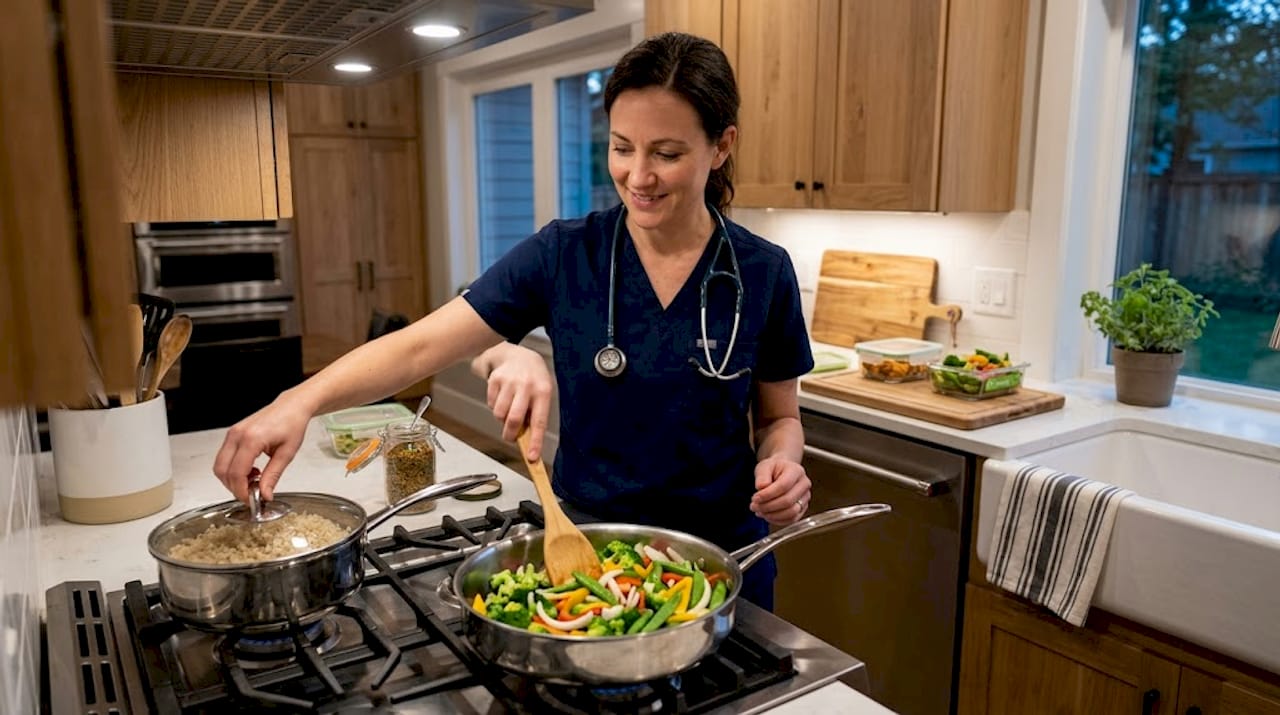
Step 3: Batch your cooking. Cook proteins, grains, and vegetables in parallel. While chicken is in the oven, cook rice on the stovetop and roast vegetables alongside. This cuts total prep time significantly.
Step 4: Cool food rapidly and safely. According to food safety rules, cooked food must move from 140°F down to 40°F within six hours. Use shallow containers to speed this process.
Step 5: Store and label everything. Portion meals into airtight containers and label each with the contents and date. This removes guesswork and keeps waste low.
Here is a quick reference for safe storage times:
| Food Type | Refrigerator | Freezer |
|---|---|---|
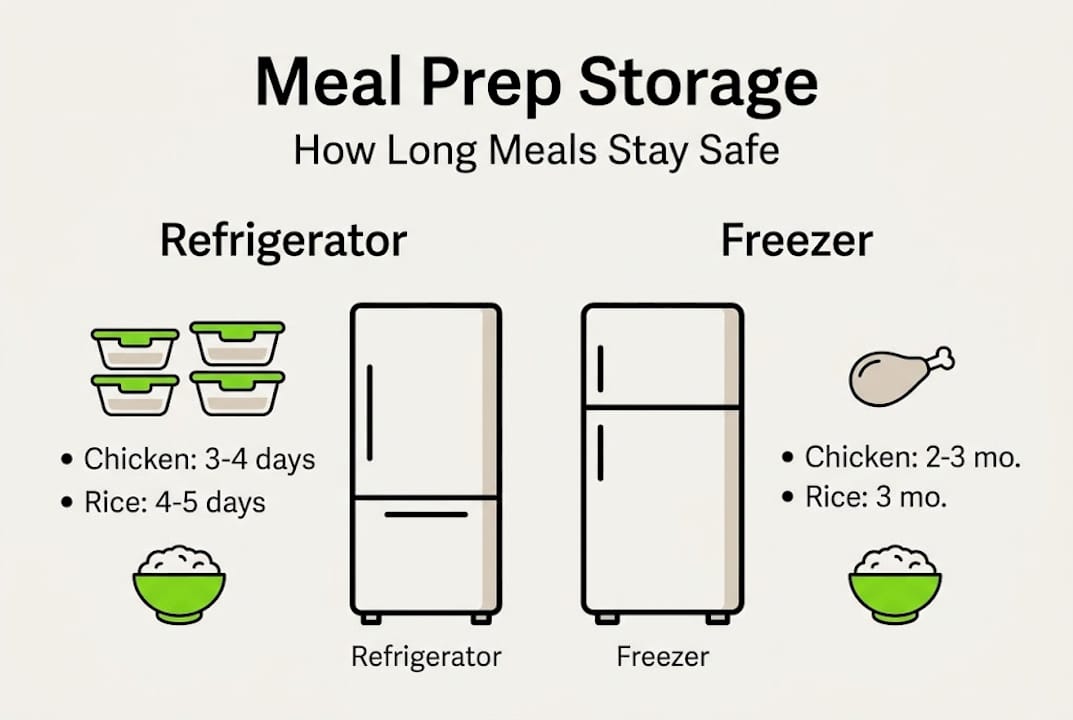
| Cooked proteins (chicken, fish, beef) | 3 to 4 days | 2 to 3 months |
| Cooked grains (rice, quinoa) | 4 to 5 days | 1 to 2 months |
| Roasted vegetables | 4 to 5 days | 2 to 3 months |
| Soups and stews | 3 to 4 days | 2 to 3 months |
For more organized strategies, explore batch cooking tips that help you get the most from a single prep session.
Pro Tip: Always reheat food to an internal temperature of 165°F. Use a food thermometer, not guesswork, to confirm it is safe to eat.
Balancing nutrition and variety: How to avoid meal prep boredom
Once you have meal prepping down, maintaining interest and proper nutrition can be your next big challenge. Eating the same grilled chicken and rice every day is a fast track to giving up entirely.
Here is a quick comparison of how different prep styles serve different needs:
| Prep Style | Best For | Variety Potential | Weekly Effort |
|---|---|---|---|
| Full meal prep | Strict schedules, calorie control | Low | High upfront |
| Component prep | Flexible eaters, variety seekers | High | Moderate |
| Batch cooking | Freezer meals, large households | Moderate | Low weekly |
Component prep stands out for busy professionals. You cook a base of ingredients, then reassemble them differently each day. Monday could be a grain bowl; Tuesday, a wrap; Wednesday, a stir-fry. Same ingredients, completely different flavor profiles.
Research supports that component prep combined with freezer use maximizes variety and nutrition without requiring daily cooking, and aligns well with MyPlate balance principles for proteins, grains, and vegetables.
To keep things interesting throughout the week, try these approaches:
- Rotate your spice blends. Use Italian herbs one day, cumin and chili the next. The protein stays the same; the flavor changes completely.
- Swap proteins weekly. Alternate between chicken, salmon, lentils, eggs, and tofu to vary both taste and nutrient intake.
- Freeze components, not just full meals. Freeze cooked grains and proteins separately so you can pull different combinations as needed.
- Add fresh elements mid-week. Prep the cooked base in advance, then add fresh avocado, herbs, or salsa when you eat to keep meals feeling alive.
For nutrition for busy professionals, variety is not just about pleasure. Rotating ingredients ensures a broader intake of micronutrients and reduces the risk of dietary gaps over time.
Meal prepping pitfalls: Food safety risks and how to prevent them
Even the best meal preppers can hit a snag. Food safety is not something to be taken lightly, and small mistakes can lead to serious consequences.
The most common risks include:
- Cooling food too slowly before refrigerating
- Storing meals past their safe window
- Reheating food unevenly or to insufficient temperatures
- Cross-contaminating raw and cooked ingredients during prep
Foodborne illness from improper storage is a real risk in meal prepping, especially when large batches sit at unsafe temperatures for too long. The fix is knowing the rules and building them into your routine.
Follow these steps to keep every meal safe:
- Cool food immediately. Do not leave cooked food at room temperature for more than two hours.
- Use shallow containers. These allow heat to escape faster, moving food through the danger zone temperature range quickly.
- Store proteins separately from grains and vegetables. This makes rotation easier and limits cross-contamination.
- Label every container. Include both the date and content. If you cannot remember when you made it, do not eat it.
- Reheat to 165°F every time. Partial reheating does not eliminate bacteria reliably.
For a detailed guide on meal prep safe storage, including container types and reheating best practices, use resources that align with certified food safety standards.
Pro Tip: Invest in a set of shallow, airtight glass containers. They cool food evenly, stack well, and make it easy to see exactly what you have stored without opening every lid.
Cooked chicken and rice, two of the most common meal prep staples, last 3 to 4 days in the refrigerator and up to 3 months in the freezer when stored correctly. Plan your rotation around these windows.
Our take: Meal prepping that truly works for real-life schedules
Here is what we have learned from working with health-focused individuals at every stage of their nutrition journey: most people do not fail at meal prepping because they lack information. They fail because they set unrealistic expectations from day one.
Following rigid, elaborate meal plans is a recipe for burnout. You miss one prep day and feel like the whole system has collapsed. That is a design flaw in the approach, not a personal failure.
The most sustainable meal preppers are not the ones with perfect lunchboxes. They are the ones who keep cooked grains in the fridge, a bag of washed greens ready to go, and two or three versatile proteins on hand. They build flexibility into the system rather than fighting against life’s unpredictability.
Building the habit of prepping, even 30 to 45 minutes on a Sunday, matters far more than executing a perfect five-day menu. Consistency at 70% effort beats perfection attempted twice and abandoned.
For those exploring sustainable nutrition choices, the message is clear: start simpler than you think you need to, and add complexity only when the habit is already locked in.
Take your healthy meal prepping further with Dietium
Meal prepping becomes significantly easier when you have the right tools and a plan that actually fits your life. Dietium offers personalized meal plans built around your health goals, dietary needs, and schedule. Whether you are just starting out with meal prepping for beginners or refining a system that already works, the platform gives you structured guidance backed by nutrition science. You can also explore nutritional assessment methods to better understand your body’s specific needs before building your next meal plan. Smart prepping starts with knowing what your body actually requires.
Frequently asked questions
How long can I store meal prepped food safely in the fridge or freezer?
Most cooked proteins last 3 to 4 days in the fridge and up to 3 months in the freezer. Grains and vegetables stay safe for 4 to 5 days when refrigerated properly.
Is meal prepping better for weight loss than using meal kits or delivery?
Home meal prepping, especially with minimally processed foods, shows greater benefits for weight loss. Meal kits and delivery options often carry higher fat and sodium levels that can offset results.
What is the safest way to cool and store meal prep dishes?
Transfer cooked food into shallow containers immediately after cooking and refrigerate within two hours. Always label containers with the date and contents before storing.
How do I keep meal prepping interesting?
Rotate your spice blends, change protein sources weekly, and use component prep with variety to mix and match flavors daily. Adding fresh toppings at mealtime also helps keep dishes from feeling repetitive.
Recommended
- Meal Prep for Beginners: Simple Steps to Healthy Eating – Dietium
- Essential Meal Prep Tips for Beginners: Save Time and Eat Healthy – Dietium
- Meal Prep for Busy People: Smart Tips and Simple Plans – Dietium
- Batch Cooking Tips for Busy Parents: Simplify Meal Prep – Dietium
- Meal Prep Schritt für Schritt: Proteinreich für Alltag – FITTASTE


