 Skip to content

TL;DR:
- Eating seasonally enhances flavor, nutrients, and savings by focusing on peak harvest fruits and vegetables. Regional differences and shoulder seasons offer varied options and opportunities for meal variety and preservation. Using one or two seasonal ingredients as anchors simplifies meal planning and encourages fresh, flavorful cooking year-round.
A seasonal produce guide identifies fruits and vegetables at their peak harvest so you get better flavor, higher nutrients, and lower prices at the same time. Registered Dietitian Nutritionist Hannah Van Ark confirms that seasonal eating improves taste, nutrient density, and diet variety through antioxidants and vitamins. Seasonal produce retains delicate nutrients because it spends less time in transit. The USDA and nutrition experts consistently endorse this approach for healthier, more cost-effective eating. This guide covers what’s in season by month, how region changes the picture, and exactly how to build meals around peak produce.
What fruits and vegetables are in season throughout the year?
Seasonal produce follows four broad windows in the US, each with its own standout crops. Peak season is when produce is most abundant, flavorful, and affordable. Knowing these windows lets you plan meals with confidence and stop guessing at the grocery store.
| Season | Peak Months | Representative Produce |
|---|---|---|
| Spring | March–May | Asparagus, peas, spinach, strawberries, rhubarb |
| Summer | June–August | Tomatoes, corn, peaches, zucchini, blueberries, melons |
| Fall | September–November | Apples, butternut squash, sweet potatoes, Brussels sprouts |
| Winter | December–February | Citrus fruits, kale, beets, carrots, storage onions |
Spring marks the return of tender, quick-cooking vegetables. Asparagus peaks in april and may, while strawberries hit their sweetest point in late may across most of the country. Summer brings the widest variety of any season. Tomatoes, corn, and peaches all overlap in july and august, giving you the best raw ingredients for salads, salsas, and grilled dishes.
Fall shifts the focus to dense, starchy vegetables that hold up to roasting and braising. Apples, winter squash, and root vegetables dominate farmers market stalls from september through november. Winter does not mean empty shelves. Storage crops like apples, potatoes, onions, and winter squash remain high quality after harvest and carry you through the coldest months without relying on imports.
- Spring: Look for asparagus, snap peas, radishes, and early lettuces.
- Summer: Prioritize tomatoes, corn, peaches, cucumbers, and berries.
- Fall: Stock up on apples, squash, sweet potatoes, and Brussels sprouts.
- Winter: Rely on citrus, hardy greens, beets, and well-stored root vegetables.
Pro Tip: Buy summer tomatoes in bulk at peak season and freeze them whole. They cook down perfectly in winter soups and sauces without any prep beyond rinsing.
How does regional variation affect local produce availability?
Seasonality varies widely by region, influenced by climate, elevation, and growing methods. A strawberry peak in California arrives weeks before the same berry ripens in Michigan. Adjusting your expectations by location makes seasonal shopping far more productive.
Latitude is the biggest driver of timing differences. Southern states like Florida and Texas see winter citrus and early spring vegetables months before the Midwest or Northeast. High-elevation regions like Colorado experience shorter growing seasons, which compresses the summer window but often produces intensely flavored crops. Coastal microclimates, particularly in Northern California and the Pacific Northwest, extend the growing season well into fall for crops like tomatoes and peppers.
Greenhouse and indoor growing operations add another layer of complexity. Year-round greenhouse tomatoes and lettuce are technically available in any month, but they do not carry the same flavor or nutrient profile as field-grown, peak-season crops. Local farmers’ market calendars are the most reliable resource for knowing what is actually at its best in your area right now.
- Check your state’s agricultural extension service website for a free regional produce calendar.
- Visit your local farmers market and ask vendors directly about their harvest schedule.
- Note that greenhouse produce is available year-round but differs in flavor from field-grown crops.
- Expect warm-climate states to run 4–8 weeks ahead of northern states for most spring and summer crops.
What are “shoulder seasons” and why do they matter for meal planning?
Shoulder seasons are the transition months between major growing periods, typically march, september, and november. These overlap periods offer a unique combination of late and early crops that provide more variety and interesting cooking opportunities than any single peak season. Planning meals around shoulder seasons prevents the repetition that makes seasonal eating feel restrictive.
March is the clearest example. Late-winter storage crops like carrots, beets, and winter squash are still available, while early spring greens like spinach and arugula begin appearing at farmers markets. That combination gives you the base for hearty grain bowls topped with fresh greens, a meal that fits neither winter nor spring but works perfectly in both.
September delivers a similar overlap in the other direction. Summer tomatoes, corn, and peppers are still at their peak, while early apples, pears, and winter squash start showing up. A roasted tomato and butternut squash soup made in september uses produce from two seasons and tastes better than either ingredient alone could produce.
- Identify the overlap. Check what late-season crops are still available alongside the earliest arrivals of the next season.
- Build a bridge dish. Combine one ingredient from each side of the transition in a single recipe, like a fall apple and summer arugula salad.
- Preserve the surplus. Freeze, pickle, or ferment late-season produce before it disappears. Tomatoes, corn, and stone fruits all freeze well with minimal effort.
- Rotate your anchor ingredient. Swap your primary vegetable every two weeks during shoulder months to keep meals varied without overhauling your entire routine.
Pro Tip: September is the best month to make large batches of tomato sauce and freeze it. You get peak-season flavor locked in for winter pasta dishes at a fraction of the cost of canned alternatives.
How to incorporate seasonal produce into everyday meal planning
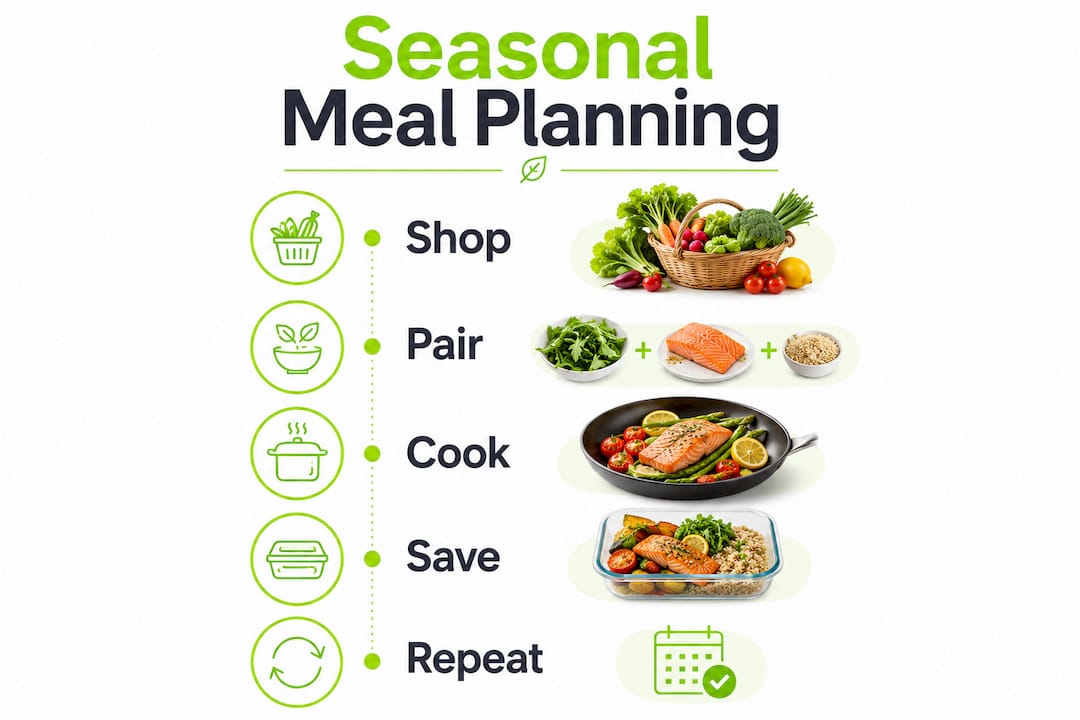
The most practical framework for seasonal meal planning uses four steps: shop, pair, cook, and save. This approach rotates meals naturally and prevents repetitive recipes without requiring you to overhaul your entire diet.

Shop with an anchor ingredient in mind. An anchor ingredient is the one seasonal item you build the week’s meals around. Choosing just 1–2 seasonal anchor ingredients per week improves meal flavor and simplifies cooking decisions. In july, that anchor might be corn. In october, it could be butternut squash. Every other ingredient in the week’s meals supports that central item.
Pair delicate and sturdy produce strategically. Delicate produce like fresh peas, berries, and tender greens has a short shelf life and should be used within 2–3 days of purchase. Sturdy produce like root vegetables, winter squash, and apples can sit in your kitchen for a week or more. Buy delicate items for early-week meals and sturdy items for later in the week. This simple habit cuts food waste significantly.
“Seasonal eating is a flexible mindset focused on noticing produce patterns rather than strict rules. You do not need to eat only local, only organic, or only what’s at the farmers market. You need to notice what’s abundant, buy more of it, and cook it while it’s at its best.”
Cook to the season’s character. The best seasonal menus match cooking methods to the season. Spring and summer produce responds well to light cooking: quick sautés, raw salads, and brief roasting at high heat. Fall and winter produce benefits from longer, slower methods: braising, roasting at lower temperatures, and simmering in soups. Matching the method to the ingredient brings out the best flavor with the least effort.
Save money by buying at peak supply. In-season produce is more budget-friendly because peak supply drives prices down. A flat of summer peaches at a farmers market costs a fraction of what out-of-season peaches cost in january. Buy in larger quantities during peak weeks and preserve the surplus through freezing, pickling, or dehydrating. Dietium’s budget meal planning resources show how to structure this approach across a full month without overspending.
For flexible meal bases, keep pasta, rice, lentils, and whole grains stocked at all times. Anchor ingredients and flexible bases make seasonal eating practical, affordable, and sustainable week after week. A grain bowl works in every season. The only thing that changes is the vegetable on top.
Key Takeaways
Eating seasonally is the single most effective way to improve flavor, retain nutrients, and reduce your grocery bill without changing your overall diet structure.
| Point | Details |
|---|---|
| Peak season means peak quality | Produce harvested at its natural peak delivers better flavor and higher nutrient retention than shipped alternatives. |
| Region shifts the calendar | Local farmers market calendars are the most reliable guide to what is actually at its best near you. |
| Shoulder seasons add variety | March, September, and November offer overlapping crops that prevent meal repetition and expand cooking options. |
| Anchor ingredients simplify planning | Choosing 1–2 seasonal anchors per week reduces decision fatigue and keeps meals rotating naturally. |
| Buy peak, preserve surplus | Purchasing in bulk at peak supply and freezing the surplus cuts costs and extends seasonal flavor into winter. |
Why seasonal eating changed how I think about cooking
The first time I bought a flat of july tomatoes at a farmers market and made sauce the same afternoon, the difference was immediate. Those tomatoes did not taste like the grocery store version. They tasted like something worth protecting, which is exactly why I started freezing them.
What surprised me more was how much easier meal planning became. When you commit to one or two anchor ingredients per week, the decision of “what’s for dinner” shrinks from an open question to a small set of obvious answers. The squash is roasting. The question is just what goes with it.
The part most people miss is that seasonal eating does not require perfection. You do not need to shop exclusively at farmers markets or avoid every out-of-season item. You need to notice what’s abundant, buy more of it, and cook it while it’s good. That mindset shift is more useful than any strict rule about what you’re allowed to eat in february.
I also found that matching cooking methods to the season made me a better cook without any additional effort. Light, fast cooking in summer. Slow, deep cooking in fall and winter. The season tells you what to do. You just have to listen.
— Srasti
Dietium’s tools for eating well all year
Dietium connects seasonal produce choices to your personal health goals through AI-powered meal planning tools and the Recipians app. The platform builds personalized meal plans around your nutritional needs, dietary preferences, and the produce that’s actually in season. You get recipe suggestions that rotate with the calendar, not against it. Dietium also tracks your body metrics and calorie needs so your seasonal meals align with real health targets. For anyone ready to move from general seasonal awareness to a structured, goal-driven eating plan, Dietium’s personalized diet tools provide the framework to make it work consistently.
FAQ
What is seasonal produce?
Seasonal produce refers to fruits and vegetables harvested at their natural peak time in a given region. Peak-season produce delivers better flavor, higher nutrient retention, and lower prices compared to out-of-season alternatives.
What fruits and vegetables are in season in summer?
Summer peak crops in the US include tomatoes, corn, peaches, zucchini, cucumbers, blueberries, and melons. These typically reach their best quality between june and august depending on your region.
How do I find what’s in season near me?
Local farmers market calendars and your state’s agricultural extension service website are the most reliable resources. Seasonality varies by climate and elevation, so national lists are a starting point, not a definitive answer.
What are storage crops and why do they matter in winter?
Storage crops are harvested in fall but remain high quality for months afterward. Apples, potatoes, onions, and winter squash are the most common examples, and they make seasonal eating practical through the coldest months without relying on imported produce.
How many seasonal ingredients should I plan around each week?
Choosing 1–2 seasonal anchor ingredients per week is the most practical approach. This simplifies meal decisions, rotates your diet naturally, and keeps cooking varied without requiring a complete menu overhaul.


