 Skip to content

TL;DR:
- Whole foods are foods in their natural state with minimal processing, while ultra-processed foods are engineered for taste and calorie density. Evidence shows diets rich in whole foods lead to better health, lower calorie intake, and reduced heart disease risk compared to processed foods. Strategic, gradual substitution and personalized meal planning support sustainable whole-food consumption.
Whole foods are defined as foods consumed in or near their natural state, with minimal alteration from farm to plate. Processed foods cover a wide spectrum, from canned tomatoes to packaged snack cakes, and that range matters enormously for your health. The debate around whole foods vs processed foods is not simply about clean eating trends. It is grounded in measurable differences in calorie density, nutrient availability, and long-term disease risk. Understanding where your food falls on that spectrum gives you real power over your nutrition choices.
What does the science say about whole foods vs processed foods?
The evidence is clear: whole food diets produce better health outcomes than diets dominated by ultra-processed foods. A 2026 University of Bristol study found that people on whole food diets ate 57% more food by weight yet consumed 330 fewer calories daily compared to ultra-processed food eaters. That finding flips the common assumption that eating more food means consuming more calories.
The calorie gap gets even wider in controlled experiments. Volunteers placed on ultra-processed diets consumed 500 extra calories per day and gained roughly 1 kilogram in two weeks. Participants on unprocessed diets lost a similar amount of weight over the same period. The difference was not willpower. It was food engineering.
“Ultra-processed foods are designed to be eaten quickly, require little chewing, and deliver calories faster than satiety signals can catch up. Whole foods, by contrast, slow the eating process and trigger fullness earlier, making overeating structurally harder.”
An analysis of 120,000 adults linked whole food diets to approximately 15% lower heart disease risk. Diets heavy in processed foods correlated with weight gain and elevated cardiovascular risk across the same population. That is not a small signal.
Nutrient density: the key difference
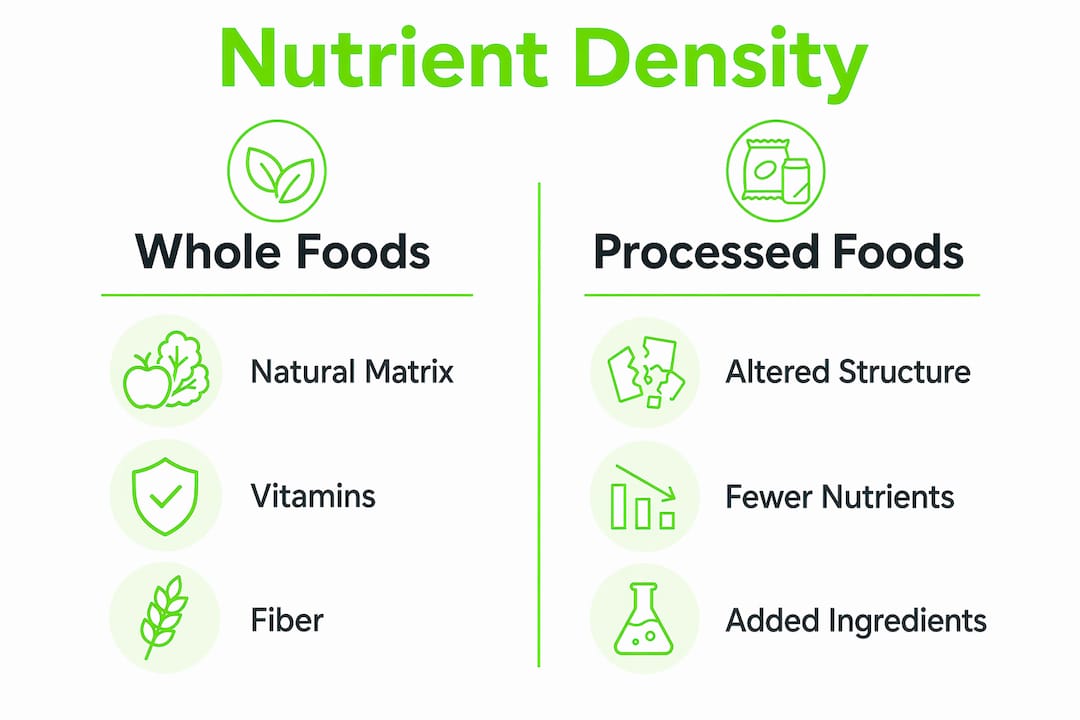
Whole foods deliver nutrients in their natural matrix, meaning vitamins, minerals, and fiber work together rather than in isolation. Nutrient synergy in whole foods supports better absorption than isolated nutrients found in heavily fortified processed products. A handful of almonds provides vitamin E, magnesium, and healthy fats simultaneously. A fortified snack bar delivers the same vitamin E on paper but without the fiber and fat that help your body use it.
| Metric | Whole food diet | Ultra-processed diet |
|---|---|---|
| Daily calorie difference | 330 fewer calories | 500 extra calories |
| Weight change (2 weeks) | Weight loss | ~1 kg gained |
| Heart disease risk | ~15% lower | Elevated |
| Nutrient absorption | Higher (synergy effect) | Lower (isolated nutrients) |
Are all processed foods actually bad for you?
The binary view of whole foods vs processed foods misses a critical distinction: processing exists on a spectrum. Canned beans, frozen spinach, and plain yogurt are all technically processed. They are also nutritious, affordable, and practical. The real concern is ultra-processed foods, which include packaged snacks, fast food, and ready meals loaded with added sugars, sodium, artificial flavors, and refined oils.
Some processed foods retain high nutritional value and fit comfortably into a healthy diet. Canned tomatoes preserve lycopene effectively. Tinned fish delivers omega-3 fatty acids at a fraction of the cost of fresh. Frozen vegetables often retain more nutrients than fresh produce that has spent days in transit.
The dairy matrix effect illustrates this nuance well. Cheese and yogurt differ nutritionally from isolated saturated fats, meaning the processing of dairy changes how its components behave in your body. Yogurt does not raise cholesterol the way isolated dairy fat does. Strict processing classifications miss that distinction entirely.
Here is what actually separates a healthy processed food from a problematic one:
- Ingredient list length: Shorter lists with recognizable ingredients signal less manipulation.
- Added sugar content: More than 5 grams of added sugar per serving is a warning sign.
- Sodium levels: Anything above 600 milligrams per serving warrants attention.
- Fiber presence: Whole grain or legume-based products retain fiber; refined versions strip it out.
- Artificial additives: Emulsifiers, colorings, and flavor enhancers indicate heavy processing.
Pro Tip: When reading a label, scan the ingredient list before the nutrition panel. If the first three ingredients include sugar, refined flour, or a hydrogenated oil, the product is ultra-processed regardless of what the front of the package claims.
Ultra-processed foods are engineered to be calorie-dense and highly palatable, but complete avoidance is neither realistic nor necessary. The goal is to reduce their share of your overall diet, not to treat every packaged item as a health threat.
How can you make healthier food choices every day?
Shifting toward more whole foods does not require a complete diet overhaul. Gradual substitution produces sustainable results. Replacing one ultra-processed meal per day with a whole food alternative creates a meaningful calorie and nutrient shift over time without triggering the deprivation response that causes most diets to fail.

Whole foods shopping tips often focus on the store perimeter, but that advice is incomplete. Dried beans, lentils, plain oats, canned fish, and frozen vegetables live in the aisles. Shopping only the perimeter overlooks these whole food staples and adds unnecessary cost. A bag of dried lentils costs less than a single protein bar and delivers far more fiber, iron, and plant protein.
Use this sequence to build a practical whole-foods-focused routine:
- Audit your current meals. Identify the two or three ultra-processed items you eat most often. Those are your first substitution targets.
- Swap one item per week. Replace packaged breakfast cereal with plain oats. Replace flavored yogurt with plain Greek yogurt and fresh fruit. Small swaps compound quickly.
- Read ingredient labels. Focus on added sugars, sodium, and the presence of whole grains or legumes as the first ingredient.
- Stock whole food staples. Keep dried beans, frozen vegetables, eggs, canned fish, and whole grains on hand. These form the backbone of fast, nutritious meals.
- Plan two to three meals per week in advance. Meal planning reduces the decision fatigue that pushes people toward ultra-processed convenience foods.
Pro Tip: Batch-cook a pot of whole grains and a pot of legumes every Sunday. Both store well in the refrigerator for five days and cut weeknight cooking time in half, making whole food meals as fast as reheating a packaged product.
Whole food diet benefits extend beyond weight management. Dietary variety across whole food groups supports nutrient synergy, meaning different foods amplify each other’s absorption. Pairing iron-rich lentils with vitamin C-rich tomatoes increases iron uptake. Eating healthy fats alongside leafy greens improves fat-soluble vitamin absorption. These combinations do not happen by accident in whole foods. They happen because food in its natural form already contains the cofactors needed for its own nutrients to work.
What role does personalized meal planning play in a whole-foods diet?
Personalized meal planning is the most reliable method for maintaining a whole-foods-focused diet without sacrificing convenience or variety. Generic dietary advice fails because it ignores individual calorie needs, food preferences, health conditions, and schedules. A plan built around your specific goals and constraints is far more likely to stick.
Effective personalized nutrition planning includes several components:
- Baseline assessment: Knowing your calorie needs, macronutrient targets, and any dietary restrictions before building a plan prevents guesswork and wasted effort.
- Whole food prioritization: A well-structured plan places whole foods at the center of each meal and uses minimally processed items as practical supplements, not the foundation.
- Flexibility for processed staples: Canned legumes, frozen vegetables, and plain dairy products belong in a personalized plan. They reduce prep time without compromising nutrition.
- Progress tracking: Monitoring what you eat against your targets reveals patterns, such as consistent sodium overconsumption or insufficient fiber, that you cannot spot by feel alone.
- Adjustment cycles: Effective plans update as your goals, weight, or activity level changes. A static plan loses accuracy within weeks.
Whole food eating patterns become sustainable when they fit your actual life. Dietium’s approach to personalized nutrition accounts for your food preferences, health goals, and realistic time constraints. The platform’s AI-powered tools calculate your calorie and macronutrient needs, then generate meal plans that center whole foods while incorporating convenient processed staples where they make sense. That combination of data and flexibility is what separates a plan you follow from one you abandon by week two.
Why meal planning matters becomes obvious when you track the alternative. People who do not plan meals default to whatever is fastest and most available, which in most environments means ultra-processed options. Planning removes that default and replaces it with a prepared whole food alternative that requires no decision in the moment.
Key Takeaways
Whole foods consistently outperform ultra-processed foods on calorie control, nutrient delivery, and long-term health outcomes, but the most practical diet includes both strategically.
| Point | Details |
|---|---|
| Calorie gap is measurable | Whole food eaters consume up to 330–500 fewer calories daily than ultra-processed food eaters. |
| Not all processing is equal | Canned beans, frozen vegetables, and plain yogurt are processed yet nutritious and practical. |
| Nutrient synergy matters | Whole foods deliver vitamins and minerals together, improving absorption over isolated nutrients. |
| Gradual substitution works | Replacing one ultra-processed meal per day produces sustainable improvement without deprivation. |
| Personalized planning sticks | Meal plans built around individual goals and preferences maintain whole-food habits long-term. |
The spectrum matters more than the label
The whole foods vs processed foods debate gets framed as a moral contest, and that framing does real harm. I have watched people abandon genuinely healthy diets because they felt guilty about eating canned tomatoes or a slice of cheese. That guilt is not grounded in science. It is grounded in marketing.
What the research actually shows is a spectrum. Ultra-processed foods, the ones engineered for maximum palatability and minimum satiety, are the real problem. They are designed to override your body’s natural fullness signals. Canned beans are not. Frozen peas are not. Plain Greek yogurt is not. The distinction matters enormously for how you shop, cook, and feel about your food.
The time cost of whole food cooking is real, and I think it gets dismissed too quickly. Whole food diets require more time for planning and preparation. That is a genuine barrier for people with demanding schedules, limited budgets, or no cooking infrastructure. Acknowledging that barrier is not an excuse to eat poorly. It is a starting point for building a realistic plan that uses healthy processed staples to fill the gaps.
The most effective approach is not perfection. It is a consistent pattern where whole foods dominate and processed foods serve a supporting role. That pattern, maintained over months and years, produces the health outcomes the research documents. Occasional ultra-processed meals do not erase that pattern. Chronic reliance on them does.
— Srasti
Dietium’s approach to balanced, personalized nutrition
Dietium builds nutrition plans around your actual goals, not generic templates. The platform’s AI tools assess your calorie needs, macronutrient targets, and dietary preferences, then generate personalized meal plans that put whole foods at the center while accounting for real-world constraints like time, budget, and food access. You get structure without rigidity. The Recipians app suggests recipes, tracks your intake, and adjusts recommendations as your goals evolve. For people who want to shift toward whole foods without overhauling their entire routine, Dietium provides the data and the plan to make that shift practical and measurable. Explore meal plan personalization to see how a tailored approach changes your results.
FAQ
What is the main difference between whole and processed foods?
Whole foods remain close to their natural state with minimal alteration, while processed foods have been modified through cooking, preserving, or adding ingredients. Ultra-processed foods are the most heavily altered and are most strongly linked to overeating and poor health outcomes.
Are whole foods always healthier than processed foods?
Whole foods are generally more nutrient-dense, but not all processed foods are harmful. Canned beans, frozen vegetables, and plain yogurt are processed yet retain strong nutritional value and fit well in a healthy diet.
How many extra calories do ultra-processed foods cause?
Controlled research shows people on ultra-processed diets consume up to 500 extra calories per day compared to those eating unprocessed foods, leading to measurable weight gain within two weeks.
Can I eat processed foods and still lose weight?
Yes, if the majority of your diet consists of whole and minimally processed foods. Replacing even one ultra-processed meal per day with a whole food alternative creates a meaningful calorie deficit and improves nutrient intake over time.
How does meal planning help with whole food eating?
Meal planning removes the in-the-moment decision that typically defaults to ultra-processed convenience foods. A structured plan built around whole food staples reduces prep time, controls costs, and makes nutritious eating the path of least resistance.


