 Skip to content

TL;DR:
- Food cravings are intense, specific desires driven by hormones, brain reward systems, and conditioned behaviors. Managing them effectively involves understanding their causes, practicing mental imagery techniques, and establishing consistent eating patterns. Building self-awareness and personalized diets can sustainably reduce cravings over time.
Food cravings are defined as intense, specific desires for a particular food that go well beyond ordinary hunger. Unlike general hunger, which accepts almost any food, a craving locks onto something specific: chocolate, chips, or a warm bowl of pasta. Understanding food cravings means recognizing that these urges are driven by hunger hormones like ghrelin and leptin, brain reward pathways, cortisol spikes from stress, and deeply conditioned behaviors. Cravings are not a sign of weak willpower. They are biological and psychological signals worth decoding, not suppressing.
What causes food cravings? Physiology and psychology explained
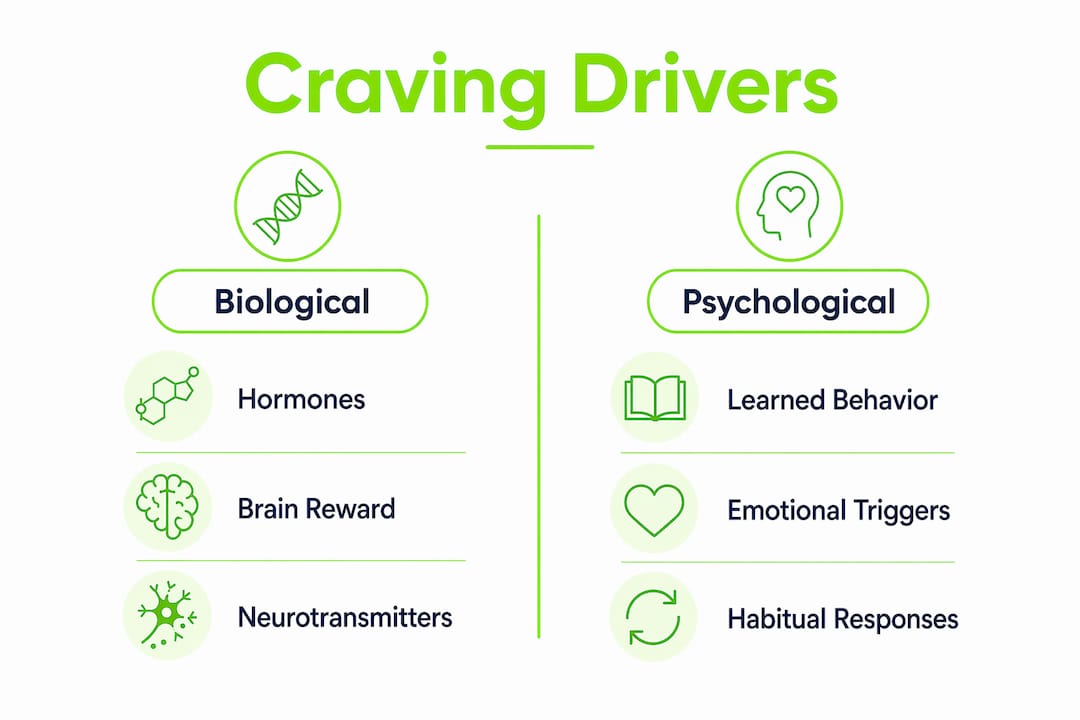
Food cravings originate from two overlapping systems: your body’s hormonal state and your brain’s reward circuitry. Getting clear on both is the first step toward real control.
Hormonal drivers
Three hormones shape most cravings. Ghrelin rises when your stomach is empty and signals the brain to seek food. Leptin, released by fat cells, signals fullness, but chronic stress can blunt its effect. Elevated cortisol from ongoing stress triggers cravings for high-fat, high-sugar foods and raises the risk of abdominal weight gain. That combination explains why a stressful afternoon at work so reliably ends with a reach for something sweet or salty.
The brain’s “wanting” vs. “liking” systems
Neuroscience draws a clear line between two craving mechanisms. The hedonic liking system governs the pleasure you feel while eating. The motivational wanting system drives the urge to seek food before you even taste it. These two systems can operate independently. You can intensely want a food you don’t even particularly enjoy once you eat it. Recognizing this split helps explain why cravings feel so urgent and why satisfying them doesn’t always feel as good as expected.
Learned behaviors and emotional triggers
Cravings often arise from conditioned responses tied to specific environments or emotional states, not just physical need. If you always eat popcorn during movies, your brain wires that context into a craving trigger. Stress, boredom, loneliness, and anxiety all activate emotional eating triggers that push you toward comfort foods. The craving isn’t random. It’s a learned response your brain has practiced many times.
- Ghrelin rises before meals and spikes when you skip them.
- Cortisol increases appetite and narrows food preference toward calorie-dense options.
- Conditioned cues like smells, locations, or times of day can activate cravings independently of hunger.
- Emotional states such as stress and boredom are among the most common non-hunger craving triggers.
Pro Tip: Keep a brief log of when cravings hit and what you were doing or feeling. Patterns appear within a week, and patterns are the starting point for change.
How does hunger make cravings more vivid and harder to resist?
Hunger does more than make you want food. It sharpens the mental image of food in your mind, making cravings feel more urgent and specific.
Research shows that hunger amplifies mental imagery of food, particularly the sensory details of smell, taste, and texture. When your stomach is empty, your brain simulates the experience of eating with greater clarity. That mental simulation makes the craved food feel almost real, which intensifies the pull toward it. Texture, interestingly, is often imagined more vividly than flavor. The crunch of a chip or the chewiness of a cookie can feel almost physical before you’ve taken a single bite.
“Repeated visualization of a craved food can reduce its appeal over time. Imagining eating the food in detail, bite by bite, can make the imagined version feel less desirable, even though it does not reduce your enjoyment of the real thing.”
Source: The Conversation
This finding has a practical application. You can use mental imagery deliberately to take the edge off a craving without eating. Here’s how:
- Pause and visualize. When a craving hits, close your eyes and imagine eating the food slowly, in full sensory detail.
- Repeat the image. Go through the experience several times in your mind. The appeal tends to fade with each repetition.
- Check your hunger level. After the visualization, assess whether the urge is still strong or has softened. This tells you whether the craving was hunger-driven or habit-driven.
- Eat mindfully if the craving persists. If physical hunger is real, eat. The goal is awareness, not avoidance.
Understanding these mental processes gives you a tool that requires no willpower. It works with your brain’s own mechanisms rather than against them.
How do you tell physical hunger from an emotional craving?
Not all cravings are equal. Physical hunger, emotional cravings, and psychological habit cravings each call for a different response. Treating them the same way leads to frustration.
The three main types break down clearly:
| Craving type | Key signal | Best response |
|---|---|---|
| Physical hunger | Gradual onset, accepts many foods | Eat a balanced meal |
| Emotional craving | Sudden, targets specific comfort foods | Pause, identify the emotion |
| Psychological habit | Triggered by a cue (time, place, activity) | Interrupt the cue or substitute a behavior |
Tracking mood and food intake helps you tell these apart. A food diary doesn’t need to be elaborate. A note on your phone recording the time, what you wanted, and how you felt is enough. Over days, the pattern becomes obvious. Emotional cravings tend to cluster around stress events, boredom, or fatigue. Physical hunger is more evenly distributed and less specific.

Restrictive dieting makes this harder. Cutting entire food groups or slashing calories sharply increases craving intensity because deprivation activates the brain’s wanting system. The goal is not to eliminate cravings but to understand them well enough to respond rather than react.
Pro Tip: Before eating in response to a craving, run a quick hunger reality check: “Would I eat a plain piece of chicken and vegetables right now?” If yes, it’s physical hunger. If no, something else is driving it.
Effective strategies to manage food cravings sustainably
Managing cravings long-term requires building systems, not relying on moment-to-moment willpower. The strategies below are grounded in how the body and brain actually work.
Establish consistent meal timing
Consistent meal patterns over 4–6 weeks reduce both the intensity and frequency of cravings. Eating 2–3 meals plus planned snacks prevents the extreme hunger that drives impulsive food choices. Skipping meals raises ghrelin sharply, which narrows your food choices toward high-calorie options. Regular timing trains your hunger hormones to follow a predictable rhythm, which makes cravings easier to anticipate and manage. Dietium’s hunger management strategies offer a practical framework for building this kind of schedule.
Balance your macronutrients
Balanced meals with carbohydrates, fats, and proteins stimulate different satiety hormones, reducing post-meal cravings. Protein raises peptide YY and GLP-1, both of which signal fullness to the brain. Fat slows gastric emptying, extending the feeling of satisfaction. Carbohydrates, especially fiber-rich ones, stabilize blood sugar and prevent the sharp drops that trigger sugar cravings. A meal that skips one of these three macronutrients almost always leads to a craving within a couple of hours.
Practice self-compassion during cravings
Responding to cravings with self-compassion reduces shame, improves emotion regulation, and limits reliance on addictive eating patterns. Shame and guilt after giving in to a craving activate the same stress response that triggered the craving in the first place. That cycle is self-reinforcing. Treating a craving as information rather than a failure breaks the loop. Ask what the craving is telling you about your hunger, stress level, or emotional state, then respond accordingly.
- Eat regularly. Three meals plus snacks prevent the extreme hunger that overrides rational food choices.
- Include all three macronutrients at each meal to activate multiple satiety signals.
- Use non-food rewards for stress relief: a short walk, a five-minute breathing exercise, or a brief conversation with someone you trust.
- Avoid severe food restrictions. Banning a food increases its psychological pull. Allowing it in reasonable portions reduces its power.
- Build consistent habits. New eating patterns take 4–6 weeks to feel automatic. Expect the first few weeks to require more conscious effort.
Pro Tip: When dealing with sugar cravings specifically, pair any sweet food with a protein source. The protein slows the glucose spike and reduces the likelihood of a follow-up craving an hour later.
Key Takeaways
Food cravings are biological and psychological signals shaped by hormones, brain reward systems, learned behaviors, and emotional states. Managing them requires understanding their source, not suppressing them through willpower alone.
| Point | Details |
|---|---|
| Cravings have a biological basis | Hormones like ghrelin and cortisol directly drive craving intensity and food preference. |
| Hunger sharpens mental food images | An empty stomach makes imagined food more vivid, especially texture, intensifying the urge. |
| Three craving types need different responses | Physical, emotional, and habit-based cravings each require a distinct strategy to manage effectively. |
| Consistent meal timing reduces cravings | Eating 2–3 meals plus snacks over 4–6 weeks lowers craving frequency and intensity. |
| Self-compassion breaks the craving cycle | Treating cravings as information rather than failure reduces shame and improves long-term control. |
What I’ve learned from treating cravings as data, not failures
The most useful shift I’ve seen in how people relate to food cravings is moving from judgment to curiosity. When a craving hits and your first response is “I shouldn’t want this,” you’ve already lost the most useful piece of information the craving was trying to give you.
Cravings are learned biological signals, shaped by experience, not evidence of poor character. Once you accept that, you can start asking better questions: Am I actually hungry? Am I stressed? Did I skip a meal? Did I walk past the bakery I always stop at on Fridays? Those questions lead somewhere useful. Shame doesn’t.
The 4–6 week timeline for habit formation is real, and it’s worth taking seriously. Most people abandon new eating patterns after two weeks because the cravings haven’t softened yet. They interpret that as failure. It’s not. It’s just biology running on its own schedule. Staying consistent through that window, even imperfectly, is what produces lasting change. The science of intuitive eating supports this: building awareness of your body’s signals over time is more effective than any short-term restriction.
The people who manage cravings best long-term are not the ones with the most willpower. They are the ones who built the most self-awareness.
— Srasti
Personalized nutrition makes craving management practical
Knowing why you crave certain foods is the first step. Building a diet that addresses those triggers is the second. Dietium’s personalized diet plans are designed to stabilize blood sugar, balance macronutrients, and match your eating schedule to your body’s actual hunger rhythms. The Recipians app generates meal plans and recipe suggestions aligned with your specific goals, so you’re not guessing at what to eat when a craving hits. For people who want a structured, data-driven approach to consistent eating habits, Dietium provides the tools to build one without relying on restriction or willpower alone.
FAQ
What is the difference between a craving and hunger?
Hunger is a gradual, general need for food that accepts most options. A craving is a sudden, specific desire for one particular food, often driven by hormones, emotions, or conditioned cues rather than physical need.
Why do I crave sugar when I’m stressed?
Chronic stress raises cortisol, which increases appetite and specifically drives cravings for high-fat, high-sugar foods. This is a hormonal response, not a character flaw, and it can be managed by addressing the stress itself alongside your eating patterns.
Can visualizing food actually reduce a craving?
Yes. Repeated food visualization can reduce a craving’s appeal over time. Imagining eating the food in detail, bite by bite, makes the mental version feel less desirable without affecting your enjoyment of the real food.
How long does it take to reduce craving frequency?
Consistent meal patterns maintained over 4–6 weeks measurably reduce both the intensity and frequency of cravings. The first two weeks are the hardest because the new habits haven’t yet become automatic.
Does avoiding a food make you crave it more?
Strict restriction increases the psychological pull of a banned food by activating the brain’s wanting system. Allowing a food in reasonable portions reduces its power over time, which is why severe dietary rules tend to backfire.


