 Skip to content

TL;DR:
- Portion control involves eating measured amounts aligned with your body’s energy needs, not oversized servings. Using hand measurements or common objects as visual cues can help prevent unnoticed overeating, while customizing portions based on personal factors leads to sustainable habits. Structuring your environment with smaller plates, pre-portioned snacks, and mindful practices supports long-term portion management without relying solely on willpower.
Portion control is the practice of eating measured amounts of food that match your body’s actual energy needs, not the amount placed in front of you. Most people eat 20 to 30 percent more than they intend to, not because they lack willpower, but because modern plates, packages, and restaurant servings have quietly redefined what “normal” looks like. Learning how to manage portion sizes gives you a practical framework to eat well, support weight goals, and build habits that last without obsessing over every gram on a food scale.
What tools and visual cues help manage portion sizes reliably
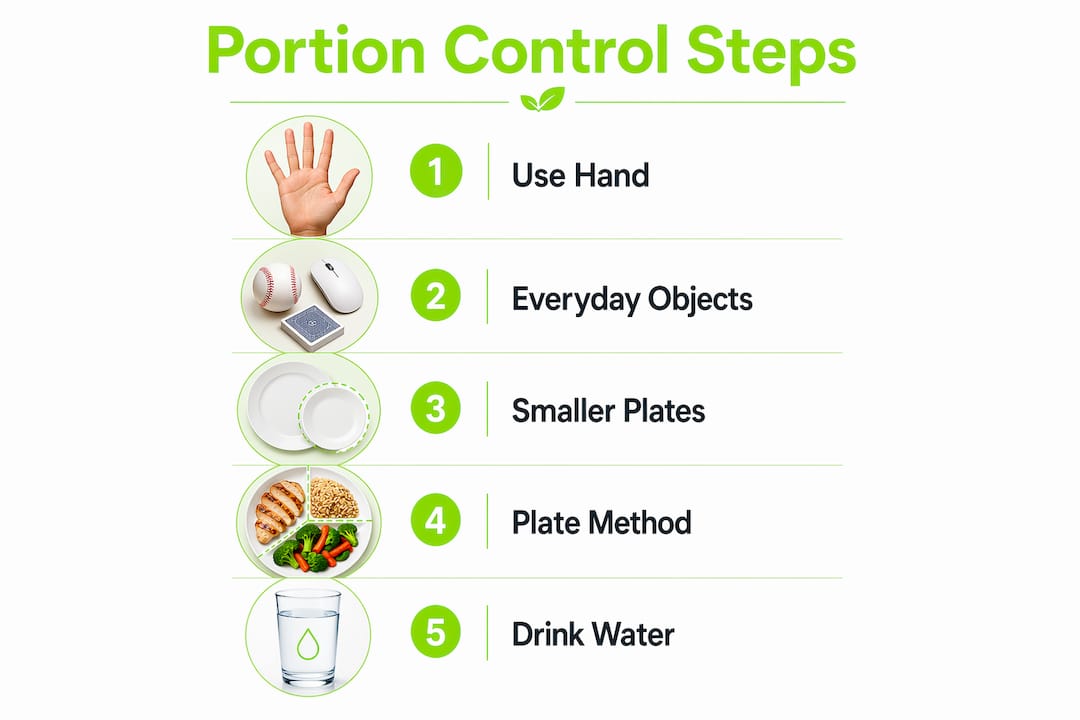
The most practical portion size guide starts with what you already carry everywhere: your hand. Your palm, fist, cupped hand, and thumb each correspond to a different food category, and they scale naturally with your body size. A palm-sized amount covers a protein serving like chicken or fish. A closed fist represents a vegetable or fruit portion. A cupped hand measures grains or legumes. Your thumb covers fats like nut butter or cheese.
For anyone who finds hand measurements abstract, everyday objects work just as well. Visual cues like a deck of cards represent a standard protein serving, while a baseball approximates one cup of vegetables or fruit. A golf ball equals roughly two tablespoons of nut butter. These comparisons are not perfect, but they are accurate enough to prevent the most common form of overeating: the gradual, unnoticed creep in serving size.
Here is a quick reference for healthy portion sizes across common food groups:
| Food type | Visual cue | Approximate amount |
|---|---|---|
| Lean protein (chicken, fish) | Deck of cards | 3 oz (85g) |
| Cooked grains or pasta | Tennis ball | 1/2 cup |
| Raw vegetables | Baseball | 1 cup |
| Fresh fruit | Baseball | 1 medium piece |
| Cheese | Four stacked dice | 1 oz (28g) |
| Oils or nut butter | Thumb tip | 1 tablespoon |
Pro Tip: Switch to a 9-inch plate instead of a standard 12-inch dinner plate. Research confirms that smaller plates retrain the brain to perceive smaller amounts as satisfying, which directly reduces how much you serve yourself without any conscious restriction.
The plate method, endorsed by the American Diabetes Association and widely used in clinical nutrition, divides your plate into half vegetables, one quarter protein, and one quarter grains. This structure removes the need for measuring tools entirely while keeping macros roughly balanced.
How to personalize your portions based on individual needs
Healthy portion sizes are highly individualized, meaning no single template applies to everyone. Standard dietary guidelines are built around 2,000 kcal per day for women and 2,500 kcal for men, but these are population averages. A 5’4" sedentary woman in her 50s and a 6’1" male construction worker have radically different calorie needs, even if they weigh the same.
Several factors determine your personal portion targets:
- Activity level. Someone who trains five days a week needs larger carbohydrate and protein portions than a desk worker with the same body weight.
- Body size and composition. Muscle mass increases calorie demand. Two people at the same weight but different body fat percentages need different portion sizes to maintain or lose weight.
- Age. Metabolic rate declines gradually with age, meaning portions that maintained your weight at 30 may cause slow gain by 45.
- Health goals. Weight loss, muscle gain, and maintenance each call for different calorie targets and, therefore, different portion sizes.
- Food quality. A cup of white rice and a cup of lentils are the same volume but deliver very different protein, fiber, and glycemic responses.
Food labels offer a useful starting point, but serving sizes on nutrition labels differ from the portion you actually consume. Use them as temporary calibration tools to reset your perception of what a standard amount looks like, not as a permanent tracking system.
The 80/20 rule is one of the most practical behavioral frameworks for sustainable diet portion management. Eighty percent of your intake comes from nutrient-dense whole foods. The remaining 20 percent allows for treats, social eating, and flexibility. This prevents the all-or-nothing thinking that derails most diet attempts. For a deeper look at how this fits into a balanced diet for adults, Dietium covers the full framework with practical meal examples.
Step-by-step methods to practice portion control daily
Consistent portion management depends less on willpower and more on your environment and routines. These steps build the habits that make correct portions feel automatic over time.
- Serve food before sitting down. Plate your meal in the kitchen, not at the table. Keeping serving dishes off the table removes the visual and physical cue to take more.
- Never eat directly from the package. Bags, boxes, and containers give no visual feedback on how much you have consumed. Pour a portion into a bowl or onto a plate first.
- Apply the 20-minute rule. Satiety signals take 15 to 20 minutes to register after eating begins. Eating slowly, putting your fork down between bites, and pausing mid-meal gives your brain time to catch up with your stomach.
- Pre-portion snacks immediately after grocery shopping. Divide bulk snacks into individual servings as soon as you get home. This one habit dramatically reduces impulse eating later in the week.
- Use mindful eating exercises before meals. A brief body scan, checking whether you feel physical hunger or emotional restlessness, helps you choose the right portion size before you start eating. Dietium’s guide to mindful eating exercises walks through this process step by step.
- Order strategically when eating out. Choose appetizer-sized portions as your main course, ask for a to-go box at the start of the meal, or split an entree. Dietium’s resource on eating out healthy covers this in detail for 2025 dining contexts.
- Meal prep two to three days in advance. Pre-cooked, pre-portioned meals remove the decision fatigue that leads to oversized servings at the end of a long day.
Pro Tip: Drink a full glass of water 15 minutes before each meal. Mild dehydration is frequently misread as hunger, and pre-meal hydration reduces the likelihood of overeating by helping you distinguish true appetite from thirst.
Common pitfalls that undermine portion control efforts
Portion distortion is the single most widespread barrier to effective food portion management. It occurs when large plates, oversized glasses, or restaurant servings reset your internal reference point for what a normal amount looks like. Studies confirm that visual perception effects from large dinnerware cause people to serve and eat more without realizing it. The fix is structural: swap large plates for smaller ones and use tall, narrow glasses instead of wide, short ones.
Several other common mistakes consistently derail progress:
- Confusing serving size with portion size. A serving size is a standardized unit printed on a food label. A portion is what you actually eat. A bag of chips labeled “serving size: 1 oz” may contain three servings, but most people eat the whole bag in one sitting.
- Eating while distracted. Ritualistic behaviors like eating in front of screens or while scrolling disconnect you from fullness cues. You finish the plate on autopilot, regardless of whether you were actually hungry.
- Plate-cleaning habits. Many adults were conditioned in childhood to finish everything on their plate. This habit overrides internal hunger signals and causes consistent overeating, especially when portions are already too large.
- Underestimating calorie-dense foods. Nuts, oils, avocado, and cheese are nutritious but calorie-dense. A “handful” of almonds can easily reach 300 calories. These foods require the most attention when managing food portions.
Pre-portioning snacks and freezing leftovers are two of the most effective environmental controls available. They remove the moment of decision entirely. When a single-serve container of leftovers comes out of the freezer, the portion is already set. Pair this with avoiding overeating naturally through smart meal planning, and you build a system that works even on your worst days.
Key takeaways
Effective portion management combines visual reference tools, personalized calorie targets, and environmental habits that remove the need for constant willpower.
| Point | Details |
|---|---|
| Use visual cues consistently | Hand measurements and everyday object comparisons give reliable estimates without a food scale. |
| Personalize your portions | Adjust serving sizes based on your activity level, body size, age, and specific health goals. |
| Slow down your eating pace | The 20-minute satiety delay means eating slowly prevents overeating before fullness registers. |
| Control your environment | Smaller plates, pre-portioned snacks, and no eating from packages reduce intake automatically. |
| Apply the 80/20 rule | Eighty percent nutrient-dense foods and 20 percent flexible choices builds sustainable habits. |
Why rigid portion rules usually backfire
I have watched a lot of people approach portion control the same way they approach a crash diet: with strict rules, precise measurements, and a plan that collapses the moment life gets complicated. The problem is not the goal. The problem is the method.
What actually works, in my experience, is building a system that requires as few conscious decisions as possible. The hand measurement method is not the most precise tool available, but it is the one people actually use six months later. A food scale sits in a drawer by week three. Your hand goes everywhere you go.
The other thing most articles miss is the emotional dimension. Mindful eating involves distinguishing physical hunger from emotional triggers, and that distinction changes everything. You can have the perfect portion on your plate and still overeat if you are eating to manage stress rather than satisfy hunger. The body scan practice, pausing before a meal to ask whether you are physically hungry or emotionally restless, sounds simple. It is also the step most people skip, and skipping it is why portions alone rarely solve the problem.
Start with one or two changes. Add a smaller plate. Pre-portion your snacks this weekend. Practice the 20-minute rule at dinner tonight. Build from there. Sustainable portion control is not a discipline you achieve once. It is a set of habits you layer in gradually until they stop feeling like effort.
— Srasti
Build on your portion habits with personalized meal planning
Getting your portions right is the foundation. Knowing exactly what to put on that plate, in amounts calibrated to your body and goals, is where real results come from. Dietium’s personalized diet plans take your calorie needs, food preferences, and health targets into account to build a meal structure that removes the guesswork entirely. The Recipians app pairs custom recipes with pre-set portion guidance, so every meal is already sized correctly before you start cooking. For anyone serious about portion sizes for weight loss, this is the most direct path from intention to consistent results.
FAQ
What is the difference between a portion size and a serving size?
A serving size is a standardized reference amount printed on a nutrition label. A portion size is the amount you actually choose to eat, which is often larger than the labeled serving.
How do I reduce portions without feeling hungry?
Fill half your plate with high-fiber vegetables, eat slowly to allow satiety signals to register, and drink water before meals. These three steps reduce calorie intake without increasing hunger.
Can I manage portions without measuring or weighing food?
Yes. Hand measurements and everyday object comparisons such as a deck of cards for protein or a baseball for vegetables provide reliable estimates that work consistently without any equipment.
How many calories should my portions add up to each day?
Standard guidelines suggest around 2,000 kcal per day for women and 2,500 kcal for men, but your actual target depends on your age, activity level, body size, and specific health goals.
Does plate size really affect how much I eat?
Yes. Smaller plates cause the brain to perceive smaller portions as more satisfying, which reduces how much you serve yourself and eat without requiring conscious restriction.


