 Skip to content

Facing the pull of late-night cravings or stress-driven snacking can feel frustrating when you are striving for manageable weight control. Unchecked emotions may trigger hidden eating patterns that sabotage your goals, as research shows these emotional triggers can push anyone toward overeating. For those eager to take control, this guide explores technology-driven meal planning strategies that combine mindful awareness with digital tools, helping you recognize eating cues and stay on track with simple, personalized changes.
Table of Contents
- Step 1: Assess Your Eating Triggers and Patterns
- Step 2: Set Personalized Meal Timings and Portions
- Step 3: Implement Technology-Driven Meal Planning
- Step 4: Practice Mindful Eating at Every Meal
- Step 5: Track Progress and Adjust Habits Regularly
Quick Summary
| Key Insight | Explanation |
|---|---|
| 1. Identify Your Eating Triggers | Track emotional states and situations that lead to overeating to create effective prevention strategies. |
| 2. Personalize Meal Timing and Portions | Customize your meal schedule and portion sizes based on your lifestyle, activity level, and nutritional needs. |
| 3. Utilize Technology for Meal Planning | Use apps and AI tools to track nutrition and automate meal planning for better dietary management. |
| 4. Practice Mindful Eating | Engage fully with your food by eating slowly and eliminating distractions to enhance meal satisfaction. |
| 5. Regularly Track and Adjust Habits | Monitor your eating habits consistently and make incremental adjustments to maintain success over time. |
Step 1: Assess Your Eating Triggers and Patterns
Understanding your eating triggers is the first critical step in developing a sustainable approach to managing food consumption. By identifying the underlying psychological and emotional factors driving your eating habits, you can create targeted strategies to prevent overeating.
Research reveals that emotional states significantly influence eating behaviors. Complex emotional eating patterns emerge from stress, academic pressures, and negative emotions, creating a cycle of disinhibited consumption. To break this cycle, start by tracking your eating patterns meticulously.
Here are key strategies to assess your eating triggers:
- Record emotional states before and after meals
- Note specific circumstances triggering unplanned eating
- Track stress levels and correlation with food intake
- Identify patterns of hedonic or comfort eating
Consider using a dedicated food and mood journal to document these insights. Look for recurring themes like:
- Stress-induced snacking during work hours
- Emotional eating after challenging interpersonal interactions
- Late-night consuming triggered by exhaustion
Awareness is the first step toward transforming your relationship with food.
By methodically documenting your eating behaviors, you’ll uncover nuanced insights into your unique consumption patterns.
Pro tip: Use a smartphone app or digital journal to track eating triggers consistently and identify subtle patterns that might otherwise go unnoticed.
Step 2: Set Personalized Meal Timings and Portions
Creating personalized meal timings and portions is crucial for preventing overeating and maintaining consistent energy levels throughout the day. Customizable meal planning strategies help individuals align their nutrition with their unique lifestyle and health goals.
To develop an effective meal timing and portion strategy, consider these key factors:
- Assess your daily activity level
- Evaluate your work schedule and energy requirements
- Understand your metabolic rate and nutritional needs
- Account for individual health conditions and fitness goals
Establish a structured approach to meal planning with these steps:
- Calculate your precise caloric needs based on age, weight, and activity
- Divide daily calories into balanced meal intervals
- Create portion sizes that match your energy expenditure
- Plan meals that provide consistent nutrition
Personalized nutrition is about matching your food intake to your body’s unique requirements.
Use visual cues like portion control plates or digital tracking apps to maintain consistency in your meal planning approach.

Pro tip: Invest in smaller plates and measure serving sizes to naturally control portion intake without feeling deprived.
Step 3: Implement Technology-Driven Meal Planning
Modern technology offers powerful solutions for managing eating habits and preventing overeating through intelligent, personalized nutrition strategies. AI-powered meal planning technologies are revolutionizing how individuals approach dietary management with precision and ease.
To effectively leverage technology for meal planning, consider these key digital tools and strategies:
- Smartphone nutrition tracking apps
- Digital food diary platforms
- AI-driven meal recommendation systems
- Automated portion control calculators
- Wearable fitness and nutrition integration devices
Implement your technology-driven meal planning approach through these steps:
- Select a comprehensive nutrition tracking app
- Input your personal health metrics and goals
- Enable automated meal recommendations
- Use real-time nutrition feedback features
- Connect fitness trackers for holistic insights
Technology transforms meal planning from guesswork to precision science.
These digital tools can help you understand your eating patterns, providing actionable insights that support natural weight management and prevent overconsumption.
Here’s a comparison of traditional vs technology-driven meal planning approaches:
| Approach | Key Features | Benefits | Challenges |
|---|---|---|---|
| Traditional Meal Planning | Manual journaling, paper | Personal reflection, familiarity | Time intensive, risk of error |
| Technology-Driven Planning | Apps, AI recommendations | Real-time insights, automation | Requires tech adoption, costs |
Pro tip: Choose nutrition apps with machine learning capabilities that adapt recommendations based on your ongoing progress and changing health parameters.
Step 4: Practice Mindful Eating at Every Meal
Mindful eating transforms your relationship with food from unconscious consumption to intentional nourishment. Mindful eating techniques help you develop a deeper awareness of your body’s hunger and fullness signals, preventing overeating naturally.
To practice mindful eating effectively, incorporate these key strategies:
- Eliminate digital distractions during meals
- Eat slowly and intentionally
- Engage all your senses while consuming food
- Pause between bites to assess hunger levels
- Practice non-judgmental food awareness
Implement mindful eating through these deliberate steps:
- Create a calm eating environment
- Take deep breaths before starting your meal
- Chew each bite thoroughly
- Put utensils down between bites
- Check in with your body’s hunger signals
True nourishment happens when you are fully present with your food.
By cultivating mindfulness, you learn to distinguish between physical hunger and emotional eating, giving you greater control over your dietary habits.
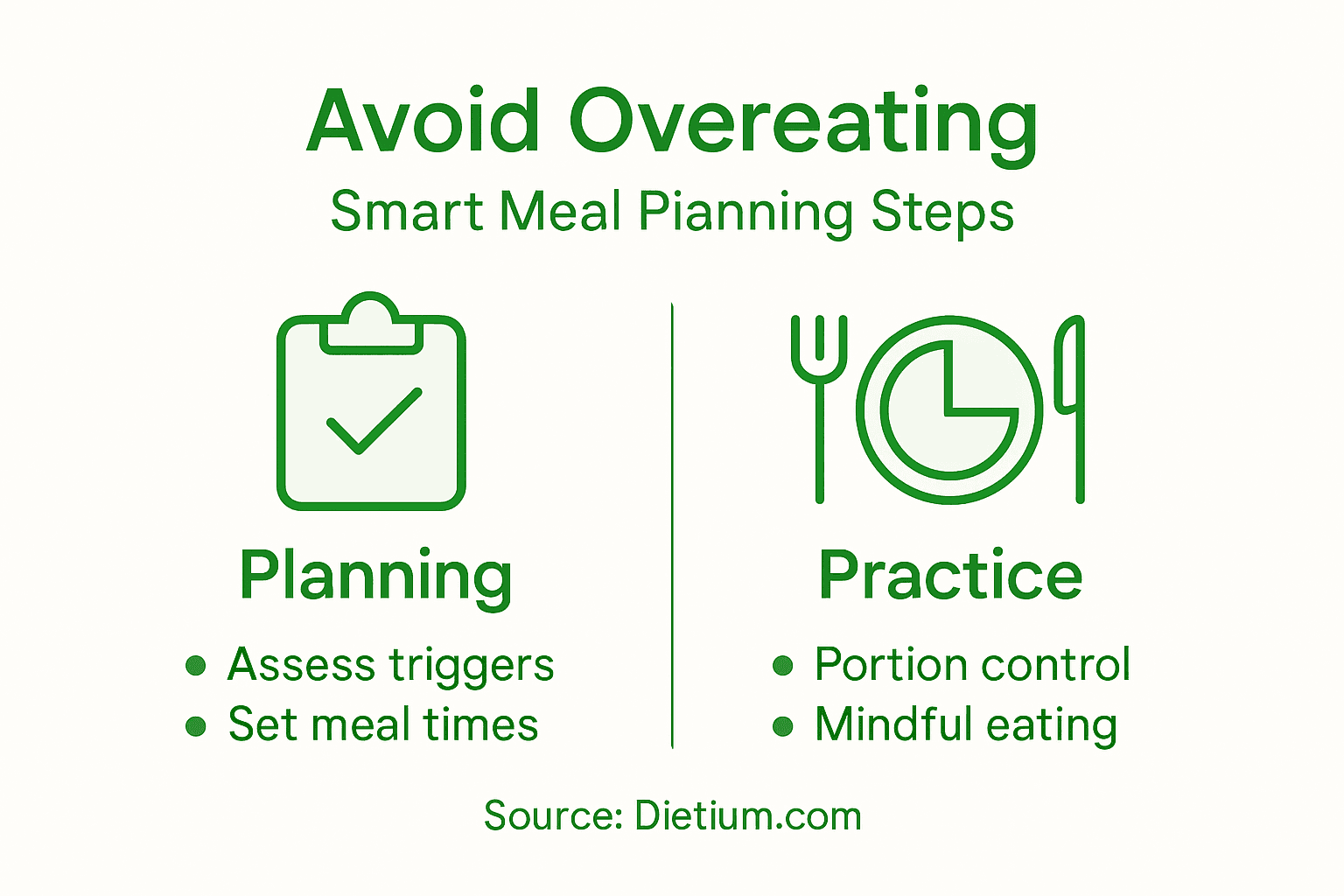
Below is a summary of mindful eating techniques and their potential effects:
| Technique | How to Practice | Expected Outcome |
|---|---|---|
| Eliminating distractions | Eat without screens or devices | Improved focus on food |
| Slowing the eating pace | Chew thoroughly, pause between bites | Enhanced meal satisfaction |
| Engaging the senses | Notice taste, smell, texture | Deeper awareness and enjoyment |
Pro tip: Use smaller plates and eat without screens to naturally slow down your eating pace and increase meal satisfaction.
Step 5: Track Progress and Adjust Habits Regularly
Consistent monitoring and data-driven adjustments are crucial for maintaining long-term success in managing your eating habits. Tracking dietary behavior patterns provides valuable insights into your nutritional journey and helps prevent overeating.
To effectively track and adjust your habits, implement these strategic approaches:
- Create a comprehensive progress tracking system
- Use digital food and fitness journals
- Measure body metrics consistently
- Record emotional and physical responses to meals
- Schedule regular self-assessment intervals
Follow these steps for systematic habit modification:
- Select reliable tracking tools
- Establish baseline measurements
- Set specific and measurable goals
- Review progress every two weeks
- Make incremental adjustments
Small consistent changes create lasting transformations.
Remember that tracking is not about perfection but about understanding your unique nutritional patterns and making informed decisions.
Pro tip: Use smartphone apps with data visualization features to make tracking more engaging and insightful.
Take Control of Overeating with Smart, Personalized Meal Planning
Struggling to break free from emotional eating or uncertain about how to set meal timings and portions tailored just for you Understanding your unique eating triggers and adopting mindful, consistent habits is key but can feel overwhelming without the right support. This article highlights the importance of targeted strategies and technology-driven tools to prevent overeating naturally by tracking behaviors and creating customized nutrition plans.
Dietium.com offers an innovative solution through the Recipians app that uses AI-powered meal planning tailored to your personal health metrics and lifestyle. With smart nutrition calculators, seamless tracking of body metrics, and real-time insights, you can transform guesswork into confident food choices that align perfectly with your goals. Take the guesswork out of portion control and meal timing and discover the power of mindful eating supported by expert guidance right at your fingertips.
Ready to turn knowledge into action and make lasting changes Start your personalized journey with Dietium today at https://dietium.com/recipians and embrace a natural, sustainable approach to smart meal planning. Your healthier lifestyle begins with one simple step.
Frequently Asked Questions
How can I identify my eating triggers?
Understanding your eating triggers involves tracking emotional states, circumstances, and stress levels related to food consumption. Start by keeping a food and mood journal to recognize patterns, such as stress-induced snacking after work.
What are effective strategies for planning my meals to prevent overeating?
To prevent overeating, create personalized meal timings and portion sizes that align with your activity level. Calculate your daily caloric needs and divide them into balanced meal intervals to ensure consistent energy throughout the day.
How can technology help me with meal planning to avoid overeating?
Technology can aid in meal planning by providing nutrition tracking apps and AI-driven meal recommendations. Select a comprehensive app, input your health metrics, and enable automated suggestions to streamline your planning process.
What are some mindful eating techniques I can practice?
Mindful eating techniques include eliminating distractions during meals, eating slowly, and engaging all your senses. Start by creating a calm eating environment and taking deep breaths before you begin your meal to enhance your awareness of hunger cues.
How should I track my progress in managing my eating habits?
To effectively track your progress, create a comprehensive system using digital food and fitness journals. Measure your body metrics and emotional responses to meals regularly, and review your progress every couple of weeks to make necessary adjustments.


