 Skip to content

Six lunch formats reliably deliver protein and fiber in a matter of minutes: the tinned-fish bowl, curried salmon rice salad, Greek lentil salad, Mediterranean chicken salad, chickpea mash sandwich, and quick pasta with vegetables. Three rules make them repeatable: build every meal around protein and fiber, rely on assembly over cooking, and keep a small set of versatile pantry staples stocked at all times.
- Tinned-fish bowl (5 minutes): canned fish over rice and greens, oil from the tin used as dressing. High-protein, zero cooking.
- Greek lentil salad (10 minutes): canned lentils, cucumber, olives, feta, store-bought Greek dressing. Keeps up to 4 days refrigerated.
- Curried salmon rice salad (8–10 minutes): microwavable brown rice, canned salmon, frozen vegetables, curry powder. Scales perfectly for batch prep.
- Mediterranean chicken salad (10 minutes): five ingredients, 3–4 days fridge life, customizable with whatever produce you have.
- Chickpea mash sandwich: canned chickpeas mashed with seasonings, spread on whole-grain bread. Assembly only, ready in minutes.
- Quick pasta with vegetables: cook pasta, use residual heat to warm frozen veg in the same pot. One pan, under 15 minutes.
Quick stat: A Greek lentil salad takes roughly 10 minutes to prep and stays fresh in the fridge for up to 4 days, making it one of the most efficient batch-prep lunches you can make.
Table of Contents
- Six easy lunch meals you can assemble in 5–15 minutes
- How to keep lunches fast without losing flavor or nutrition
- Batch prep, storage, and a sample 1-week lunch plan
- Simple portion rules for health-conscious lunches
- What to stock and which tools actually save you time
- How Dietium’s Recipians personalizes these lunches to your goals
- Key Takeaways
- Building an easy-lunch habit takes less than you think
- Dietium’s Recipians turns these lunches into a personalized weekly plan
- Sources and further reading
Six easy lunch meals you can assemble in 5–15 minutes
These recipes prioritize pantry ingredients and minimal steps. Each one works for quick and easy lunch recipes at home or packed for work.
1. Tinned-fish bowl
Time: A few minutes | Tag: High-protein, dairy-free
Ingredients: 1 can tinned fish (sardines, mackerel, or tuna), some cooked rice, mixed greens, salt, pepper.
- Warm the rice pouch.
- Spoon rice into a bowl, top with greens.
- Open the tin and lay fish over the greens.
- Drizzle the packing oil directly over the bowl as dressing.
- Season and serve.
Storage: Best eaten fresh. Refrigerate components separately to maintain freshness.
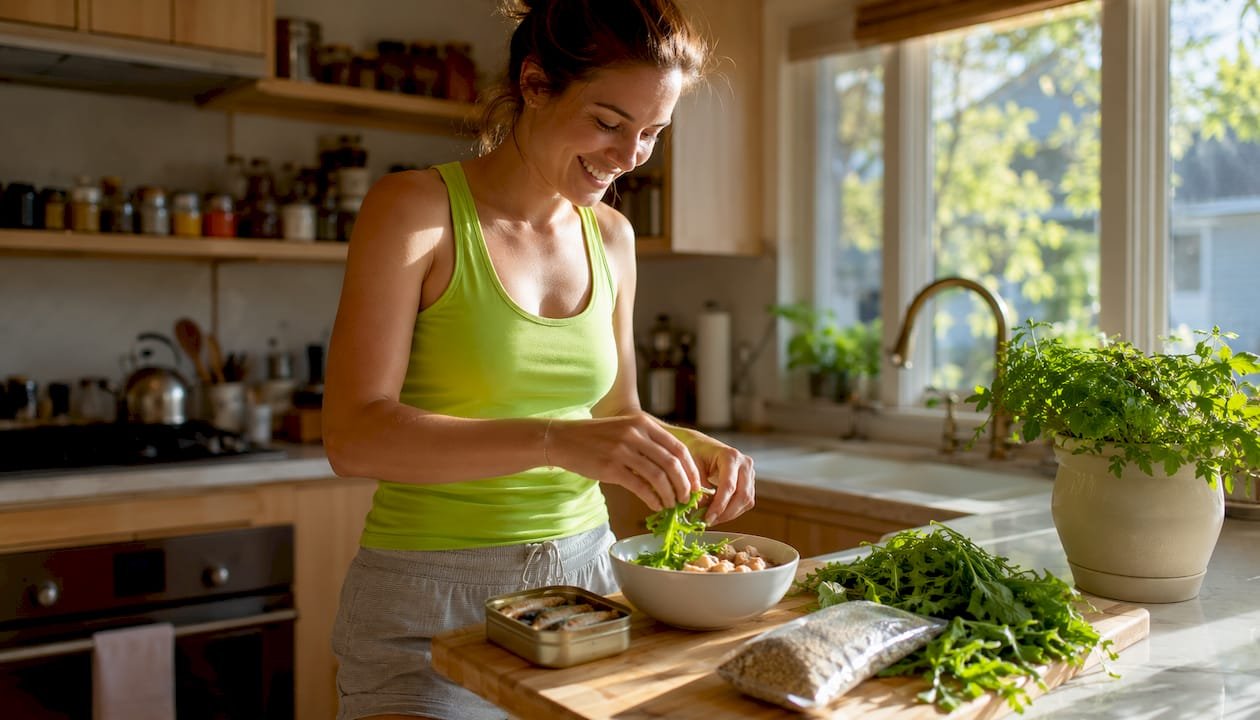
This 3-ingredient tinned-fish bowl is one of the fastest high-protein lunches available. The packing oil adds beneficial fats without an extra dressing step.
2. Curried salmon rice salad
Time: 8–10 minutes | Tag: High-protein, high-fiber
Ingredients: 1 can salmon, 1 microwavable brown rice pouch, ½ cup frozen vegetables, 1 tsp curry powder, 2 tbsp Greek yogurt.
- Microwave rice and frozen veg separately (2 minutes each).
- Drain and flake canned salmon into a bowl.
- Add rice, veg, curry powder, and Greek yogurt.
- Stir to combine and season to taste.
Storage: Refrigerate up to 3 days. Flavor improves overnight as spices meld.
This quick curried salmon salad uses pantry staples exclusively and scales well for a two- or three-day batch.
3. Greek lentil salad
Time: Around 10 minutes | Tag: High-fiber, vegetarian
Ingredients: canned lentils (drained), cucumber (diced), olives, feta, store-bought Greek dressing.
- Drain and rinse lentils.
- Dice cucumber, halve olives.
- Combine all ingredients in a bowl.
- Toss with dressing and serve.
Storage: Keeps refrigerated for multiple days. Add feta at serving to preserve texture.
4. Mediterranean chicken salad
Time: 10 minutes | Tag: High-protein, gluten-free option
Ingredients: 1 cup cooked or rotisserie chicken (shredded), ¼ cup cherry tomatoes, 2 tbsp olives, 1 tbsp olive oil, lemon juice, salt.
- Shred chicken into a bowl.
- Halve tomatoes, add olives.
- Dress with olive oil and a squeeze of lemon.
- Toss and serve over greens or in a wrap.
Storage: Fridge life 3–4 days. Keep dressing separate if prepping ahead.
5. Chickpea mash sandwich
Time: 5 minutes | Tag: High-fiber, vegetarian, no-cook
Ingredients: 1 can chickpeas (drained), 1 tbsp lemon juice, 1 tsp cumin, salt, 2 slices whole-grain bread, lettuce, tomato.
- Mash chickpeas with a fork until chunky.
- Stir in lemon juice, cumin, and salt.
- Spread onto bread, layer with lettuce and tomato.
Storage: Mash keeps 3 days refrigerated. Assemble at serving. This chickpea salad sandwich is a satisfying deli-meat alternative with zero cooking required.
6. Quick pasta with vegetables
Time: 12–15 minutes | Tag: High-fiber, customizable
Ingredients: 1 cup pasta, 1 cup frozen vegetables, 1 tbsp olive oil, garlic powder, Parmesan.
- Boil pasta per package directions.
- In the last 2 minutes, add frozen veg directly to the boiling water.
- Drain together, toss with olive oil and garlic powder.
- Top with Parmesan.
Storage: Refrigerate up to 3 days. Reheat with a splash of water to loosen.
Pro Tip: Add frozen veg to the pasta pot in the final 2 minutes of cooking. You save a pan, cut cleanup time, and the veg reaches the right texture without going mushy.
How to keep lunches fast without losing flavor or nutrition
The fastest lunches rely on smart pantry building and simple swaps rather than elaborate recipes.
Core pantry checklist:
- Canned legumes (chickpeas, lentils, black beans)
- Tinned fish (sardines, mackerel, salmon, tuna)
- Microwavable rice or grain pouches
- Greek yogurt (plain, full-fat or low-fat)
- Frozen vegetables (peas, edamame, mixed stir-fry)
- Whole-grain wraps or bread
- Olive oil, lemon juice, curry powder, cumin
Swap suggestions to tune macros without extra work:
- Mayo → Greek yogurt (cuts saturated fat, adds protein)
- Cooked chicken → canned salmon (faster, shelf-stable)
- Bread → lettuce cups or a bowl (lower carbs, more produce)
- White rice → microwavable brown rice (more fiber, same prep time)
Pro Tip: Store dressings and sauces in a separate small container when packing lunch. Add them at serving to keep greens crisp and grains from getting soggy.
For on-the-go packing, use a wide-mouth insulated jar for grain bowls and a divided container for salads. Crunchy raw vegetables (cucumber, bell pepper strips, radishes) should always go in last, added at serving time for maximum texture.
These assembly-based lunch strategies keep prep under 15 minutes while delivering the protein and fiber needed to sustain afternoon energy. For more ideas on time-efficient healthy meals, Dietium has a full resource library.
Batch prep, storage, and a sample 1-week lunch plan
One batch-cooking session on Sunday covers most of your week. Cook a large pot of brown rice and a batch of lentils or curried salmon salad, and you have the base for three to four lunches.
Sample 5-day plan:
- Monday: Curried salmon rice salad (batch-prepped Sunday)
- Tuesday: Greek lentil salad (batch-prepped Sunday)
- Wednesday: Mediterranean chicken salad (uses rotisserie chicken)
- Thursday: Tinned-fish bowl (assembled fresh, 5 minutes)
- Friday: Chickpea mash sandwich (assembled fresh)
Storage reference:
| Lunch type | Fridge life | Notes |
|---|---|---|
| Bean/lentil salads | Up to 4 days | Flavor improves over time; add fresh herbs at serving |
| Tinned-fish bowls | 1–2 days | Best fresh; store components separately |
| Cooked-grain bowls | 3–4 days | Reheat with a splash of water |
| Chicken salads | 3–4 days | Keep dressing separate until serving |
Food-safety rules:
- Refrigerate cooked food within 2 hours of preparation.
- Store lunches in airtight containers at or below 40°F.
- Reheat cooked grains and proteins to 165°F before eating.
- Discard anything left out for more than 2 hours.
Bean- and grain-based salads often taste better after a day in the fridge as dressings and spices meld together. Plan your weekly meal prep around this: make the lentil or curried salmon salad first, since both improve with time.
Simple portion rules for health-conscious lunches
Three rules cover most of what you need for a satisfying, goal-supporting lunch.
- Protein target: Aim for 20–30 g per meal. Canned salmon (one 5-oz can) delivers roughly 25 g. Canned lentils (½ cup) provide about 9 g, so pair them with Greek yogurt or feta to hit the range.
- Fiber target: Aim for 8–12 g. One cup of lentils provides close to 15 g. Whole-grain bread, frozen vegetables, and chickpeas all contribute meaningfully.
- Produce volume: Fill at least half your bowl or plate with vegetables or legumes before adding grains or protein.
Assembly lunches hit these targets reliably when you build them deliberately. A tinned-fish bowl with brown rice and greens, for example, covers protein and fiber without any cooking beyond a microwave.
To reduce calories, swap the grain base for extra greens. To increase carbs before a workout, double the rice portion. These small adjustments are exactly what logging your lunches enables: once you track a few meals, patterns emerge and swaps become automatic.
Pro Tip: Log your lunch macros for one week using a calorie tracker. You will quickly see which meals keep you full until dinner and which leave you reaching for snacks at 3 PM.
Tracking lunches also feeds AI personalization tools. When Dietium’s Recipians receives your logged data, it can auto-adjust future meal suggestions to close gaps in protein or fiber. For readers focused on weight management, Dietium’s simple lunch ideas for weight loss resource covers portion-specific strategies in more detail.
What to stock and which tools actually save you time
The right staples and a few basic tools eliminate most of the friction that makes people skip lunch prep.
Fridge staples: Greek yogurt, pre-washed salad greens, cooked rotisserie chicken, lemons, feta or Parmesan.
Pantry staples: Canned chickpeas, canned lentils, tinned fish (sardines, tuna, salmon), microwavable brown rice pouches, whole-grain wraps, olive oil, curry powder, cumin, garlic powder.
Freezer staples: Frozen mixed vegetables, frozen edamame, frozen cooked grains.
Tools worth having:
- Microwave-safe containers with lids: reheat and store in the same vessel.
- Wide-mouth insulated jars: keep grain bowls at the right temperature for hours.
- A sharp chef’s knife: halves prep time for any vegetable-heavy lunch.
- Reusable divided containers: keep dressings and crunchy toppings separate until you eat.
Pantry-first lunches cost significantly less than daily takeout. A can of salmon, a rice pouch, and frozen veg typically total under $3.00 per serving. For more on keeping costs down, Dietium’s meal planning on a budget resource has practical guidance.
How Dietium’s Recipians personalizes these lunches to your goals
The six lunches above work for most people. Recipians makes them work specifically for you.
Dietium’s Recipians app takes your calorie needs, macro targets, food preferences, and activity data, then auto-generates a weekly lunch plan with substitutions already built in. If your protein target is 30 g per meal, Recipians adjusts the salmon portion or adds a Greek yogurt side automatically. If you log a workout, the app recalculates your carb needs for that day.
Key features:
- Automated ingredient substitutions based on macro targets
- Calorie and macro tailoring per meal and per day
- Auto-generated grocery lists from your weekly plan
- Integration with real-time activity tracking
Three clear benefits for health-conscious readers:
- Save time: no manual calculation; the plan updates as your activity changes.
- Improve adherence: meals match your preferences, so you actually eat them.
- Measure progress: logged meals feed Dietium’s fitness tracking tools, connecting lunch choices to measurable outcomes.
Recipians connects your daily lunch choices to your actual health data, so every meal adjustment is grounded in your real calorie needs, not a generic template. Your data stays within your account and is used solely to generate your personalized plan.
For a deeper look at how AI-driven planning works, Dietium’s AI meal planning overview explains the logic behind automated substitutions and weekly plan generation.
Key Takeaways
The fastest path to consistent, healthy lunches is combining protein and fiber in assembly-first meals, keeping a small set of versatile pantry staples stocked, and using AI personalization to close the gap between a generic plan and your actual goals.
| Point | Details |
|---|---|
| Assembly beats cooking | Six lunches (tinned-fish bowl, lentil salad, chickpea mash, and others) are ready in 5–15 minutes with no or minimal cooking. |
| Protein + fiber rule | Target 20–30 g protein and 8–12 g fiber per lunch to sustain energy and reduce afternoon snacking. |
| Batch prep saves the week | One Sunday session (rice, lentils, or curried salmon) covers 3–4 lunches; bean and grain salads keep up to 4 days refrigerated. |
| Stock the right staples | Canned legumes, tinned fish, microwavable rice, Greek yogurt, and frozen veg are the five items that prevent skipped or scrounged lunches. |
| Dietium Recipians | Recipians auto-adjusts your weekly lunch plan to hit your protein and fiber targets, with grocery lists generated automatically. |
Building an easy-lunch habit takes less than you think
Most people overcomplicate the lunch problem. The evidence points in a clear direction: a small set of repeatable formats, built around protein and fiber, beats an elaborate weekly plan you abandon by Wednesday. Trying one new lunch format for two weeks, tracking how it affects your afternoon energy, and making one small swap based on what you observe is a more reliable path than overhauling your entire diet at once. The Greek lentil salad and the curried salmon rice salad are good starting points precisely because they improve with time in the fridge, which means the effort you put in on Sunday pays off through Friday. Personalization tools like Recipians accelerate this process by removing the guesswork from macro adjustments, but the habit itself starts with picking one format and repeating it.
Dietium’s Recipians turns these lunches into a personalized weekly plan
Knowing six great lunch formats is a solid start. Having a system that builds them into a weekly plan calibrated to your protein targets, tracks your progress, and updates when your activity changes is what makes the habit stick long-term.
Recipians generates a full week of personalized meal plans from your health data, auto-substitutes ingredients to meet your macro goals, and produces a ready-to-use grocery list. You do not need to calculate anything manually. If you hit a hard workout on Tuesday, the plan adjusts Wednesday’s lunch carbs automatically.
Dietium’s platform combines calorie calculators, real-time activity tracking, and chef video consultations in one place, so your lunch choices connect directly to your broader health goals. Start with a personalized diet assessment to see how Recipians maps your current habits to your targets and builds a plan from there.
Sources and further reading
- Greek Lentil Salad Recipe (5 Ingredients, 10 minutes) — Simply Recipes
- Quick Curried Salmon and Rice Salad (10 Minutes) — Simply Recipes
- Mediterranean Chicken Salad Recipe (5 Ingredients, 10 Minutes) — Simply Recipes
- The “So Delicious” 3-Ingredient Lunch I Make Between Meetings — The Kitchn
- Chickpea salad sandwich recipe — Wholesome Cove
- Lunch in 15: Quick & Easy Lunch Ideas — Getty Stewart
- The 10 Quick Lunch Recipes I Make When There’s No Time — Simply Recipes
- Why Fresh Prepared Food Matters for Your Health — Wild Foodz
- AI meal planning: smarter nutrition in 2026 — Dietium
- Personalized meal plans for every health goal — Dietium
- Fast lunch ideas for busy professionals — Dietium


