 Skip to content

Portion sizes on dinner plates have doubled in the last twenty years, and this shift is quietly making weight loss harder than ever. Many people struggle with knowing how much is too much, since food cues in restaurants and at home often lead to unintentional overeating. Understanding how portion control affects your calories and choices can help you break free from hidden traps. Discover practical ways to fine-tune your servings and make sustainable changes for lasting results.
Table of Contents
- Defining Portion Sizes For Weight Loss
- How Portion Sizes Affect Calorie Intake
- Comparing Portion Sizes Across Food Groups
- Practical Tools And Strategies For Control
- Common Mistakes And How To Avoid Them
Key Takeaways
| Point | Details |
|---|---|
| Understanding Portion Sizes | Portion sizes significantly impact energy intake and are crucial for effective weight management. Learn to differentiate between portion sizes and recommended serving sizes. |
| Impact of Portion Distortion | Larger portion sizes can lead to increased calorie consumption, with small increments translating to substantial caloric excess. Awareness of portion distortion is essential for controlling intake. |
| Practical Strategies for Control | Utilize tools like smaller plates and measuring containers to enhance portion control. Mindful eating practices and pre-portioned meals can also help maintain healthy habits. |
| Avoid Common Mistakes | Recognize psychological factors that may lead to overeating, such as eating from large packages or skipping meals. Addressing these behaviors can improve portion management and support weight loss efforts. |
Defining Portion Sizes for Weight Loss
Understanding portion sizes is critical for achieving successful weight loss. According to research from NCBI, portion sizes directly impact energy intake and play a significant role in managing dietary habits. A portion is essentially the amount of food you choose to eat at one time, which can vary dramatically from recommended serving sizes.
Portion sizes have undergone substantial changes over recent decades. Research indicates that portion distortion has become a widespread phenomenon, where consumers frequently consume significantly larger quantities than nutritional guidelines recommend. PubMed suggests this trend is driven by multiple factors including perceived value for money and gradual increases in restaurant and packaged food serving sizes.
To effectively manage portion sizes for weight loss, consider these key strategies:
- Use smaller plates to naturally limit food intake
- Measure ingredients using kitchen scales or measuring cups
- Learn to visually estimate appropriate portion sizes using hand measurements
- Practice mindful eating by consuming meals slowly and paying attention to hunger signals
Successful portion control isn’t about deprivation. Instead, it’s about understanding how much food your body genuinely needs while creating a sustainable approach to nutrition. With the weight loss calculator from Dietium, you can precisely determine your ideal caloric intake and portion sizes tailored to your specific health goals.
Remember: portion control is a skill that improves with practice. Start small, be consistent, and gradually develop a more intuitive understanding of appropriate food quantities for your body’s needs.
How Portion Sizes Affect Calorie Intake
Portion sizes have a profound impact on daily calorie intake, directly influencing weight management and overall nutritional balance. According to a comprehensive meta-analysis from PubMed, reducing food portion sizes can lead to significant reductions in daily energy intake, making it a powerful strategy for preventing weight gain and managing body composition.
The relationship between portion size and calorie consumption is more complex than many realize. PubMed research demonstrates that larger portion sizes consistently increase energy intake among adults, creating a direct correlation between serving size and total calories consumed. This phenomenon, often called portion distortion, means that even seemingly small increases in portion sizes can translate to substantial caloric differences over time.
To understand how portion sizes affect calorie intake, consider these critical insights:
- A 10% increase in portion size can lead to a 10-20% increase in total calorie consumption
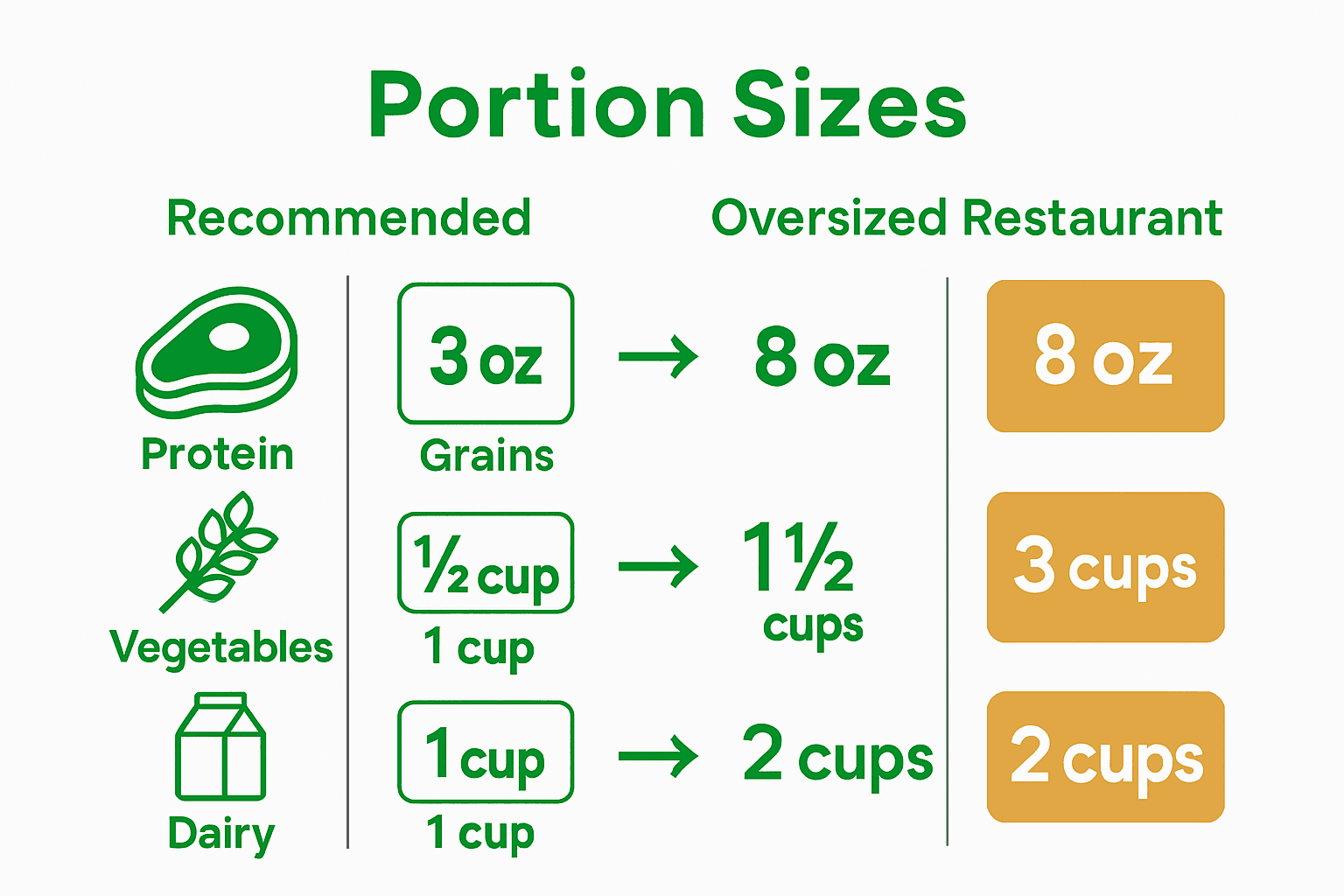
- Restaurant and pre-packaged meals often provide portions 2-3 times larger than recommended serving sizes
- Visual cues and plate size significantly influence perceived appropriate portion sizes
- Consuming larger portions becomes a learned behavior that can be gradually unlearned
For precise tracking of how portion sizes impact your specific dietary needs, the benefits of tracking calories guide offers comprehensive strategies to monitor and adjust your nutritional intake effectively.
Mastering portion control is a nuanced skill that requires consistent practice and awareness. By understanding the direct relationship between portion sizes and calorie intake, you can make more informed dietary choices that support your weight management goals.
Comparing Portion Sizes Across Food Groups
Understanding portion sizes requires a nuanced approach across different food groups. A fascinating long-term study from PubMed analyzing Danish cookbook recipes revealed significant increases in portion sizes over 100 years, highlighting how dietary serving sizes have dramatically transformed across various food categories.
Portion sizes vary dramatically between different food groups, each requiring a unique approach to measurement and management. Protein sources, such as meats and legumes, typically have smaller recommended portions compared to vegetables, while carbohydrate-rich foods like grains and pasta often require more precise portion control. Understanding these differences is crucial for maintaining balanced nutritional intake and supporting weight loss goals.
Here’s a comprehensive breakdown of recommended portion sizes across key food groups:
- Proteins: 3-4 ounces (about the size of a deck of cards)
- Vegetables: 1-2 cups of raw or cooked vegetables
- Fruits: 1 medium whole fruit or 1/2 cup of chopped fruit
- Grains: 1/2-1 cup of cooked rice, pasta, or grains
- Dairy: 1 cup of milk or yogurt, 1.5 ounces of cheese
To simplify your portion measurement process, the recipe conversion calculator can help you accurately translate measurements across different units.
Mastering portion sizes across food groups is not about restriction, but about creating a balanced and sustainable approach to nutrition. By understanding the unique characteristics of each food group and practicing mindful portioning, you can develop a more intuitive relationship with your dietary intake.

Practical Tools and Strategies for Control
Controlling portion sizes requires more than good intentions. According to research from EDIS, implementing practical strategies can dramatically improve your ability to manage food intake and support weight loss goals. Portion control is fundamentally about creating an environment and mindset that naturally guides healthier eating habits.
Several evidence-based techniques can help transform your approach to portion management. Visual cues play a critical role in perception, which means strategies like using smaller plates, pre-portioning meals, and understanding portion distortion can significantly impact how much you consume. By deliberately designing your eating environment and developing mindful habits, you can make portion control feel less like a struggle and more like a natural part of your lifestyle.
Here are practical tools and strategies to master portion control:
- Use smaller dinner plates (9-10 inches instead of 12-inch plates)
- Invest in portion control containers or measuring tools
- Practice the “hand method” for estimating serving sizes
- Pre-portion snacks into individual containers
- Learn to read and understand nutrition labels carefully
For precise tracking of your nutritional intake, the healthy grocery shopping tips guide offers comprehensive strategies to make informed food choices that support portion management.
Remember, portion control is a skill that improves with consistent practice. Start small, be patient with yourself, and gradually develop a more intuitive understanding of appropriate food quantities for your body’s unique needs.
Common Mistakes and How to Avoid Them
Portion control is fraught with subtle pitfalls that can derail even the most well-intentioned weight loss efforts. Research from Nutrition Journal highlights a critical challenge: many individuals struggle to feel satisfied when portion sizes are reduced, which can lead to unintended compensatory overeating. Psychological perception plays a significant role in how we experience food intake.
Another fascinating insight comes from International Journal of Behavioral Nutrition and Physical Activity, which reveals that portion size dissatisfaction can trigger counterproductive eating behaviors. When people feel their portions are too small, they may unconsciously seek additional food or snacks to feel satiated, undermining their weight management goals.
Common portion control mistakes to watch out for include:
- Eating directly from large packages or containers
- Skipping meals and then overeating later
- Misunderstanding serving sizes on nutrition labels
- Using oversized plates and utensils
- Emotional or mindless eating without paying attention to hunger cues
- Drinking calories through sugary beverages or alcohol
To develop more precise nutritional tracking skills, explore the healthy grocery shopping tips guide for strategies that support mindful eating and portion management.
Mastering portion control is a journey of self-awareness. Recognize that perfection isn’t the goal—consistent, incremental improvements are what truly transform your relationship with food.
Take Control of Your Portions with Personalized Support
Struggling to master portion sizes can feel overwhelming but it does not have to hold you back from reaching your weight loss goals. This guide highlighted key challenges like portion distortion and the emotional hurdles that come with feeling unsatisfied by smaller servings. You deserve an approach that understands your unique needs while providing practical, science-backed methods to regain control over your eating habits.
Dietium.com offers the perfect solution with its powerful Recipians app that delivers customized meal plans and recipe suggestions tailored exactly to your calorie requirements and portion goals. Start tracking your progress with our weight loss calculator and enhance your journey by learning to manage your intake with helpful tools like the recipe conversion calculator. Take advantage of expert guidance, quick integration with your devices, and real-time support that makes portion control achievable and sustainable.
Don’t let confusing portion sizes slow you down. Visit Dietium’s Recipians now and empower yourself to develop healthier eating habits that last. Your weight loss success begins with smarter portions and personalized planning available at your fingertips.
Frequently Asked Questions
How can portion sizes affect my weight loss efforts?
Understanding and managing portion sizes can help control calorie intake, which is crucial for weight loss. Larger portions often lead to increased calorie consumption, while reducing portion sizes can significantly lower daily energy intake and support weight management.
What are some effective strategies for managing portion sizes?
Effective strategies include using smaller plates, measuring ingredients, learning to estimate portion sizes using hand measurements, and practicing mindful eating. These techniques can help you naturally limit food intake and make healthier choices.
How do portion sizes vary between different food groups?
Portion sizes differ across food groups, with proteins generally having smaller recommended portions compared to carbohydrates. For example, a protein portion is typically 3-4 ounces, while grains may be 1/2-1 cup of cooked rice or pasta. Understanding these differences is crucial for balanced nutrition.
What common mistakes should I avoid in portion control?
Common mistakes include eating directly from large packages, skipping meals, misunderstanding serving sizes on nutrition labels, and emotional eating. Being aware of these pitfalls can help you develop better portion control habits.


