 Skip to content

TL;DR:
- Evidence-based meal plans use scientific research, personalization, and flexibility for sustainable results.
- Creating a moderate calorie deficit with nutrient-rich foods and behavioral support is key.
- Technology can enhance adherence and personalization but is not essential for success.
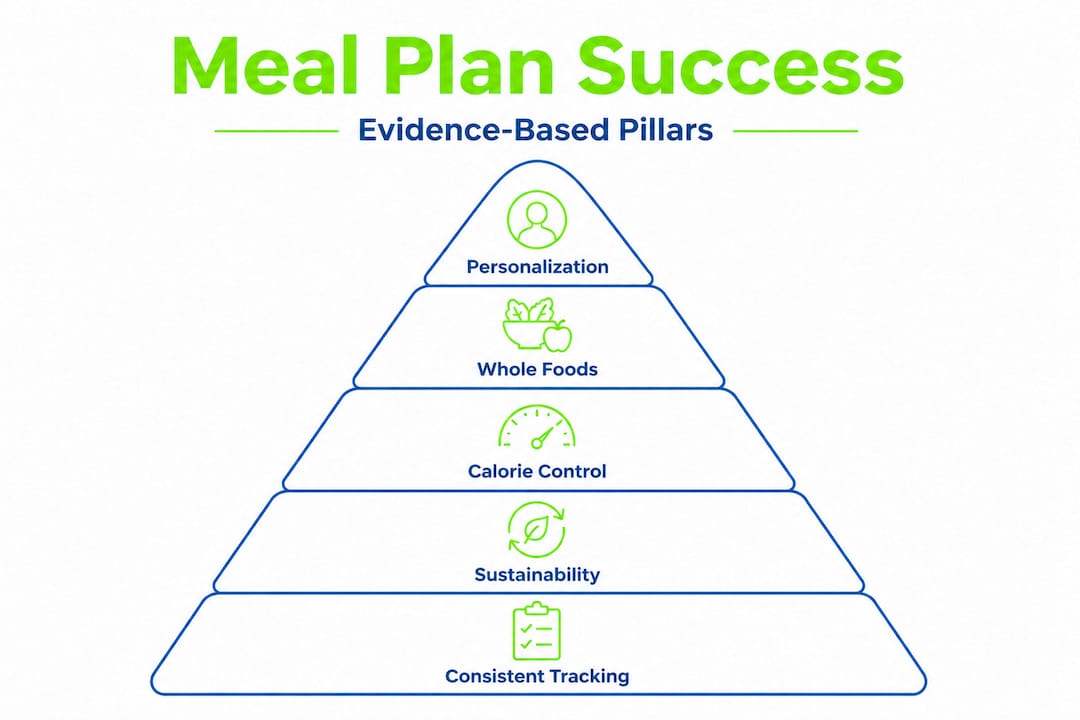
Most people assume that a stricter meal plan equals better results. Cut more calories, eliminate entire food groups, and follow rigid rules until the weight comes off. That approach sounds logical, but research consistently shows it often backfires. Rigid, restrictive diets are harder to maintain and less effective over time than flexible, personalized strategies grounded in actual science. Evidence-based meal planning takes a different route: it uses clinical research, your personal data, and adaptable strategies to build eating habits you can realistically sustain and actually enjoy.
Table of Contents
- What makes a meal plan evidence-based?
- The science behind weight management meal plans
- Personalization: How evidence meets your unique needs
- The role of technology in evidence-based meal planning
- Pitfalls and limitations: What the research really shows
- Our take: What most people miss about evidence-based meal plans
- Get started: Personalized evidence-based meal plans with Dietium
- Frequently asked questions
Key Takeaways
| Point | Details |
|---|---|
| Flexible approach wins | Personalized meal plans grounded in evidence support better adherence and long-term results than rigid diets. |
| Science-backed structure | Successful plans combine a calorie target, nutrient-dense foods, flexibility, and behavioral support. |
| Tech boosts success | Apps and trackers can enhance personalization and adherence when used strategically. |
| Set realistic expectations | Not every meal plan yields dramatic results for all health outcomes—focus on sustainable improvement. |
What makes a meal plan evidence-based?
“Evidence-based” is a term used a lot in health circles, but it has a precise meaning. A meal plan is evidence-based when it is designed around findings from peer-reviewed research and established clinical guidelines, not trends, testimonials, or marketing claims. The reason meal planning matters so much for long-term health is that structure and intention consistently outperform reactive, unplanned eating.
The NICE guidance on overweight and obesity management is clear: evidence-based meal planning is about sustained energy deficit and flexible, individualized dietary patterns, not extreme restriction. That distinction separates science-backed plans from most fad diets.
Core elements of an evidence-based meal plan:
- Sustained energy deficit: A moderate calorie reduction maintained over time, not a crash.
- Nutrient density: Prioritizing foods rich in fiber, protein, vitamins, and minerals per calorie.
- Individualization: Adjusting for cultural preferences, food access, medical conditions, and personal goals.
- Behavioral support: Regular check-ins, feedback loops, and accountability mechanisms.
- Flexibility: Allowing for real-life variation without derailing progress.
Here is how evidence-based plans compare to typical fad diets:
| Feature | Evidence-based plan | Fad diet |
|---|---|---|
| Foundation | Peer-reviewed research | Anecdote or trend |
| Calorie approach | Moderate, sustained deficit | Severe restriction |
| Flexibility | High | Low |
| Personalization | Built in | Generic |
| Long-term adherence | Strong | Poor |
| Behavioral support | Included | Rarely present |
“Evidence-based meal planning is not about eating perfectly every day. It’s about building a pattern you can sustain across weeks, months, and years.”
A key benchmark: an effective evidence-based plan sets a realistic calorie target, emphasizes whole and minimally processed foods, and includes regular reassessment. No elimination of entire food groups without medical necessity. No unsupported “detox” protocols. Just measurable, reproducible strategies that work across diverse populations.
The science behind weight management meal plans
With a clear definition in place, let’s dig into the scientific foundations of how meal plans support weight management and health.
Weight loss at its core requires an energy deficit, meaning you consume fewer calories than your body burns. That is not a controversial claim. What the research adds is critical nuance: how you create that deficit matters enormously for sustainability, metabolic health, and long-term outcomes.
The American Diabetes Association (ADA) recommends a 500 to 750 kcal per day deficit and at least 16 counseling sessions in the first six months for structured weight loss in people with diabetes or obesity. That level of support is not incidental. It reflects how strongly adherence and accountability drive real results.
The ADA benchmark also highlights a key outcome: achieving a 5 to 7% body weight reduction significantly improves blood sugar control and cardiovascular risk factors. This is not a cosmetic target. It is a clinically meaningful threshold with measurable effects on health.
Steps to build a structured, evidence-based meal plan:
- Calculate your baseline: Use your total daily energy expenditure (TDEE) to find your maintenance calories.
- Set a moderate deficit: Aim for 500 to 750 kcal below maintenance, not more.
- Choose a dietary pattern: Mediterranean, DASH, or a balanced macronutrient distribution all have research support.
- Plan meals in advance: Structure weekly menus to reduce decision fatigue and impulsive eating.
- Track your intake: Use a food log or app to monitor calories and macronutrients (proteins, fats, carbohydrates).
- Schedule regular reviews: Reassess every 4 to 6 weeks and adjust based on results and how you feel.
- Add behavioral support: Consult a registered dietitian or use a digital coaching tool regularly.
Pro Tip: Start by tracking your current intake for just one week before changing anything. Knowing your real baseline is more valuable than guessing, and it makes every subsequent adjustment far more targeted.
Reaching the 5 to 7% weight loss threshold in the first three to six months is associated with reduced blood pressure, lower fasting blood glucose, improved lipid profiles, and reduced inflammation. These are not minor benefits. They directly lower the risk of type 2 diabetes, cardiovascular disease, and metabolic syndrome.

Personalization: How evidence meets your unique needs
While general science gives us a foundation, the impact often increases when meal plans are tailored to the individual. Let’s look at how that works in practice.
No two people respond identically to the same meal plan. Your meal plan for every health goal should account for your food preferences, cultural background, metabolic rate, medical history, and lifestyle demands. These are not optional extras. They are the variables that determine whether a plan is one you will actually follow.
A review of personalized nutrition approaches found that personalized nutrition can improve short-term metabolic outcomes, though results for weight loss and blood pressure vary and depend heavily on the level of support and adherence. In other words, personalization is most powerful when it is paired with consistent follow-through and qualified guidance.
What effective personalization looks like:
- Food preferences and intolerances: Building meals around foods you genuinely like improves adherence. Avoiding foods that cause discomfort or allergic reactions is essential for safety and consistency.
- Cultural food traditions: Incorporating culturally familiar ingredients makes a plan realistic and respectful. A plan that ignores your food culture is one you are unlikely to follow long term.
- Medical conditions: Conditions like type 2 diabetes, kidney disease, or irritable bowel syndrome require specific nutrient targets. A one-size-fits-all plan can be inappropriate or even harmful here.
- Tracked metrics: BMI, body fat percentage, waist circumference, fasting glucose, and blood pressure all inform how aggressive your calorie deficit should be and which nutrients to prioritize.
- Activity level and schedule: A person who trains five days a week needs a very different macronutrient distribution than someone who is mostly sedentary.
“Personalization is not about having unlimited food choices. It’s about making strategic choices that fit your biology, culture, and daily life.”
One important nuance: personalization does not automatically translate to greater weight loss for everyone. The research is clear that its strongest benefits are in dietary quality improvement and metabolic marker optimization, such as better blood glucose control or reduced triglycerides. Weight loss outcomes are more variable. Setting that expectation clearly from the start keeps you motivated when the scale moves slower than expected.
Pro Tip: When working with a dietitian or app, provide as much specific information as possible: not just your goal weight, but your cooking habits, the foods you genuinely dislike, your work schedule, and any health conditions. The more precise your input, the more accurate and useful your plan becomes.
The role of technology in evidence-based meal planning
Applying personalization at scale sounds complex, but technology now makes high-level support practical for nearly everyone.
Digital tools have genuinely changed what is possible in meal planning. Apps that track calories and macros, AI-driven meal planners that adjust recommendations in real time, and continuous glucose monitors (CGMs) that show how your blood sugar responds to specific foods are all tools that were inaccessible or prohibitively expensive just a decade ago.
A review of mHealth and CGM-integrated tools confirms that digital and personalized tools can improve dietary quality and short-term outcomes, with major benefits depending on overall program structure and user adherence. Technology amplifies a good plan. It cannot replace one.
Outcomes with digital vs. standard meal planning:
| Outcome | Digital meal planning | Standard meal planning |
|---|---|---|
| Dietary quality improvement | Higher | Moderate |
| Calorie tracking accuracy | Higher | Lower |
| Behavioral support frequency | On-demand | Scheduled only |
| Real-time adjustments | Yes | No |
| Cost | Variable | Often lower |
| Adherence over 6 months | Higher with coaching | Lower without |
Steps to use technology effectively in your meal plan:
- Choose an app that tracks macros, not just calories. Protein, carbohydrate, and fat ratios matter as much as total energy intake.
- Integrate wearable data. Syncing step counts and heart rate data with your meal planner helps calibrate your true calorie needs.
- Use AI meal suggestions as a starting point. Adjust them based on what you have at home and what sounds appealing. Learn about AI meal planning insights to see how these tools are evolving.
- Review your data weekly. Look for patterns: which meals keep you full longest, which days you tend to overeat, and what time of day your energy dips.
- Don’t let perfect data become a barrier. If tracking every meal feels overwhelming, start by logging just dinners. Any data is better than none.
You can also streamline meal prepping with technology using tools that generate weekly grocery lists, batch cooking schedules, and portion guides automatically. These features reduce the friction that causes most people to abandon their plans by week three.
One common pitfall: over-relying on apps to make decisions for you. Technology tracks and suggests. You still need to understand why certain foods fit your plan and which recommendations align with your actual health status. Use personalized meal plan tools as a support system, not a substitute for understanding your own nutrition.
Pitfalls and limitations: What the research really shows
Even with all the advantages of modern, evidence-based meal planning, a clear-eyed view of what these methods can and cannot do is essential.
The science on evidence-based and personalized meal planning is compelling, but it is not without limits. Understanding those limits helps you set realistic goals and avoid frustration when results do not match expectations from a magazine cover or a social media post.
Key limitations to understand:
- Not all biomarkers improve equally. Some studies show strong improvements in blood glucose and dietary quality but minimal changes in blood pressure or cholesterol for certain individuals.
- Adherence is the biggest variable. The best-designed plan in the world produces no benefit if it is not followed consistently over time.
- Short-term studies dominate the research. Most clinical trials run for 3 to 12 months. Long-term data beyond two years is less robust for most dietary interventions.
- Weight loss results vary widely. Even in well-controlled studies, individual responses to the same calorie deficit range from minimal to substantial based on genetics, gut microbiome composition, sleep quality, and stress levels.
- Medically tailored meals have specific boundaries. A pragmatic RCT (NOURISH) found that medically tailored meals did not reduce all-cause hospitalizations at 90 days in high-risk groups, showing that even precisely designed meal interventions have clear limits.
“Evidence-based does not mean guaranteed. It means the probability of success is higher, the risks are lower, and the approach is grounded in the best available data.”
Medically tailored approaches are most effective when the target outcome is directly food-related, such as blood glucose management in diabetes or sodium reduction in hypertension. They are less effective as standalone interventions for complex, multi-factor outcomes like reducing hospitalizations in people with multiple chronic conditions.
The practical takeaway: use evidence-based meal planning as a high-quality foundation, stay realistic about timelines, track specific markers rather than relying solely on the scale, and adjust your approach based on your actual results.
Our take: What most people miss about evidence-based meal plans
Most articles stop at presenting the research. Here is what the data and real-world experience together actually suggest.
The research is genuinely strong. But the gap between knowing what works and consistently doing it is where most people get stuck. Chasing the “perfect” plan is one of the most common and costly mistakes. People spend weeks researching meal plans, comparing approaches, and optimizing macros, then abandon everything by week four because life interrupted the plan.
The irony is that any evidence-based plan you can realistically follow for six months will outperform a technically superior plan you quit after three weeks. Consistency and custom meal plan benefits compound over time. Perfection does not.
Personalization pays off most in diet quality and long-term enjoyment, not in dramatic short-term weight loss. The people who report the biggest life changes from structured meal planning often describe it this way: they stopped dreading mealtimes, started cooking foods they actually liked, and gradually built habits that fit their life. The weight change came with it, but it was not the headline.
Progress over perfection is not a motivational slogan here. It is a practical instruction. Collect your data, identify what is working, adjust what is not, and keep going. That feedback loop is more powerful than any single dietary protocol.
Get started: Personalized evidence-based meal plans with Dietium
Ready to turn science into action? Dietium brings together everything covered in this article into one practical platform. Start with personalized meal plans built around your goals, health status, and food preferences, all grounded in evidence-based nutrition principles. Use Dietium’s suite of calculators to assess your BMI, body fat percentage, and calorie needs with precision. Explore meal plan personalization options that adapt to your medical conditions, fitness routine, and lifestyle. And if you want to start from a solid baseline, Dietium’s nutritional assessment methods give you the data foundation every effective plan requires. The next step is simpler than you think.
Frequently asked questions
How do evidence-based meal plans differ from fad diets?
Evidence-based meal plans are built on scientific research, focusing on nutrient quality, calorie control, and personalization, unlike fad diets which are often restrictive and lack supporting evidence. The key difference is flexibility and scientific grounding versus short-term, unsupported restriction.
What results can I expect from a personalized meal plan?
Most people see improvements in diet quality, metabolic markers, and sustainable weight management, but individual outcomes depend on adherence and personal factors. Personalized nutrition often improves diet quality and metabolic health, with variable effects on weight loss across individuals.
Is technology necessary for following an evidence-based meal plan?
Technology is not required, but apps and trackers make it easier to personalize your intake, monitor progress, and stay consistent with evidence-based strategies. Digital tools can enhance personalization and tracking, supporting better adherence over time.
Do medically tailored meal plans always improve health outcomes?
Not always. Some studies show benefits for specific conditions, but medically tailored meals did not reduce all-cause hospitalizations at 90 days in high-risk groups. Results depend on the population studied and the specific outcome being measured.
Recommended
- Eco-Friendly Meal Planning: Eat Well, Lower Your Impact – Dietium
- Meal Plan for Weight Maintenance: Achieve Your Goals – Dietium
- Personalized Meal Plans for Every Health Goal – Dietium
- Top Tips for Sustainable Weight Loss: A Complete Guide – Dietium
- Nutrition and OBSP: Brampton’s Guide to a Healthy Diet – Valence Medical Imaging
- Why Choose Plant-Based Supplements: Wellness Impact – Vitaminone.dk


