 Skip to content

TL;DR:
- Effective wellness tracking emphasizes strategic data use supported by intuition to prevent stress and obsession.
- Choosing relevant, goal-specific metrics and reviewing trends weekly fosters sustainable health habits.
- Technology enhances tracking but should supplement self-awareness, with flexible routines to avoid burnout.
Tracking every calorie, step, and sleep cycle sounds like the fast track to peak health. But for many people, piling on metrics creates more stress than progress. The real advantage goes to those who track strategically, using the right data at the right frequency, supported by smart tools. This guide walks you through the science of effective wellness tracking, the real value of AI-powered apps and wearables, and how to build habits that improve your nutrition, fitness, and overall well-being without burning out or losing trust in your own body.
Table of Contents
- Why wellness tracking works—and where it can fail
- Choosing smart metrics: What (and how much) to track for results
- Harnessing technology: The rise of AI, apps, and wearables
- Building sustainable tracking habits that stick
- A smarter approach: Why balance beats obsession every time
- Ready to take the next step? Personalize your wellness journey
- Frequently asked questions
Key Takeaways
| Point | Details |
|---|---|
| Track what matters | Focus on a handful of high-impact wellness metrics tailored to your personal goals. |
| Balance tracking and intuition | Let tech tools guide your habits, but never ignore body signals or mental wellness. |
| Short periods, big insights | Tracking for just a few days gives meaningful feedback for nutrition and fitness adjustments. |
| Tech is a tool, not a crutch | Use wearables and apps to spot trends, but avoid obsessing over every glitch or data point. |
Why wellness tracking works—and where it can fail
With a clear understanding of common misconceptions, we can explore what science says about effective wellness tracking.
Tracking works because it creates accountability. When you log meals, monitor steps, or record sleep, you convert vague intentions into concrete data. That data shows patterns. Patterns point to changes. This feedback loop is powerful, and research consistently links fitness tracking benefits to improved motivation and goal adherence in both beginner and experienced exercisers.
But there is a point where tracking flips from helpful to harmful. The problem is not tracking itself. It is tracking without boundaries.
“Over-tracking carries real risks: obsessive behavior, orthosomnia (anxiety about sleep data), and a gradual erosion of the body trust that supports long-term health.” Source
When numbers replace intuition entirely, you stop listening to your body and start obeying an app. That shift can fuel anxiety, disordered eating patterns, and rigidity around food and exercise. Research published in Frontiers in Nutrition found that calorie tracking is associated with a drive for thinness and functional impairment in certain individuals, especially those already prone to food-related anxiety.
Signs tracking is helping you:
- You notice useful patterns (poor sleep after late meals, energy dips on low-protein days)
- Logging feels neutral, not stressful
- Data informs decisions without dominating them
- You feel more confident, not more anxious
Signs tracking may be hurting:
- You feel guilty skipping a day of logging
- You obsess over small fluctuations in weight or sleep scores
- You cancel social plans to avoid “off-plan” meals
- You feel less in tune with hunger and fullness cues
Pro Tip: Schedule one day per week without logging. Use that day to practice eating according to hunger and fullness cues. This reinforces the intuition that makes data more useful, not less.
The healthiest trackers use data as a guide, not a rulebook. Subjective signals (energy, mood, digestion, motivation) are valid metrics too. Building in space for these alongside your numbers creates a fuller and more sustainable picture of health.
Choosing smart metrics: What (and how much) to track for results
Once you know the psychological pros and cons, the next step is choosing the right metrics to track for real, lasting progress.
Not all metrics are created equal. Steps, for example, are easy to count and highly motivating, but they do not tell the whole story of fitness. Heart rate variability (HRV), a measure of nervous system recovery, offers deeper insight but requires context to interpret correctly. Knowing which metrics align with your specific goals saves you time and prevents data overload.
| Metric | Best for | Tracking frequency | Reliability |
|---|---|---|---|
| Steps / activity minutes | Movement goals, cardio base | Daily | High |
| Calories and macros | Weight and body composition | 3 to 7 days per week | Moderate to high (with AI apps) |
| Sleep duration and quality | Recovery, energy management | Nightly | Moderate |
| HRV | Stress and recovery assessment | Daily (as trend, not single data point) | Low to moderate (device-dependent) |
| Resting heart rate | Cardiovascular fitness | Weekly | High |
| Body weight | Composition progress | 2 to 3 times per week (averaged) | High when averaged |
According to fitness tracker research, wearable devices are most reliable for step counting and basic activity, but significantly less accurate for complex metrics like HRV and sleep staging. The recommended goal of 150 minutes of moderate movement per week remains a solid, trackable target regardless of device accuracy limitations.
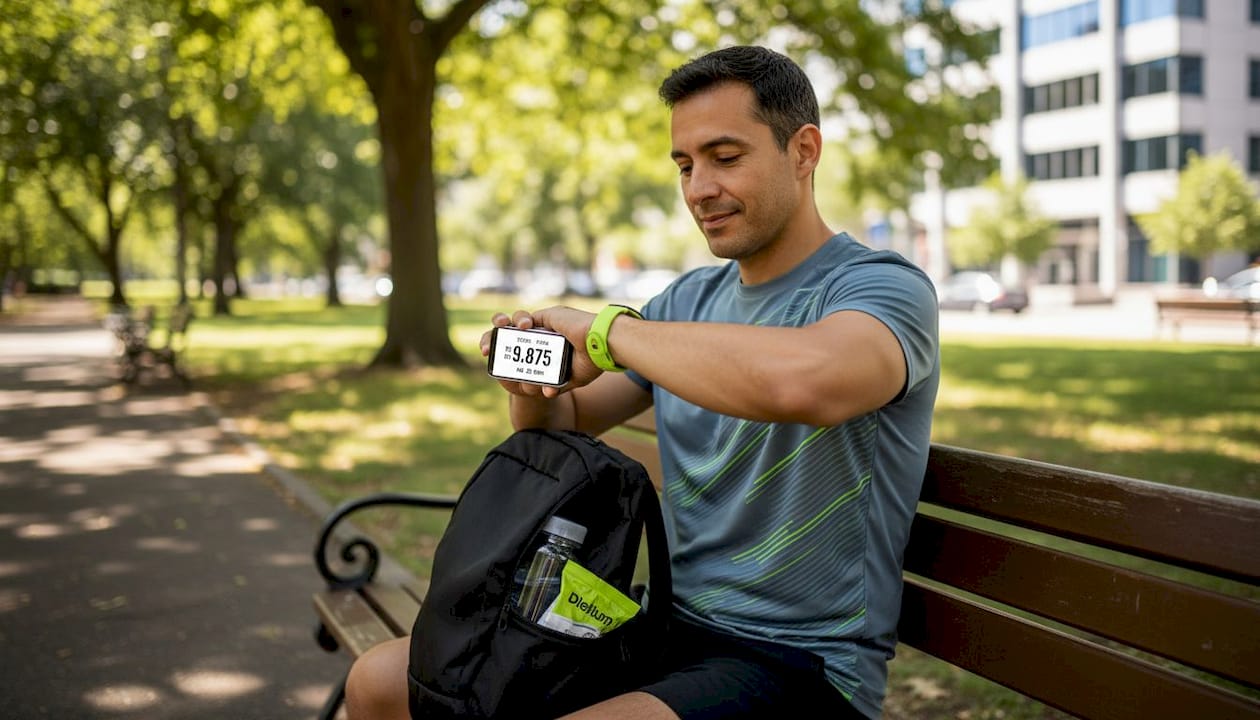
On the nutrition side, accuracy matters enormously. Manual food logging apps carry error rates between 6.8% and 31.7%, but AI calorie tracking tools now achieve as little as ±1.2% error. That gap is significant if you are tracking for body composition, athletic performance, or managing a health condition.
For most people, tracking everything simultaneously creates noise rather than clarity. A better approach is to rotate your focus. Spend a month dialing in your nutrition using one of the evidence-backed calorie tracking methods, then shift attention to sleep quality, then movement consistency. This sequential approach builds habits layer by layer rather than all at once.
Metrics worth tracking based on goal type:
- Weight loss: Calories, protein intake, daily steps, weekly weight average
- Muscle gain: Protein grams, training volume, weekly weight average, sleep quality
- Stress management: Sleep duration, HRV trend, movement minutes, daily mood score
- General wellness: Steps, sleep, hydration, weekly fruit and vegetable servings
Pro Tip: Use your tracking tool’s trend view, not the daily number, for metrics like weight or HRV. A 7-day moving average filters out noise and reveals the actual direction of your progress. You can also pair digital tracking with home health monitoring tools for additional recovery context.
Knowing which metrics matter and how to read them is foundational to tracking calorie intake and other wellness data in ways that actually drive results.
Harnessing technology: The rise of AI, apps, and wearables
Armed with a plan for what to track, let’s see how technology can make this process even easier—and smarter.
Wellness technology has moved well beyond basic step counters. Modern platforms integrate AI coaching, real-time biometric feedback, and meal scanning powered by computer vision. These tools can interpret large amounts of health data quickly, identify patterns that would take weeks to spot manually, and deliver personalized recommendations in seconds.
| Technology type | Key strength | Key limitation |
|---|---|---|
| AI coaching apps | Personalized guidance at scale | Still limited by input quality |
| Wearables (smartwatches) | Continuous passive tracking | Lower accuracy for complex metrics |
| Meal tracking apps (AI) | High calorie and macro accuracy | Requires consistent user input |
| Smart scales | Body composition trends | Can be misleading day to day |
| Sleep trackers | Sleep duration, basic stages | Poor staging accuracy vs. lab testing |
Recent research on AI-powered coaching found that large language model AI tools, including systems like PHIA, achieved 84% accuracy in delivering health and sleep coaching recommendations. That is a significant milestone for automated wellness support, though it also means 16% of responses may not be optimal for every individual. AI should be treated as a highly capable advisor, not an infallible one.
Wearables present a similar picture. They are useful for building awareness, tracking trends, and maintaining accountability. However, as wearable data research consistently shows, the outputs require thoughtful interpretation. A single “red” HRV score on a Monday morning does not mean you are overtrained. It might mean you slept in an awkward position or had a glass of wine the night before.
How to use wellness technology without over-reacting to data:
- Set up weekly review sessions instead of checking data constantly throughout the day.
- Identify your three most important metrics and focus your daily attention there.
- Note context alongside data (stress level, travel, illness) so outliers make sense.
- Use the insight to ask better questions, not to draw immediate conclusions.
- Cross-reference device output with how you actually feel before making training or diet changes.
“Wearables are best understood as supplementary tools that enrich body awareness rather than replace it. Noisy data demands careful, patient interpretation before any action is taken.”
Connecting technology to well-designed nutrition calculation tools and health calculator tools strengthens the picture even further. When your wearable data syncs with a platform that also tracks your macros and BMI, you get a more integrated view of what is actually driving your results.
The key mindset shift is treating your devices as data collection instruments and yourself as the analyst. You interpret the data. You decide what actions to take. Technology informs that decision. It does not make it for you.
Building sustainable tracking habits that stick
All the data and tools are only meaningful if they translate into lasting, positive changes in your daily life.
Most people start tracking with enthusiasm and abandon it within a month. The reason is almost always the same: tracking became a chore rather than a tool. Sustainable tracking habits are built around automation, flexibility, and a clear “why” that connects daily logging to a goal that genuinely matters.
Step-by-step habit framework for sustainable tracking:
- Choose your anchor metric. Pick one primary metric tied directly to your current goal. Everything else is secondary.
- Automate where possible. Sync your wearable with your health app. Use a food logging app with a barcode scanner or AI photo recognition to reduce friction.
- Set range goals, not rigid targets. Instead of “exactly 2,000 calories,” aim for 1,850 to 2,100. Ranges reduce guilt and reflect real-life variation.
- Schedule a weekly review. Spend 10 minutes each Sunday reviewing your week’s data. Look for patterns, not individual data points.
- Build in a reset protocol. Life happens. If you miss a few days, restart immediately without judgment. Gaps in data are normal, not failures.
Research on nutrition tracking accuracy confirms that 3 to 4 days of logging, including at least one weekend day, provides a reliable snapshot of your typical macro and calorie intake. You do not need to log every single day to gain useful nutritional insight. This finding alone can reduce the pressure that leads to burnout.
Practical habits that make tracking stick:
- Log meals immediately after eating rather than recalling at the end of the day
- Use voice entry or photo logging to cut time spent on data entry
- Link tracking to an existing routine (morning coffee, lunch break, pre-workout)
- Celebrate tracking streaks with non-food rewards to reinforce the habit
- Review how to track progress across health and fitness goals to stay motivated
Taking breaks from tracking is not only allowed, it is often recommended. A planned one to two week break every few months helps you reconnect with natural hunger signals, reduces app fatigue, and often makes you more intentional when you return.
Pro Tip: Use the “resume gently” rule when returning from a tracking break. Start by logging just one meal per day for the first three days. This lowers the barrier to re-entry and rebuilds the habit without triggering an all-or-nothing response.
When you treat tracking as a flexible, evolving practice rather than a rigid commitment, it becomes something you choose rather than something you endure.
A smarter approach: Why balance beats obsession every time
Here is the counterintuitive truth: the people who achieve the most consistent, long-term wellness results are rarely the ones tracking the most. They are the ones tracking the right things, at the right times, with enough self-awareness to know when the data is noise and when it is signal.
The push toward 100% compliance in fitness culture misses an important biological and psychological reality. Humans are not machines. Energy intake fluctuates. Sleep quality varies. Stress affects every metric your wearable measures. Forcing rigid adherence to daily targets ignores this reality and often produces the opposite of the intended effect: increased stress, elevated cortisol, disrupted sleep, and eventually, abandonment.
What top wellness practitioners actually do differently is not more tracking. It is better interpretation. They look at weekly trends, not daily numbers. They factor in subjective wellbeing alongside objective data. They take planned breaks without guilt. And they treat every metric, including data from wearable devices, as a guide rather than a verdict.
There is also a broader principle here: flexibility is not a weakness in a wellness plan. It is a feature. The ability to adapt your tracking approach to a stressful week, a vacation, or a period of illness is what separates people who maintain healthy habits for years from those who cycle endlessly through start-again, fail-again patterns.
Tracking calories, for example, is not inherently restrictive. Understanding the benefits of tracking calories includes increased food awareness, better meal planning decisions, and stronger alignment between what you eat and how you feel. The problem arises when the log becomes more important than the meal, or when missing an entry triggers shame. Data serves you. You do not serve the data.
The smartest approach blends structured tracking during focused goal periods with intuitive, low-tech monitoring during maintenance phases. This rhythm prevents burnout, maintains body awareness, and keeps wellness feeling sustainable rather than punishing.

Ready to take the next step? Personalize your wellness journey
Now that you know how to track smarter, discover resources that make following through on your wellness goals easier and more rewarding.
Dietium brings together the tools you need to act on everything covered in this guide. Start by accessing personalized meal plans that align with your calorie and macro targets, removing the guesswork from daily nutrition decisions. Use the fitness calculator tools to calculate your calorie needs, activity levels, and body composition goals with precision. For a complete picture of where you stand nutritionally, explore Dietium’s nutritional assessment methods to identify gaps and opportunities in your current diet. Every tool is designed to translate your tracking data into clear, actionable steps that support real, measurable progress.
Frequently asked questions
What metrics matter most for overall wellness tracking?
Focus on a combination of movement (steps or activity minutes), nutrition (macros or calories), and sleep quality for the most complete wellness picture, as fitness tracker research confirms these cover the core pillars of physical health.
How many days should I log meals for reliable nutritional feedback?
Logging meals for 3 to 4 days, including at least one weekend day, provides an accurate view of your typical macro and calorie intake without requiring daily logging.
Is it okay to take breaks from tracking?
Short, intentional breaks from tracking can reset your mindset and reduce burnout, as long as you return with clear goals and a gradual re-entry plan.
How accurate are popular fitness trackers for sleep and heart rate variability?
Fitness trackers are quite reliable for step counting but significantly less accurate for complex measurements like sleep staging or HRV, so use them as directional guides, not definitive diagnostics.
Can technology replace intuition in wellness tracking?
Tech tools should supplement, not replace, your own body awareness; wearable data is most useful when interpreted alongside how you actually feel, not instead of it.


