 Skip to content

TL;DR:
- Use sensory checks to select fresh, nutrient-rich whole foods in store.
- Plan shopping around seasonal sales and use loyalty programs for cost savings.
- Read ingredient labels carefully, prioritizing recognizable, minimal ingredients.
Walking the grocery store aisles looking for genuinely nutritious food is harder than it sounds. Between misleading labels, seasonal confusion, and budget pressure, many shoppers end up with products that look healthy but fall short. The good news: a clear, evidence-based framework makes whole foods shopping both efficient and effective. This guide covers everything from produce selection and label reading to budget-saving programs and where to shop, giving you the practical tools to make smarter choices every time you push a cart.
Table of Contents
- How to select the best whole foods
- Budget-friendly tips for whole foods shopping
- How to read labels and avoid misleading claims
- Best practices for shopping whole foods: store, farmers market, and online
- A fresh perspective: why your shopping habits matter more than the store
- Enhance your health with personalized support
- Frequently asked questions
Key Takeaways
| Point | Details |
|---|---|
| Use a produce checklist | Selecting firm, fresh-smelling items and avoiding bruises ensures quality whole foods. |
| Shop smart on a budget | Discounts, bulk buying, and planning meals around sales help you afford healthy foods. |
| Read labels carefully | Check for simple, recognizable ingredients and avoid misleading marketing claims. |
| Choose the right shopping channel | Whether store, farmers market, or online, each platform offers unique benefits for whole foods. |
How to select the best whole foods
Now that we see why whole food selection matters, let’s break down the practical ways to pick the best options in store.
Choosing whole foods starts before anything lands in your cart. Your senses are the most reliable tools you have. Sight, touch, and smell give you immediate, honest feedback that no marketing claim on a package can override. Learning to use them consistently is what separates shoppers who get genuinely nutritious produce from those who bring home items that decay within days.
Food Hero recommends checking that the skin is intact with no holes, feeling for firmness that signals peak ripeness, and smelling produce for a fresh scent, since a weak or absent scent often means the item is not ripe yet, while a sour or moldy smell means it should be avoided entirely.
Here is a practical checklist to use at the store:
- Choose seasonal produce. Fruits and vegetables in season locally cost less, travel shorter distances, and deliver better flavor and nutrient density. Understanding seasonal eating benefits can shift how you plan meals throughout the year.
- Check for firmness. A firm texture generally signals freshness. Soft spots, mushiness, or collapse under light pressure indicate breakdown that shortens shelf life and reduces nutritional value.
- Inspect the skin. Look for intact skin free from cuts, holes, or punctures. Broken skin accelerates spoilage and creates entry points for bacteria and mold.
- Smell before you buy. Ripe produce typically carries a distinct, pleasant scent. If something smells sour, fermented, or simply off, put it back.
- Avoid visible mold or bruising. Even a small patch of mold on soft produce like berries can indicate deeper spoilage. Bruising on harder produce like apples signals internal damage.
- Know which fruits ripen after picking. Bananas, avocados, peaches, and pears continue to ripen off the tree or vine. Stone-cold firm avocados will soften at home. Berries and grapes, however, do not ripen further after harvest, so what you buy is what you get.
“Select fresh, high-quality produce by checking that the skin is intact, feeling for firmness at peak ripeness, and smelling for freshness. Avoid anything with moldy, sour, or off odors.” — Food Hero Produce Selection Guide
The benefits of following this checklist go beyond freshness. Higher-quality produce tends to have better nutrient profiles. Bruised or overripe items lose vitamins more quickly, especially water-soluble ones like vitamin C. Consistently applying these criteria also helps you build confidence in the produce section, making shopping faster over time.
Connecting produce quality to your broader goals is just as important. Exploring whole food diet benefits reinforces why taking those extra thirty seconds to inspect your produce is worth it every single time.
Pro Tip: Before shopping, check what’s in season for your region that week. Pair that list with your meal plan so you only evaluate produce you actually intend to buy. This focus makes the sensory checklist faster and far less overwhelming.
Budget-friendly tips for whole foods shopping
With your selection criteria clear, let’s explore ways to maximize your budget while shopping for whole foods.
One of the most persistent myths about whole foods is that eating nutritiously requires a large grocery budget. It does not. Strategic planning, program awareness, and smart timing can significantly reduce your costs without compromising quality. Healthy eating on a budget is achievable with a few reliable approaches applied consistently.
Follow these steps to reduce your whole foods spending:
- Sign up for store loyalty programs. Most major grocery chains offer digital coupons and personalized discounts through free loyalty accounts. These programs frequently target produce, legumes, and whole grains, exactly the categories you want to prioritize.
- Use government assistance programs. For SNAP/EBT shoppers, WA State’s SNAP Produce Match program provides a $5 coupon or discount when you spend at least $10 on fresh, frozen, or canned fruits and vegetables with EBT at participating retailers, starting October 1, 2025. That is a 50% return on produce spending for qualifying households.
- Buy in bulk for non-perishables. Dried lentils, chickpeas, oats, brown rice, and quinoa cost a fraction of their packaged or pre-cooked equivalents. A 5-pound bag of rolled oats can cost less per serving than a single processed granola bar.
- Shop sales and plan meals around them. Check weekly store flyers before writing your shopping list. Build your meals around what’s discounted that week rather than buying ingredients for a fixed menu regardless of price.
- Choose frozen and canned produce strategically. Flash-frozen vegetables retain nearly all their nutrients and cost significantly less than fresh, especially out of season. Canned legumes and tomatoes are equally nutritious and dramatically cheaper than fresh equivalents.
| Strategy | Estimated savings | Best for |
|---|---|---|
| Loyalty program coupons | 10-30% per item | Packaged whole foods, grains |
| SNAP Produce Match | $5 per $10 spent on produce | Fresh, frozen, canned produce |
| Bulk buying dry goods | 20-40% vs. packaged | Lentils, oats, rice, seeds |
| Buying frozen vs. fresh | 30-50% per serving | Berries, vegetables, legumes |
| Seasonal produce choices | 15-35% vs. out-of-season | All fruits and vegetables |
Thinking about budget-friendly healthy eating as a skill rather than a restriction shifts your mindset. Every dollar saved on produce fundamentals is a dollar available for quality protein sources or specialty items that complete a balanced plate.
Pro Tip: Plan your meals for the week before you go shopping, then cross-reference that plan with your store’s weekly ad. Matching your menu to what’s on sale reduces food waste and can cut your grocery bill by 20% or more without changing what you eat. Pair this habit with grocery shopping on a budget strategies for maximum impact.
How to read labels and avoid misleading claims
Smart budget strategies are vital, but reading labels correctly ensures the products you buy are genuinely whole foods.
Food packaging is designed to sell products, not to educate shoppers. Marketing terms are chosen because they trigger positive associations, not because they carry legal or nutritional meaning. Knowing the difference between regulated claims and marketing language is essential if you want to actually fill your cart with whole foods.
Start with the ingredient list, not the front of the package. The front panel is entirely marketing territory. The ingredient list, found on the back or side, tells you what the product actually contains. A true whole food or minimally processed item will have a short ingredient list composed entirely of recognizable items. If you see a long list with chemical-sounding additives, emulsifiers, or multiple forms of added sugar, the product is processed regardless of what the front label says.
Watch out for these specific misleading claims:
- “Natural” has no regulated definition from the FDA for most foods. A product can contain high-fructose corn syrup, artificial preservatives, or refined oils and still legally be called natural.
- “Whole grain” on the front label does not mean the product is primarily whole grain. A bread can contain mostly refined flour with a small amount of whole wheat flour and still use this claim. Check that whole grain flour is the first ingredient listed.
- “Organic” is regulated and meaningful for pesticide exposure, but it does not automatically mean the food is nutritious. Organic cookies are still cookies.
- “Multigrain” simply means the product contains more than one type of grain. Those grains can all be refined. This term says nothing about whether any of them are whole.
- “Low fat” or “reduced fat” often signals added sugar or sodium to compensate for flavor lost when fat is removed. A reduced-fat peanut butter may contain more sugar than the full-fat version.
- “No added sugar” can still mean the product is high in natural sugars from concentrated fruit juice, which affects blood sugar similarly to added sugar.
Many Americans struggle with this. A significant portion of shoppers cannot accurately identify whole grain products from labels or distinguish truly low-sodium options from marketing claims. Practicing balanced grocery shopping means treating label reading as a non-negotiable step rather than an optional one.
The simplest rule: the fewer ingredients, the better. If you’re buying oats, the ingredient list should say “oats.” If you’re buying canned chickpeas, it should say “chickpeas, water, salt.” Apply this standard consistently and you will naturally filter out the majority of ultra-processed items. Develop your label-reading skills further with practical grocery shopping tips that address specific product categories in detail.
Best practices for shopping whole foods: store, farmers market, and online
Once you know how to decode labels, choosing where to shop can further improve your whole foods experience.
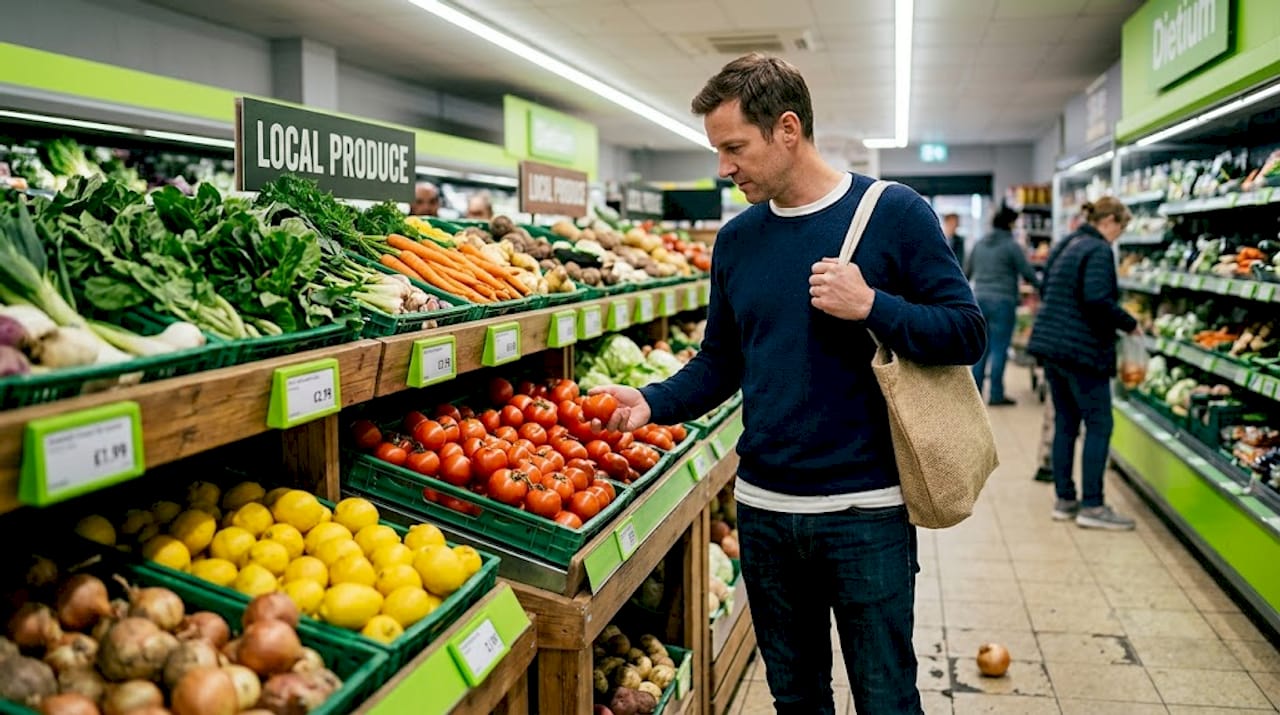
There is no single best place to buy whole foods. Each shopping channel has genuine strengths and real limitations. The most effective approach combines channels based on your priorities, schedule, and local access.
| Shopping channel | Key advantages | Main limitations |
|---|---|---|
| Supermarket | Wide selection, loyalty discounts, year-round availability | Produce quality varies, marketing-heavy environment |
| Farmers market | Peak freshness, local sourcing, seasonal variety, direct producer access | Limited hours, seasonal gaps, higher prices for some items |
| Online retailers | Specialty items, bulk dry goods, convenient reordering, price comparison | Can’t inspect produce directly, shipping adds cost, delayed access |
Supermarket tips:
- Shop the perimeter of the store first. Produce, proteins, and dairy are typically along the outer walls.
- Use the store’s app or website before arriving to clip digital coupons for whole food staples.
- Visit the bulk bins section for grains, nuts, seeds, and legumes at lower per-unit costs.
- Avoid shopping hungry, which reliably leads to more processed, convenience-focused purchases.
Farmers market tips:
- Arrive early for the best selection, especially for popular items like heirloom tomatoes or specialty greens.
- Talk to vendors directly. Farmers can tell you exactly when produce was harvested, how it was grown, and which items are at peak ripeness.
- Bring cash and reusable bags. Many small farms do not accept cards.
- Buy in larger quantities when prices drop late in the market day, then freeze or preserve extras.
Online shopping tips:
- Use online retailers for bulk non-perishables: dried beans, whole grain flours, nuts, seeds, and specialty items like miso or tahini that your local store may not stock.
- Subscribe-and-save programs from major retailers can reduce costs on items you buy regularly.
- Read reviews for produce boxes or CSA (community supported agriculture) subscriptions carefully before committing.
Building a sustainable diet often means mixing channels. You might buy fresh seasonal produce at a farmers market, dry goods in bulk online, and proteins at a supermarket where you have loyalty discounts. That multi-channel approach takes slightly more planning but delivers both quality and value consistently.
A fresh perspective: why your shopping habits matter more than the store
After exploring all channels and criteria, it’s important to reflect on what really shapes your nutrition choices over time.
A common trap in whole foods conversations is focusing almost entirely on location. People debate farmers markets versus supermarkets, organic versus conventional, and local versus imported, as though one perfect store would solve everything. It will not. Where you shop matters far less than the habits and decisions you bring with you.
The shopper who applies sensory-based produce evaluation, reads every ingredient list, and plans meals around seasonal sales will eat better than someone who shops exclusively at a premium health food store with no consistent strategy. Consistency and applied knowledge drive outcomes, not store prestige or geography.
Small, repeated decisions compound over time. Choosing whole oats over flavored instant packets five mornings a week adds up to roughly 260 better breakfast decisions per year. That kind of accumulated habit change, grounded in the practical strategies covered here, produces real results in energy levels, body composition, and long-term health markers.
Building reliable healthy eating strategies into your routine removes the need to make willpower-dependent decisions every time you shop. Systems beat motivation. A checklist, a meal plan, and a clear label-reading framework are more powerful than any store on its own.
Enhance your health with personalized support
The tips in this guide give you a strong foundation for smarter whole foods shopping. The next step is connecting those choices to a personalized nutrition plan that aligns with your specific health goals. Dietium offers nutritional assessment methods to help you identify exactly where your diet stands and what to prioritize. From there, personalized meal plans built around your calorie needs, macros, and food preferences make it straightforward to put whole foods to work for your body. If you’re feeding a household, meal planning for families provides practical frameworks that account for different tastes, budgets, and nutrition needs all at once.
Frequently asked questions
How can I tell if produce is fresh in the store?
Checking for firmness, intact skin, and a fresh scent are the most reliable indicators. Avoid anything with soft spots, mold, bruising, or a sour smell.
Are there programs to make whole foods more affordable?
Yes. Programs like WA State’s SNAP Produce Match offer a $5 coupon when you spend at least $10 on fresh, frozen, or canned produce using EBT at participating retailers.
Which food labels should I trust when shopping?
Trust labels with short, recognizable ingredient lists and regulated terms like “USDA Organic.” Avoid placing weight on unregulated terms like “natural,” which carry no enforced nutritional standard.
Is shopping at a farmers market better for whole foods?
Farmers markets often provide the freshest, most seasonal produce with direct access to growers, but supermarkets and online retailers offer convenience, variety, and pricing advantages that make them equally valid options depending on your needs.


