 Skip to content

Staying active sounds simple, but many health-conscious people struggle to maintain or meaningfully increase their daily physical activity. Generic advice rarely works because everyone faces unique barriers like time constraints, motivation gaps, or physical limitations. This article delivers evidence-based, personalized strategies proven to boost daily activity sustainably. You’ll learn specific behavior change techniques, digital tools using reinforcement learning that add over 200 daily steps, and practical methods tailored to your lifestyle. Whether you’re starting from scratch or looking to level up, these approaches transform intention into consistent action.
Table of Contents
- Understanding Why Increasing Daily Activity Matters And Preparing Yourself
- Step-By-Step Methods To Increase Your Daily Activity Sustainably
- Overcoming Challenges And Avoiding Common Mistakes When Increasing Activity
- Results To Expect And How To Verify Your Increased Daily Activity
- Enhance Your Daily Activity With Personalized Nutrition And Wellness Support
- FAQ
Key takeaways
| Point | Details |
|---|---|
| Personalized techniques work best | Goal setting, social support, instructions, and graded tasks significantly boost activity levels when tailored to your situation. |
| Digital tools deliver results | Reinforcement learning apps sustainably increase daily steps by 200+ over months through adaptive recommendations. |
| Incremental progress wins | Small, consistent daily step increases lead to lasting health improvements without overwhelming your schedule. |
| Preparation prevents failure | Choosing the right mindset and tracking tools before starting dramatically improves success rates. |
Understanding why increasing daily activity matters and preparing yourself
Regular physical activity extends your lifespan and protects against chronic diseases, making it one of the most powerful health and longevity interventions you can implement. Yet knowing this rarely translates into action without the right approach. Research identifies four behavior change techniques that notably increase physical activity: goal setting, social support, providing instructions, and graded tasks. These aren’t random suggestions but scientifically validated methods that address the psychological and practical barriers preventing consistent movement.
Before jumping into action, prepare your mindset and tools. Successful activity increases start with realistic expectations and self-compassion. You’re not training for a marathon tomorrow; you’re building healthy habits that stick. This mental shift prevents the all-or-nothing thinking that derails most attempts. Gather basic tracking tools like a smartphone pedometer app, fitness tracker, or simple notebook. These devices provide the feedback loop essential for motivation and progress monitoring.
Pro Tip: Start with a baseline week where you simply track current activity without trying to change it. This honest assessment reveals your true starting point and prevents setting unrealistic goals.
The table below summarizes essential preparation elements:
| Preparation Element | Purpose | Example |
|---|---|---|
| Baseline tracking | Establish current activity level | Record daily steps for 7 days |
| Goal setting framework | Create specific, measurable targets | Increase steps by 500 daily within 4 weeks |
| Social support system | Build accountability and motivation | Join walking group or find activity partner |
| Tracking device | Monitor progress objectively | Pedometer app or fitness tracker |
| Instruction resources | Learn proper techniques safely | Online videos or fitness professional guidance |
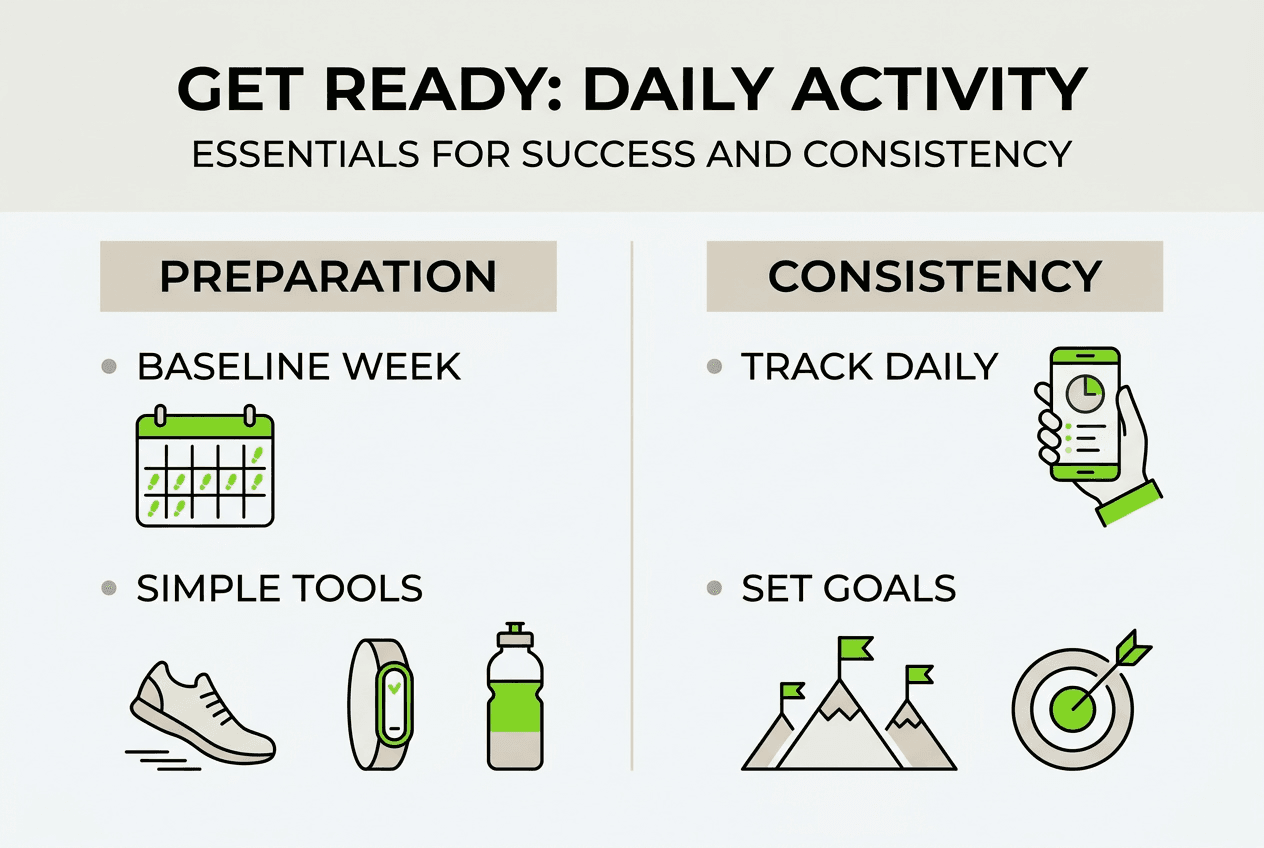
Choosing the right tools matters less than consistency in using them. A basic pedometer works as effectively as an expensive smartwatch if you check it daily and adjust behavior accordingly. The key is making tracking effortless enough that it becomes automatic.
Understanding these fundamentals positions you to implement specific strategies that work. Generic advice fails because it ignores individual circumstances like work schedules, physical limitations, or personal preferences. The techniques ahead adapt to your unique situation, making sustainable increases achievable rather than aspirational.
Step-by-step methods to increase your daily activity sustainably
Implementing evidence-based techniques transforms vague intentions into concrete action. Follow these five steps to build lasting activity increases:
-
Set specific, measurable activity goals. Define exactly what you want to achieve and when. Instead of “be more active,” commit to “walk 8,000 steps daily by March 15.” Write this goal somewhere visible and review it each morning. Specificity creates clarity; deadlines create urgency. Setting fitness goals properly requires choosing targets slightly beyond your current capacity but within reach through consistent effort.
-
Establish social support and accountability. Share your goal with friends, family, or online communities. Schedule regular check-ins where you report progress. Social accountability dramatically increases follow-through because humans naturally avoid disappointing others. Join staying active groups or find a walking partner who shares similar goals. Even texting daily step counts to a friend creates powerful motivation.
-
Follow clear instructions for proper technique and safety. Learn correct walking posture, stretching routines, or exercise form before increasing intensity. Poor technique causes injuries that halt progress entirely. Watch instructional videos, consult fitness professionals, or use apps providing guided workouts. Instructions reduce the intimidation factor for beginners and prevent experienced exercisers from developing bad habits.
-
Apply graded tasks by increasing intensity gradually. Start with small, manageable increases rather than dramatic jumps. If you currently walk 4,000 steps daily, aim for 4,500 next week, not 10,000 immediately. This incremental approach prevents burnout and injury while building confidence. Each small success motivates the next step up. Graded progression respects your body’s adaptation timeline.
-
Leverage digital tools using personalized algorithms. Reinforcement learning interventions increase daily steps by over 200 consistently across months by adapting recommendations to your behavior patterns. These apps learn when you’re most likely to be active, what motivates you, and how to time reminders for maximum impact. Unlike static programs, they evolve with you. Tracking progress becomes effortless when technology handles the details.
Pro Tip: Track daily steps at the same time each evening and immediately plan tomorrow’s activity boost. This habit loop connects measurement with action planning.
These methods work synergistically. Goal setting provides direction, social support supplies motivation, instructions ensure safety, graded tasks prevent overwhelm, and digital tools optimize timing and personalization. Combining all five creates a robust system resistant to the inevitable motivation dips and schedule disruptions.
The beauty of this approach lies in its flexibility. Busy professionals might focus on lunchtime walking meetings and parking farther from entrances. Parents could incorporate active play with children or walking school drop-offs. Retirees might join morning walking groups or volunteer for activities requiring movement. The techniques adapt to any lifestyle when applied thoughtfully.
Consistency beats intensity for sustainable increases. Walking an extra 1,000 steps daily for a year delivers far more health benefits than sporadic intense workouts followed by weeks of inactivity. These methods prioritize building the habit first, then gradually increasing the challenge as the behavior becomes automatic.

Overcoming challenges and avoiding common mistakes when increasing activity
Even well-designed plans encounter obstacles. Recognizing common pitfalls and having solutions ready prevents temporary setbacks from becoming permanent failures. The most frequent challenge is motivation loss after initial enthusiasm fades. Combat this by tracking small wins daily rather than focusing only on long-term goals. Celebrate each day you hit your step target, not just monthly milestones. Visual progress charts or streak counters tap into our natural desire for consistency.
Unrealistic goals sabotage more attempts than any other factor. Setting a target of 15,000 daily steps when you currently average 3,000 sets you up for failure and discouragement. Tailoring behavior change techniques to your individual conditions enhances effectiveness dramatically. Someone with arthritis needs different strategies than a healthy 25-year-old. Adjust goals based on honest self-assessment, not Instagram highlight reels.
Physical limitations require creative solutions, not surrender. Pain, chronic conditions, or mobility issues demand modified approaches but don’t eliminate activity increases. Consult healthcare providers before starting, then explore low-impact options like water walking, seated exercises, or gentle stretching routines. The goal is sustainable movement appropriate to your body, not matching someone else’s definition of fitness.
Common pitfalls and solutions include:
- All-or-nothing thinking: Missing one day doesn’t ruin everything. Resume immediately without guilt or compensatory overexertion.
- Ignoring rest and recovery: Muscles need recovery time. Schedule rest days and prioritize sleep to prevent injury and burnout.
- Comparing yourself to others: Your only competition is yesterday’s version of yourself. Individual progress matters more than matching peers.
- Skipping tracking during busy periods: Busy times require tracking most because activity often drops unnoticed. Quick check-ins prevent backsliding.
- Neglecting nutrition: Increased activity without proper fuel causes fatigue and poor performance. Match energy intake to output.
Weather, travel, illness, and schedule changes will disrupt routines. Plan backup options in advance. Indoor walking routes, home exercise videos, or hotel gym workouts maintain momentum when normal routines break down. The difference between temporary setback and permanent failure often comes down to having a backup plan ready.
Regular self-assessment every two weeks helps identify what’s working and what needs adjustment. Ask yourself: Are my goals still appropriate? Is my social support system functioning? Do I need new instructions for advancing to the next level? This reflection prevents drifting off course and keeps strategies aligned with evolving needs.
Perfection isn’t the goal; progress is. Some weeks you’ll exceed targets easily. Others you’ll barely maintain baseline activity. Both are normal parts of sustainable lifestyle changes. The key is never quitting entirely, even when progress stalls. Maintaining current activity during difficult periods prevents the complete restart cycle that exhausts so many people.
Understanding that challenges are inevitable rather than signs of failure changes your entire approach. You’re not trying to achieve perfect adherence; you’re building resilience and problem-solving skills that make long-term success possible. Each obstacle you overcome strengthens your active lifestyle foundation.
Results to expect and how to verify your increased daily activity
Sustained increases deliver measurable health improvements you can track objectively. Research shows daily step increases of 200+ lead to meaningful cardiovascular benefits, improved mood regulation, better sleep quality, and enhanced weight management. These aren’t theoretical benefits; they’re observable changes you’ll notice within weeks of consistent effort.
The timeline matters for setting realistic expectations. Initial improvements in energy and mood often appear within the first two weeks. Cardiovascular adaptations like lower resting heart rate and improved endurance typically emerge around the four to six week mark. Weight changes and body composition shifts require longer, usually eight to twelve weeks of sustained increased activity combined with appropriate nutrition.
| Time Period | Expected Step Increase | Observable Benefits |
|---|---|---|
| 1 month | 200-400 additional daily steps | Improved energy, better mood, easier daily tasks |
| 2 months | 400-600 additional daily steps | Lower resting heart rate, increased endurance, modest weight changes |
| 3+ months | 600+ additional daily steps | Significant cardiovascular improvements, body composition changes, established habit |
Verifying true progress requires tracking multiple health markers beyond just step counts. Monitor these indicators:
- Resting heart rate: Should gradually decrease as cardiovascular fitness improves.
- Recovery time: How quickly your heart rate returns to normal after activity indicates fitness level.
- Sleep quality: Increased activity typically improves sleep depth and duration.
- Energy levels: Sustainable increases boost daily energy rather than causing constant fatigue.
- Mood and stress: Regular activity reduces anxiety and improves emotional regulation.
- Body measurements: Waist circumference and body composition often improve before scale weight changes.
Using devices and apps effectively requires understanding their limitations. Step counters provide useful relative data but aren’t perfectly accurate. Focus on trends over time rather than obsessing over exact numbers. Tracking progress works best when you review weekly averages instead of daily fluctuations. One low day means nothing; a downward weekly trend signals needed adjustments.
Take monthly progress photos and notes about how you feel during daily activities. Can you climb stairs without getting winded? Do you have energy for evening activities that previously exhausted you? These qualitative measures often reveal progress that numbers miss. Combine objective data with subjective experience for the complete picture.
Celebrate milestones appropriately. Hitting your first week of consistent goal achievement deserves recognition. Reaching a new personal record for daily steps merits celebration. These positive reinforcements strengthen the habit loop and associate increased activity with reward rather than deprivation. Just ensure rewards don’t undermine progress, like celebrating with excessive food that negates calorie burns.
Realistic expectations prevent discouragement. You won’t transform overnight, and progress isn’t linear. Some weeks show dramatic improvements; others plateau or even regress slightly. The overall trend matters more than daily variations. Trust the process, stay consistent, and verify progress through multiple indicators rather than relying on any single metric.
Enhance your daily activity with personalized nutrition and wellness support
Increasing physical activity works best when supported by comprehensive wellness strategies. Your body needs proper fuel to sustain higher activity levels and recover effectively. Personalized meal plans tailored to your specific health goals ensure you’re eating the right balance of nutrients to support increased movement without unwanted weight gain or energy crashes. When nutrition aligns with activity, results compound dramatically.
Understanding your unique nutritional needs through professional assessment methods reveals exactly what your body requires. This eliminates guesswork and prevents common mistakes like under-eating protein or neglecting hydration. Combined with clear activity goals, nutritional optimization creates synergy where each element enhances the other.
Setting nutrition goals using the same evidence-based techniques that increase activity ensures your eating habits support rather than sabotage your progress. The behavior change methods you’ve learned here apply equally to nutrition, creating a unified approach to total wellness. When activity and nutrition strategies work together, sustainable health transformation becomes achievable rather than aspirational.
FAQ
What are simple ways to increase daily steps without going to the gym?
Take walking breaks every hour during work, park at the far end of parking lots, and choose stairs over elevators whenever possible. These micro-habits add hundreds of steps daily without requiring dedicated workout time. Set phone reminders to stand and move for five minutes each hour. During phone calls, walk instead of sitting. These practical adjustments fit seamlessly into existing routines and compound into significant daily increases. For more ideas on staying active without gym access, explore comprehensive home activity strategies that work for any living situation.
How do goal setting and social support improve daily activity levels?
Goal setting provides specific targets that transform vague intentions into measurable actions you can track and achieve. Social support adds accountability because sharing commitments with others creates external motivation that persists when internal motivation wavers. Research shows these techniques significantly increase physical activity by addressing both the planning and motivation challenges that typically derail efforts. Combining them creates a powerful system where you know exactly what to do and have people encouraging you to follow through. Learn how to set effective fitness goals that leverage these proven techniques.
What digital tools use personalized methods to help increase daily activity?
Reinforcement learning algorithms analyze your behavior patterns and adapt recommendations to your unique schedule, preferences, and response to different motivational strategies. These intelligent systems learn when you’re most receptive to activity prompts and what types of encouragement work best for you. Studies demonstrate these tools consistently increase daily steps by over 200 across multiple months, significantly outperforming static programs. The personalization means recommendations become more effective over time as the system learns your patterns. Discover more about implementing active lifestyle strategies enhanced by smart technology.
How long does it take to see health benefits from increased daily activity?
You’ll notice improved energy and mood within two weeks of consistent increased activity. Cardiovascular improvements like lower resting heart rate typically appear around four to six weeks. More substantial changes in body composition and weight management usually require eight to twelve weeks of sustained effort. The key is consistency rather than intensity; small daily increases maintained over time deliver better results than sporadic intense efforts. Track multiple health markers beyond just step counts to recognize the full range of benefits as they emerge at different timelines.
Can I increase daily activity if I have physical limitations or chronic conditions?
Absolutely, but your approach must be tailored to your specific situation. Consult healthcare providers before starting to identify safe activities and appropriate progression rates. Low-impact options like water walking, seated exercises, or gentle stretching can significantly increase activity without aggravating conditions. The same behavior change techniques work; you simply apply them to activities suited to your capabilities. Research confirms that tailoring strategies to individual conditions enhances effectiveness, so personalization becomes even more critical when managing health challenges.
Recommended
- Staying Active at Home: A Step-by-Step Guide for Busy Adults – Dietium
- Physical activity’s role in health and longevity 2026 – Dietium
- Understanding Active Lifestyle Tips for a Healthier You – Dietium
- Actionable Tips to Eat More Vegetables Every Day Easily – Dietium
- Mini bikes boost kids’ activity 30% more in 2026 – GoKarts USA®


