 Skip to content

Busy schedules often leave little room for long gym sessions, but your own home can become your strongest wellness ally. Making movement part of everyday life is more practical than many think, with the Physical Activity Guidelines for Americans highlighting how even small apartment spaces can work for daily activity. You will discover simple ways to design optimal workout zones, set goals that fit your routine, and keep motivation high—no matter where you live.
Table of Contents
- Step 1: Assess Your Home Space For Optimal Activity Zones
- Step 2: Set Achievable Fitness And Movement Goals
- Step 3: Organize At-Home Workout Equipment And Resources
- Step 4: Establish A Daily Activity Schedule
- Step 5: Track Your Progress And Adjust Routines
Quick Summary
| Key Point | Explanation |
|---|---|
| 1. Define workout zones at home | Identify underutilized areas in your home for fitness activities, ensuring they are safe and accessible. |
| 2. Utilize S.M.A.R.T. goals | Craft fitness objectives that are Specific, Measurable, Achievable, Relevant, and Time-bound to enhance motivation. |
| 3. Organize fitness equipment wisely | Categorize workout tools for strength, cardio, flexibility, and recovery to maintain an efficient fitness space. |
| 4. Schedule daily activities | Establish a consistent fitness routine by incorporating activity blocks throughout your day to build habits. |
| 5. Monitor progress regularly | Track performance metrics and physical changes to adjust your routine and maintain accountability toward your fitness goals. |
Step 1: Assess your home space for optimal activity zones
Creating effective home workout spaces doesn’t require massive square footage – just strategic planning and smart arrangement. Your living area, regardless of size, can transform into a versatile fitness zone with the right approach. Physical activity guidelines emphasize making movement a natural part of daily life, even within limited home environments.
Start by conducting a quick spatial audit of your living area. Look for underutilized spaces that could become mini workout zones:
- Living room corner: Perfect for yoga mat, resistance bands, and bodyweight exercises
- Hallway: Ideal for walking lunges or stationary marching
- Bedroom: Space for stretching, light weight training
- Kitchen: Area for counter-supported balance and strength movements
When mapping out your activity zones, prioritize safety and accessibility. Clear any potential obstacles like furniture or loose rugs that might interfere with movement. NIH Physical Wellness Toolkit recommends creating dedicated spaces that make physical activity convenient and inviting.
Small, deliberate spaces can transform your entire approach to home fitness.
Consider using multipurpose furniture or collapsible equipment that can be easily stored when not in use. A compact foldable exercise mat, adjustable dumbbells, or resistance bands can maximize your workout potential without permanent setup requirements.
Pro tip: Measure your available spaces and sketch a quick floor plan to visualize potential activity zones before moving any furniture.
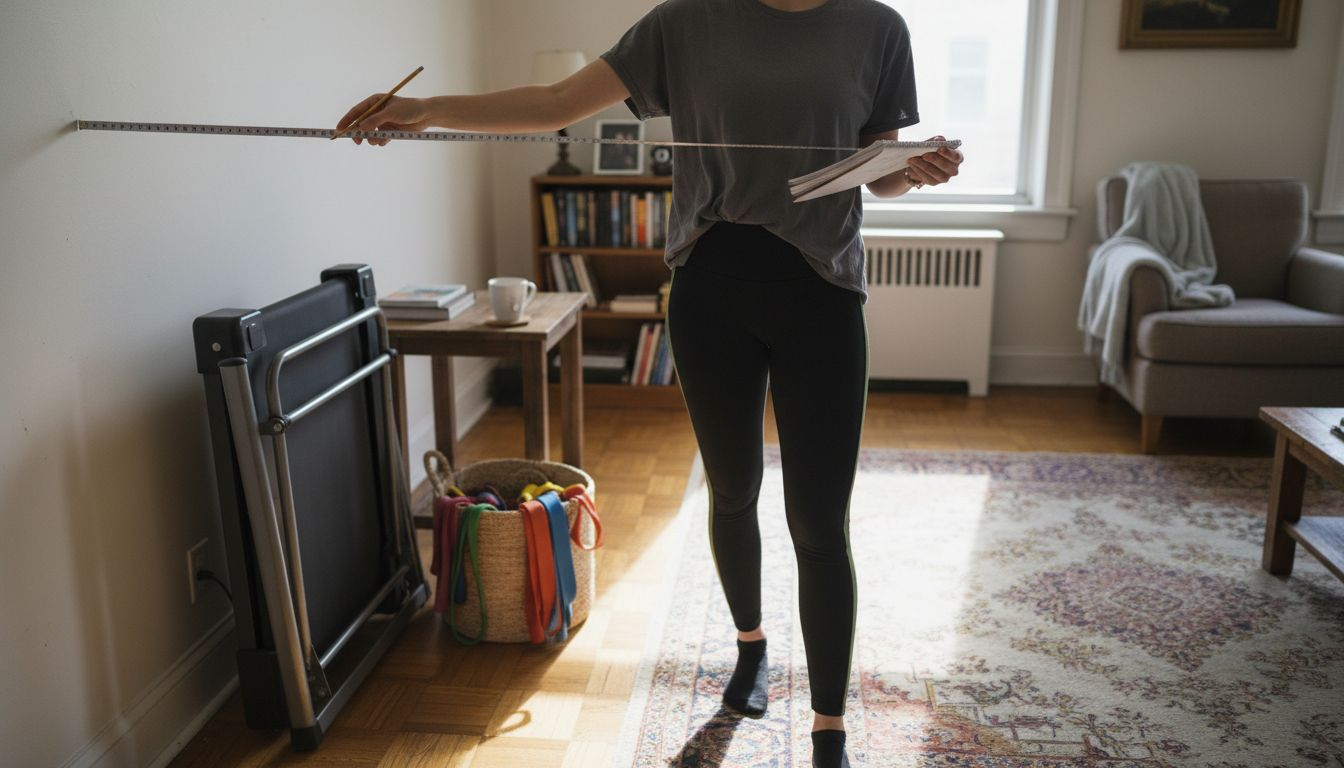
Here’s a summary of common home workout activity zones and their best uses:
| Home Area | Ideal Activities | Setup Considerations |
|---|---|---|
| Living room | Yoga, resistance training, bodyweight | Move furniture for open space |
| Hallway | Walking lunges, marching in place | Ensure clear path and good lighting |
| Bedroom | Stretching, light weights | Soft flooring or mat suggested |
| Kitchen | Counter-supported balances | Use counters for safe support |
Step 2: Set achievable fitness and movement goals
Setting realistic fitness goals is crucial for maintaining motivation and creating lasting lifestyle changes. Strategies from the American Heart Association emphasize developing goals that align with your current fitness level and personal health conditions.
To create meaningful fitness objectives, utilize the S.M.A.R.T. goal framework:
- Specific: Define clear, precise fitness targets
- Measurable: Track progress with quantifiable metrics
- Achievable: Choose goals within your current capabilities
- Relevant: Align goals with your personal health motivations
- Time-bound: Set realistic deadlines for accomplishment
Consider developing goals that focus on consistency rather than extreme transformation. For example, aim for 30 minutes of moderate activity five days per week, or start with three 10-minute walking sessions if you’re just beginning your fitness journey.
Small, consistent efforts create significant long-term health improvements.
SMART goal strategies suggest breaking larger objectives into smaller, manageable milestones. This approach helps maintain motivation and provides a sense of ongoing achievement.
Pro tip: Write down your fitness goals and place them somewhere visible to maintain daily motivation and accountability.
Step 3: Organize at-home workout equipment and resources
Transforming your home into an efficient fitness space requires strategic planning and smart equipment selection. Cleveland Clinic’s home gym recommendations highlight the importance of choosing workout tools that align with your specific fitness goals and available space.
Start by categorizing your fitness equipment into essential zones:
- Strength Training Zone: Hand weights, resistance bands, kettlebells
- Cardio Area: Jump rope, resistance bands, compact exercise mat
- Flexibility Space: Yoga mat, foam roller, stretch bands
- Recovery Corner: Water bottle, towel, small storage container
When organizing your workout resources, consider vertical storage solutions that maximize space efficiency. Wall-mounted racks, over-the-door hangers, and compact storage cubes can help keep equipment accessible yet neatly arranged. NIH physical wellness guidelines suggest placing smaller equipment like resistance bands in frequently used areas to encourage spontaneous movement breaks.
Strategic equipment placement transforms your home into a personal fitness sanctuary.
Dedicate a specific area for digital workout resources, such as a tablet stand or designated spot for online fitness class streaming. This helps create a structured workout environment and minimizes distractions.
Pro tip: Choose multipurpose equipment that can be easily stored and provides maximum workout versatility.
Step 4: Establish a daily activity schedule
Building a consistent fitness routine requires strategic planning and intentional scheduling. Physical Activity Guidelines emphasize incorporating movement throughout your day, not just during dedicated workout sessions.
Design your daily schedule with these strategic activity blocks:
- Morning Movement: 10-15 minute warm-up stretches
- Work Breaks: 5-minute movement intervals
- Afternoon Activity: 20-30 minute dedicated workout
- Evening Wind-Down: Light stretching or walking
Tracking and accountability are crucial for maintaining your schedule. Use a digital or physical calendar to map out your daily activities, marking completed sessions and noting any modifications needed. Mental Health America’s routine-building strategies recommend identifying potential barriers and building flexibility into your plan.
Consistency matters more than perfection in your fitness journey.
Consider using smartphone apps or digital reminders to prompt movement breaks and maintain your activity rhythm. These tools can help you stay motivated and track your progress without feeling overwhelmed.
Pro tip: Schedule your activities at the same time each day to help transform them into automatic habits.
Step 5: Track your progress and adjust routines
Monitoring your fitness journey transforms good intentions into measurable results. Routine tracking techniques offer powerful insights into your physical activity progress and help you make data-driven adjustments to your wellness plan.
Implement a comprehensive tracking system with these key components:
- Performance Metrics: Repetitions, duration, intensity
- Physical Changes: Body measurements, weight, energy levels
- Habit Consistency: Workout frequency, adherence rate
- Personal Feedback: Subjective feelings, motivation levels
Utilize multiple tracking methods to get a holistic view of your progress. Digital fitness apps, handwritten journals, or spreadsheets can help you document goal achievements and identify patterns in your fitness journey.
Small, consistent tracking leads to significant long-term transformations.
Review your progress monthly, looking for trends and areas needing adjustment. Be prepared to modify your routine based on what the data reveals, whether that means increasing intensity, changing exercise types, or addressing potential plateaus.
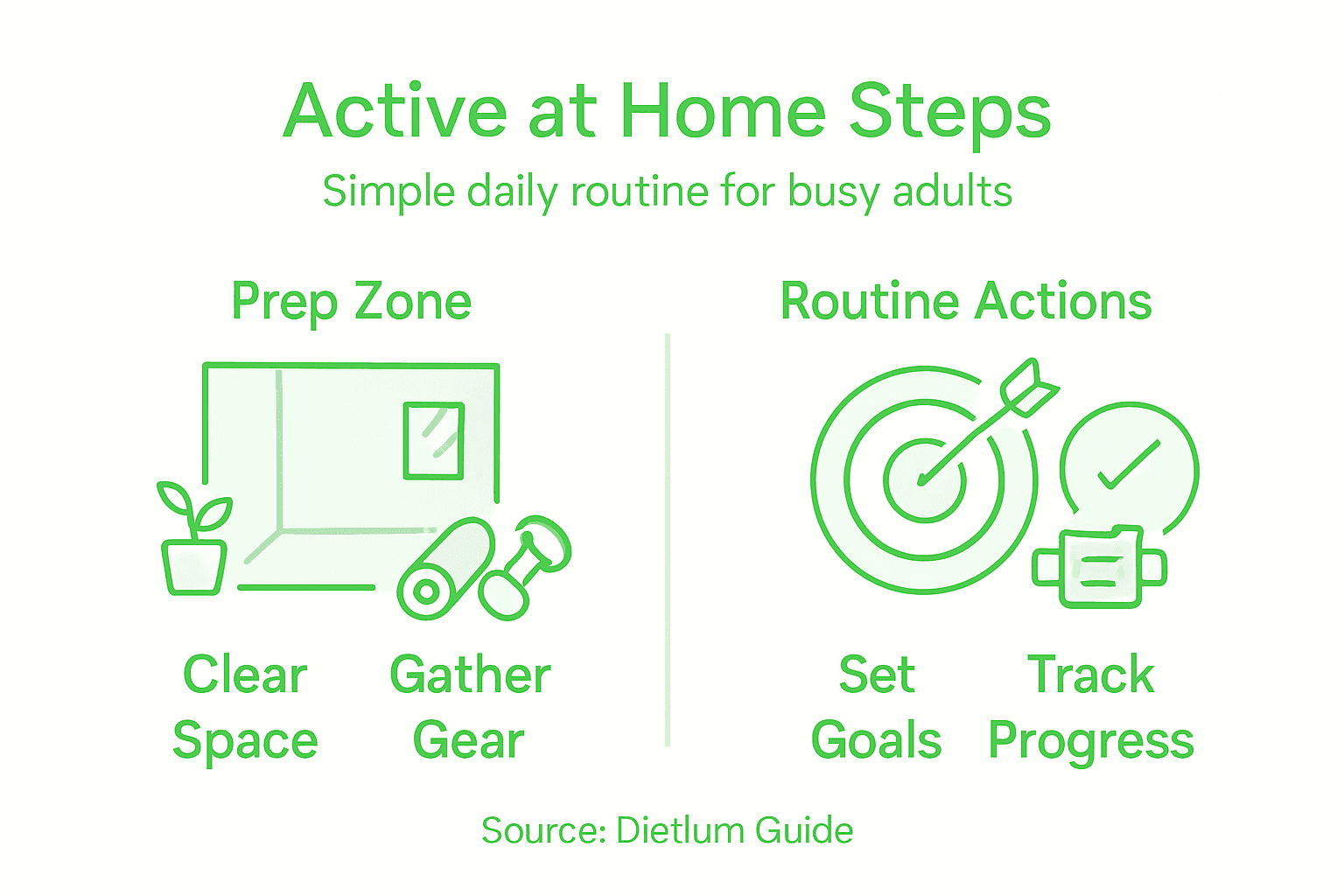
Pro tip: Take progress photos and measurements every 4-6 weeks to capture changes that might not be immediately visible on the scale.
Use this comparison to select the best workout tracking method for your needs:
| Tracking Method | Advantages | Limitations |
|---|---|---|
| Fitness App | Automated analytics, reminders | Requires device, possible costs |
| Handwritten Journal | Personalized notes, flexible format | Manual calculations, paper needed |
| Spreadsheet | Custom calculations, easy trends | Requires setup, basic tech skills |
| Progress Photos | Visual progress, motivating | Subjective, privacy concerns |
Make Staying Active at Home Simple and Effective with Dietium
Struggling to carve out workout zones or set realistic fitness goals at home just like the guide suggests You are not alone in balancing busy life and maintaining consistent activity. The steps about smart space use and goal setting highlight common pain points many face finding dedicated spaces and tracking progress without overwhelm.
Dietium.com offers a personalized wellness experience tailored to your unique lifestyle. With advanced AI-powered tools like body metrics calculators and the Recipians app you can build custom meal plans and fitness routines that fit perfectly into your available home areas. Plus seamless device integration and expert support help you stay accountable with real-time activity tracking and video consultations.
Don’t wait to transform your home into a motivating fitness sanctuary Visit Dietium today and start setting achievable goals and organizing your wellness routine with smart solutions designed for busy adults just like you. Explore how you can track your progress easily and create your personalized fitness schedule at Dietium. Your journey to healthier living at home begins now.
Frequently Asked Questions
How can I assess my home space for workout areas?
Start by conducting a quick review of your living area to identify underutilized spaces. Look for corners or small areas that can be repurposed for activities like yoga or strength training.
What are some achievable fitness goals to set for home workouts?
Consider using the S.M.A.R.T. framework to create fitness goals that are specific, measurable, achievable, relevant, and time-bound. For example, aim for 30 minutes of moderate activity five days a week to maintain consistency and motivation.
How should I organize my at-home workout equipment?
Categorize your fitness equipment into different zones for strength training, cardio, and flexibility. Use vertical storage solutions to maximize space and keep your area organized and inviting for workouts.
What does a daily activity schedule look like?
Establish a consistent daily schedule with designated times for movement, such as morning stretches, work breaks for short activities, and an afternoon workout. This helps reinforce your fitness routine and makes it easier to stay active throughout the day.
How can I track my progress effectively?
Implement a tracking system that includes performance metrics, physical changes, and habit consistency. Review your progress regularly, ideally every month, to identify trends, adjust your routine, and celebrate achievements along the way.


