 Skip to content

TL;DR:
- Walking daily for just 20 minutes significantly reduces risks of heart disease, stroke, and certain cancers.
- It also improves mental health by lowering stress hormones and boosting mood, creativity, and cognitive resilience.
Walking daily is a scientifically proven form of moderate-intensity aerobic exercise that reduces the risk of heart disease, stroke, type 2 diabetes, and certain cancers. The benefits of walking daily extend far beyond weight management. Just 20 minutes per day is enough to produce measurable, lasting changes in physical and mental health. Leading health organizations consistently recommend this minimum threshold as the entry point for meaningful results. Whether you walk in one continuous session or break it into shorter bouts, the evidence is clear: daily walking works.
What are the primary physical health benefits of walking daily?
Walking every day delivers a wide range of physical health benefits, starting with the cardiovascular system. 30 minutes of daily walking improves heart function, lowers resting blood pressure, and reduces the risk of chronic metabolic diseases including type 2 diabetes. These effects compound over time, meaning consistency matters more than any single long session.

Blood sugar regulation is one of walking’s most underappreciated physical benefits. Distributed walking sessions throughout the day regulate blood glucose just as effectively as a single continuous walk. This is especially relevant for people managing prediabetes or insulin resistance, where post-meal blood sugar spikes are a primary concern. Pairing this habit with a blood sugar-focused diet amplifies the effect significantly.
Walking also strengthens bones and joints. Weight-bearing movement stimulates bone density, which reduces the long-term risk of osteoporosis. For people with joint pain, low-impact walking builds the surrounding muscle without the stress that running or high-intensity training places on cartilage.
Key physical benefits include:
- Cardiovascular protection: Lowers blood pressure and reduces heart disease risk
- Metabolic regulation: Improves insulin sensitivity and blood sugar control
- Weight management: Burns calories and supports fat loss, particularly when combined with a structured walking plan
- Bone and joint strength: Builds density and reduces pain over time
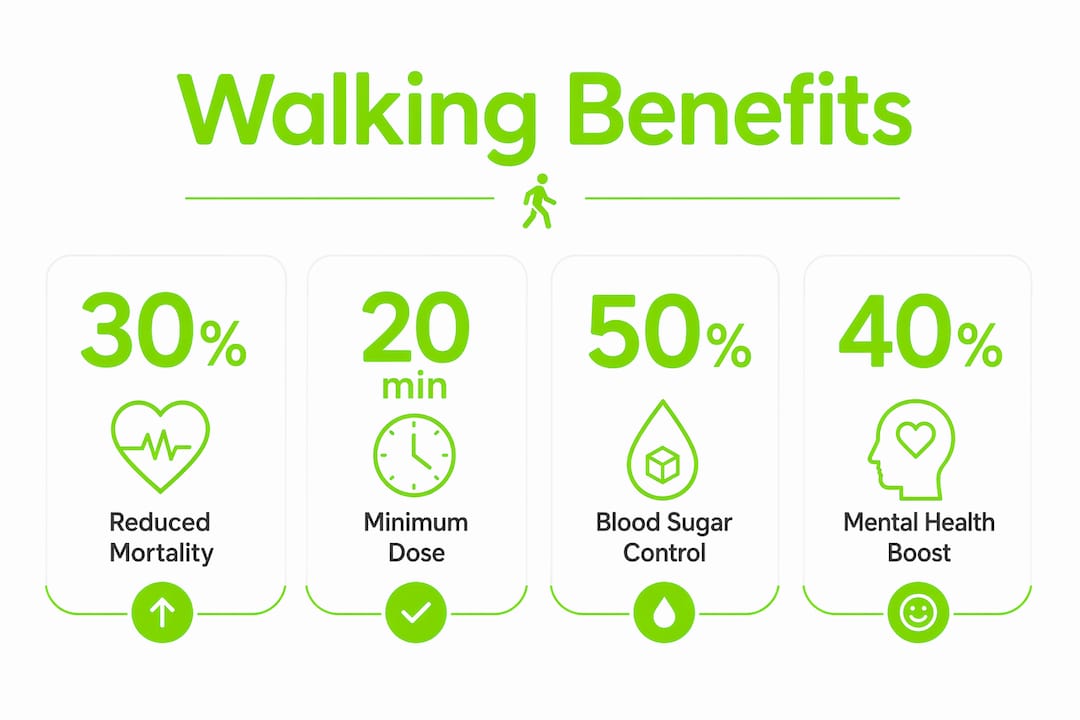
- Longevity: Reduces all-cause mortality risk with as little as 20 minutes per day
Stat callout: 20 minutes of daily walking is sufficient to significantly reduce the risk of death and protect against heart disease and some cancers. That is a remarkably low time investment for a profound health return.
Pro Tip: Use the first 10 minutes after each meal to take a short walk. This targets post-meal blood sugar spikes directly and requires no additional time carved out of your day.
How does daily walking benefit mental health and cognitive function?
Walking is one of the most effective, accessible mental health tools available, yet most people treat it purely as physical exercise. Walking reduces cortisol levels and regulates the nervous system, producing measurable relief from stress and anxiety. The effect is not just psychological. It is biochemical. Endorphin release during walking directly improves mood, often within minutes of starting.
Regular walking also protects the brain as it ages. The same cortisol-lowering mechanism that reduces stress also provides protective effects on brain tissue, supporting mental resilience and lowering dementia risk over time. This makes daily walking one of the few lifestyle habits with simultaneous short-term mood benefits and long-term cognitive protection.
The creativity benefit surprises most people. Walking facilitates divergent thinking, the type of open-ended problem-solving that generates new ideas. This is why many writers, engineers, and executives deliberately schedule walking meetings or solo walks before tackling complex decisions.
“Walking is not just movement. It is one of the most reliable ways to shift your mental state, reduce anxiety, and think more clearly. The research on divergent thinking alone should make it a standard tool for anyone doing creative or analytical work.”
Mental health benefits of walking every day include:
- Mood improvement: Endorphin release reduces symptoms of depression and anxiety
- Stress reduction: Lower cortisol levels calm the nervous system within a single session
- Cognitive protection: Regular walking supports brain health and reduces dementia risk
- Creative thinking: Divergent thinking improves during and after walking sessions
- Sleep quality: Physical fatigue from walking promotes deeper, more restorative sleep
For people managing anxiety or low mood, a daily walk is not a replacement for clinical treatment. It is a powerful, evidence-backed complement to it.
How to incorporate walking into your daily routine effectively
Building a consistent walking habit requires more than good intentions. Structure and small decisions about pace, timing, and environment determine whether the habit sticks.
- Start with a minimum viable dose. 20 minutes per day is the research-backed floor for meaningful health benefits. Starting there removes the psychological barrier of committing to an hour-long session.
- Use micro-walking when time is tight. Breaking walks into 5–10 minute bouts throughout the day delivers comparable benefits to a single session and is far easier to sustain long-term. Set a timer every 90 minutes and walk for 5 minutes.
- Apply the talk test to gauge intensity. Moderate-intensity brisk walking is the target pace for cardiovascular benefit. The talk test is simple: you should be able to speak in full sentences but not sing comfortably.
- Check your posture before you start. Keep your chin parallel to the ground, shoulders relaxed and back, and arms swinging naturally. Slouching forward compresses the spine and reduces breathing efficiency.
- Choose the right footwear. Poor posture and inadequate shoes are the two leading causes of walking-related injuries including shin splints and lower back pain. Shoes with proper arch support and cushioning are non-negotiable for daily walkers.
Pro Tip: Walk with a friend or podcast at least three times per week. Social and audio engagement increases session length by an average of several minutes and dramatically improves long-term adherence.
Additional strategies that improve consistency:
- Walk the same route at the same time each day to build an automatic habit trigger
- Track steps with a wearable or a free app like Pointy to create accountability
- Alternate between neighborhood walks and green spaces. Nature exposure amplifies the stress-reduction effect
- Use walking as transportation when possible. Commute walking removes the need to schedule separate exercise time
For people building broader daily activity habits, walking is the most practical starting point because it requires no equipment, no gym membership, and no learning curve.
How does walking compare with other forms of exercise?
Walking is a low-impact aerobic exercise, which places it in a different category from running, cycling, or resistance training. That distinction matters for two reasons: injury risk and long-term adherence.
| Feature | Walking | Running | Resistance training |
|---|---|---|---|
| Injury risk | Low | Moderate to high | Moderate |
| Equipment needed | Minimal | Minimal | Moderate to high |
| Suitable for most ages | Yes | Limited | Moderate |
| Cardiovascular benefit | Strong at brisk pace | Strong | Moderate |
| Long-term adherence | High | Moderate | Moderate |
| Mental health benefit | Strong | Strong | Moderate |
Brisk walking improves blood pressure and aerobic capacity at a level comparable to more vigorous workouts when intensity and duration are maintained consistently. The key phrase is “when maintained consistently.” Walking’s real advantage over running or high-intensity interval training is that most people actually keep doing it. An exercise you perform every day outperforms a harder exercise you quit after six weeks.
Walking is not a complete fitness solution on its own. It does not build significant muscle mass or develop explosive power. The most effective approach treats walking as the daily foundation of physical activity, with strength training added two to three times per week for a complete fitness profile. For people tracking physical activity and longevity, walking consistently ranks as the single most accessible lever available.
Key Takeaways
Daily walking is the most accessible, evidence-backed form of exercise for reducing chronic disease risk, improving mental health, and building long-term fitness habits with as little as 20 minutes per day.
| Point | Details |
|---|---|
| Minimum effective dose | 20 minutes of walking per day reduces mortality risk and protects against heart disease and cancer. |
| Micro-walking works | Breaking walks into 5–10 minute bouts delivers comparable benefits and improves long-term adherence. |
| Mental health impact | Walking lowers cortisol, releases endorphins, and supports cognitive protection against dementia. |
| Pace matters | Brisk walking at moderate intensity, using the talk test, maximizes cardiovascular and metabolic benefits. |
| Posture and footwear | Proper form and supportive shoes prevent the injuries that most commonly derail walking habits. |
Walking changed how I think about preventive health
I spent years treating walking as something you do between real workouts. That was a mistake. The research on divergent thinking was what finally shifted my perspective. I started taking 15-minute walks before difficult writing sessions and noticed the difference within the first week. Ideas came faster. The mental static cleared. That is not placebo. That is cortisol dropping and blood flow increasing to the prefrontal cortex.
What I find most striking about the evidence is how little time is required. Most people assume health requires sacrifice. Walking proves the opposite. Twenty minutes is a lunch break. It is a phone call you take outside instead of at your desk. The barrier is not time. It is the habit of treating walking as “not enough.” It is enough. For most people, it is the single highest-return health behavior available.
My practical advice: start with one fixed walk per day at the same time. Morning works best for consistency because willpower is highest and the day has not yet filled with competing demands. Add a second short walk after dinner to target blood sugar. Within two weeks, the habit becomes automatic. Within two months, the physical and mental changes become measurable.
The people who get the most from walking are not the ones who walk the farthest. They are the ones who never miss a day.
— Srasti
How Dietium supports your active lifestyle with personalized nutrition
Walking builds a strong fitness foundation. Nutrition determines how far that foundation takes you. Dietium’s personalized diet plans are built around your specific health goals, whether that means managing blood sugar, losing weight, or fueling longer walks with the right macros. The platform’s AI-powered tools calculate your calorie needs, body metrics, and nutritional gaps, then generate meal plans that align with your activity level. For walkers who want to see faster results, pairing a consistent walking habit with a fitness-aligned meal plan is the most direct path to measurable progress. Dietium makes that combination practical and data-driven.
FAQ
How much walking per day is enough for health benefits?
20 minutes of daily walking is the research-backed minimum for significant health benefits, including reduced mortality risk and lower rates of heart disease. 30 minutes per day delivers additional cardiovascular and metabolic gains.
Is walking daily good for you if you already exercise regularly?
Walking every day complements higher-intensity exercise by adding low-impact aerobic volume without increasing injury risk. It also provides mental health benefits, including stress reduction and improved sleep, that intense training alone does not fully deliver.
Can short walks throughout the day replace one long walk?
Micro-walking sessions of 5–10 minutes distributed across the day produce comparable health benefits to a single continuous session and tend to have higher long-term adherence rates.
What pace should I walk at to maximize benefits?
Brisk walking at moderate intensity is the target. Use the talk test: you should be able to speak comfortably but not sing. This moderate pace maximizes cardiovascular and metabolic benefits without requiring the recovery time of vigorous exercise.
Does walking help with mental health?
Walking reduces cortisol and releases endorphins, producing measurable relief from anxiety and stress. Regular walking also protects brain health over time, supporting cognitive function and reducing dementia risk as people age.


